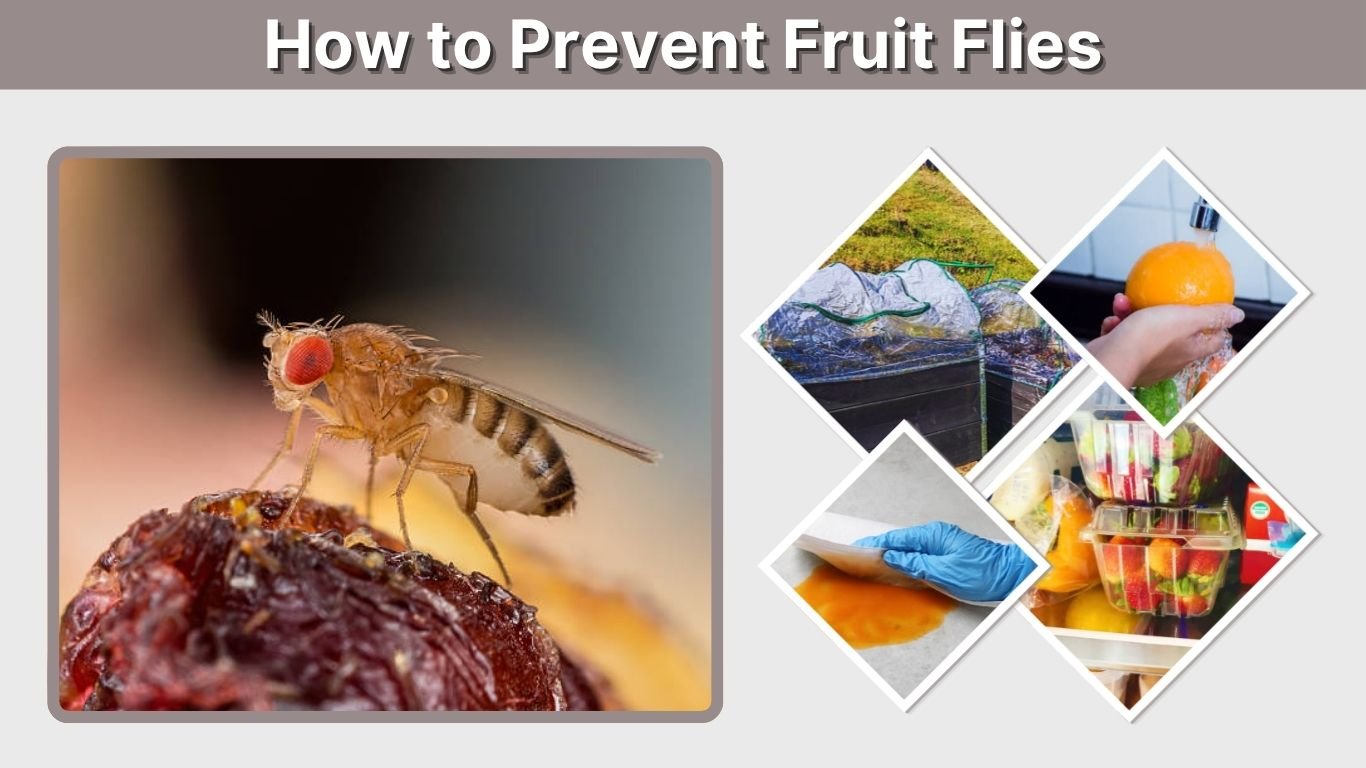
Fruit flies are easiest to control before they begin breeding. These tiny flies are attracted to overripe fruit, fermenting vegetables, sugary drink residue, moist garbage, and other yeast-rich organic material. Effective prevention means removing these resources, storing produce correctly, cleaning drains and recycling containers, and keeping compost covered. Traps can catch occasional adults, but cleanliness and food-source control provide the most dependable long-term protection.
What Attracts Fruit Flies?
Fruit flies do not appear from nowhere. Adults enter through doors, windows, and small openings or arrive with produce. Once indoors, females search for moist, fermenting material where their larvae can feed.
Common attractions include:
- Overripe bananas and other fruit
- Rotting potatoes, onions, and tomatoes
- Wine, beer, juice, and soft-drink residue
- Indoor compost containers
- Damp garbage
- Unwashed recycling
- Food buildup in garbage disposals
- Sticky spills beneath appliances
- Wet pet-food residue
Fruit flies can complete their development quickly under warm conditions, so even a small, overlooked spill may support a growing infestation.
10 Ways to Prevent Fruit Flies
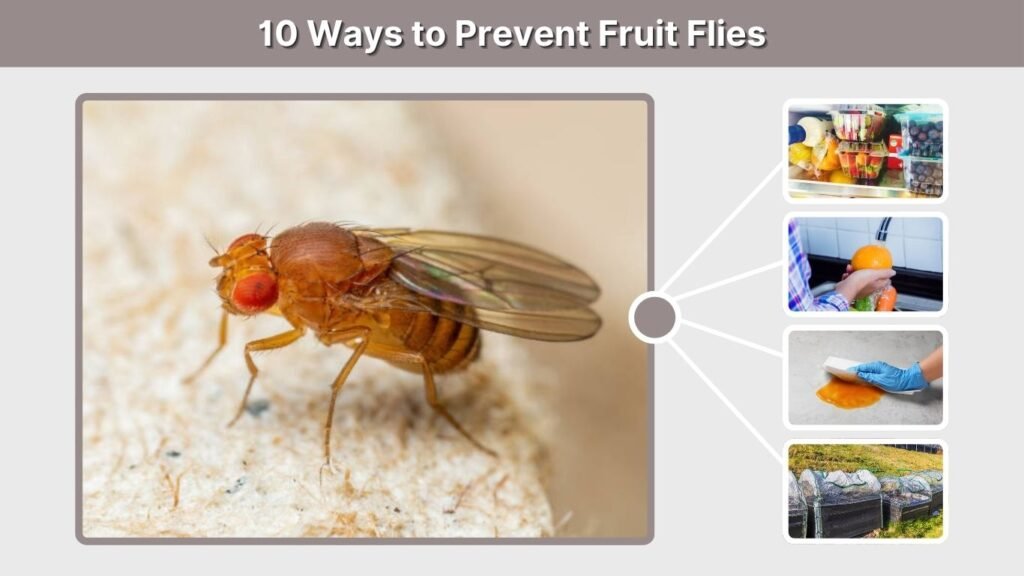
Prevention requires denying the flies access to both food and breeding material. Concentrate on produce, waste, drinks, drains, and hidden moisture.
1. Store Ripe Fruit in the Refrigerator
Fruit kept on the counter becomes increasingly attractive as it softens and begins fermenting. Check your fruit bowl daily and refrigerate ripe produce before it becomes overripe.
During an active fruit-fly problem, consume, cover, or refrigerate all susceptible produce for at least one week. Promptly place spoiled fruit in a sealed bag and move it to an outdoor trash container.
2. Inspect Produce Before Buying It
Avoid fruit and vegetables that are badly bruised, split, leaking, or already beginning to rot. Damaged areas ferment sooner and offer easier access to fruit flies.
Check the bottom of packaged fruit for crushed pieces and moisture. Select pre-cut produce only when it is properly refrigerated or surrounded by ice.
3. Wash Produce Properly
Rinse produce under clean running water before preparing or eating it—even when you do not plan to eat the peel. Gently rub the surface and dry it with a clean towel.
Do not use soap, detergent, bleach, or household cleaning products on fruit. Washing helps remove surface dirt and possible hitchhiking insects, but it cannot replace proper storage or eliminate an indoor breeding source.
4. Clean Spills Immediately
A small amount of fruit juice, wine, soda, syrup, or smoothie residue may provide enough sugar and moisture to attract fruit flies.
Clean beneath and around:
- Refrigerators
- Stoves
- Trash cans
- Coffee machines
- Blenders
- Bar carts
- Juice dispensers
- Recycling containers
Pay attention to grout, cabinet edges, floor cracks, and the undersides of appliances. A few unnoticed drops behind a refrigerator can potentially support a substantial population.
5. Rinse Beverage Containers
Empty bottles and cans often retain small amounts of beer, wine, juice, soda, or kombucha. Rinse them thoroughly before placing them in a recycling bin.
Keep recycling covered and, during an infestation, store it outdoors when practical. Wash the bin regularly to remove residue collecting at the bottom.
6. Manage Garbage Carefully
Choose a trash can with a tight-fitting lid and use a properly sized liner. Remove food waste frequently rather than allowing it to remain indoors for several days.
Wash the inside, underside of the lid, hinges, rim, and floor beneath the bin. Leaking liners and residue below the bag can continue attracting flies even when the visible garbage is removed.
7. Keep Drains and Disposals Clean
True fruit flies may reproduce around drains when fermenting food residue is present. Drain flies and phorid flies can also develop in organic slime inside plumbing and are frequently mistaken for fruit flies.
Remove and wash sink strainers and stoppers. Disconnect power before cleaning accessible parts of a garbage disposal, and scrub beneath the rubber splash guard. When organic buildup is present inside a drain, physical brushing followed by a compatible drain cleaner is more effective than simply pouring liquid down the opening.
8. Keep Compost Covered
Use an indoor compost container with a secure lid and empty it regularly. Wash and dry the container before adding new scraps.
In an outdoor pile or worm bin, bury fresh fruit and vegetable waste beneath dry bedding or brown material such as shredded paper, leaves, or cardboard. Covering fresh scraps discourages adult flies from reaching them to lay eggs.
9. Clean Pet Food and Water Areas
Fruit flies may feed around wet cat or dog food, especially when it remains at room temperature. Serve manageable portions, remove leftovers promptly, and wash bowls after feeding.
Clean beneath feeding mats and storage containers. Moist crumbs and spilled water can create an attractive area even when the bowl itself appears clean.
10. Block Entry Points
Install tight-fitting window and door screens and repair any holes. Seal gaps around windows, ventilation openings, and exterior doors where practical.
Exclusion will not stop flies arriving with produce, but it can reduce the number entering from outdoor compost, fallen fruit, garbage, and nearby gardens.
How to Prevent Fruit Flies on Bananas
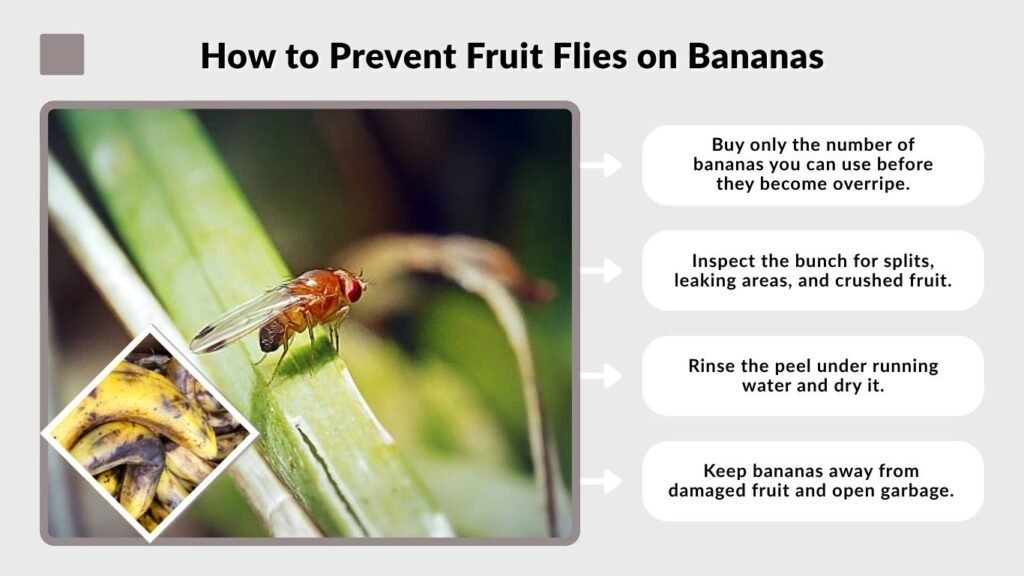
Bananas are highly attractive as they ripen because their aroma becomes stronger and the peel gradually develops soft or damaged areas.
Use these steps:
- Buy only the number of bananas you can use before they become overripe.
- Inspect the bunch for splits, leaking areas, and crushed fruit.
- Rinse the peel under running water and dry it.
- Keep bananas away from damaged fruit and open garbage.
- Refrigerate them once they reach your preferred ripeness.
- Freeze peeled bananas that will not be used soon.
- Discard leaking or fermenting bananas promptly.
Refrigeration may darken the peel, but the edible fruit inside can remain usable. Covering a banana bunch may prevent adults from landing directly on it, although refrigeration and timely use are more dependable than leaving ripe bananas in a countertop container.
How to Prevent Fruit Flies in Houseplants
Small flies around houseplants are usually fungus gnats rather than fruit flies. Fungus-gnat larvae develop in moist potting mix containing fungi and decaying plant material.
Allow the upper layer of soil to dry between waterings when the plant permits it. Remove fallen leaves, empty standing water from saucers, and avoid adding food waste to indoor pots. New plants should be checked before placing them beside established plants.
Do Fruit-Fly Traps Prevent Infestations?
Vinegar traps can capture adult fruit flies and help detect activity, but they do not stop larvae developing in fruit, garbage, drains, or recycling residue.
A simple trap may contain apple-cider vinegar inside a jar with a paper funnel. Commercial traps work on a similar principle. Use traps as a supplement while removing breeding sources; traps alone do not provide satisfactory control.
Daily Fruit-Fly Prevention Checklist
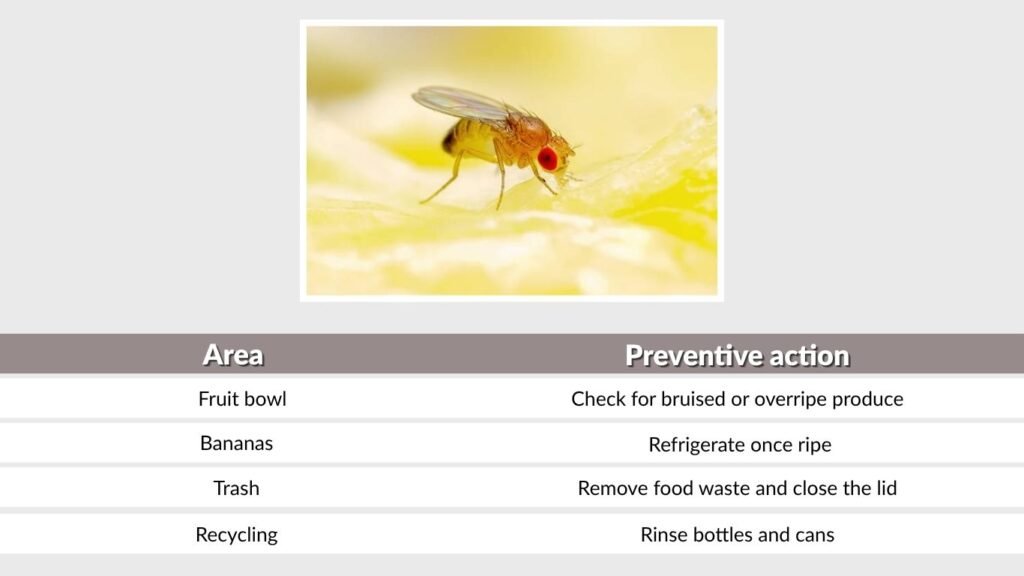
| Area | Preventive action |
| Fruit bowl | Check for bruised or overripe produce |
| Bananas | Refrigerate once ripe |
| Trash | Remove food waste and close the lid |
| Recycling | Rinse bottles and cans |
| Sink | Remove food and keep disposal parts clean |
| Counters | Wipe up sugary or alcoholic spills |
| Compost | Cover scraps and empty the container |
| Pet area | Remove wet food and clean bowls |
| Plants | Avoid consistently wet soil |
FAQs
What is the best way to prevent fruit flies?
Remove every potential breeding source. Refrigerate ripe produce, discard spoiled food, rinse recycling, empty garbage and compost frequently, clean sticky spills, and prevent food buildup around drains and garbage disposals.
Does washing bananas prevent fruit flies?
Washing can remove surface dirt and possible hitchhiking insects, but it cannot guarantee prevention. Fruit flies can enter from elsewhere and find bananas after they ripen. Dry the fruit after rinsing and refrigerate it once ripe.
How should bananas be stored to prevent fruit flies?
Keep firm bananas at room temperature while they ripen, away from garbage and damaged produce. Once ripe, move them to the refrigerator or peel and freeze them. Discard any banana that is leaking, split, or fermenting.
How can I prevent fruit flies in a compost bin?
Use a secure lid, empty indoor compost frequently, and wash the container. In outdoor compost or worm bins, bury fresh scraps beneath dry bedding or brown material so flies cannot easily reach them.
Why do fruit flies keep returning after cleaning?
A hidden source may remain beneath an appliance, inside recycling, around a garbage disposal, or in an overlooked vegetable. Existing pupae can also continue producing adults after cleaning. Inspect all moist organic material and maintain prevention for at least one to two weeks.