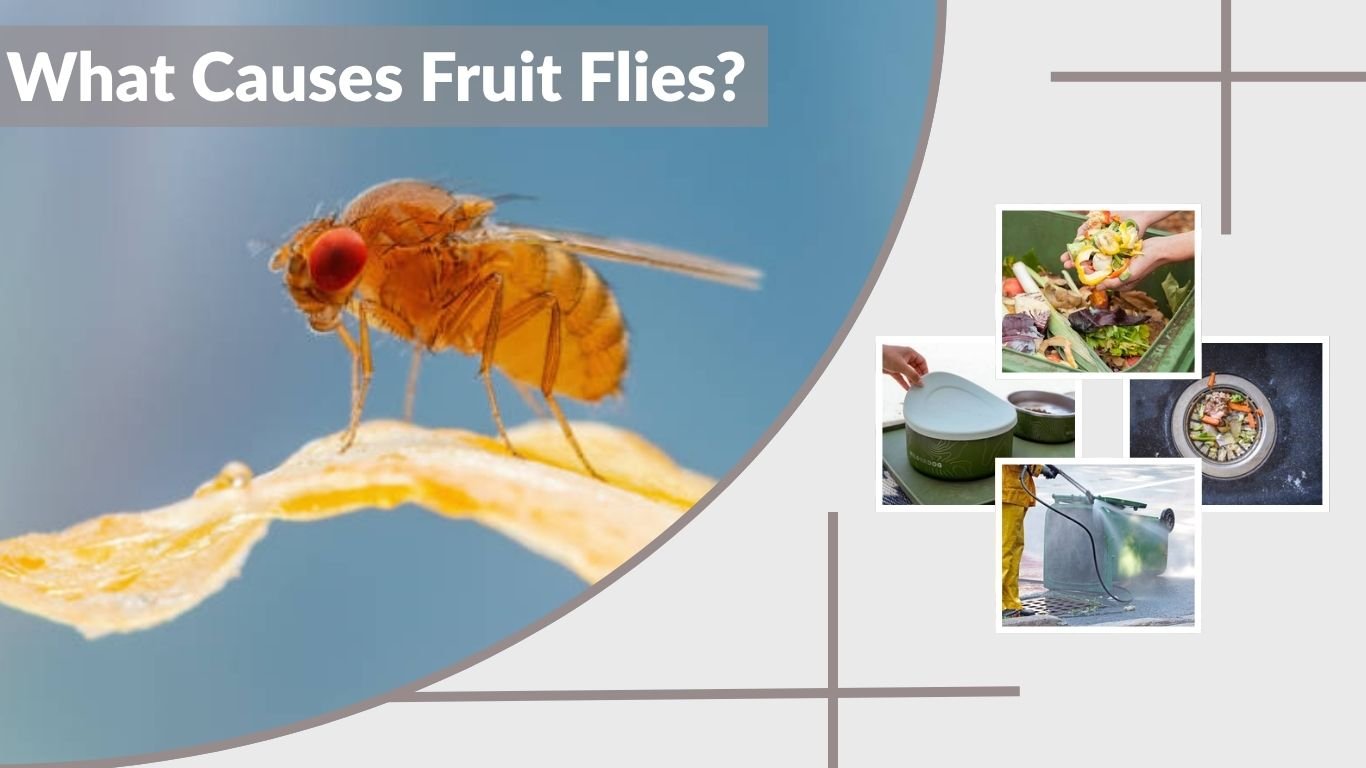
Fruit flies appear when adult flies gain access to moist, fermenting organic material where they can feed and lay eggs. Overripe produce is the most familiar cause, but an infestation may also begin in beverage residue, recycling containers, garbage disposals, compost bins, spilled liquids, or food hidden beneath appliances. Fruit flies multiply rapidly in warm conditions, so a small unnoticed source can produce many adults within days.
What Is the Main Cause of Fruit Flies?
The main cause is fermenting plant material containing yeast and other microorganisms. Fruit-fly larvae do not simply eat fresh fruit flesh; they feed largely on microorganisms growing as fruit, vegetables, or sugary liquids begin to ferment.
Common breeding materials include:
- Overripe bananas and other fruit
- Rotting potatoes, tomatoes, or onions
- Beer, wine, juice, and soft-drink residue
- Food buildup inside garbage disposals
- Moist garbage and compost
- Sticky spills under appliances
- Unwashed recycling containers
- Fermenting pet-food residue
Fruit flies may be carried indoors with harvested produce, or adults may enter through doors, windows, and screens after detecting fermenting odors. They do not appear spontaneously from fruit.
Why Do Fruit-Fly Infestations Grow So Quickly?
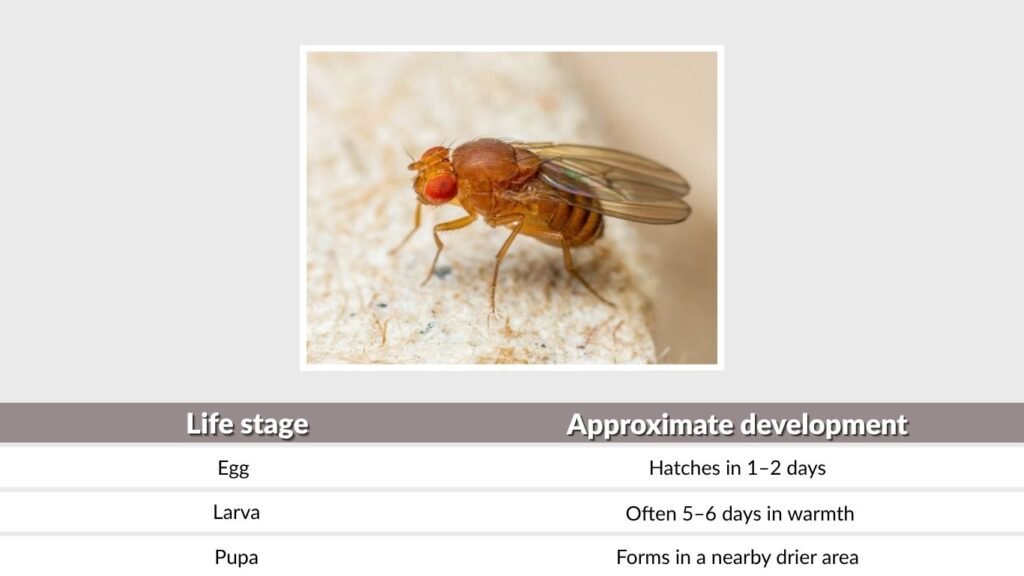
Females lay tiny eggs directly on suitable food or around its wet edges. The eggs may hatch within one or two days, and larvae begin feeding immediately.
Under warm conditions, larval development may take only five or six days, and the complete egg-to-adult cycle can be finished in approximately eight days. This rapid development allows several overlapping generations to occupy one hidden breeding source.
| Life stage | Approximate development |
| Egg | Hatches in 1–2 days |
| Larva | Often 5–6 days in warmth |
| Pupa | Forms in a nearby drier area |
| Egg to adult | As little as about 8 days |
| Infestation removal | Often up to 2 weeks after source removal |
Temperature matters. Development is faster in warm kitchens, restaurants, and garbage areas and usually slower in cool conditions.
What Causes Fruit Flies in the House?
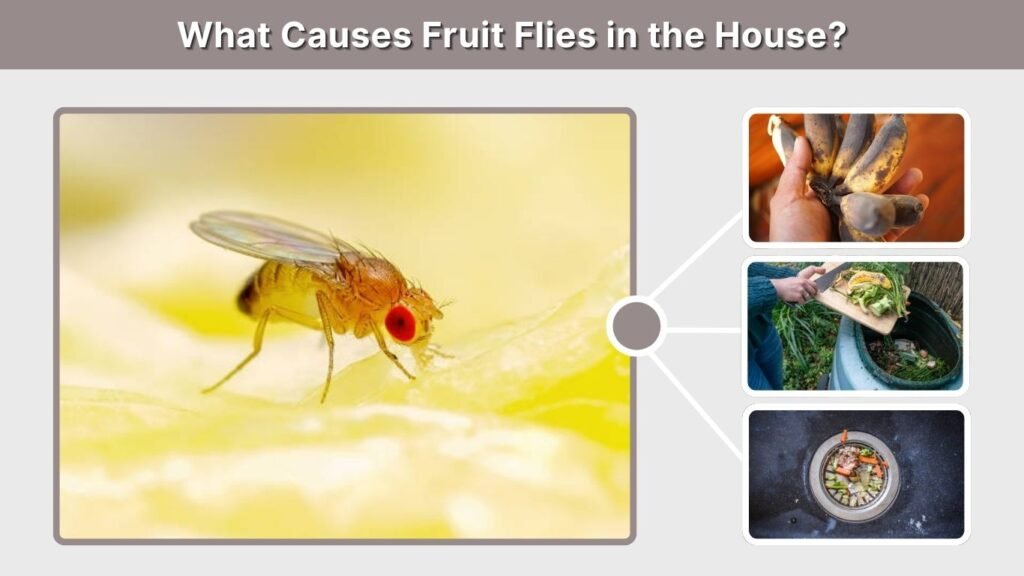
A home infestation nearly always has an accessible feeding and breeding source. The source may be much smaller than expected.
Overripe Fruit and Vegetables
Bananas are commonly blamed because they ripen quickly and release strong odors that attract adult flies. Peaches, grapes, melons, berries, tomatoes, potatoes, and onions can also support fruit flies when bruised, cut, forgotten, or beginning to rot.
Most familiar household vinegar flies prefer overripe or damaged produce. Spotted-wing drosophila is different because females can lay eggs inside ripening, relatively undamaged soft fruit.
Beverage and Recycling Residue
An apparently empty bottle or can may retain enough beer, wine, juice, soda, or kombucha to support feeding and reproduction. Fruit flies may gather around recycling containers even when no fresh produce is nearby.
Rinse beverage containers before storing them and keep the recycling bin clean, dry, and covered.
Garbage, Compost, and Hidden Spills
Moist garbage, compost, discarded produce, and food stuck to the bottom of a trash can provide ideal conditions. A small juice spill beneath a refrigerator or food fragment behind a cabinet can remain hidden while continually producing flies.
Compost containers should close tightly, and indoor food waste should be removed regularly.
Sink Drains and Garbage Disposals
True fruit flies may breed around a drain when food waste or fermenting residue is present. They do not reproduce successfully in a clean pipe containing only water.
Scrub the drain opening, stopper, disposal splash guard, and accessible pipe walls. Pouring hot water into the center of the drain may not remove material attached to its sides.
Why Are Fruit Flies Present When There Is No Fruit?
Fruit is only one possible source. Flies can continue feeding and breeding in residue that may not look like food.
Check these overlooked locations:
- Under the refrigerator, stove, or trash can
- Beneath a garbage-disposal splash guard
- Inside empty cans and bottles
- Around a coffee maker or juice machine
- In wet pet-food bowls
- Inside mop buckets and damp cloths
- In a forgotten lunch bag
- Around compost and recycling bins
- Inside a cabinet containing old potatoes or onions
Adults already present can also remain visible for a week or more after the breeding source is removed. New adults may emerge from pupae formed before cleaning began.
What Causes Fruit Flies in the Kitchen?
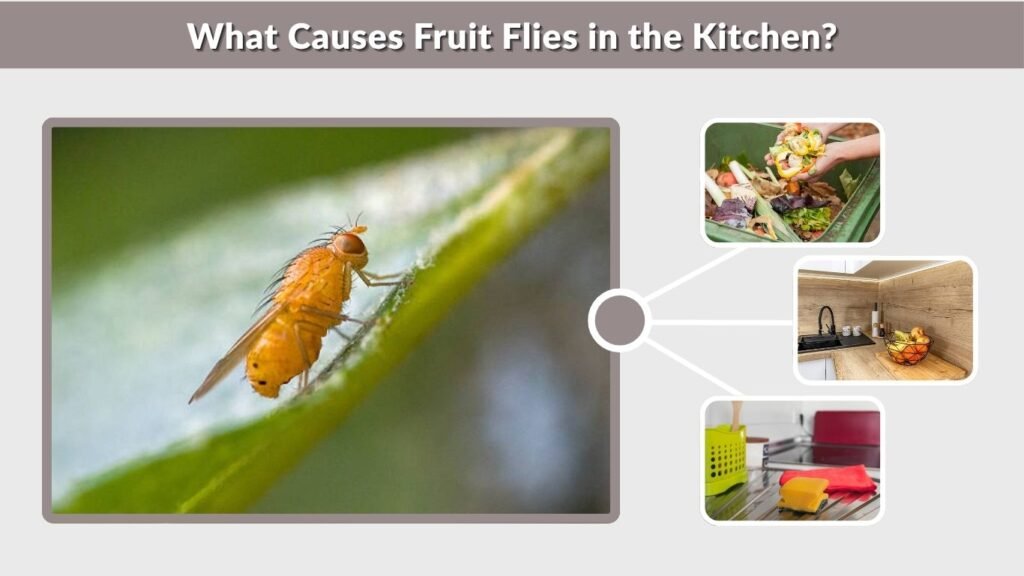
Kitchens provide warmth, moisture, produce, drinks, drains, garbage, and numerous places for residue to collect. The most common kitchen source is overripe produce left at room temperature.
Other likely locations include:
- Drain strainers and garbage disposals
- Trash and compost containers
- Recycling bins
- Dishcloths and sponges
- Fruit bowls and produce drawers
- Beverage machines
- Food trapped beneath appliances
Storing susceptible produce in the refrigerator for at least a week can interrupt access while remaining adults die. Discarded fruit and vegetables should be sealed and moved outdoors promptly.
What Causes Fruit Flies in the Bathroom?
Tiny bathroom flies are often misidentified. True fruit flies may be attracted to residue in trash, drink containers, or plant-based products, but insects emerging from drains are frequently drain flies or phorid flies.
Fruit Flies vs. Similar Flies
| Insect | Appearance | Typical source |
| Fruit fly | Tan body, often red eyes | Fermenting food or drinks |
| Drain fly | Fuzzy with moth-like wings | Organic film inside plumbing |
| Phorid fly | Small with a humped back | Drains, waste, or plumbing leaks |
| Fungus gnat | Slender and mosquito-like | Damp houseplant soil |
Drain-fly larvae feed in bacterial film coating continuously wet plumbing. Phorid flies may develop around trapped waste or leaking pipes. Persistent flies accompanied by sewage odors or damp flooring may require a plumbing inspection.
Can Houseplants or Flowers Cause Fruit Flies?
Houseplants usually produce fungus gnats, not fruit flies. Fungus gnats are dark, slender insects whose larvae develop in consistently moist potting mix and feed on fungi, algae, decaying plant matter, and sometimes roots. Allowing the upper soil to dry between waterings makes the pot less suitable for them.
Cut flowers could attract true fruit flies when decaying leaves, sugary flower food, or stagnant organic residue begins fermenting in the vase. Replace the water, wash the container, and remove deteriorating plant material.
Do Fruit Flies Cause Disease or Illness?
Household fruit flies are generally considered nuisance pests rather than a major direct health threat. They do not bite, sting, or normally cause human myiasis.
However, flies can mechanically carry contaminated material on their bodies or through regurgitation and waste. Research has included Drosophila among flies that could potentially transfer foodborne microorganisms under contaminated conditions. This does not mean every brief landing causes food poisoning, but exposed, moist food should be protected when an infestation is present.
Discard food containing visible larvae, extensive decay, or heavy fly activity. Wash intact produce thoroughly under running water.
How to Stop the Causes of Fruit Flies
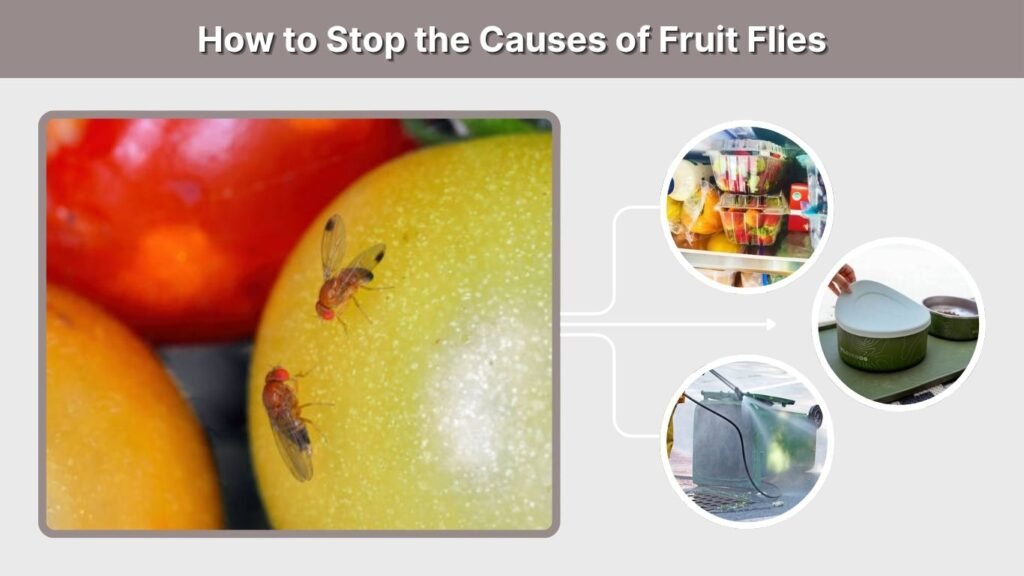
Focus on removing breeding sites rather than only killing adults.
- Refrigerate ripe produce.
- Discard spoiled fruit and vegetables.
- Rinse bottles and cans before recycling.
- Wash trash and compost containers.
- Clean beneath appliances and cabinets.
- Scrub disposal parts and dirty drains.
- Dry sponges, cloths, and mop heads.
- Cover pet food and clean bowls promptly.
- Repair window screens and plumbing leaks.
- Use vinegar traps only for remaining adults.
Traps containing cider vinegar, wine, beer, or mashed fruit can capture adults, but traps alone cannot eliminate eggs and larvae developing elsewhere.
FAQs
What causes fruit flies to suddenly appear?
A hidden breeding source has usually reached the right stage of fermentation, or adults have emerged from previously unnoticed pupae. Warm temperatures can shorten the life cycle, allowing a few flies to become a noticeable infestation within approximately one week.
Do bananas create fruit flies?
Bananas do not create flies from nothing. Their smell attracts nearby adults, and overripe or damaged bananas provide yeast-rich material for egg laying and larval development. Flies or immature stages may also be carried indoors with produce.
Can mold cause fruit flies?
Ordinary household mold is not usually the primary cause. Fruit flies are especially associated with yeast and fermenting organic material. A moldy, decaying food item may attract them because it also contains moisture, microorganisms, and decomposing plant tissue.
Why do I have fruit flies during winter?
Fruit flies can reproduce indoors throughout winter when homes remain warm and food is accessible. Produce, recycling, garbage, beverage residue, and compost can maintain an infestation even when outdoor temperatures are too cold for much activity.
How long will fruit flies remain after cleaning?
Numbers should decline within several days after every breeding source is removed. Existing adults and pupae may keep producing visible flies for up to approximately two weeks. Continued activity usually means another source remains hidden.