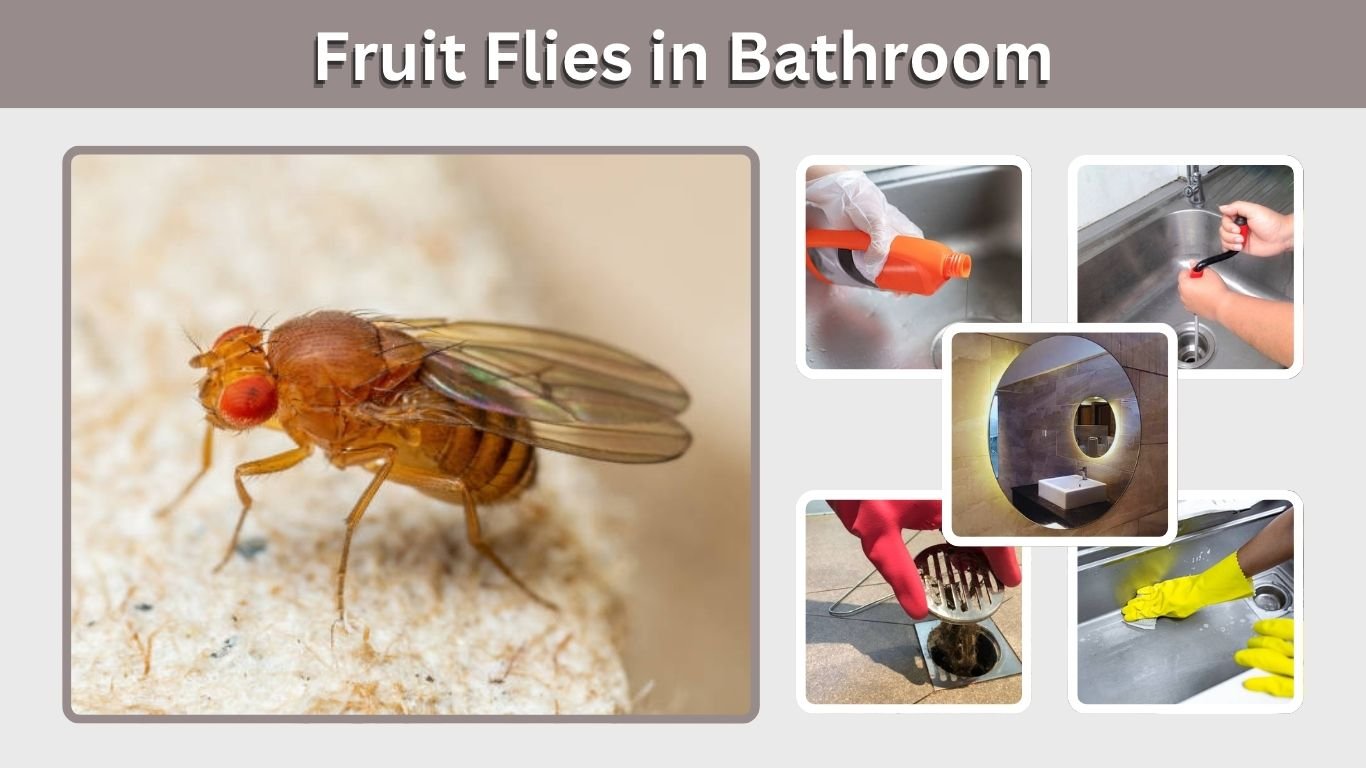
Finding tiny flies around your bathroom sink, mirror, shower, or ceiling usually means moisture and decaying organic material are present nearby. However, many “bathroom fruit flies” are actually drain flies, phorid flies, or fungus gnats. True fruit flies normally breed in fermenting food or drink residue, while drain flies develop in the slimy film coating wet plumbing. Correct identification and source removal are essential because traps alone will not stop new adults from emerging.
Why Are There Fruit Flies in My Bathroom?
Bathrooms provide humidity, standing moisture, drains, trash, and concealed plumbing spaces. These conditions can support several small fly species, even when no fruit or obvious food is present.
Possible sources include:
- Organic slime inside sink, shower, or bathtub drains
- Residue inside a sink overflow channel
- Leaking pipes beneath the sink
- Wet garbage or discarded personal-care products
- Damp mops, towels, sponges, and cleaning cloths
- Fermenting residue inside bottles or containers
- Overwatered houseplants
- A damaged sewer or drainpipe
True fruit flies feed and reproduce around yeasts growing in fermenting material. They are typically associated with overripe produce, beverage residue, vinegar, beer, wine, garbage, or other moist organic matter. Drain flies and phorid flies are more directly associated with plumbing and wet decay.
Can Fruit Flies Come From a Bathroom Drain?
True fruit flies can breed near a bathroom drain when it contains suitable organic residue, but they do not reproduce in clean water or on clean pipe surfaces.
Flies appearing directly from the drain are often moth flies, also called drain flies. Their larvae feed on bacteria and organic film inside continuously wet plumbing. Large numbers may also indicate leaking or broken drainpipes.
Are They Fruit Flies, Drain Flies, or Gnats?
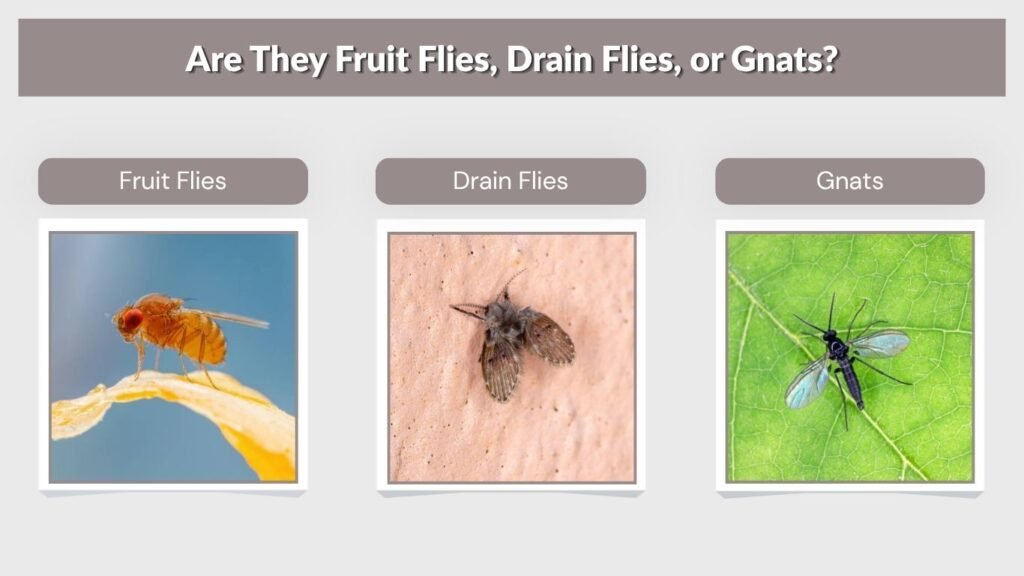
Correct identification determines which treatment will work.
| Insect | Appearance | Common bathroom source |
| Fruit fly | Tan or light brown, often with red eyes | Fermenting residue, trash, bottles |
| Drain fly | Gray or black, fuzzy, moth-like wings | Slime inside drains and wet pipes |
| Phorid fly | Tan or dark with a humped back | Drains, sewage leaks, decaying waste |
| Fungus gnat | Thin, dark, mosquito-like | Damp houseplant soil |
Fruit Flies
Fruit flies are approximately 2–2.5 millimeters long. They usually have tan bodies and prominent red or dark eyes. Their flight is relatively quick, and they commonly hover around garbage, drinks, or fermenting material.
Drain Flies
Drain flies are dark, hairy, and approximately 1/12 inch long. Their fuzzy wings are held flat or roof-like over the body, giving them the appearance of miniature moths. They fly weakly and often rest on bathroom walls, mirrors, sinks, or shower surfaces.
Phorid Flies
Phorid flies resemble small fruit flies but have a visibly rounded or humped thorax. They often run rapidly across surfaces before flying. Indoor populations may develop in food waste inside drains, moist garbage, sewage, or other decaying organic material.
Fungus Gnats
Dark, slender flies around a bathroom houseplant are more likely to be fungus gnats. Their larvae develop in moist potting soil rich in fungi and decomposing plant material. Overwatering encourages their development.
How to Find Where Bathroom Flies Are Coming From
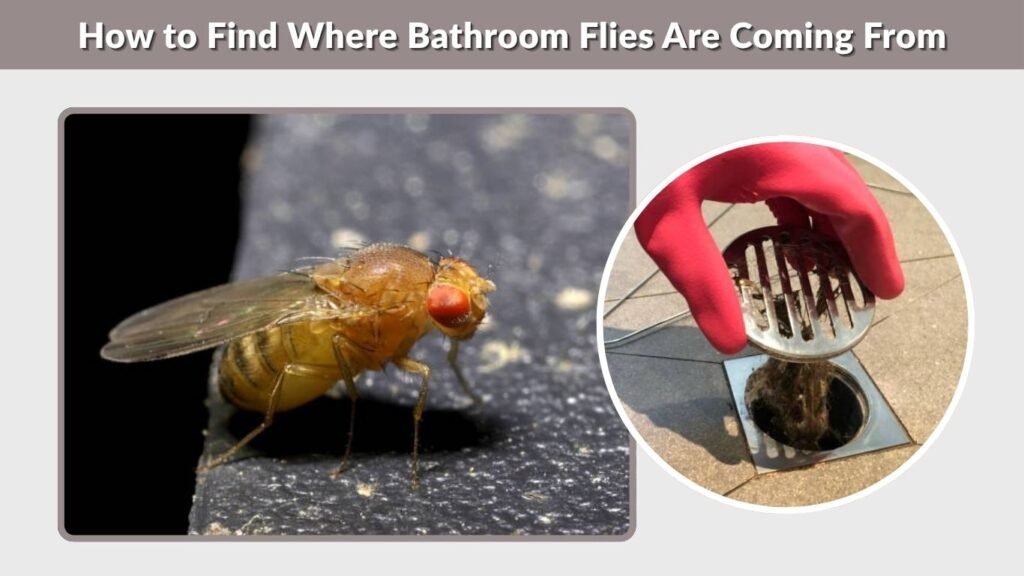
Inspect every source rather than assuming the sink drain is responsible.
Perform a Drain Tape Test
Dry the opening and place a piece of clear tape over part of the drain with the sticky surface facing downward. Do not seal the opening completely.
Leave it overnight and inspect it the following morning. Flies caught beneath the tape suggest that adults are emerging from that drain. Repeat the test on:
- Bathroom sink drain
- Sink overflow opening
- Shower or bathtub drain
- Floor drain
- An infrequently used toilet or drain
If no flies appear, inspect trash, houseplants, wet cleaning materials, leaks, and nearby rooms.
Inspect for Plumbing Problems
Look inside the cabinet beneath the sink for dripping water, damp wood, staining, mold, or sewer odors. Drain and phorid flies may breed where moisture collects behind walls or under floors. These hidden areas must be repaired and dried before the infestation will stop.
How to Get Rid of Fruit Flies in the Bathroom
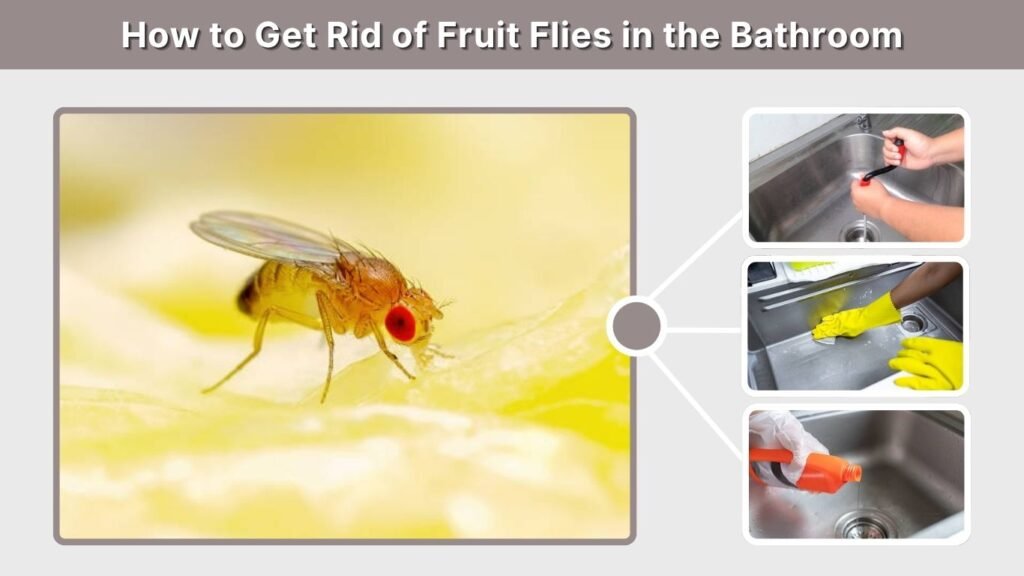
The most effective approach is to eliminate breeding material and then capture the adults that remain.
1. Remove Organic Material
Empty the bathroom trash and wash the container with detergent. Remove damp tissues, cotton products, discarded containers, and other wet waste.
Rinse bottles before disposal and clean any spilled mouthwash, sweetened products, beverages, or plant-based personal-care residue.
2. Clean the Sink and Overflow Channel
Remove the drain stopper and scrub it thoroughly. Hair, soap, toothpaste, skin oils, and organic residue can collect beneath it.
The sink overflow channel can also remain wet and dirty even when the basin looks clean. Clean accessible areas with a narrow brush and a product suitable for your plumbing.
3. Scrub the Drain Mechanically
Use a long, stiff drain brush to scrub the inside walls of the pipe. This step is essential because larvae live within the bacterial and organic film attached to plumbing.
Simply pouring liquid into the drain may pass through the center without removing the material coating its sides. Colorado State University Extension recommends physically scraping or brushing drains to eliminate the food supporting moth and phorid fly larvae.
4. Apply an Enzyme-Based Drain Cleaner
After brushing, apply an enzyme or microbial drain cleaner labeled for breaking down organic buildup. A foaming formula may provide longer contact with the pipe walls.
Follow the label for dosage, treatment frequency, ventilation, and plumbing compatibility. Do not combine it with bleach or another drain product.
5. Dry the Bathroom
Repair dripping faucets and pipes, improve ventilation, and run the exhaust fan during and after bathing. Hang towels and bathmats where they can dry fully.
Reduce watering if fungus gnats are coming from a bathroom plant. Allowing the upper soil to dry between waterings can make the pot less suitable for larvae.
6. Trap Remaining Adult Fruit Flies
For confirmed fruit flies, place apple-cider vinegar or wine in a small jar and add a paper funnel. Commercial fruit-fly traps can also reduce the adult population.
These traps attract fruit flies but generally work poorly against drain flies. They are supplemental tools and cannot remove larvae hidden in drains or wet organic material.
Will Bleach Kill Bathroom Fruit Flies?
Bleach may kill organisms it contacts, but it is not a dependable stand-alone treatment for flies breeding inside a drain. It may pass over the organic coating without completely removing it, allowing eggs or larvae in protected areas to survive.
Never mix bleach with vinegar, toilet cleaner, ammonia, drain opener, or any other cleaning product. Dangerous gases can be released. Keep the bathroom ventilated and follow every product label.
Does Boiling Water Kill Drain Flies?
Hot water may kill a few exposed larvae and flush away loose debris, but it usually does not remove the biofilm attached to pipe walls. Pour-down caustic cleaners and hot water are considered ineffective when the underlying breeding material remains.
Very hot water may also be unsuitable for certain plumbing systems. Brushing followed by a compatible enzyme cleaner is a more reliable approach.
Why Are Flies on the Bathroom Mirror or Ceiling?
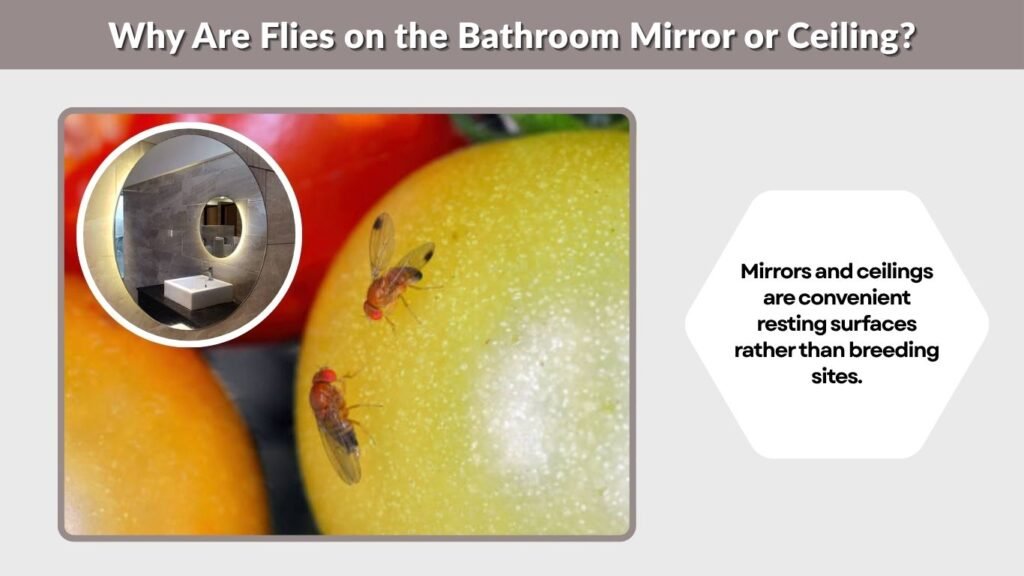
Mirrors and ceilings are convenient resting surfaces rather than breeding sites. Adult flies may gather there because of light, warmth, humidity, or their proximity to the drain where they emerged.
Cleaning the mirror may temporarily remove adults, but the population will return until the drain, leak, trash, soil, or other breeding source is treated.
How Long Does It Take to Eliminate Bathroom Fruit Flies?
Adult numbers should begin declining within several days after every breeding source is removed. However, existing larvae and pupae may continue producing adults.
Many household flies can complete their development from egg to adult within one or two weeks. Adults already present may also remain visible for a week or longer after sanitation begins. Continued activity after about two weeks suggests that a breeding source was missed.
FAQs
Why do I have fruit flies in a bathroom with no food?
The insects may be drain flies or phorid flies rather than fruit flies. They can develop in drain slime, sewage residue, or plumbing leaks. True fruit flies may also use small amounts of fermenting residue in trash, bottles, cleaning materials, or nearby rooms.
How do I get rid of fruit flies in a bathroom sink?
Remove the stopper, scrub all removable parts, brush the inside of the drain, clean the overflow channel, and apply an enzyme-based cleaner according to its label. Repair leaks and use traps only to capture remaining adults.
Are bathroom fruit flies harmful?
Most small bathroom flies are mainly nuisance pests and do not bite. Because some breed in drains or decaying material, they may mechanically carry bacteria to nearby surfaces. Avoid crushing them on toothbrushes, towels, or personal items.
Why are there black fruit flies in my bathroom?
Small black flies are more likely to be drain flies, phorid flies, or fungus gnats. Drain flies look fuzzy, phorid flies have humped backs, and fungus gnats have thin mosquito-like bodies associated with damp soil.
When should I call a plumber?
Contact a plumber when flies persist after thorough drain cleaning, several drains are affected, sewage odors are present, or you notice leaking pipes, wet flooring, or moisture inside walls. Persistent phorid or drain flies can indicate concealed plumbing damage.