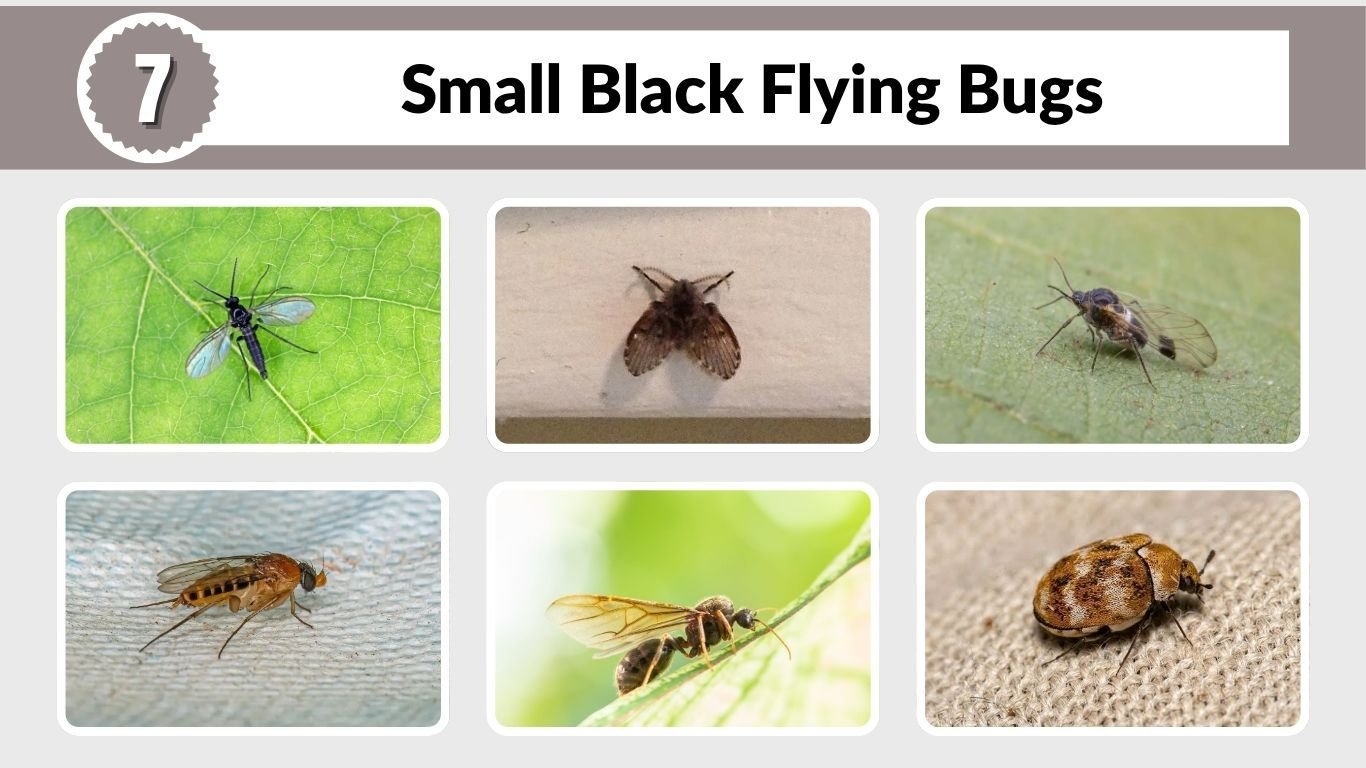
Small black flying bugs in the house are often mistaken for fruit flies, but several other insects can look similar. Fungus gnats, drain flies, phorid flies, flying ants, cigarette beetles, carpet beetles, and even outdoor black flies may enter kitchens, bathrooms, plant areas, or storage spaces. Each pest has different habits, breeding sites, and control methods, so correct identification is important. This guide explains seven common small black flying bugs found indoors, how to recognize them, where they come from, and the best ways to remove them before they multiply, cause damage, or become persistent pests inside your living space.
1. Fungus Gnat
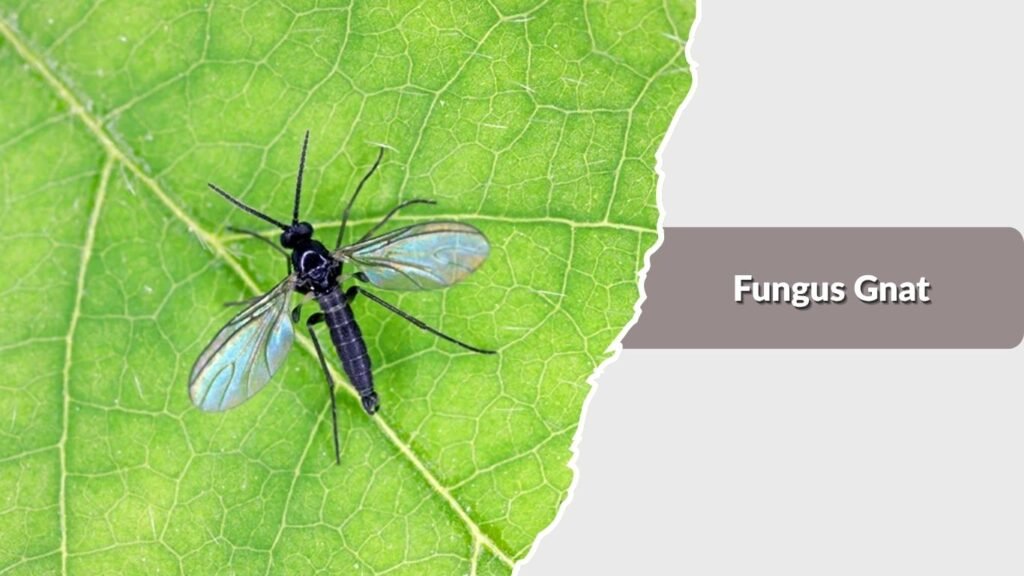
Fungus gnats are tiny black flying insects commonly found around indoor plants, windows, and damp areas. Adults are mostly harmless, but their larvae live in moist soil and feed on fungi, decaying plant material, and sometimes tender plant roots. Frequent sightings usually indicate that houseplant soil is staying wet for too long.
Identification
- Approximately 1/16 to 1/8 inch long
- Dark gray or black slender body
- Long, thin legs and antennae
- Clear or slightly smoky wings
- Mosquito-like appearance
- Weak, slow, and irregular flight
- Commonly seen crawling over plant soil
- Often gathers near windows and lights
Where Fungus Gnats Live
Fungus gnats usually breed in damp potting soil containing fungi and decomposing organic matter. They may also develop in seed-starting mixtures, greenhouse trays, compost, moss, and poorly drained plant containers. Adult gnats often remain close to houseplants, although they may fly toward windows, lamps, or computer screens.
Why They Appear in the House
Overwatering is the most common cause of indoor fungus gnat problems. Constantly moist soil creates ideal conditions for females to lay eggs and for larvae to survive. Infested potting soil, decaying roots, fallen leaves, and water collecting beneath plant pots can also support their development.
Unlike fruit flies, fungus gnats are generally not attracted to ripe fruit or sugary spills. Their presence around plants is the strongest clue separating them from fruit flies.
How to Get Rid of Fungus Gnats
Allow the upper one or two inches of potting soil to dry before watering again. Remove dead leaves, improve drainage, and empty water from plant saucers. Yellow sticky traps can capture flying adults, while replacing the top layer of heavily infested soil may reduce eggs and larvae. Persistent infestations can be treated with a biological larvicide containing Bacillus thuringiensis israelensis.
2. Drain Fly
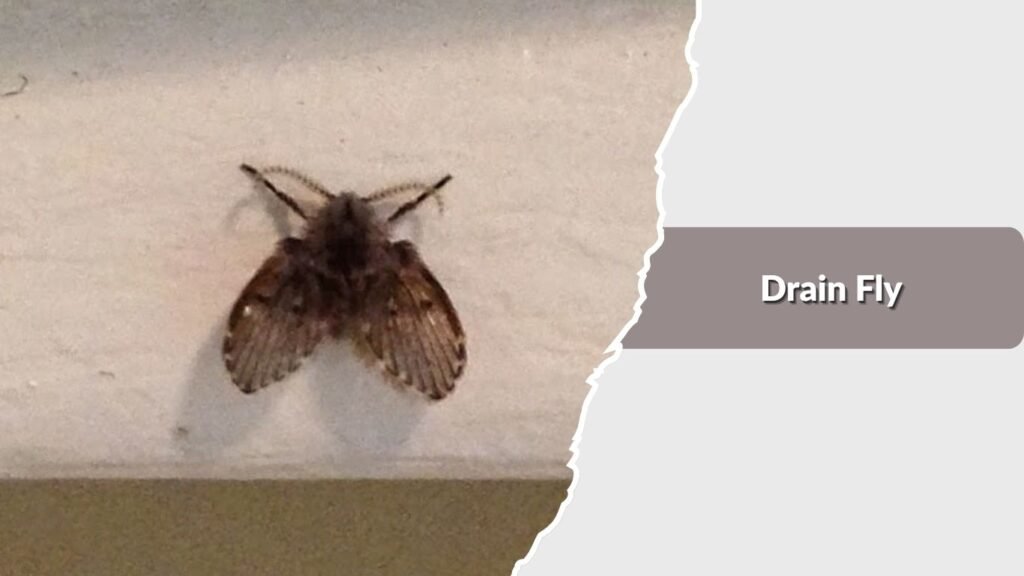
Drain flies are tiny, dark insects commonly found around sinks, showers, floor drains, and other damp plumbing areas. Their fuzzy bodies and broad wings give them a moth-like appearance. Adults are harmless, but repeated sightings usually indicate that larvae are developing inside the organic slime coating a drain or pipe.
Identification
- Approximately 1/16 to 1/5 inch long
- Gray, brown, or nearly black body
- Broad, fuzzy wings
- Wings held roof-like over the body
- Short, hairy appearance
- Slow, weak flight
- Often rests on bathroom or kitchen walls
- Common near drains and standing water
Where Drain Flies Live
Drain flies breed in wet, gelatinous organic matter. Common locations include sink drains, shower drains, floor drains, sewage lines, sump pits, and rarely used toilets. Their larvae feed on bacteria, fungi, and decaying material inside the slime layer.
Adults usually remain close to the breeding site. They may rest on nearby walls during the day and become more active during the evening.
Why They Appear in the House
Drain flies appear when moisture and organic buildup remain inside plumbing. A slow or dirty drain provides the ideal combination of water, food, and protection.
They may also develop beneath leaking appliances, inside clogged gutters, or around standing wastewater. Unlike fruit flies, drain flies have visibly hairy wings and are usually concentrated around plumbing rather than produce.
How to Get Rid of Drain Flies
Scrub the inside of the affected drain with a stiff drain brush to remove the organic film. Clean the drain opening, overflow hole, stopper, and garbage disposal if present.
Flush the drain after scrubbing and repair leaks that keep nearby areas wet. Chemical products alone may kill some insects but often fail to remove the breeding material. Continue cleaning for several days until no adults emerge.
3. Phorid Fly
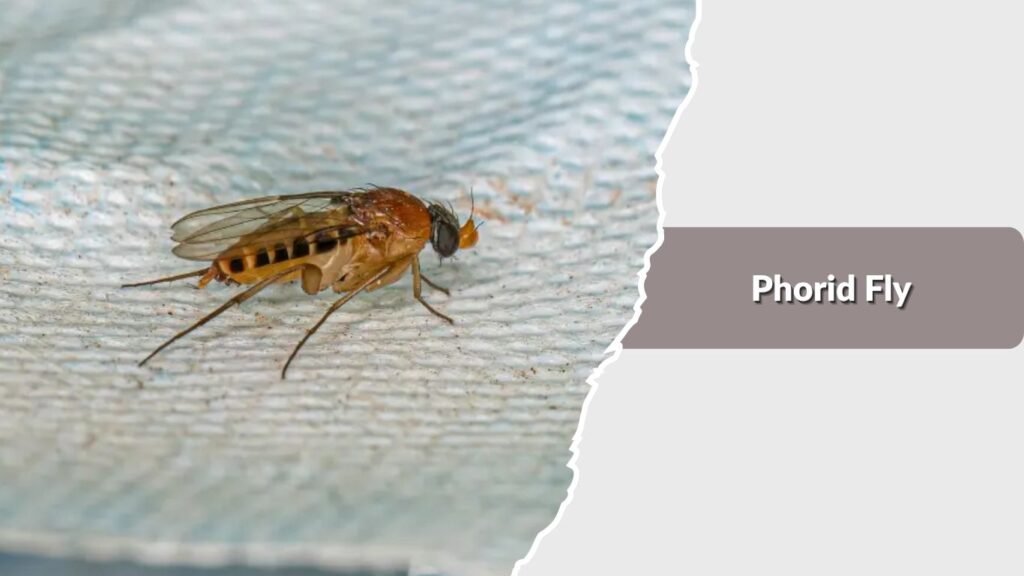
Phorid flies are small, dark flies that often run rapidly across surfaces instead of immediately flying away. They are also called scuttle flies because of this distinctive movement. Indoors, they may indicate decaying organic matter, dirty drains, plumbing leaks, or waste hidden beneath floors and appliances.
Identification
- Approximately 1/16 to 1/8 inch long
- Brown, dark gray, or black body
- Humpbacked appearance
- Small head and enlarged thorax
- Clear or slightly tinted wings
- Rapid running or scuttling movement
- Short, irregular flights
- Common near drains, trash, or decaying material
Where Phorid Flies Live
Phorid flies breed in moist, decomposing organic matter. They may develop in drains, garbage disposals, trash containers, compost, spoiled food, animal waste, and dead insects or rodents.
Serious infestations sometimes originate beneath damaged flooring or inside plumbing systems where leaking wastewater has accumulated. Adults may appear in kitchens, bathrooms, basements, and utility areas.
Why They Appear in the House
These flies appear when a hidden source of decay provides food for their larvae. A small amount of organic residue can support a few flies, while a broken sewer pipe or concealed animal carcass may produce a persistent infestation.
Their habit of running quickly across counters helps distinguish them from fruit flies, which are more likely to hover around fermenting food.
How to Get Rid of Phorid Flies
Locate and remove the breeding source. Clean drains, garbage disposals, trash cans, and areas beneath kitchen appliances. Inspect for leaking pipes, water-damaged flooring, or unpleasant odors that may indicate hidden waste.
Sticky traps can reduce adult numbers, but they will not stop continued breeding. Persistent infestations may require a plumber or pest-control professional to inspect inaccessible plumbing or structural spaces.
4. Black Fly
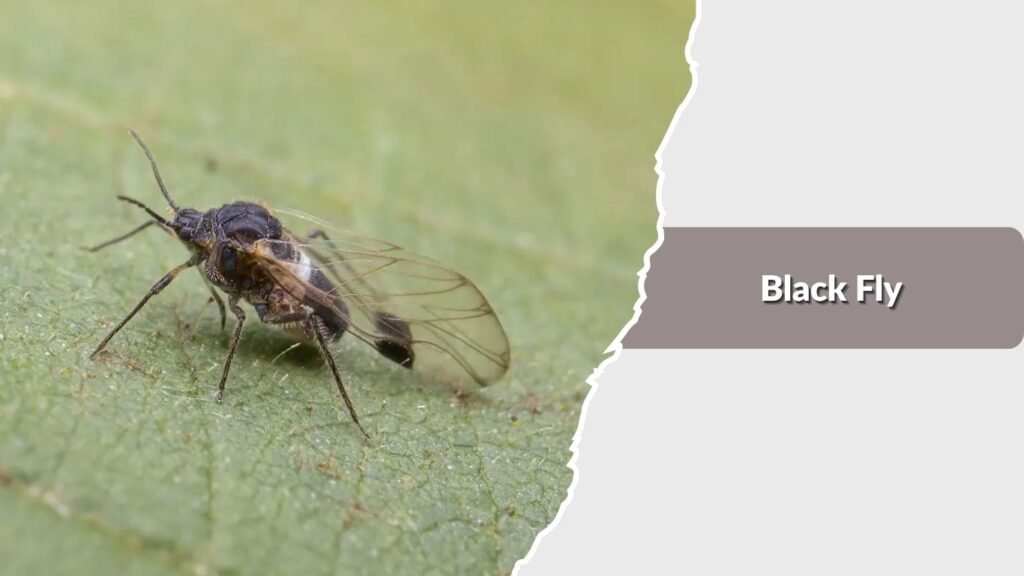
Black flies are small, dark, humpbacked insects best known as outdoor biting pests. They usually develop near flowing water rather than inside homes. An occasional adult may enter through an open door or window, especially when a house is close to streams, rivers, or other suitable outdoor habitats.
Identification
- Approximately 1/16 to 1/4 inch long
- Dark gray or black body
- Broad, humpbacked thorax
- Short legs and antennae
- Clear, relatively wide wings
- Compact, sturdy appearance
- Strong outdoor flight
- Females of many species can bite
Where Black Flies Live
Black fly larvae develop in clean, moving water. They attach themselves to rocks, vegetation, and other submerged surfaces in streams and rivers.
Adults spend most of their lives outdoors. They may gather around people, animals, shaded vegetation, or water. Unlike fruit flies, they do not reproduce in kitchen drains, trash cans, or overripe produce.
Why They Appear in the House
A black fly may enter accidentally through an open window, damaged screen, or door. Homes close to flowing water may experience more frequent activity during the insects’ seasonal emergence.
Finding one or two indoors does not usually indicate an indoor infestation. Repeated sightings may mean that screens or weather seals need repair.
How to Get Rid of Black Flies
Close doors and windows when outdoor black fly activity is high. Repair damaged screens and seal gaps around window frames.
Use a vacuum to remove individual flies indoors. Outdoor reduction is difficult because the larvae develop in natural waterways. Protective clothing and suitable insect repellent can help prevent bites when spending time outside near affected areas.
5. Flying Ant
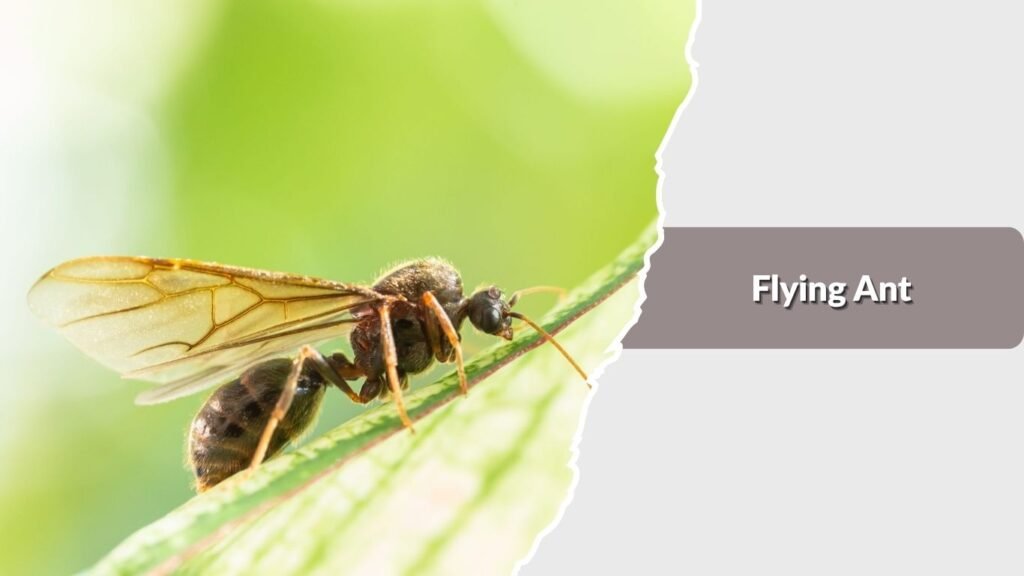
Flying ants are reproductive male and female ants that leave established colonies to mate and form new nests. They may appear suddenly in large numbers near windows, lights, walls, or ceilings. Their narrow waists and bent antennae distinguish them from termites and most small flies.
Identification
- Usually 1/8 to 3/8 inch long
- Black, dark brown, reddish, or yellowish body
- Clearly pinched waist
- Elbowed antennae
- Two pairs of wings
- Front wings longer than rear wings
- Six legs
- Often appears in groups or swarms
Where Flying Ants Live
Flying ants come from mature colonies located outdoors, beneath floors, inside walls, under foundations, or within damaged wood. After mating, males die, while fertilized queens shed their wings and search for nesting sites.
The exact nesting location depends on the ant species. Some prefer soil, while carpenter ants may nest inside damp or weakened wood.
Why They Appear in the House
A few flying ants may enter from outdoors during a seasonal mating flight. However, a large swarm emerging from a wall, baseboard, window frame, or ceiling may indicate an established colony inside the structure.
Flying ants are not attracted to fermenting fruit in the same way as fruit flies. They may gather near lights simply because winged ants are attracted to bright areas.
How to Get Rid of Flying Ants
Vacuum visible swarmers and empty the vacuum outside. Seal cracks around windows, doors, siding, and utility openings.
If ants continue emerging indoors, identify the species and locate the colony. Ant baits are often more effective than spraying individual insects because workers carry the bait back to the nest. Moisture-damaged wood should also be repaired.
6. Cigarette Beetle
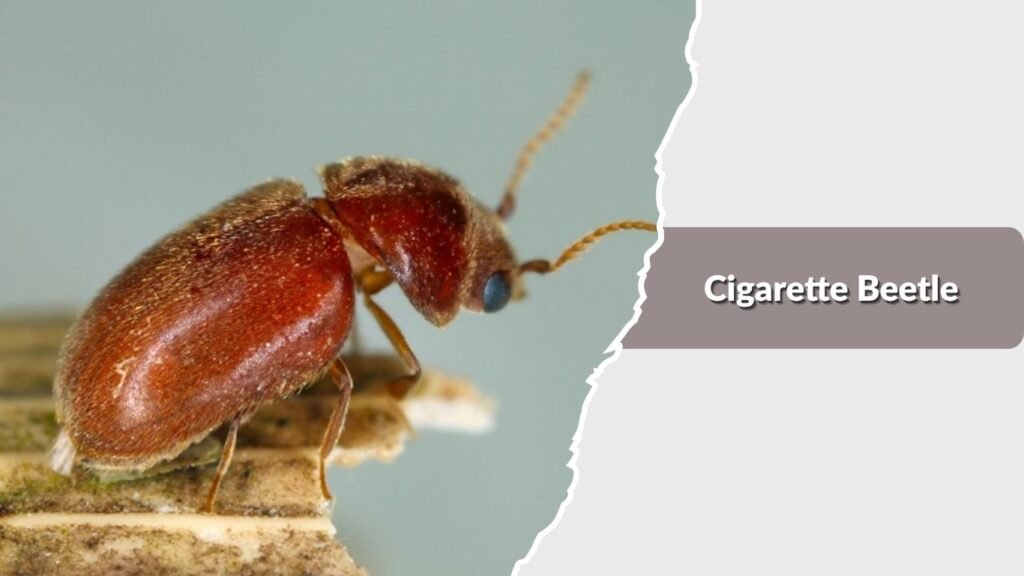
Cigarette beetles are tiny, reddish-brown pantry pests that can fly through kitchens and storage areas. Despite their name, they infest many dried foods and plant-based materials, not only tobacco. Adults are often noticed near windows or lights after emerging from contaminated products.
Identification
- Approximately 1/16 to 1/8 inch long
- Reddish-brown or light brown body
- Rounded, oval shape
- Humpbacked appearance
- Head hidden beneath the upper body
- Smooth wing covers
- Fine body hairs
- Capable of strong flight
Where Cigarette Beetles Live
These beetles infest dried goods such as spices, flour, cereal, rice, dried herbs, pet food, seeds, nuts, and tobacco products. Larvae feed within the stored material before forming pupae and emerging as adults.
They may also infest dried flowers, decorative plant material, and some animal-based products. Adults often leave the food source and fly toward windows.
Why They Appear in the House
Cigarette beetles usually enter homes inside an already infested package. A forgotten spice container, bag of pet food, or dried decorative arrangement can support multiple generations.
Their hard, rounded bodies distinguish them from soft-bodied fruit flies. They also crawl more frequently and are not specifically associated with moist or fermenting material.
How to Get Rid of Cigarette Beetles
Inspect all dried foods and discard products containing beetles, larvae, webbing, powder, or small exit holes. Place infested material in a sealed bag before removing it from the house.
Vacuum pantry shelves, corners, cracks, and shelf-pin holes. Store replacement foods in tightly sealed glass or durable plastic containers. Continue monitoring because adults may emerge from hidden products after the first cleaning.
7. Carpet Beetle
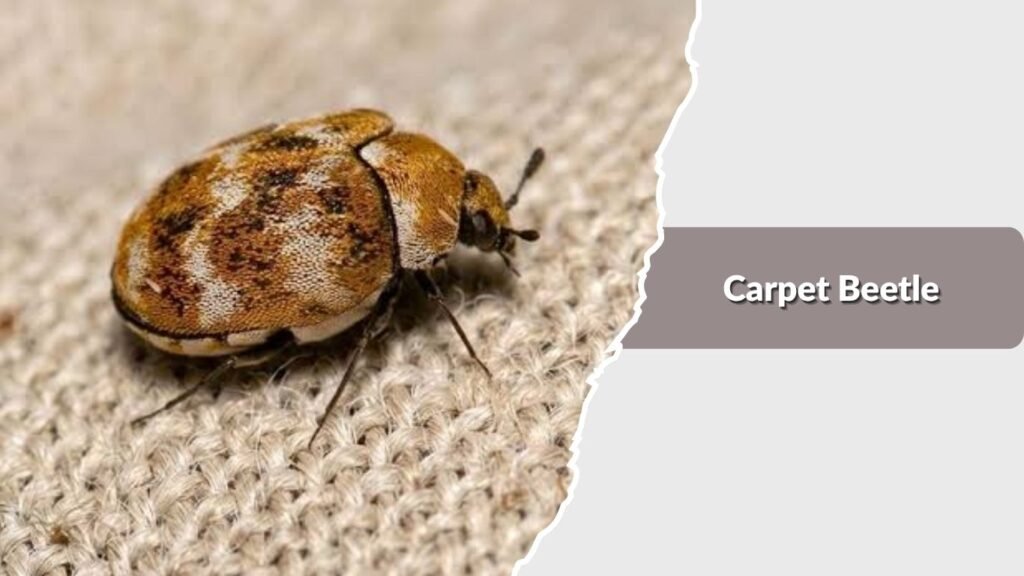
Adult carpet beetles are small, rounded insects that may fly around windows, curtains, and light fixtures. Some species are black, while others have mottled patterns. The adults do not damage fabrics, but their hairy larvae can feed on wool, fur, feathers, dead insects, and other natural materials.
Identification
- Approximately 1/16 to 1/8 inch long
- Round or oval body
- Black, dark brown, or mottled coloration
- Hard wing covers
- Short antennae
- Six short legs
- Often found near windows
- Adults can fly
Where Carpet Beetles Live
Adult carpet beetles may feed on pollen and nectar outdoors before entering houses. Indoors, females lay eggs near materials that will support their larvae.
Larvae may hide beneath furniture, along carpet edges, inside closets, in air vents, or around stored clothing. They are especially attracted to undisturbed areas containing natural fibers, pet hair, feathers, or dead insects.
Why They Appear in the House
Adults may enter through doors, windows, or vents. They can also arrive on flowers or develop from larvae already feeding inside the house.
Adult beetles often gather near windows as they attempt to return outdoors. Unlike fruit flies, they have hard, rounded bodies and are not attracted primarily to ripe produce or fermented liquids.
How to Get Rid of Carpet Beetles
Vacuum carpets, baseboards, furniture edges, closets, and air vents thoroughly. Wash or dry-clean susceptible clothing and inspect stored wool, fur, feathers, and natural-fiber items.
Remove lint, pet hair, and dead insects that could feed larvae. Store clean fabrics in sealed containers. Persistent activity may require treating cracks and hidden areas where larvae continue to develop.
FAQs
What are the most common small black flying bugs in a house?
The most common small black flying bugs found indoors include fungus gnats, drain flies, phorid flies, flying ants, carpet beetles, and cigarette beetles. Their location usually helps with identification. Fungus gnats gather around plants, while drain flies remain near sinks and showers.
Why do small black bugs keep flying around my house?
Small flying bugs usually remain because they have access to food, moisture, or a breeding site. Common sources include wet potting soil, dirty drains, spoiled pantry food, trash residue, damp wood, and natural-fiber materials. Removing the source is more effective than killing individual adults.
How can I tell whether the bugs are fruit flies?
Fruit flies usually have compact tan or yellowish-brown bodies, clear wings, and red or dark eyes. They gather around ripe fruit, fermented drinks, and food waste. Small black insects around houseplants are more likely fungus gnats, while fuzzy insects near drains are probably drain flies.
Are small black flying bugs dangerous?
Most small black flying bugs found indoors are nuisance pests and do not seriously harm people. However, some may contaminate food, damage fabrics, affect plant roots, or indicate plumbing and moisture problems. Black flies found outdoors can bite, but they rarely establish indoor infestations.
How do I permanently eliminate small flying bugs?
Identify the insect and remove its breeding source. Let wet plant soil dry, scrub dirty drains, discard infested pantry products, clean trash containers, vacuum fabric-storage areas, and repair moisture problems. Sticky traps can capture adults, but cleaning and correcting the source are necessary for lasting control.