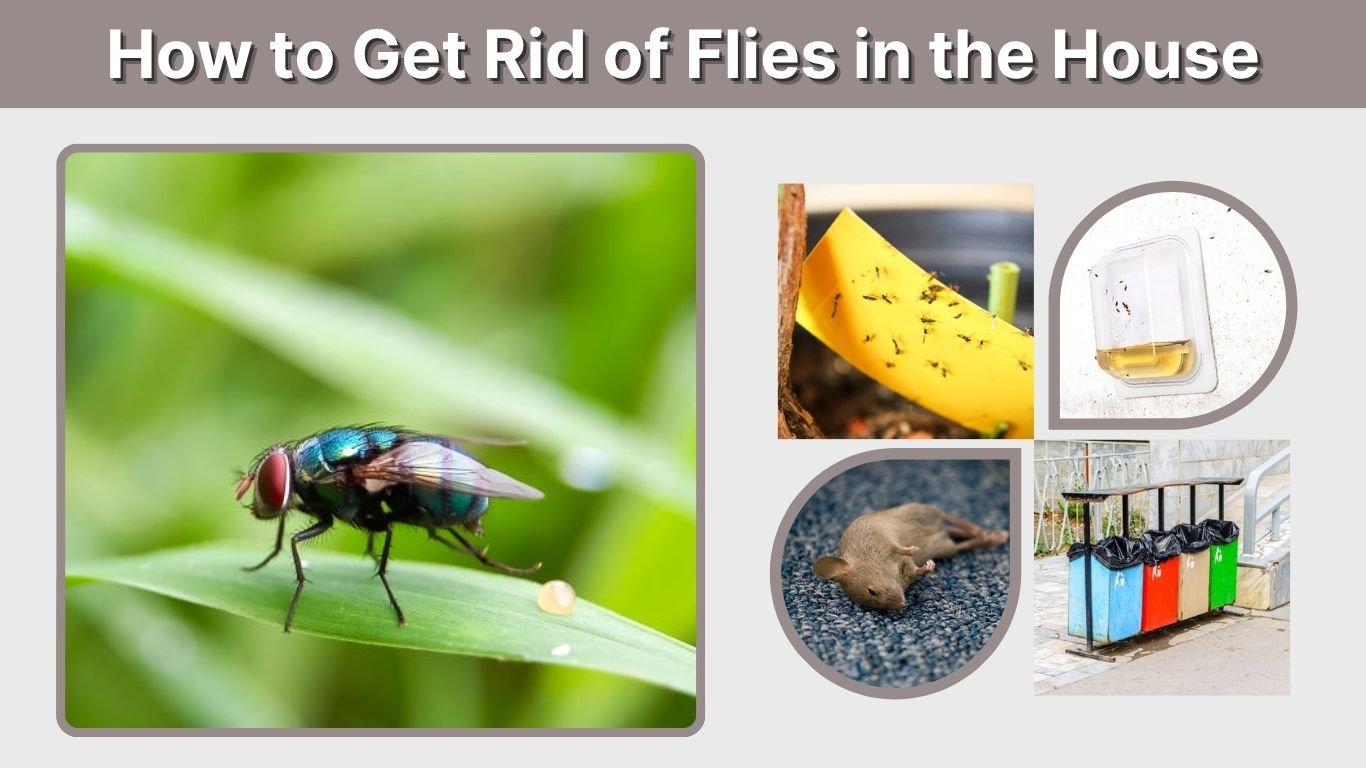
Flies can enter a house through open doors, damaged screens, vents, and small gaps around windows. Once indoors, they may reproduce in garbage, drains, overripe fruit, damp soil, or decaying organic matter. Killing the adult flies provides temporary relief, but permanent control requires finding and removing their breeding source. The best approach combines cleaning, trapping, exclusion, and targeted treatment based on the type of fly in your home.
How to Get Rid of Flies in the House Quickly
When several flies are buzzing around your kitchen or living space, begin by removing anything that could attract them. Flies are drawn to food odors, moisture, garbage, and organic waste.
Remove Food and Breeding Sources
Inspect the kitchen, pantry, garbage area, drains, and pet-feeding spaces. Clean up spills and remove anything that may contain decaying material.
- Throw away overripe fruit and vegetables.
- Empty indoor garbage and recycling bins.
- Wash dishes instead of leaving them overnight.
- Clean food crumbs from counters and floors.
- Store food in sealed containers.
- Refrigerate ripe fruit.
- Remove pet waste and uneaten pet food.
- Check beneath appliances for forgotten food.
- Rinse bottles and cans before recycling.
A hidden breeding source can keep producing flies even when the house appears clean. Check under refrigerators, behind trash cans, inside mop buckets, and around damaged plumbing.
Eliminate Adult Flies
Use a vacuum cleaner to remove large numbers of resting flies from walls and windows. Sticky fly strips can also capture adults, particularly near windows, doors, and garbage areas.
An electric fly swatter may help eliminate individual flies quickly. Avoid spraying insecticide near food, dishes, pets, or food-preparation surfaces unless the product is specifically labeled for indoor use.
Identify the Type of Fly in Your House
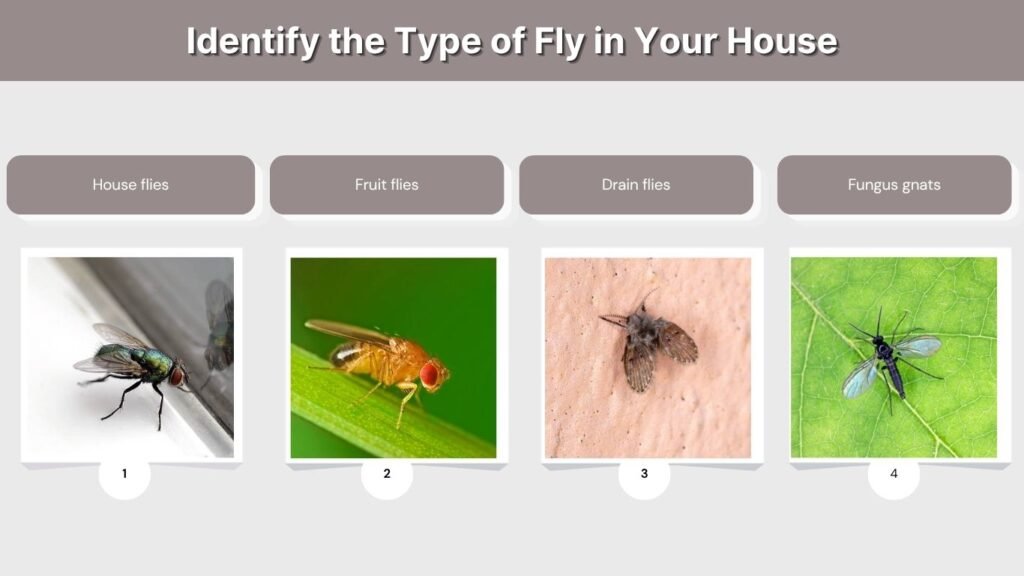
Different flies require different control methods. Identifying where they gather is often easier than examining their physical features.
| Type of fly | Common location | Likely breeding source |
| House flies | Kitchens and garbage areas | Trash, manure or decaying food |
| Fruit flies | Near fruit and beverages | Fermenting produce or liquid |
| Drain flies | Bathrooms and sinks | Organic buildup inside drains |
| Fungus gnats | Around houseplants | Damp potting soil |
| Cluster flies | Windows and attics | Enter from outdoors to overwinter |
| Blow or flesh flies | Near windows or strong odors | Dead animals or rotting meat |
House Flies
House flies are medium-sized gray flies that frequently land on food, counters, walls, and windows. They often enter from outside but may breed indoors when garbage, pet waste, or decaying material is available.
Remove the source, empty trash frequently, clean bins, and install screens. Fly traps may reduce the remaining adults.
Fruit Flies
Fruit flies are tiny tan or brown flies commonly found near bananas, tomatoes, juice, wine, vinegar, and recycling containers. They reproduce rapidly in fermenting organic matter.
Discard spoiled produce, wash fruit bowls, clean recycling containers, and wipe up sugary spills. Continue cleaning for at least one week because eggs and larvae may already be developing.
Drain Flies
Drain flies, also called moth flies or sewer flies, have fuzzy wings and are usually found around sinks, showers, and floor drains. They breed in the slimy organic film that develops inside pipes.
Cover a suspected drain overnight with clear tape, leaving the sticky side facing downward. Flies trapped beneath the tape may confirm the breeding location.
Fungus Gnats
Tiny black flies around houseplants are often fungus gnats rather than fruit flies. Their larvae develop in moist potting soil and feed on fungi and decaying plant material.
Allow the top one or two inches of soil to dry between waterings. Remove dead leaves, improve drainage, and use yellow sticky cards to catch adult gnats.
How to Get Rid of Fruit Flies in the House
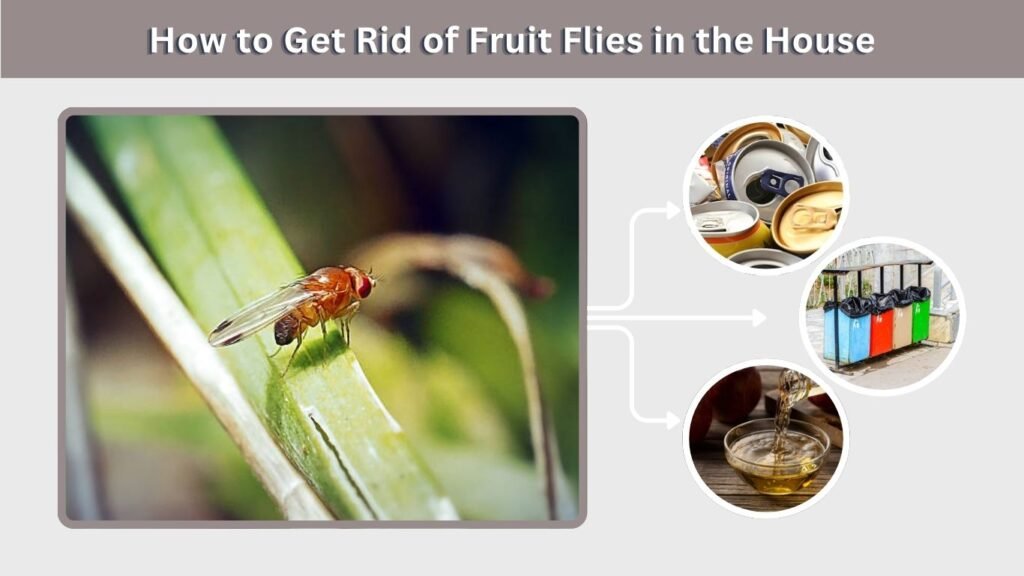
Fruit flies will continue returning until all fermenting material has been removed. Inspect produce, beverage containers, garbage disposals, drains, and cleaning cloths.
Make a Vinegar Trap
Pour a small amount of apple cider vinegar into a glass or jar. Add one drop of dish soap and place the trap near the affected area. The vinegar attracts fruit flies, while the soap reduces surface tension and causes them to sink.
This trap helps reduce adult flies, but it will not eliminate eggs or larvae. Cleaning the breeding source remains essential.
Check Hidden Sources
Fruit flies may breed in places that are easy to overlook, including:
- Empty beverage cans
- Recycling bins
- Garbage disposals
- Damp sponges and mops
- Potatoes or onions stored in cabinets
- Residue beneath kitchen appliances
- Open bottles of wine, juice, or syrup
Wash containers with hot soapy water and keep produce refrigerated until the infestation disappears.
How to Get Rid of Drain Flies
Pouring bleach into a drain may kill some insects, but it often fails to remove the organic film where the larvae live. Physical cleaning is usually more effective.
Clean the Drain Properly
Remove the drain cover and clear away hair, slime, and debris. Scrub the inside of the pipe with a long drain brush. Follow with hot water and an enzyme-based drain cleaner labeled for organic buildup.
Repeat the treatment for several nights if needed. Also inspect overflow openings, floor drains, sump areas, and rarely used plumbing fixtures.
Do not mix bleach, ammonia, vinegar, or commercial drain products. Combining household chemicals can produce dangerous fumes.
How to Get Rid of Flies Naturally
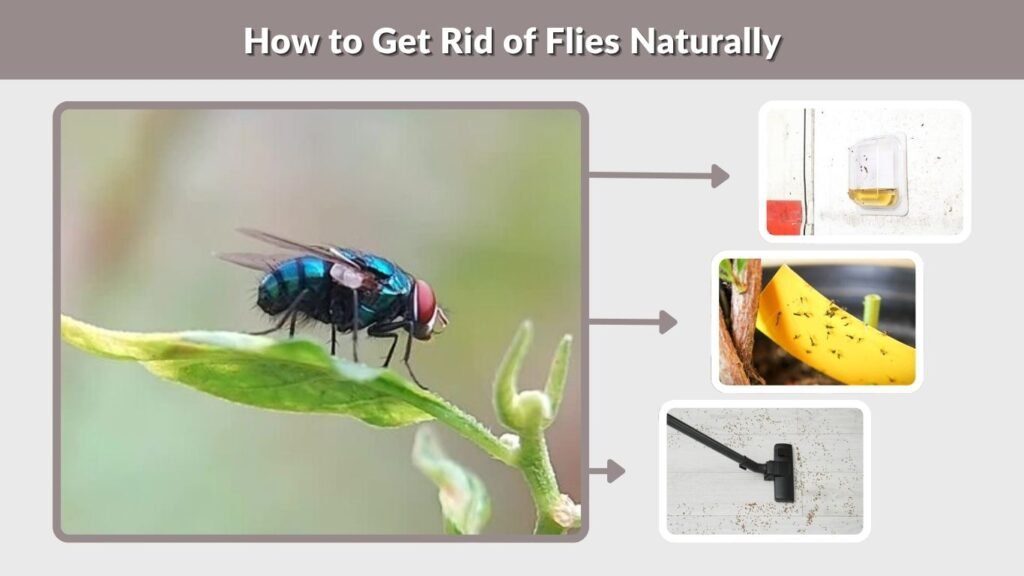
Natural control works best when combined with sanitation and exclusion. Traps alone cannot solve an active breeding problem.
Useful nonchemical methods include:
- Vinegar traps for fruit flies
- Yellow sticky cards for fungus gnats
- Flypaper for adult house flies
- A vacuum for cluster flies
- Drain brushes for drain flies
- Fans around food-preparation areas
- Tightly fitted window and door screens
Strong scents from herbs or essential oils may discourage some flies temporarily, but they are unlikely to eliminate an infestation. Source removal is much more reliable.
How to Keep Flies Out Permanently
Permanent prevention requires blocking entry points and removing the conditions flies need to reproduce.
Seal Entry Points
Repair damaged screens and install door sweeps. Seal gaps around pipes, vents, windows, siding, and utility openings. Keep doors closed or use self-closing screen doors during warmer months.
Cluster flies often enter wall voids and attics during autumn. Sealing exterior cracks before cooler weather is the most effective preventive measure.
Improve Waste Management
Use garbage cans with tight-fitting lids and clean them regularly. Keep outdoor bins away from doors and windows when possible. Bag meat scraps, diapers, and pet waste before placing them in the trash.
Clean outdoor grills, compost containers, and pet-feeding areas. Flies breeding immediately outside a house can repeatedly enter through open doors.
Why Are There Suddenly So Many Flies?
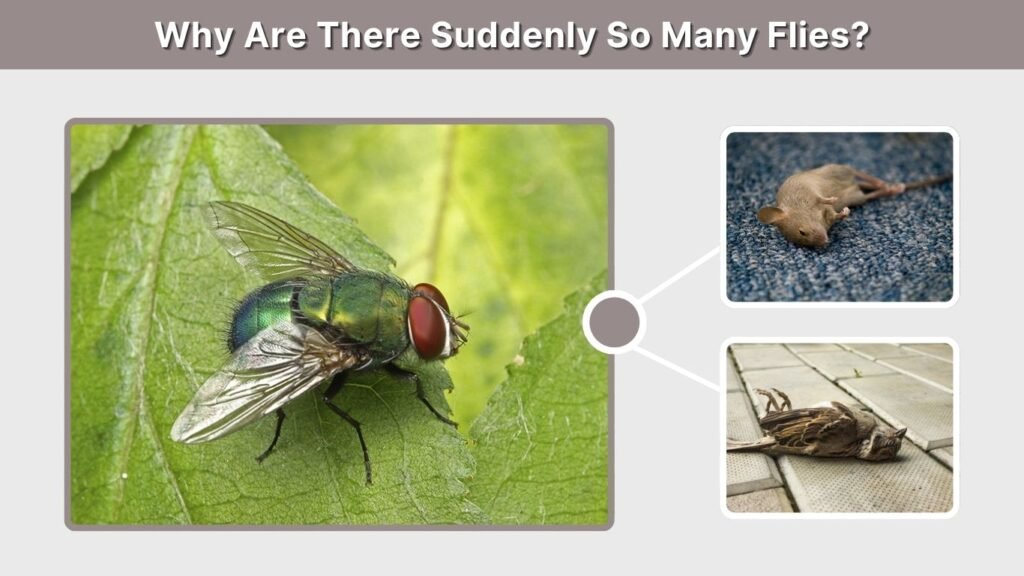
A sudden increase in large flies can indicate a dead mouse, bird, or other animal inside a wall, chimney, attic, or crawl space. Blow flies and flesh flies are especially associated with decaying animal matter.
A large number of sluggish flies gathering at sunny windows during cooler weather may be cluster flies emerging from a wall or attic.
Call a pest-control professional when:
- Flies continue appearing after thorough cleaning.
- You notice a strong or unusual odor.
- Large flies emerge from walls, vents, or ceilings.
- Drain flies appear around multiple drains.
- The breeding source cannot be safely reached.
- The infestation returns repeatedly.
FAQs
What is the fastest way to get rid of flies in the house?
Remove exposed food and garbage, clean spills, close entry points, and vacuum visible adult flies. Place appropriate traps near affected areas. The fastest permanent solution is finding and eliminating the material where the flies are breeding.
Why do I have tiny flies in my house?
Tiny flies are commonly fruit flies, drain flies, or fungus gnats. Fruit flies gather near produce and drinks, drain flies stay around plumbing, and fungus gnats hover around damp houseplant soil. Their location usually reveals the source.
Will flies go away on their own?
Adult flies may eventually die, but an infestation will continue if eggs and larvae remain in drains, garbage, soil, or decaying material. Removing only the visible flies rarely provides permanent control.
How do I get rid of big flies in the house?
Vacuum the adult flies and inspect for open doors, damaged screens, garbage, pet waste, or a dead animal. Large metallic or gray flies appearing repeatedly may indicate decaying material hidden inside the building.
How long does it take to eliminate a fly infestation?
Small infestations may improve within several days after the breeding source is removed. More established infestations can take one to three weeks because developing larvae and pupae may continue producing adults for a short period.