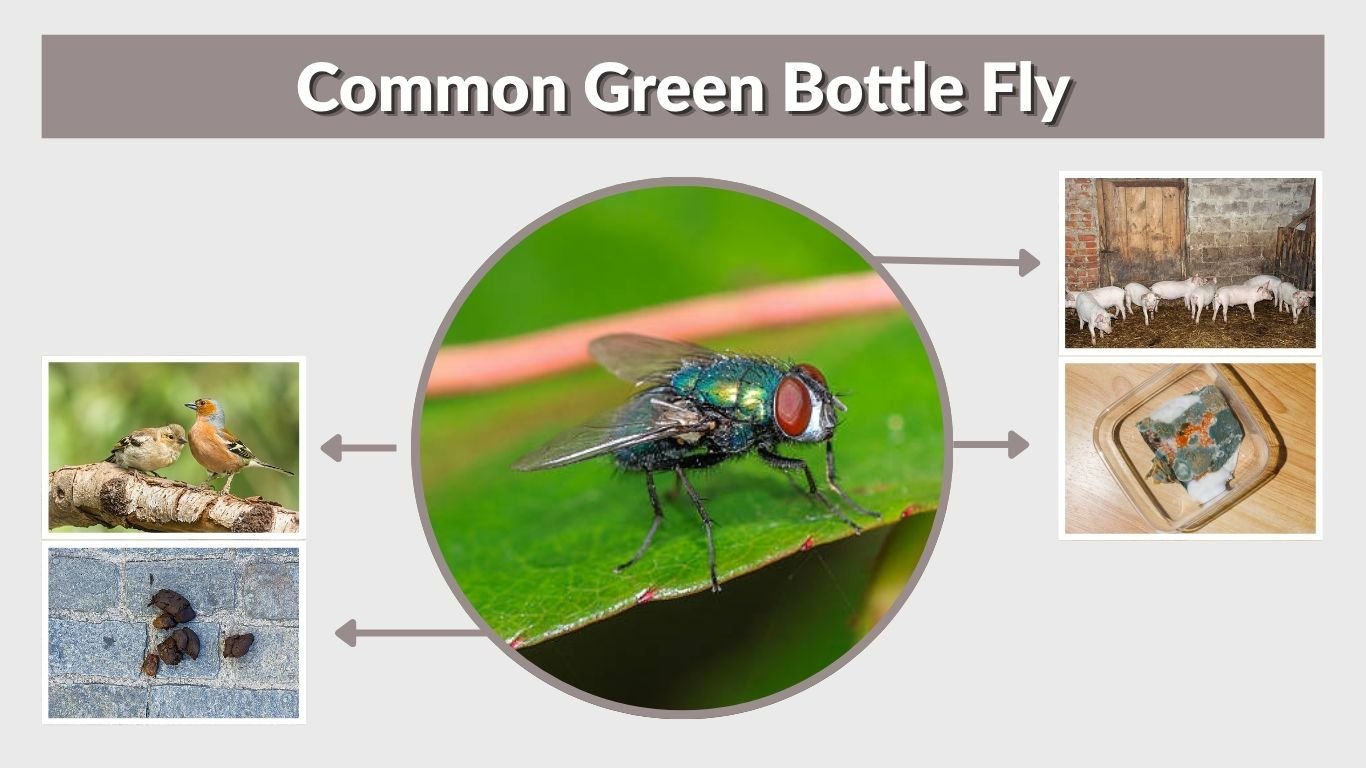
The common green bottle fly is a shiny metallic-green blow fly frequently seen around garbage, animal waste, carrion and other decomposing organic material. Its scientific name is Lucilia sericata. Although adults do not bite, their presence indoors may signal an overlooked breeding source, such as spoiled meat, an unclean trash container or a dead animal. The species also has important roles in decomposition, forensic investigations and medically supervised wound treatment.
What Is a Common Green Bottle Fly?
The common green bottle fly, also called the European green bottle fly or sheep blow fly, belongs to the blow fly family Calliphoridae and the order Diptera. It is widely distributed across the Northern Hemisphere and is also established in Australia and parts of Central and South America.
| Feature | Description |
| Scientific name | Lucilia sericata |
| Order | Diptera |
| Family | Calliphoridae |
| Adult size | Approximately 8–10 mm |
| Color | Metallic green, blue-green or copper-green |
| Main foods | Carrion, feces, garbage, nectar and other liquids |
| Development | Egg, larva, pupa and adult |
| Bite risk | Does not normally bite |
| Main concern | Food contamination and indoor breeding sources |
Common Green Bottle Fly Identification
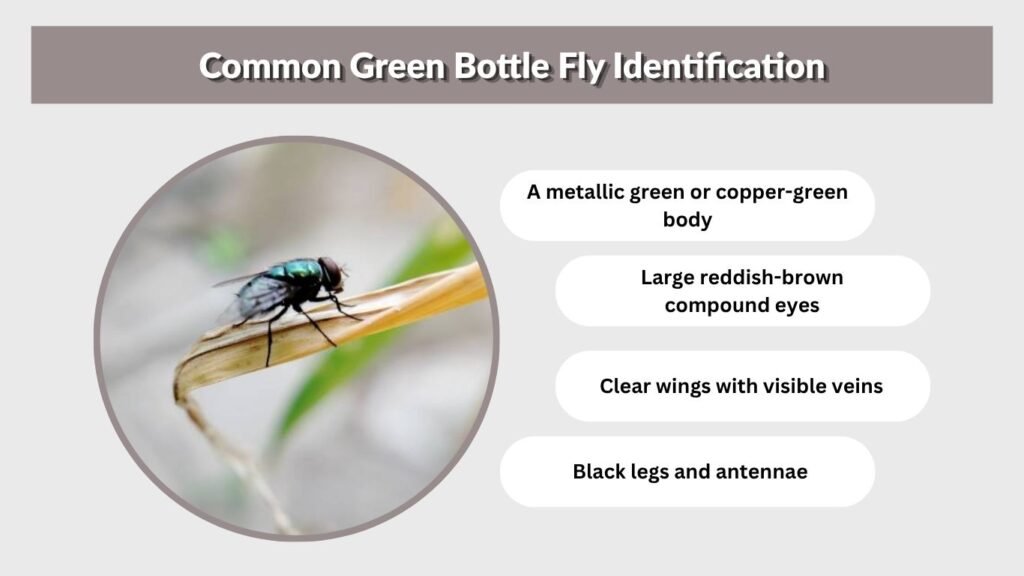
Adults are slightly larger and more strongly colored than many ordinary house flies. Their bodies reflect green, blue, gold or copper tones depending on the lighting and viewing angle.
Identification Features
A common green bottle fly typically has:
- A metallic green or copper-green body
- Large reddish-brown compound eyes
- Clear wings with visible veins
- Black legs and antennae
- A hairy thorax and abdomen
- Yellowish mouthparts
- One functional pair of wings
- A body approximately one-third of an inch long
The metallic color is useful for recognizing a green bottle fly, but several Lucilia species look nearly identical. Confirming L. sericata may require examination of small bristles and other structures under magnification. Adults are usually around 8–10 mm long.
Green Bottle Fly vs. House Fly
| Feature | Green bottle fly | House fly |
| Body color | Metallic green or copper | Dull gray |
| Typical appearance | Shiny and reflective | Gray with dark thoracic stripes |
| Breeding material | Carrion, feces and decomposing animal material | Garbage, manure and decaying organic matter |
| Adult size | About 8–10 mm | Usually similar or slightly smaller |
| Bite | No | No |
Green bottle flies are often associated more strongly with animal remains and decomposing meat than ordinary house flies.
Habitat and Distribution
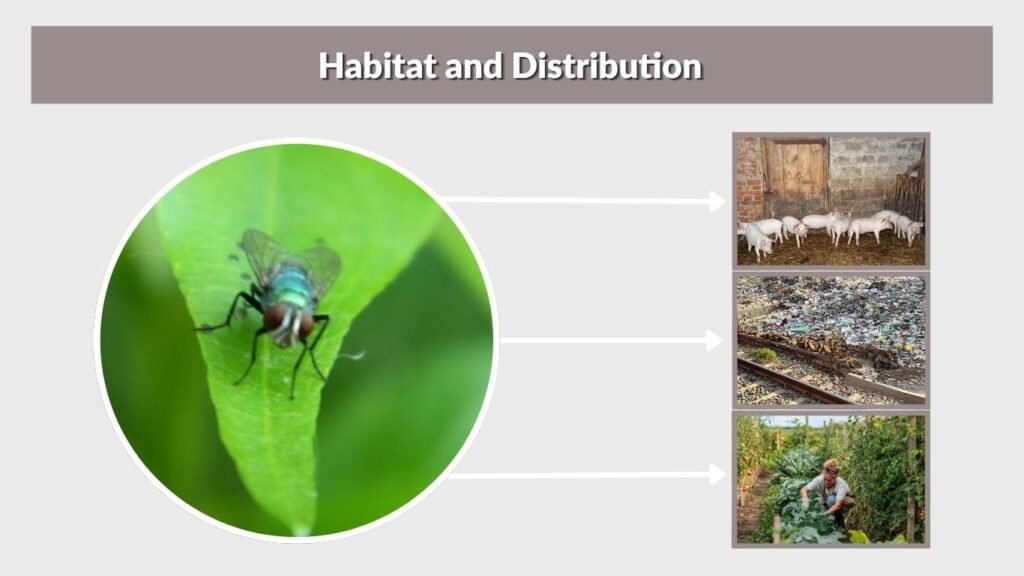
Common green bottle flies occur in temperate and tropical environments. They are frequently found around farms, urban waste areas, slaughter facilities, gardens, animal housing, garbage containers and places where dead animals are present.
Adults may also visit flowers for nectar or pollen. However, females need a suitable protein-rich material on which to place their eggs. Carrion, feces, exposed meat and contaminated animal material are common attractants.
What Do Common Green Bottle Flies Eat?
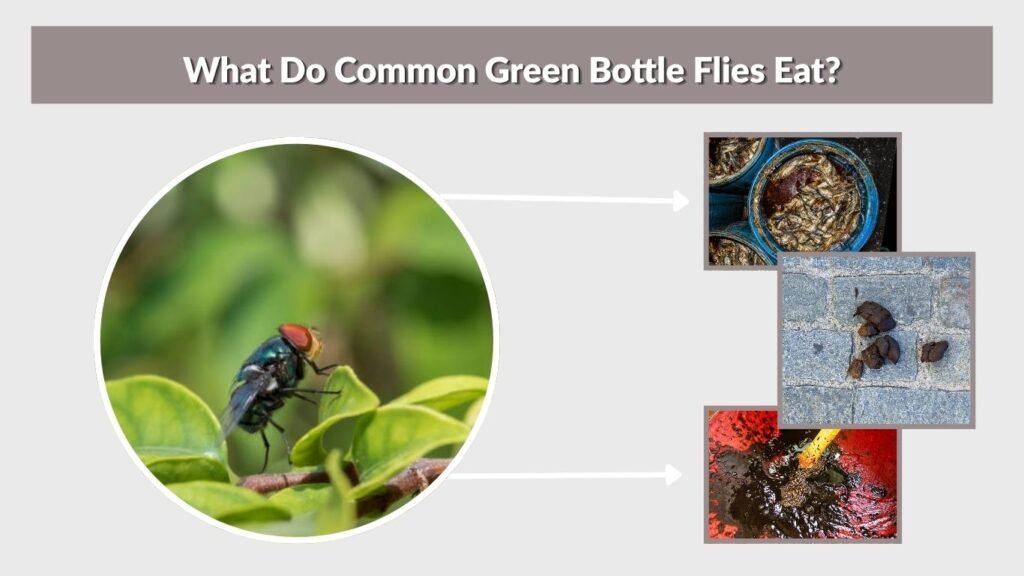
Adult and larval green bottle flies have different diets.
Adult Diet
Adults use sponge-like mouthparts to consume liquids. They may feed on:
- Liquids from decomposing animals
- Fecal material
- Garbage fluids
- Nectar and pollen
- Sugary liquids
- Juices from exposed food
Because they cannot chew solid food, adults release digestive fluids onto suitable material and then absorb the liquefied food.
Larval Diet
The larvae, commonly called maggots, mainly consume decomposing or dead animal tissue. They may develop in animal carcasses, discarded meat, fecal-contaminated material and wounds containing damaged or necrotic tissue.
Common Green Bottle Fly Life Cycle
The common green bottle fly undergoes complete metamorphosis with four stages:
- Egg
- Larva or maggot
- Pupa
- Adult
Development is strongly affected by temperature, humidity and food quality.
Eggs
Females deposit masses of elongated white or pale-yellow eggs directly on suitable food material. Individual eggs are approximately 1.5 mm long, and a female may deposit a cluster containing up to about 200 eggs.
In warm conditions, eggs can hatch in less than one day. At approximately 70°F, hatching may take around 21 hours, while temperatures near 81°F can reduce it to about 18 hours.
Larvae
The smooth, cone-shaped maggots are white or yellowish and pass through three growth stages called instars. Mature larvae may reach approximately 12–18 mm long.
Larval development can take around three to four days under warm conditions. Fully grown maggots then leave the food source and crawl into soil, cracks, insulation or another dry, protected location.
Pupae and Adults
The larva contracts inside its hardened outer skin, forming a brown or reddish-brown pupal case. Pupation may take approximately seven to ten days in warm conditions before the adult emerges.
The entire generation can develop rapidly during warm weather, although cool temperatures may delay growth or trigger diapause. Multiple generations can occur during one year. Therefore, “lifespan” is not a fixed number; development speed and adult survival depend greatly on temperature, food and environmental conditions.
Common Green Bottle Fly in the House
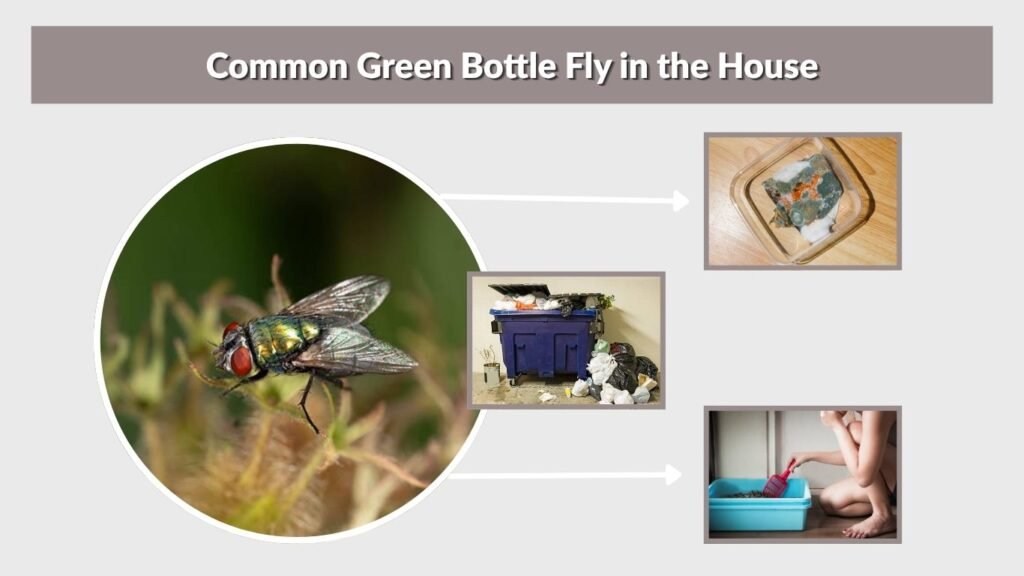
One or two green bottle flies may enter through an open door or damaged window screen. Repeated sightings or the sudden appearance of many adults can indicate that larvae have developed somewhere inside or immediately around the building.
Possible Indoor Sources
Inspect for:
- Spoiled meat or forgotten food
- Dirty indoor garbage containers
- Pet feces or contaminated bedding
- Dead rodents in attics, chimneys or wall spaces
- Dead birds near vents or roof openings
- Unclean outdoor bins beside the house
- Animal remains beneath decks or porches
Adult flies may gather around windows after emerging because they move toward light. Finding and removing the breeding material is more effective than killing only the visible adults.
Do Common Green Bottle Flies Bite?
Common green bottle flies do not have biting mouthparts. They cannot pierce human skin and do not feed on blood.
A fly landing on a person is usually searching for moisture, salt or an odor rather than attempting to bite. It can feel irritating as it explores the skin, but it does not produce a true bite.
Are Common Green Bottle Flies Dangerous?
The adults are not venomous or poisonous. Their main household concern is that they visit carrion, feces and garbage before landing on food or preparation surfaces. This behavior can mechanically transfer unwanted microorganisms.
Larvae of Lucilia species can also cause facultative myiasis in unusual circumstances when eggs are placed in an existing neglected or festering wound. This is uncommon in healthy people with properly covered and treated wounds.
Anyone who notices larvae in a human or animal wound should seek medical or veterinary care rather than attempting home treatment.
How to Get Rid of Common Green Bottle Flies
The most effective approach combines source removal, sanitation, exclusion and trapping.
Find and Remove the Breeding Source
Search for decomposing animal material, spoiled meat, feces and dirty waste containers. Wear gloves when removing contaminated material, seal it in a durable bag and clean the surrounding surface.
A dead animal in an inaccessible wall or ceiling space may require professional removal. Fly activity usually declines after the source is eliminated and the remaining pupae finish emerging.
Improve Sanitation
To prevent another infestation:
- Empty food waste regularly.
- Keep garbage containers tightly closed.
- Wash bins after leaks or spills.
- Refrigerate or seal meat and pet food.
- Remove pet waste promptly.
- Clean beneath appliances and cabinets.
- Keep outdoor waste away from doors and windows.
Prevent Flies From Entering
Repair torn window screens and seal gaps around doors, rooflines, pipes and vents. Keep doors closed when possible and cover food during outdoor preparation.
Trap Remaining Adults
A fly swatter, sticky strip or enclosed ultraviolet sticky trap can remove adults that remain after the breeding source is addressed. Place traps away from uncovered food.
Spraying visible adults may provide temporary relief, but it will not stop new flies from emerging if eggs, larvae or pupae remain nearby.
Natural Predators and Parasitoids
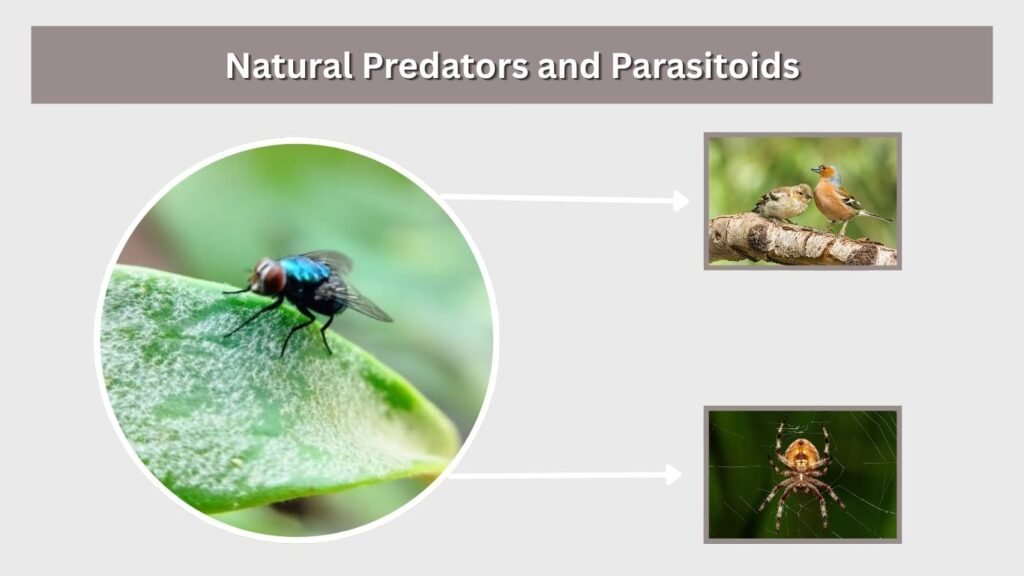
Birds, spiders and predatory insects consume adult flies or maggots. Certain tiny parasitoid wasps also attack blow fly pupae.
One example is Nasonia vitripennis. A female wasp deposits eggs in or on the fly’s puparium, and the developing wasp larvae consume the immature fly. Although parasitoids contribute to natural population control, releasing them is not normally necessary for a small household infestation.
Beneficial Uses of Green Bottle Fly Larvae
Despite their association with decay, common green bottle flies have several valuable applications.
Their predictable development allows forensic entomologists to estimate how long insect colonization has occurred on human or animal remains. Specially produced sterile larvae are also used under medical supervision to remove dead tissue from difficult wounds. Wild maggots should never be used for this purpose.
FAQs
Why are green bottle flies suddenly appearing in my house?
A sudden group may have emerged from hidden decomposing material. Check garbage, spoiled meat, pet waste and areas where a rodent or bird could have died. Adults may then move toward bright windows.
How long does a common green bottle fly live?
There is no single fixed lifespan. In warm conditions, eggs can hatch within a day, larvae may develop in three to four days and pupation may require seven to ten days. Cooler temperatures extend development.
Are green bottle fly maggots harmful?
Maggots developing in garbage or carrion are mainly a sanitation concern. Larvae found in a living person’s or animal’s wound require prompt professional examination because some Lucilia larvae can cause myiasis.
Will vinegar traps catch green bottle flies?
They may capture occasional adults, but they are less important than removing the breeding source. Blow flies are strongly attracted to decomposing animal material, so sanitation and carcass removal are the priorities.
What is the best spray for green bottle flies?
A spray may kill exposed adults but will not eliminate hidden eggs, maggots or pupae. Source removal, sanitation, screens and traps usually provide better long-term control. Use any pesticide strictly according to its label.