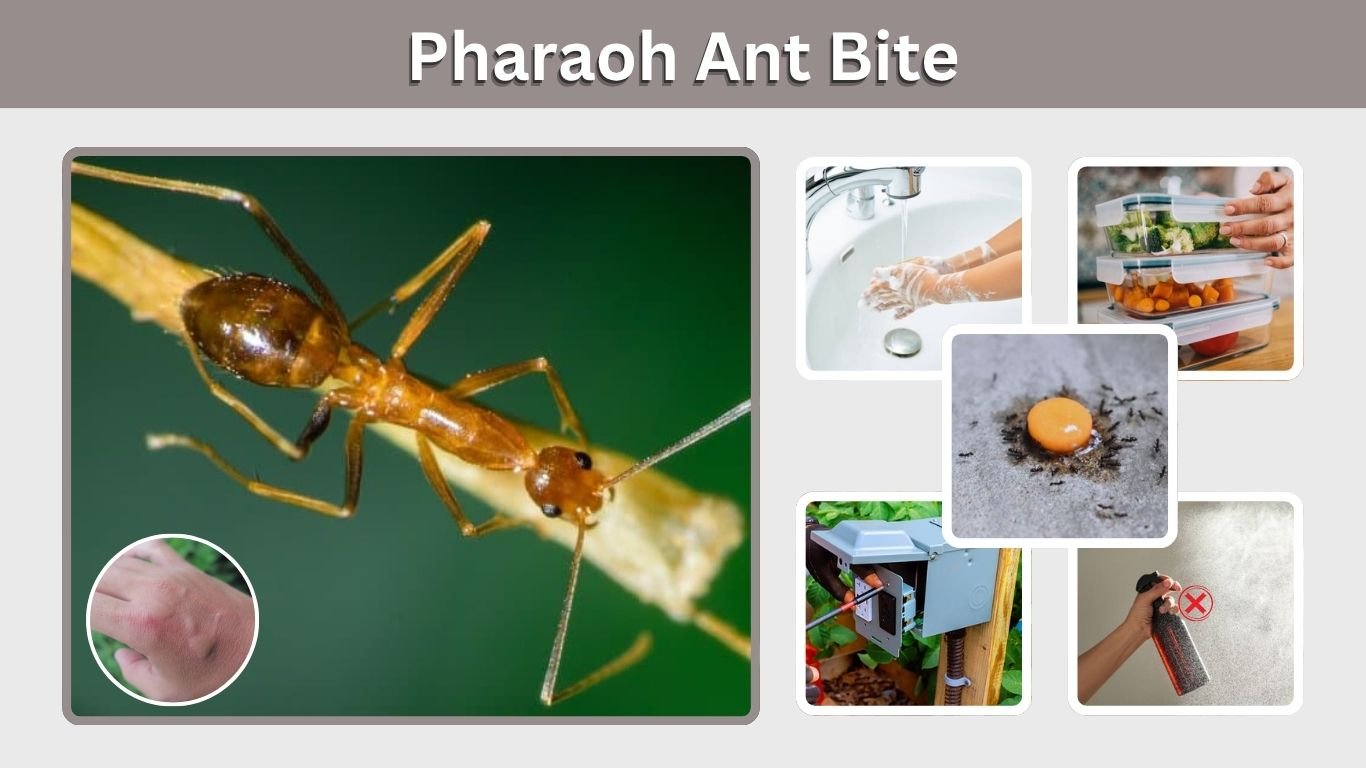
Pharaoh ants are extremely small, yellowish household ants that frequently infest kitchens, bathrooms, hospitals, apartments and other heated buildings. Although people commonly search for information about Pharaoh ant bites, these ants are not considered an important biting or stinging species. Their tiny mandibles may occasionally pinch sensitive skin, but noticeable reactions are uncommon. The greater concern is their ability to contaminate food, enter medical equipment and establish numerous hidden nests throughout a building.
Do Pharaoh Ants Bite Humans?
Pharaoh ants, scientifically known as Monomorium pharaonis, can use their mandibles for feeding, carrying objects and defending themselves. However, human skin is not their food source, and they do not normally attack people.
Workers are only about 1/16 inch long. Texas A&M reports that Pharaoh ants possess a small stinger but do not sting humans. Because they are so tiny, any bite-like sensation would usually be mild and easy to miss.
A person may notice an ant crawling on the skin and later find an itchy bump, but that does not prove the ant caused it. Mosquitoes, fleas, bed bugs, mites, contact dermatitis and other insects can produce similar marks.
What Does a Pharaoh Ant Bite Look Like?
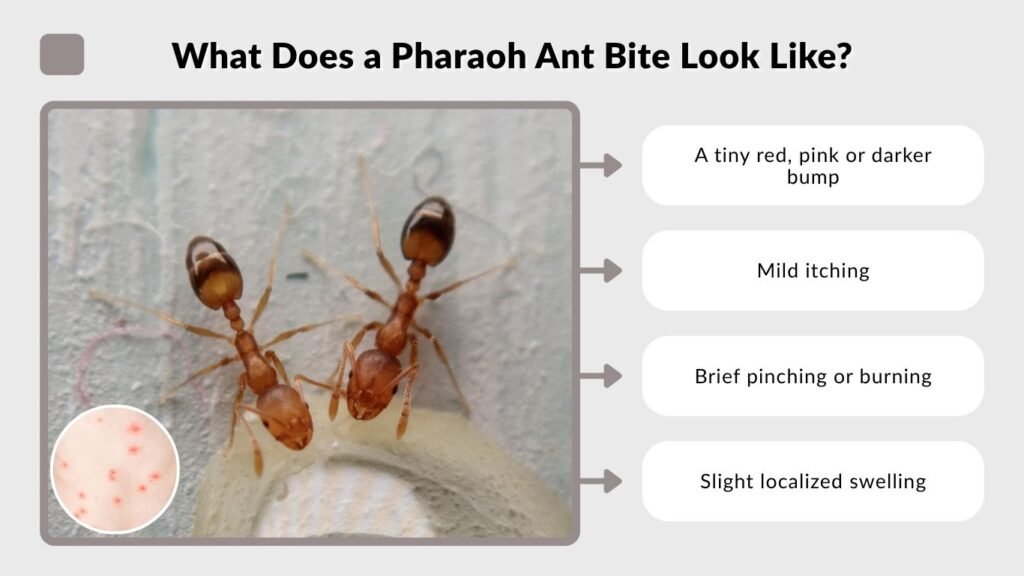
There is no unique skin pattern that can reliably identify a Pharaoh ant bite. When skin irritation occurs after contact with ants, it may appear as a small localized mark.
Possible symptoms include:
- A tiny red, pink or darker bump
- Mild itching
- Brief pinching or burning
- Slight localized swelling
- Tenderness around the affected spot
- Irritation caused by scratching
Pharaoh ants do not usually cause the painful pustules associated with fire-ant stings. They also do not normally produce large clusters of bites like fleas or bed bugs.
Pharaoh Ant Bite Pictures
Pictures found online should be interpreted cautiously. A small itchy bump cannot be identified as a Pharaoh ant bite based only on appearance.
Consider where the marks appeared, whether ants were actually seen on the skin and whether other pests may be present. A healthcare professional may be needed when the reaction is severe, persistent or difficult to explain.
Pharaoh Ant Bite Symptoms
Most suspected reactions are mild and remain limited to a small area. Symptoms may begin immediately or become more noticeable after scratching.
| Reaction | Possible signs |
| Mild irritation | Small bump, itching or temporary redness |
| Local reaction | Swelling, warmth or tenderness around one spot |
| Skin infection | Increasing pain, pus, heat or spreading redness |
| Allergic reaction | Hives or swelling beyond the contact area |
| Severe allergy | Breathing difficulty, throat swelling or fainting |
Because Pharaoh ant bites are rarely confirmed, persistent or numerous marks may have another cause.
How to Treat a Suspected Pharaoh Ant Bite
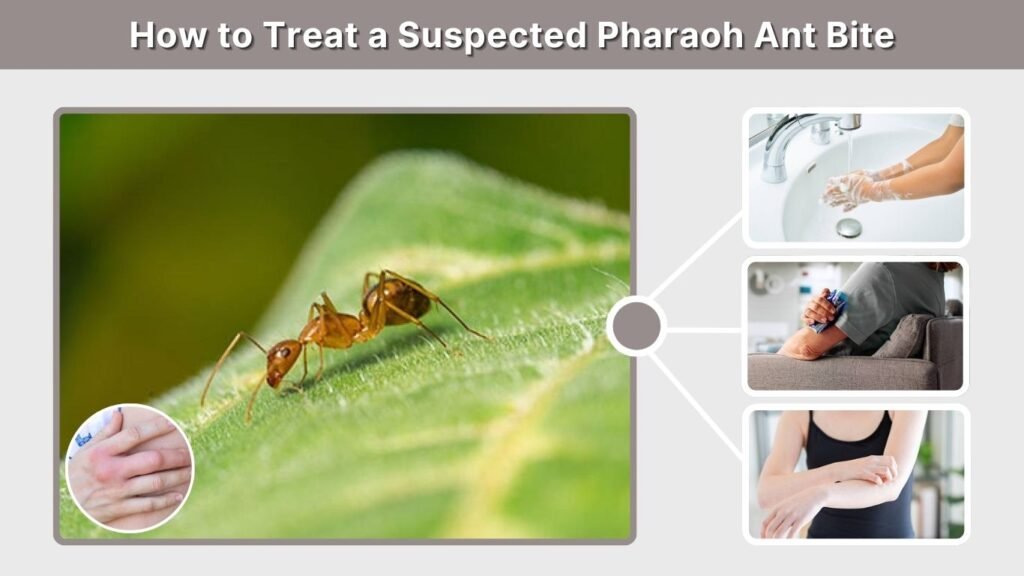
A mild skin reaction can usually be managed with basic home care. Treatment should focus on cleaning the skin, reducing irritation and preventing infection.
Wash the Area
Clean the affected skin gently with soap and water. This removes dirt and bacteria that could enter skin damaged by scratching.
Pat the area dry rather than rubbing it. Avoid applying bleach, household cleaners, concentrated alcohol or other harsh chemicals.
Apply a Cold Compress
Wrap an ice pack in a clean cloth and hold it against the irritated area for approximately 10–20 minutes.
A cold compress may reduce:
- Itching
- Swelling
- Burning
- Local discomfort
Do not place ice directly against the skin.
Relieve Itching
A pharmacist may recommend calamine lotion, a mild hydrocortisone cream or an oral antihistamine for a larger itchy reaction. Topical corticosteroids and antihistamines are commonly used to control more extensive reactions to insect bites.
Follow the product directions. Ask a healthcare professional before treating young children, pregnant people, broken skin or someone taking other medications.
Avoid Scratching
Scratching can damage the skin and allow bacteria to enter. Keep fingernails short and cover an opened area with a clean dressing when necessary.
Can a Pharaoh Ant Bite Cause an Allergy?
A severe allergy specifically caused by a Pharaoh ant is considered unusual. However, almost any insect exposure can potentially trigger a reaction in a highly sensitive person.
Seek urgent medical advice for:
- Rapidly increasing swelling
- Widespread hives
- Swelling around the eyes or mouth
- Severe dizziness
- Vomiting with other allergic symptoms
- Symptoms that continue worsening
Call the local emergency service immediately for difficulty breathing, throat tightness, tongue swelling, confusion or fainting. These can indicate anaphylaxis, which requires immediate emergency care.
Can a Pharaoh Ant Bite Become Infected?
The ant itself is unlikely to cause a serious wound. However, scratching an itchy area can break the skin and create an opportunity for bacterial infection.
Possible infection signs include:
- Increasing pain
- Skin that feels hot
- Expanding redness or discoloration
- Pus or cloudy drainage
- Yellow crusting
- Red streaks extending from the area
- Fever or swollen glands
Seek medical care when these symptoms develop. Antibiotics should only be used when a healthcare professional diagnoses a bacterial infection.
Why Are Pharaoh Ants Considered Dangerous?
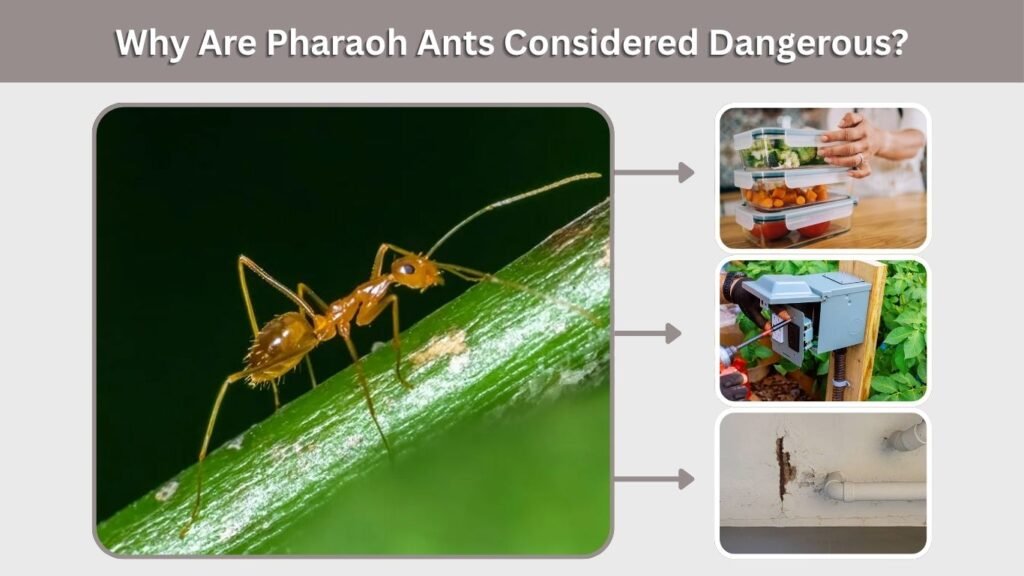
The primary danger from Pharaoh ants is not their bite. It is their ability to infest food-handling areas, hospitals and other sensitive buildings.
These ants can enter:
- Food containers
- Cupboards and pantries
- Medical facilities
- Wall cavities
- Electrical outlets
- Bathrooms and kitchens
- Warm appliances
- Cracks around plumbing
They readily establish numerous connected nests throughout a building. UF/IFAS describes Pharaoh ants as major indoor pests that can survive many conventional household treatments and establish colonies in inaccessible spaces.
Correct identification is important because Pharaoh ants closely resemble thief ants. Both are extremely small and yellowish, and microscopic examination may be needed to distinguish them.
How to Identify Pharaoh Ants
Pharaoh ant workers are very small and range from pale yellow to reddish brown. The abdomen is often darker than the head and middle section.
Identification Features
Look for:
- Workers measuring about 1/16 inch
- Yellow, golden or reddish coloration
- A slightly darker abdomen
- Twelve-segmented antennae
- A three-segmented antennal club
- Two small nodes between the thorax and abdomen
- Long indoor trails near food or moisture
They frequently appear around sinks, toilets, kitchen counters, pet dishes, warm appliances and pipes.
How to Get Rid of Pharaoh Ants
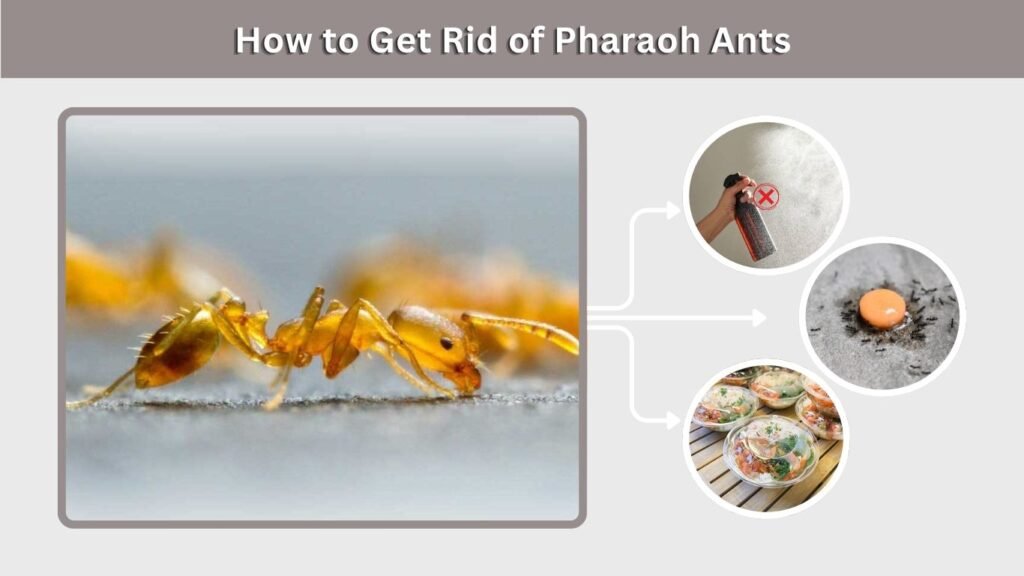
Pharaoh ant control is difficult because colonies contain multiple queens and can split into new nests through a process called budding.
Do Not Spray the Trails
Spraying visible workers may make the infestation worse. Repellent insecticides can stress the colony and cause groups of ants, queens and developing brood to move into new areas.
This can turn one infestation into several hidden colonies. UF/IFAS and the University of California recommend bait-based control rather than repellent sprays.
Use Slow-Acting Ant Baits
Workers carry slow-acting bait back to hidden nests and share it with queens, larvae and other workers. Baits must be placed near active trails and kept away from children and pets.
Potential locations include:
- Beneath sinks
- Inside cabinets
- Beside plumbing lines
- Along wall edges
- Near windows
- Around appliances
- Close to observed trails
Elimination may take several weeks because only a small percentage of workers leave the nest to forage. Large apartment buildings may require treatment throughout the entire structure.
Improve Sanitation
Store food in sealed containers, clean sugary or greasy spills, remove rubbish regularly and avoid leaving pet food out overnight.
Wipe ant trails with soapy water after placing suitable bait nearby. Repair plumbing leaks because Pharaoh ants frequently establish nests near warm, moist areas.
FAQs
Do Pharaoh ants bite or sting?
Pharaoh ants are not considered significant biting pests. They have tiny mandibles and possess a small stinger, but they are not known to sting humans. Any skin reaction attributed to them is usually mild or may have another cause.
Are Pharaoh ant bites dangerous?
A suspected bite is unlikely to be dangerous. The main risks are scratching-related infection or a rare allergic reaction. Breathing difficulty, facial swelling or fainting requires emergency medical attention.
How long does a Pharaoh ant bite last?
Mild irritation should begin improving within a few days. A mark that becomes larger, increasingly painful, hot or filled with pus may be infected or caused by something other than a Pharaoh ant.
Why are Pharaoh ants crawling on my bed?
They may be searching for food, water or warmth rather than trying to bite. Check for drinks, crumbs, pet food, moisture and ant trails leading from cracks, outlets or wall openings.
Should I spray Pharaoh ants in my home?
No. Repellent sprays can cause colonies to split and spread into additional rooms. Slow-acting bait and professional pest management are usually more effective for eliminating the entire infestation.