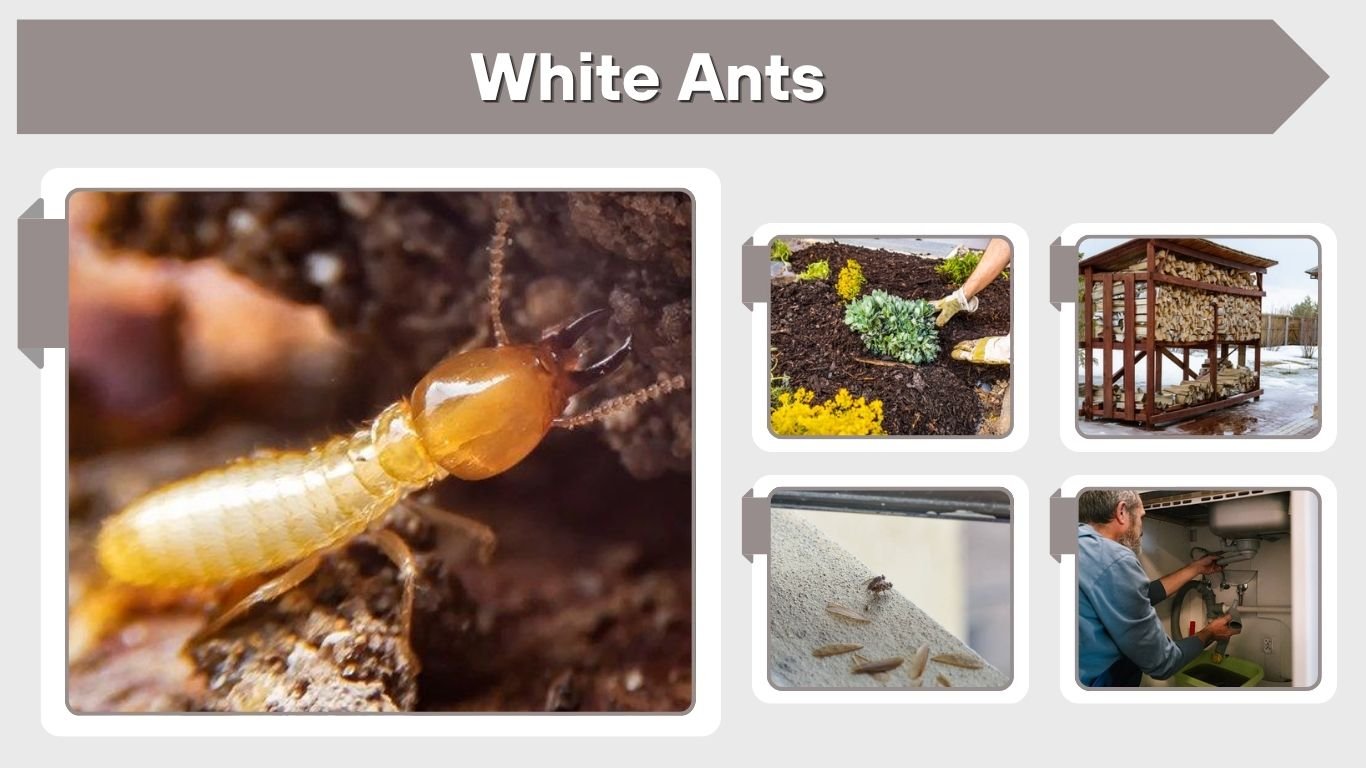
White ants may look harmless, but finding them inside wood, walls, furniture, or trees can indicate a termite infestation. The name “white ant” is commonly used for pale termite workers, although termites are not true ants. Because they remain hidden inside wood or underground, an infestation may continue for a long time before obvious damage appears.
Learning what white ants look like, where they live, and how professional treatments work can help you protect your home before the damage becomes severe.
What Are White Ants?
White ants are termites, not a separate ant species. Worker termites have soft, cream-colored bodies and spend most of their lives underground, inside mud tubes, or within wood. They live in organized colonies containing workers, soldiers, queens, kings, and winged reproductive termites.
Termites consume cellulose, a material found in wood, paper, cardboard, flooring, cabinets, and many plant products. They are useful decomposers outdoors, but colonies entering a building may damage structural timber and other cellulose-based materials.
Do not confuse white ants with white-footed ants. White-footed ants are true ants with dark bodies and pale feet, while termite workers are usually pale across most of the body.
What Do White Ants Look Like?
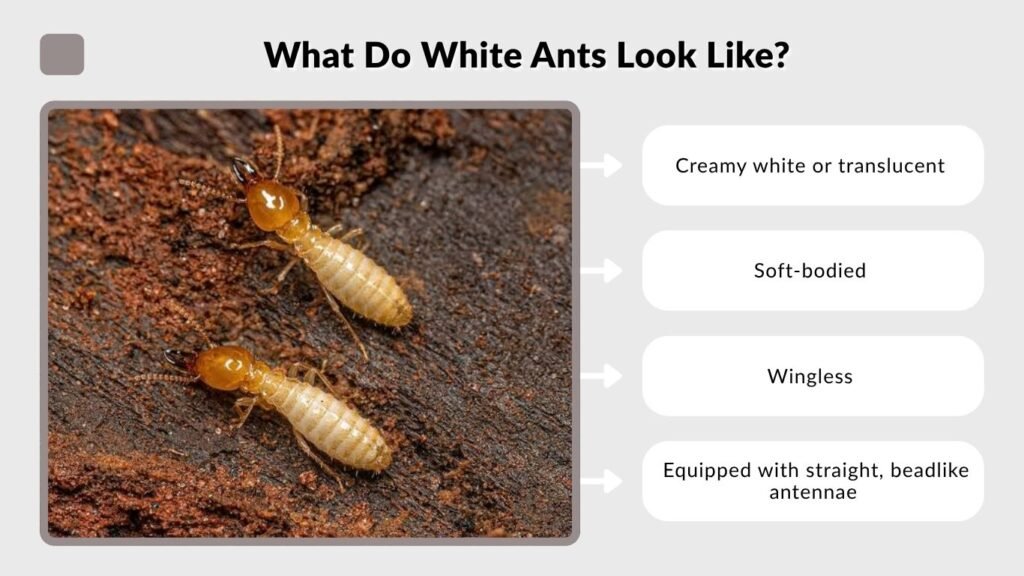
The appearance of a termite depends on its role in the colony.
Worker Termites
Workers are the pale insects most commonly described as tiny white ants. They are generally:
- Creamy white or translucent
- Soft-bodied
- Wingless
- Equipped with straight, beadlike antennae
- Approximately ¼ inch long, depending on species
Workers collect food, maintain the nest, feed other colony members, and damage wood.
Soldier Termites
Soldiers have pale bodies but larger yellow, orange, or brown heads. Many have noticeable jaws used to defend the colony. Workers usually outnumber soldiers, so discovering several soldiers alongside pale workers strongly suggests termite activity.
Flying White Ants
Termite swarmers are reproductive adults that leave mature colonies to establish new ones. Unlike pale workers, swarmers are normally brown or black and possess two pairs of similarly sized wings.
After flying, they shed their wings. Small piles of matching wings around windows, doors, lamps, and vents can therefore be an important warning sign.
White Ants vs Flying Ants
Termite swarmers are frequently mistaken for winged ants.
| Feature | Termite swarmer | Winged ant |
| Waist | Broad and straight | Narrow and pinched |
| Antennae | Straight and beadlike | Bent or elbowed |
| Wings | Four wings of similar length | Front wings longer than rear wings |
| Body | Rectangular appearance | Clearly divided body |
| Shed wings | Common near emergence areas | Less commonly found in large piles |
Finding swarmers outdoors does not always mean a building is infested. However, swarmers emerging from walls, floors, vents, or indoor woodwork strongly justify a professional inspection.
Signs of White Ants in a House
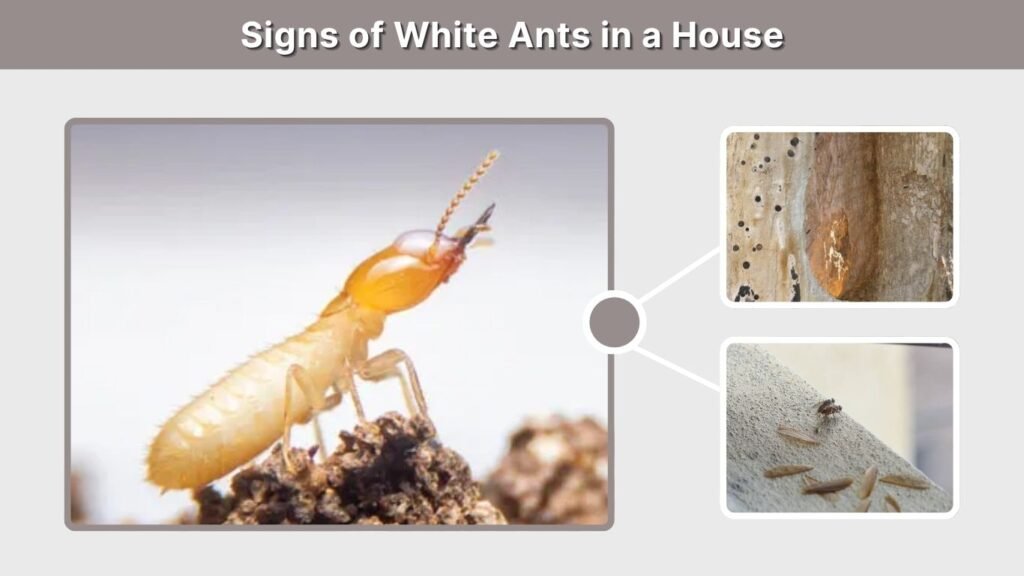
Termites usually avoid open light and air, making direct sightings uncommon. Homeowners are more likely to notice evidence of their activity.
Common warning signs include:
- Mud tubes along foundations, walls, piers, or pipes
- Wood that sounds hollow when tapped
- Soft, blistered, or darkened timber
- Sagging floors or damaged trim
- Doors and windows that suddenly become difficult to open
- Discarded wings near windows and lights
- Flying termites emerging indoors
- Small piles of dry pellets beneath wooden items
Subterranean termites build mud tubes to travel between soil and wood while maintaining moisture. Drywood termites live directly inside dry timber and may push small, uniform fecal pellets through tiny holes.
White Ants in Walls and Wood
White ants in walls can remain unnoticed because workers feed beneath paint, plasterboard, trim, flooring, or wooden framing. Visible damage may represent only a small part of the affected area.
Do not immediately break open every wall or spray insecticide into random holes. Disturbing the activity can make it harder to locate the colony and may cause termites to move into another hidden section. Arrange an inspection to determine the termite species, entry points, moisture source, and extent of damage.
Termite treatment and structural repair are separate jobs. Termites must be controlled first, but severely weakened wood may still require replacement or reinforcement. Termites can damage flooring, cabinets, molding, built-in furniture, paper products, and structural timber.
White Ants in Trees, Mulch, and Gardens
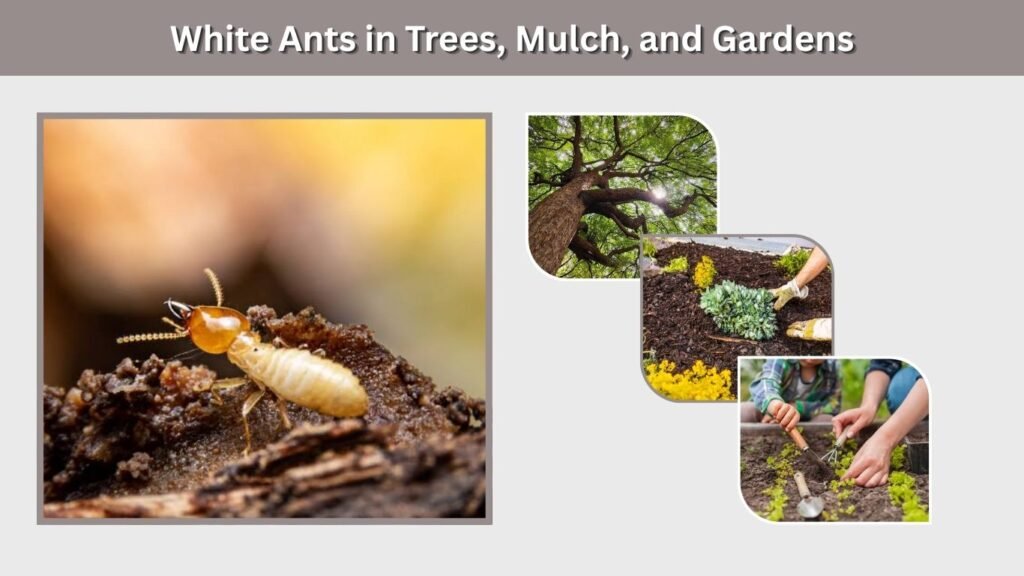
Termites commonly occupy dead roots, fallen branches, old stumps, firewood, landscape timbers, and decaying sections of trees. Their outdoor presence is natural, but wood and heavy mulch placed against a building can provide concealed access to the structure.
Keep firewood off the soil and away from exterior walls. Avoid allowing mulch to cover the visible foundation edge or touch wooden siding. Remove dead wood, leaking irrigation, and unnecessary moisture near the building.
Finding termites in a tree does not automatically prove that the house is infested. However, a tree touching the building or a termite colony close to the foundation should be evaluated.
White Ant Life Cycle
A termite colony begins when winged males and females leave an established colony, shed their wings, pair up, and locate a nesting site. The pair becomes the colony’s king and queen.
The queen lays eggs that develop into immature termites. Depending on the needs of the colony, they become workers, soldiers, or reproductive termites. Workers feed the other castes and enlarge the nest. Once the colony matures, it can produce new winged swarmers that leave to begin additional colonies.
A colony may remain active for years because treatment must reach more than the visible workers. Killing a few exposed termites does not remove the queen, hidden workers, or associated nesting sites.
How to Get Rid of White Ants
The appropriate treatment depends on the species, building design, infestation location, and surrounding soil.
Liquid Soil Treatment
A registered liquid termiticide may be placed in the soil beside and beneath the foundation. The objective is to create a treated zone that prevents termites from entering or allows them to carry a nonrepellent active ingredient through the colony.
Correct installation may require trenching, drilling, specialized equipment, and precise product volumes. It is usually professional work rather than a simple household spray treatment.
Termite Bait Stations
Bait stations are installed in the soil around the building. Foraging termites feed on the bait and transfer its slow-acting ingredient to other colony members.
Stations must be positioned, checked, and maintained properly. They do not work like quick ant traps, and results may take time. Both bait systems and correctly installed liquid treatments can provide effective long-term protection.
Wood and Localized Treatments
Some accessible wood may be treated with approved borate products or injected treatments. Localized treatment can be suitable for certain limited infestations, particularly when the affected wood is accessible.
However, spot-treating one visible area may not protect the entire structure. Drywood termite infestations can require removal of damaged timber, localized treatment, or whole-building fumigation, depending on their extent.
Does White Vinegar Kill White Ants?
White vinegar should not be considered a complete termite treatment. A surface spray cannot reliably reach a queen, underground nest, mud tubes, or workers hidden throughout structural wood.
Official termite guidance emphasizes registered liquid treatments, bait systems, wood treatments, prevention, and professional inspection—not household vinegar as colony control. Structural termite treatment is also widely considered unsuitable for untrained homeowners because it requires correct identification, equipment, and application.
Never combine vinegar with bleach. Mixing these household products can release dangerous chlorine gas.
Natural Home Remedies for White Ants
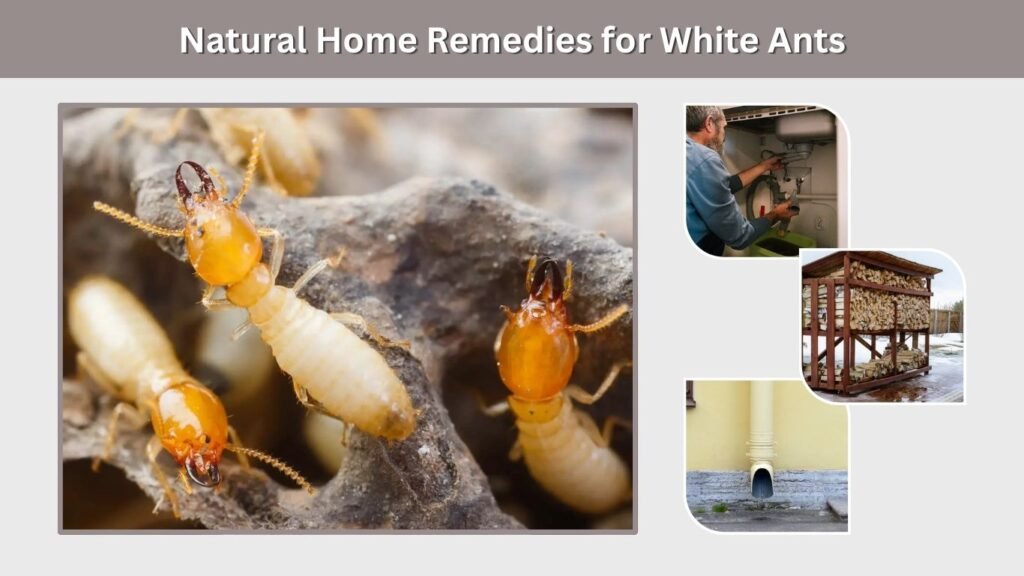
Moisture management and physical prevention are the most useful nonchemical measures. These steps cannot remove every established colony, but they can make the property less attractive and support professional control:
- Repair leaking pipes, roofs, and outdoor faucets.
- Improve drainage around the foundation.
- Remove wood-to-soil contact.
- Store cardboard and firewood away from the house.
- Keep gutters and downspouts clear.
- Avoid piling mulch against siding.
- Seal accessible foundation gaps.
- Replace badly damaged wood after control.
Home mixtures, essential oils, salt, gasoline, bleach, and random powders are not dependable substitutes for complete termite treatment. Applying an unregistered or incorrectly labeled pesticide can also create risks without eliminating the infestation.
White Ant Treatment Cost
Termite treatment cost varies according to the size of the building, termite species, construction type, treatment method, infestation severity, and warranty. A 2025 Mississippi State University Extension example estimated approximately $1,200–$1,750 to treat an average-size house in that market, but prices elsewhere may be considerably different.
Request written inspections and quotes from licensed companies. Compare the proposed method, areas covered, follow-up inspections, renewal charges, retreatment terms, and warranty. Termite guarantees commonly have specific limits, so read the contract carefully.
FAQs
Are white ants actually ants?
No. White ants are termites. They are commonly given this name because worker termites are small, social, and pale. True ants have narrow waists and elbowed antennae, while termites have broad bodies and straight antennae.
Do white ants fly?
Worker and soldier termites do not fly. Mature colonies produce winged reproductive termites called swarmers. These adults leave the colony, fly briefly, shed their wings, and attempt to establish new colonies.
What are the white things ants carry?
True ants often carry white eggs, larvae, or pupae when a nest is disturbed. These pale objects are developing ants, not white ants. Termite workers, by comparison, are moving insects with visible legs and antennae.
Can I treat white ants myself?
Minor prevention work can be performed by homeowners, but active structural infestations generally need professional evaluation. Successful treatment may require trenching, drilling, soil application, bait monitoring, fumigation, or treatment inside inaccessible wood.
How can I tell whether white ants are active?
Live workers, fresh mud tubes, recent swarmers, newly discarded wings, fresh drywood pellets, or continuing wood damage may indicate activity. Because termites can relocate within a structure, a professional inspection is the safest way to confirm their status.