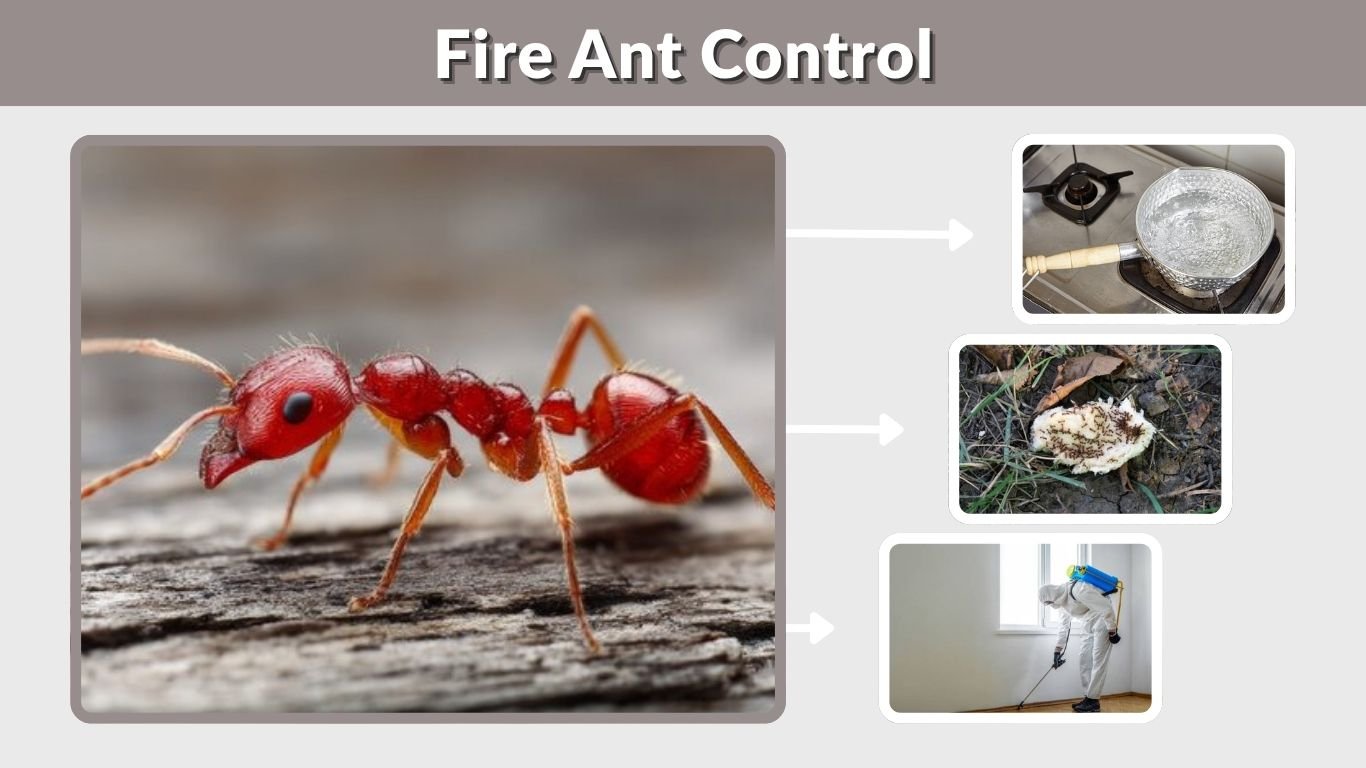
Fire ants can quickly make a lawn, garden, pasture, or play area unsafe. Disturbing a mound may trigger repeated stings, while destroying only the visible soil rarely eliminates the colony. Reliable fire ant control combines broadcast bait for hidden nests with direct treatment of dangerous mounds. This guide covers the best methods, safer application practices, natural options, pet precautions, and professional services.
Fire Ant Control Methods Compared
| Method | Best use | Speed | Main limitation |
| Broadcast bait | Whole lawns and large yards | Slow | Needs correct timing and dry weather |
| Mound treatment | Patios, paths, and visible nests | Fast | Misses hidden colonies |
| Broadcast contact insecticide | High-use turf needing quick suppression | Moderate to fast | May cost more and affect non-target insects |
| Professional service | Severe or recurring infestations | Varies | Higher upfront cost |
| Hot-water drench | A few isolated mounds | Variable | May burn people and damage plants |
Extension specialists commonly recommend a two-step program: broadcast bait over the entire area, then spot-treat colonies that remain or create an immediate hazard.
Why Fire Ants Are Difficult to Control
A mound is only the visible part of an underground nest. Flattening it may leave the queen, brood, and most workers alive. Colonies can also relocate after disturbance, and new queens may establish nests nearby. Mowing over mounds, kicking them apart, or treating only the surface usually gives temporary results.
Correct identification matters. Red imported fire ants commonly build soil mounds in sunny turf, while other pest ants may nest in trees, buildings, or shaded areas. Seek local extension or professional help when the species is uncertain.
The Best Fire Ant Control: A Two-Step Method
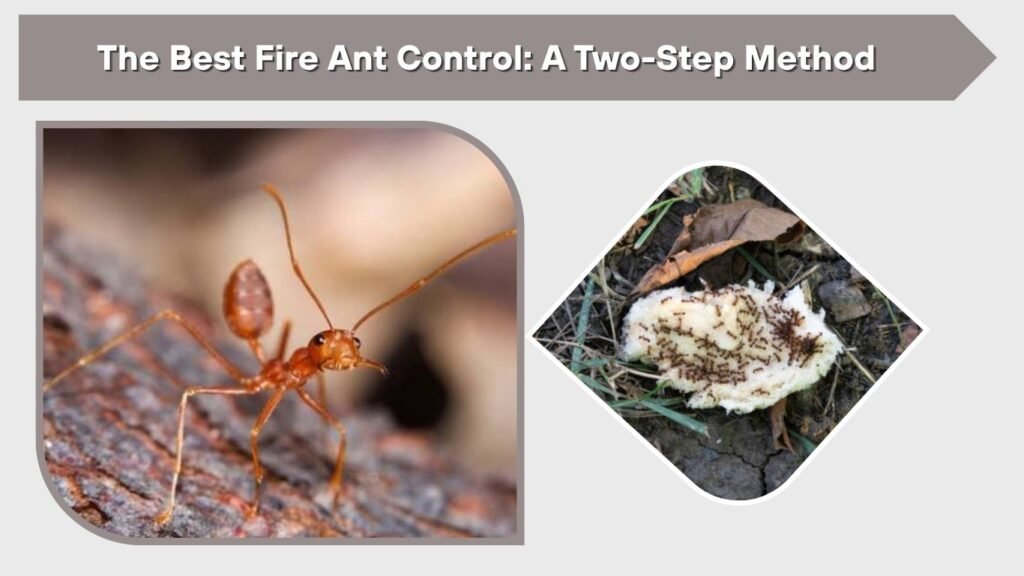
Step 1: Apply Broadcast Fire Ant Bait
Broadcast bait is the foundation of long-term control for lawns and large properties. Workers collect the bait and carry it into the nest, allowing the active ingredient to reach the colony. Some baits kill ants directly, while insect growth regulators prevent the production of new workers.
For better results:
- Spread fresh bait over the entire labeled area, not only visible mounds.
- Apply when ants are foraging and the ground is dry.
- Avoid rain or irrigation soon after treatment unless the label permits it.
- Use the exact rate stated on the label.
- Keep unused bait sealed because old bait may be ignored.
Baits act gradually. Noticeable control may take days or several weeks, depending on the active ingredient and colony size. Their main advantage is area-wide suppression.
Step 2: Treat Troublesome Mounds
After ants have collected the broadcast bait, directly treat mounds beside doors, sidewalks, playgrounds, kennels, patios, or other high-use areas.
Common options include:
- Liquid mound drenches
- Granules watered into the nest
- Dusts used according to label directions
- Fast-acting mound baits
- Aerosols labeled for ant nests
Contact treatments usually work faster than broadcast bait, but enough product must reach the ants. Follow the required water volume and application pattern rather than treating only the mound’s center.
Best Fire Ant Control for Large Yards
Treating every mound separately is inefficient on a large property because young colonies may not produce visible mounds. Broadcast bait is usually the most practical choice for an entire lawn or acreage.
Measure the treatment area, calibrate the spreader, and distribute the label rate evenly. Prioritize play areas, pet yards, paths, entrances, and utility sites. Reinspect the property and spot-treat newly active mounds.
Reinvasion from untreated neighboring land is common, so seasonal maintenance is more realistic than expecting permanent elimination after one application. The exact treatment frequency must follow the chosen product’s label.
Natural and Organic Fire Ant Control
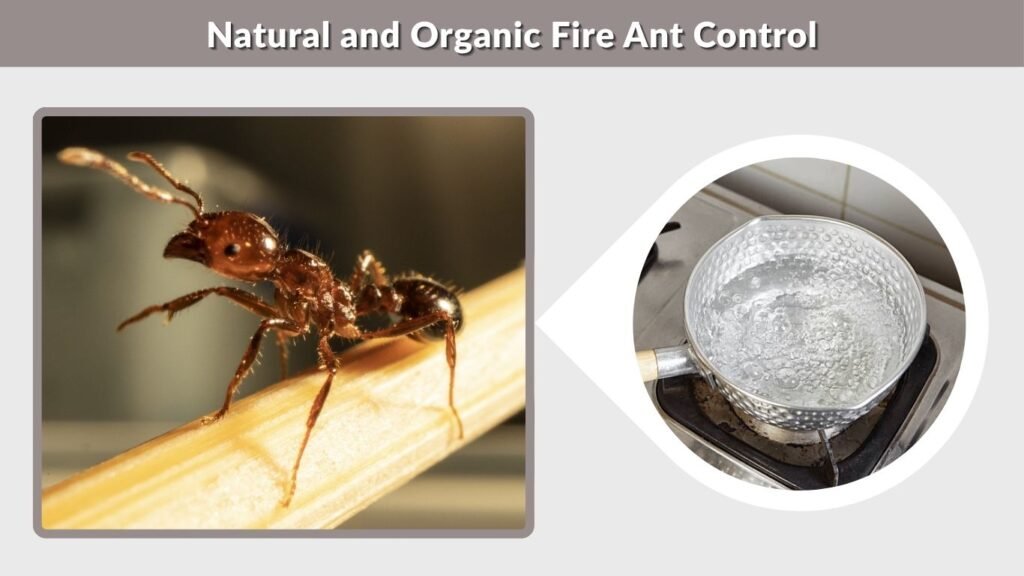
Natural fire ant control is appealing, but “natural” does not automatically mean safe or effective. A very hot-water drench may reduce an individual colony when enough water reaches the nest. However, it can burn the applicator, kill turf, damage roots, and miss a deep queen.
Some organic-labeled products contain ingredients such as spinosad, but approved uses differ. Confirm that the label permits treatment on lawns, vegetable gardens, pastures, or around animals.
Avoid gasoline, diesel, bleach, household cleaners, and similar mixtures. They may contaminate soil, injure plants, create safety hazards, or simply force the colony to move. Use only pesticides approved for the intended site and never exceed label rates.
Pet-Safe Fire Ant Control
No pesticide should be assumed completely safe because it is marketed for residential use. Choose a product labeled for the exact site and follow all directions for application, reentry, watering, storage, and disposal.
To reduce risk:
- Remove pets, bowls, toys, and bedding before treatment.
- Prevent animals from eating bait or digging into treated mounds.
- Keep pets away until label reentry requirements are met.
- Never use a lawn product in grazing or poultry areas unless listed on the label.
- Store pesticides in their original containers away from children and animals.
For mounds near kennels or feeding areas, temporary exclusion plus a labeled treatment is safer than using household chemicals.
Fire Ant Control in Florida, Texas, and Southern Lawns
Warm climates support long periods of activity, so fire ant control in Florida, Texas, and other southern states often requires seasonal maintenance. Spring is a useful time to begin when ants are actively foraging, with later applications made only as the label allows.
Apply bait when the surface is dry and rain is not expected soon. During hot weather, ants may forage more during cooler periods. Because restrictions and recommendations differ by location, combine label directions with guidance from a local cooperative extension office.
Fire Ant Control in Pastures and Gardens
Pastures, hayfields, orchards, and food gardens require extra care. A product labeled for residential turf may not be legal for grazing areas or edible crops. Check the label for the crop or site, grazing restrictions, harvest intervals, rates, and treatment limits.
For pastures, use bait specifically labeled around grazing animals and apply it with calibrated equipment. Near ponds or drainage channels, follow environmental precautions because some active ingredients are toxic to aquatic organisms.
When to Hire a Fire Ant Control Service
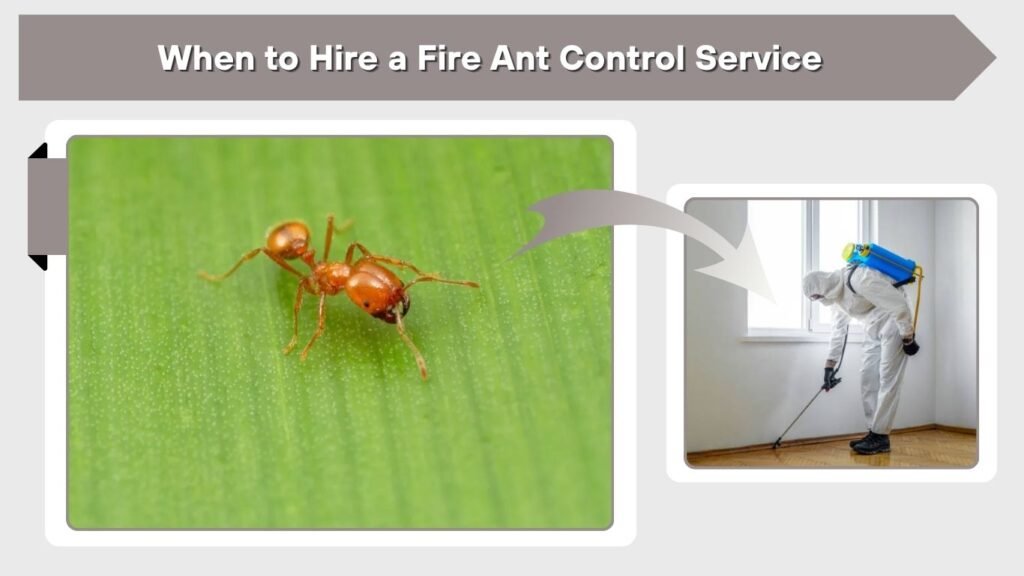
Professional pest control may be worthwhile when the infestation covers a large property, returns after repeated treatment, threatens someone with a serious sting allergy, or occurs around schools, electrical equipment, livestock facilities, or sensitive landscapes.
Ask each company about its active ingredients, broadcast and mound treatments, follow-up policy, safety precautions, licensing, and insurance. Fire ant pest control cost depends on property size, infestation level, treatment method, and retreatment coverage, so request a written quote.
FAQs
What is the most effective way to control fire ants?
For most lawns, combine broadcast bait with individual mound treatment. Bait suppresses visible and hidden colonies across the property, while a faster contact product removes dangerous mounds near doors, paths, play spaces, and pet areas.
How long does fire ant bait take to work?
Results depend on the active ingredient. Faster baits may reduce a colony within days, while insect growth regulators can take several weeks. Avoid disturbing mounds immediately after baiting because workers need time to collect and distribute it.
Can I permanently remove fire ants from my yard?
Permanent elimination is difficult in infested regions because new queens and colonies can enter from nearby land. Consistent area-wide baiting, spot treatment, and inspection can keep mound numbers low and make the property safer.
What kills a fire ant mound quickly?
A correctly applied, labeled liquid drench or contact mound treatment usually works faster than broadcast bait. Use the full water volume or application method required by the label so the treatment penetrates the nest.
Is fire ant bait safe around dogs and cats?
Safety depends on the product, dose, and application. Use only labeled products, remove pets during treatment, prevent access to granules, and follow reentry instructions. Contact a veterinarian or poison-control service if an animal eats pesticide or develops symptoms.