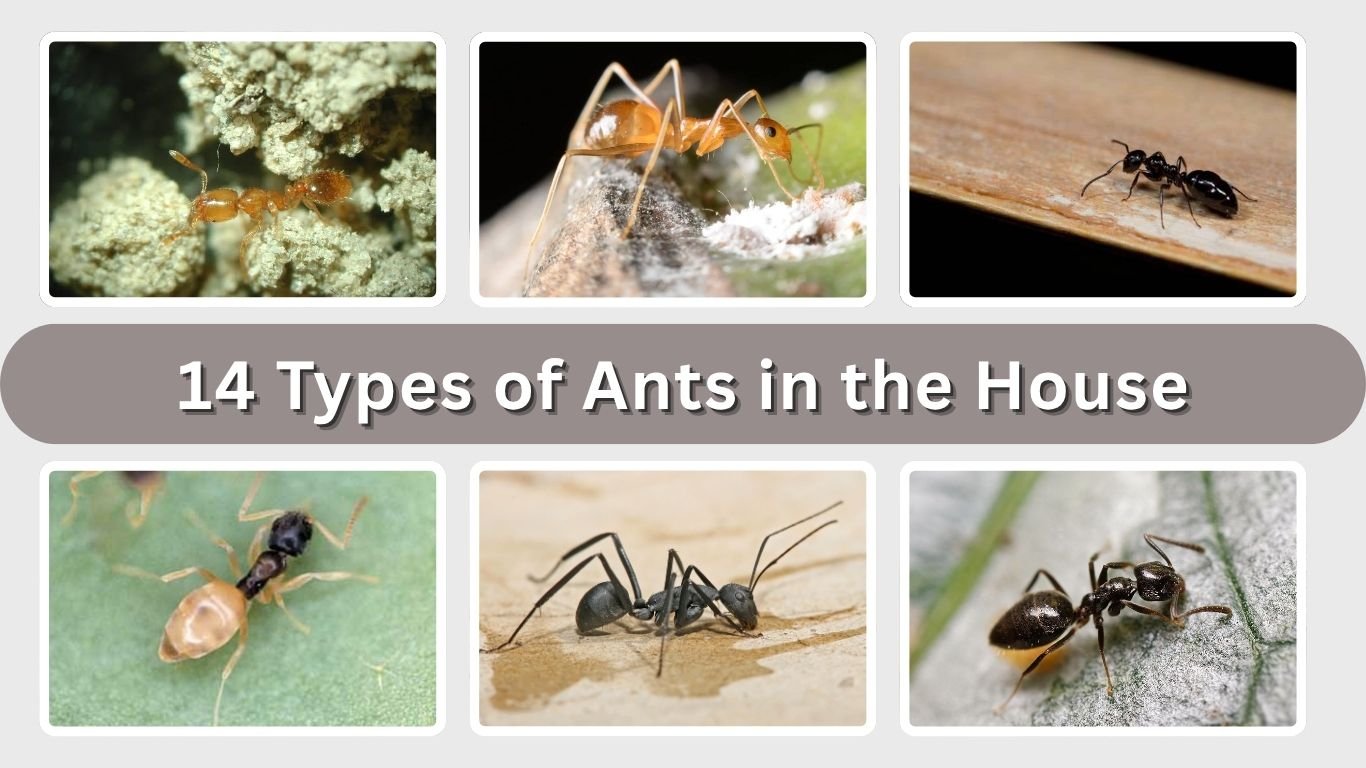
Ants are among the most common household pests, but not every species behaves the same way. Some invade kitchens for sugar and grease, while others nest in walls, damaged wood, floors, or foundations. Correct identification helps you understand where the colony may be hiding, what attracts it, and which control method is most effective. This guide covers 14 types of ants commonly found in houses, including odorous house ants, carpenter ants, pavement ants, ghost ants, fire ants, and more. Each section explains identification, habitat, diet, and the main signs that may reveal an indoor or nearby infestation on your property.
1. Odorous House Ant
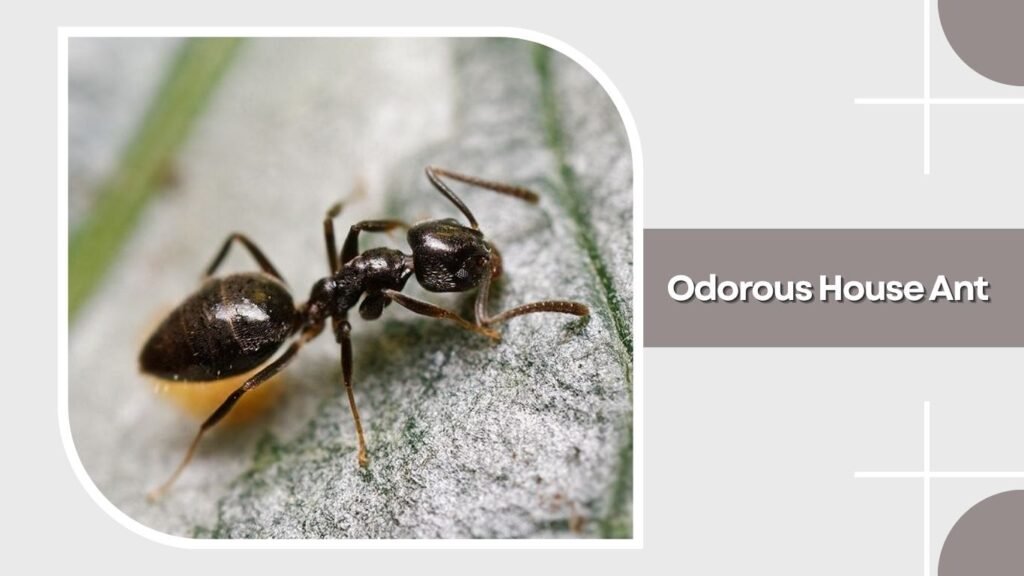
The odorous house ant is one of the most common ants found inside homes. These tiny ants frequently invade kitchens, bathrooms, cupboards, and other areas where food or moisture is available. They are especially attracted to sugary substances and often travel in long, organized trails.
Identification
- Workers measure about 1/16 to 1/8 inch long.
- Their bodies are brown, dark brown, or nearly black.
- They have unevenly shaped thoraxes when viewed from the side.
- A single waist node is present but usually hidden beneath the abdomen.
- Crushed workers produce a strong odor often compared to rotten coconut.
- Workers within the colony are generally similar in size.
Habitat and Nesting Areas
Odorous house ants commonly nest outdoors beneath stones, mulch, firewood, loose bark, and shallow soil. Indoors, colonies may establish nests inside wall voids, beneath floors, around plumbing, and near water-damaged wood. They often enter buildings during rainy weather or when outdoor conditions become excessively hot or dry.
Diet and Feeding Behavior
These ants strongly prefer sweet foods such as honey, syrup, fruit juice, candy, and spilled soda. Outdoors, they collect honeydew produced by aphids and other sap-feeding insects. They may also consume dead insects, meat, grease, pet food, and other protein-rich materials when the colony needs them.
Signs of an Infestation
The clearest sign is a steady trail of small, dark ants moving between a food source and an entry point. They may appear around sinks, countertops, pantry shelves, windows, and baseboards. Because colonies can contain several queens and many nesting sites, simply killing visible workers may not eliminate the infestation.
2. Argentine Ant
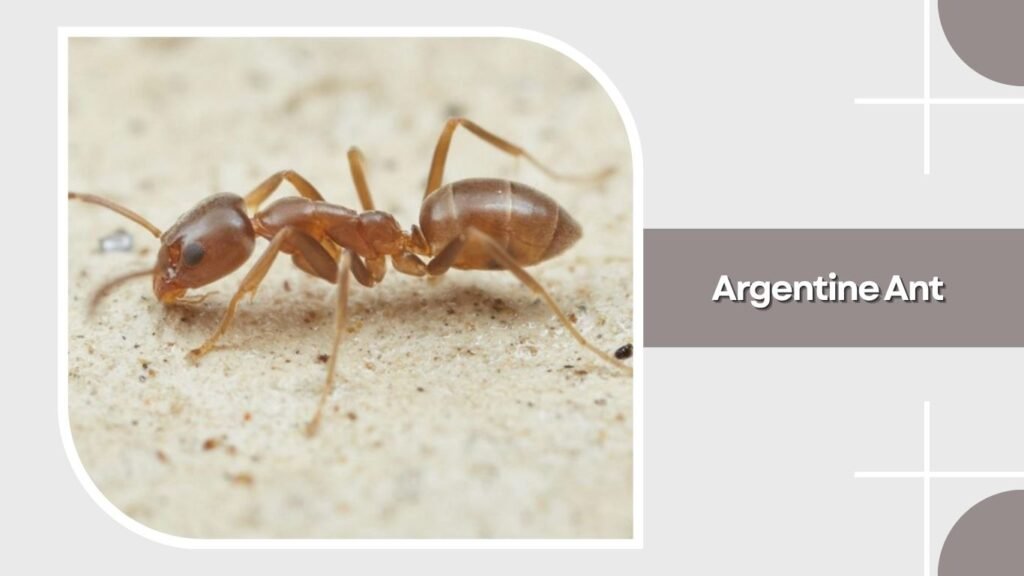
The Argentine ant is a common household pest known for forming extremely large colonies and long foraging trails. These ants often enter kitchens, bathrooms, basements, and wall spaces in search of food and water. They can become difficult to control because neighboring colonies usually cooperate rather than fight.
Identification
- Workers measure approximately 1/16 to 1/8 inch long.
- Their bodies are light brown to dark brown.
- All workers are nearly the same size.
- They have a slender body with long legs and antennae.
- A single waist node is present but may be difficult to see.
- Crushed Argentine ants may produce a faint musty odor.
Habitat and Nesting Areas
Argentine ants prefer moist environments and commonly nest beneath mulch, stones, logs, pavement, flowerpots, and landscape materials. Indoors, they may establish temporary nests inside wall voids, beneath floors, around plumbing, or near leaking sinks. Heavy rain, drought, or cold weather often pushes them into homes.
Diet and Feeding Behavior
These ants strongly prefer sugary foods, including honey, syrup, fruit juice, candy, and sweet crumbs. Outdoors, they feed heavily on honeydew produced by aphids, scale insects, and mealybugs. Argentine ants also eat dead insects, meat, grease, and pet food when the colony requires protein.
Signs of an Infestation
Long, clearly visible trails containing hundreds of ants are a major sign of an Argentine ant infestation. They often travel along baseboards, countertops, pipes, exterior walls, and tree branches. Because colonies may contain many queens and thousands of workers, spraying visible ants usually provides only temporary relief.
3. Pavement Ant
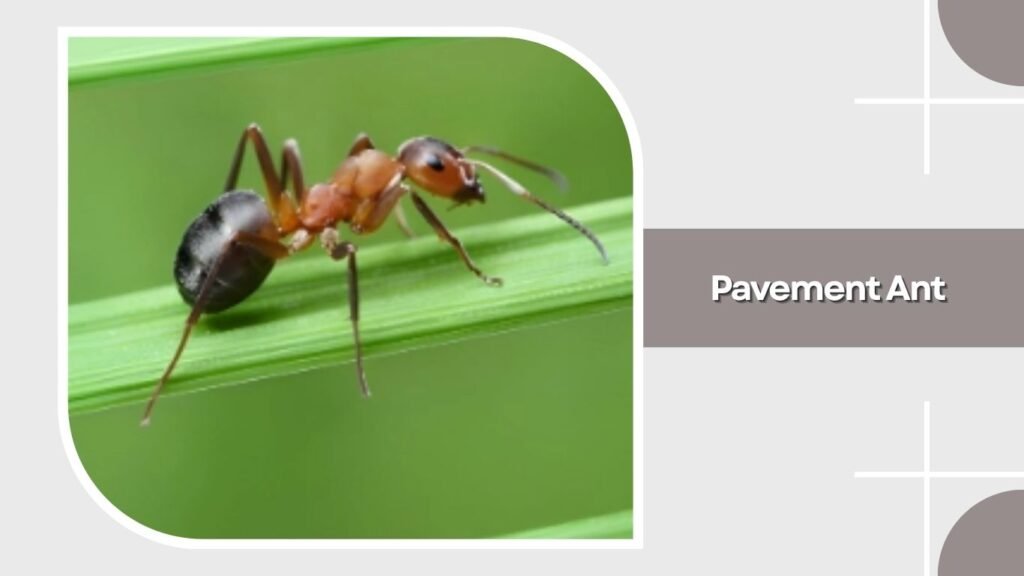
The pavement ant is a small household pest commonly found around sidewalks, driveways, foundations, patios, and concrete floors. These ants often enter homes through cracks while searching for food. They are especially active in kitchens, basements, garages, and other ground-level areas.
Identification
- Workers measure about 1/16 to 1/8 inch long.
- Their bodies are dark brown, reddish-brown, or nearly black.
- They have two visible nodes between the thorax and abdomen.
- Fine grooves can be seen on the head and thorax under magnification.
- Their antennae end in a three-segmented club.
- Workers within the colony are generally similar in size.
Habitat and Nesting Areas
Pavement ants usually build nests beneath sidewalks, concrete slabs, driveways, stones, bricks, and building foundations. Small piles of soil may appear beside cracks where workers excavate their nests. Indoors, they may nest beneath floors, inside wall voids, or near foundation openings.
Diet and Feeding Behavior
These ants eat a wide variety of foods, including sugar, honey, syrup, fruit, bread, grease, meat, cheese, seeds, and dead insects. They often forage at night and may form trails toward kitchen counters, pet bowls, trash containers, and pantry shelves.
Signs of an Infestation
Common signs include trails of small dark ants emerging from cracks in concrete, baseboards, or flooring. Small soil deposits near pavement gaps may reveal an outdoor nest. During spring and summer, pavement ant colonies may also engage in large territorial battles on sidewalks or driveways.
4. Pharaoh Ant
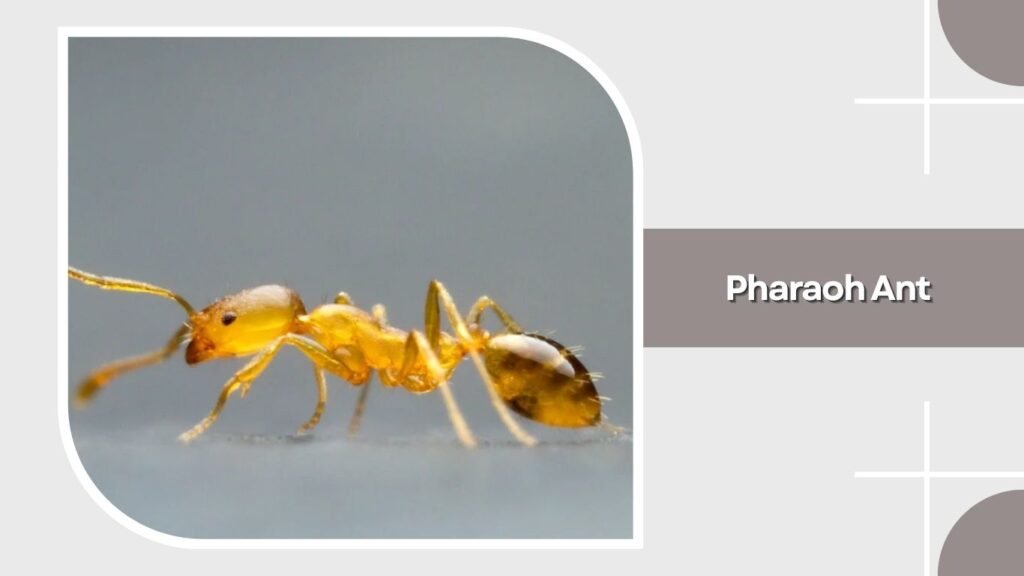
The pharaoh ant is a tiny indoor ant that commonly infests homes, apartments, hospitals, restaurants, and other heated buildings. It is difficult to control because colonies can contain multiple queens and may split into smaller colonies when disturbed. These ants often appear around food, water, and warm appliances.
Identification
- Workers measure about 1/16 inch long.
- Their bodies are pale yellow, light brown, or reddish-yellow.
- The abdomen is usually darker than the rest of the body.
- They have two visible nodes between the thorax and abdomen.
- Their antennae end in a three-segmented club.
- Workers are extremely small and similar in size.
Habitat and Nesting Areas
Pharaoh ants prefer warm, humid, and protected locations. Indoors, they may nest inside wall voids, cabinets, insulation, furniture, electrical outlets, and spaces around plumbing. Colonies are often found near kitchens, bathrooms, heating systems, and appliances that produce warmth.
Diet and Feeding Behavior
These ants eat sugary, greasy, and protein-rich foods. They are attracted to honey, syrup, fruit, sweets, meat, grease, pet food, and dead insects. Their preferences may change depending on the colony’s nutritional needs, so they sometimes ignore one type of bait while accepting another.
Signs of an Infestation
The main sign is a trail of extremely small yellow or light-brown ants around sinks, cupboards, food containers, and warm appliances. Because colonies may spread throughout a building, ants can appear in several rooms. Spraying visible workers may cause colonies to divide and make the infestation worse.
5. Carpenter Ant
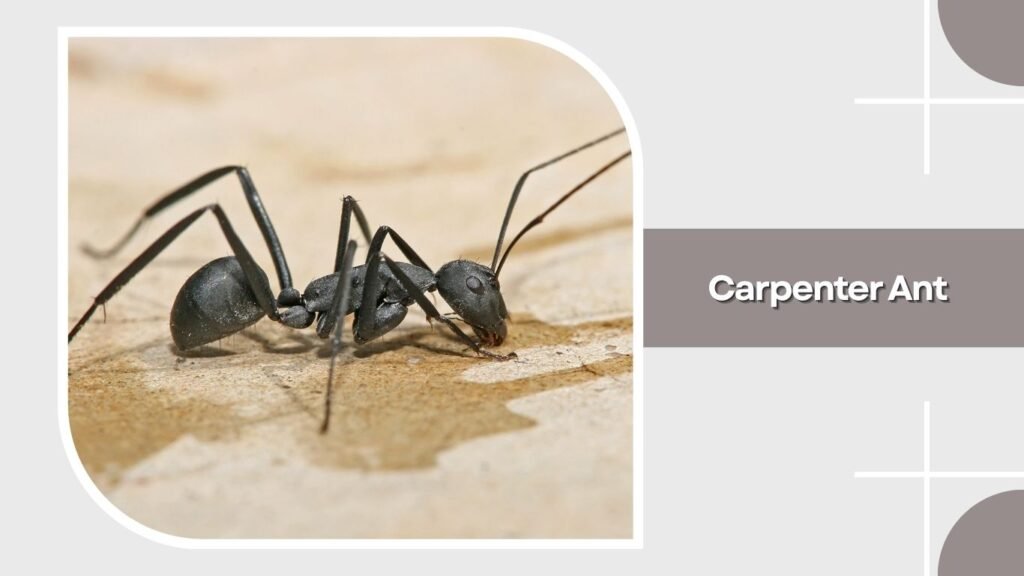
The carpenter ant is one of the largest ants commonly found inside houses. Unlike termites, carpenter ants do not eat wood. Instead, they excavate galleries inside damp, decaying, or weakened wood to build their nests. Their presence may indicate a moisture problem or hidden structural damage.
Identification
- Workers measure about 1/4 to 1/2 inch long.
- Their bodies may be black, reddish-black, brown, or red.
- Workers from the same colony can vary noticeably in size.
- They have a single waist node between the thorax and abdomen.
- The thorax appears smoothly rounded when viewed from the side.
- Winged carpenter ants have narrow waists and elbowed antennae.
Habitat and Nesting Areas
Carpenter ants usually establish their main nests outdoors in tree stumps, logs, dead trees, and damaged wood. Indoors, they may nest around leaking roofs, windows, doors, bathrooms, wall voids, and plumbing. They prefer wood softened by moisture, although established colonies can expand into sound wood.
Diet and Feeding Behavior
Carpenter ants eat sweet liquids, insects, meat, grease, and protein-rich foods. Outdoors, they feed on honeydew produced by aphids and collect dead or living insects. Indoors, they may forage around sinks, trash containers, pet bowls, spilled drinks, and sugary foods.
Signs of an Infestation
Large ants seen indoors, especially at night, may indicate a nearby colony. Other signs include rustling sounds inside walls, winged ants near windows, and small piles of coarse wood shavings called frass. Carpenter ants often push wood particles, insect remains, and debris from their nesting galleries.
6. Ghost Ant
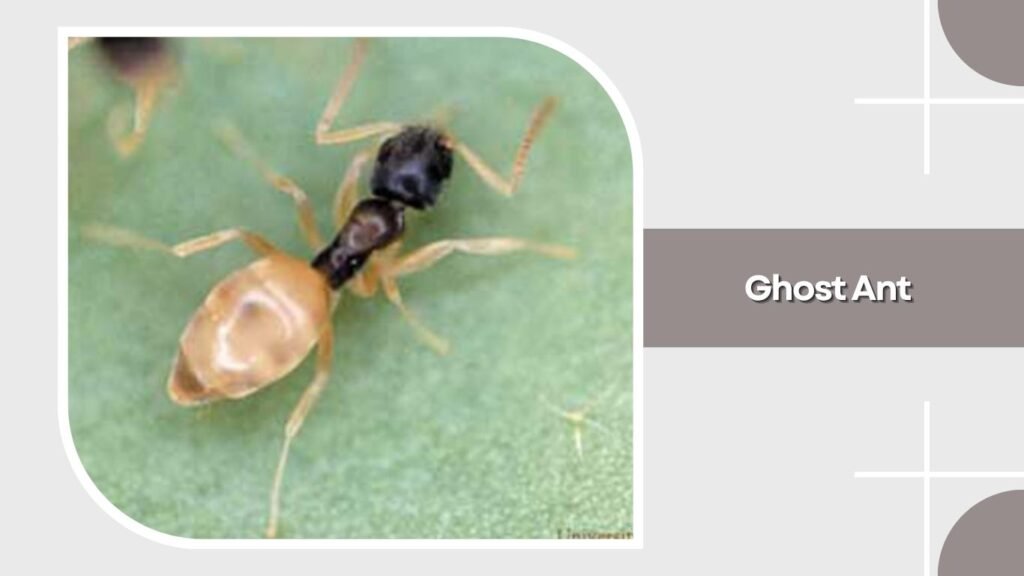
The ghost ant is a tiny household pest commonly found in warm, humid regions. Its pale legs and abdomen make it difficult to see against light-colored surfaces, giving the ant its “ghost-like” appearance. These ants frequently invade kitchens, bathrooms, greenhouses, and indoor plant areas in search of food and moisture.
Identification
- Workers measure about 1/16 inch long.
- The head and thorax are dark brown or black.
- The abdomen and legs are pale, yellowish, or almost transparent.
- They have two small waist nodes.
- Their antennae contain 12 segments and end without a distinct club.
- Workers are extremely small and move quickly along trails.
Habitat and Nesting Areas
Ghost ants prefer warm, moist, and protected environments. Outdoors, they may nest beneath loose bark, stones, leaf litter, flowerpots, and decaying plant material. Indoors, colonies can develop inside wall voids, cabinets, electrical outlets, potted plants, and spaces around sinks or plumbing.
Diet and Feeding Behavior
These ants strongly prefer sweet foods such as honey, syrup, fruit juice, candy, and spilled drinks. Outdoors, they feed on honeydew produced by aphids and scale insects. They may also consume dead insects and protein-rich foods when the colony is raising larvae.
Signs of an Infestation
Common signs include trails of tiny, pale-bodied ants moving around countertops, sinks, cupboards, windows, and indoor plants. Because colonies may contain several queens and multiple nesting sites, ghost ants can spread quickly through a building. Spraying visible workers may scatter the colony and make control more difficult.
7. Acrobat Ant
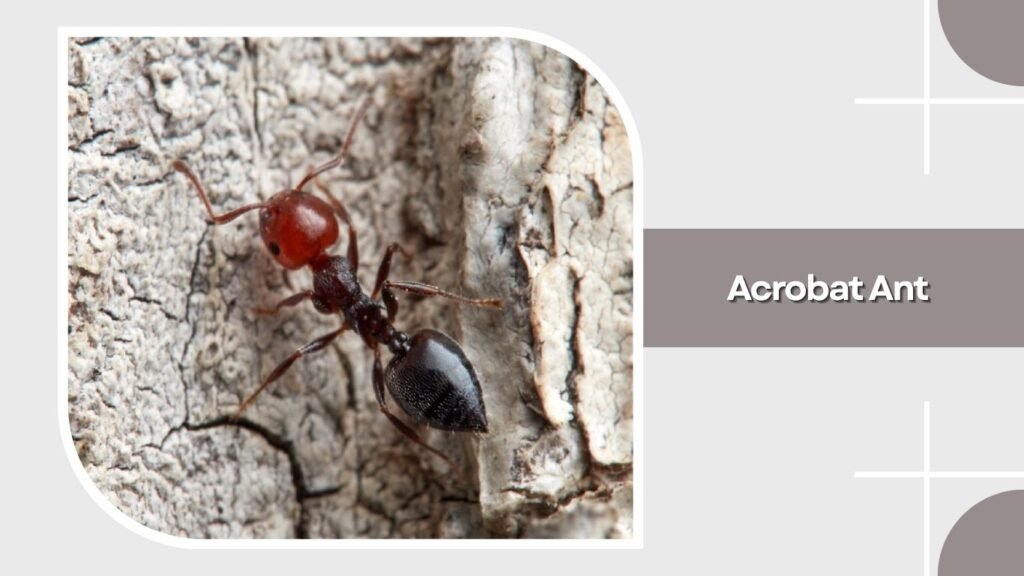
The acrobat ant is a small household ant known for raising its heart-shaped abdomen over its body when disturbed. These ants often enter homes through cracks, tree branches, utility lines, and damaged wood. They may nest indoors when moisture, warmth, and suitable shelter are available.
Identification
- Workers measure about 1/8 inch long.
- Their bodies may be light brown, dark brown, reddish-brown, or black.
- They have two visible nodes between the thorax and abdomen.
- The abdomen appears heart-shaped when viewed from above.
- Workers often lift the abdomen above the thorax when threatened.
- Some species release an unpleasant odor when disturbed.
Habitat and Nesting Areas
Acrobat ants commonly nest outdoors beneath stones, logs, tree bark, firewood, and decaying wood. They may use abandoned galleries created by termites or carpenter ants. Indoors, nests are often found inside wall voids, door frames, window frames, insulation, and wood damaged by plumbing or roof leaks.
Diet and Feeding Behavior
These ants feed on honeydew, nectar, sweets, grease, protein, and insects. They may tend aphids and scale insects to collect sugary honeydew. Inside homes, they forage around syrup, fruit, crumbs, meat, pet food, trash containers, and other accessible food sources.
Signs of an Infestation
Small trails around windows, pipes, rooflines, baseboards, and damaged wood may indicate acrobat ants. Workers may also push insulation, dead insects, or nesting debris from wall openings. Their presence near damp wood can suggest a hidden moisture problem or a previously established wood-destroying insect nest.
8. Thief Ant
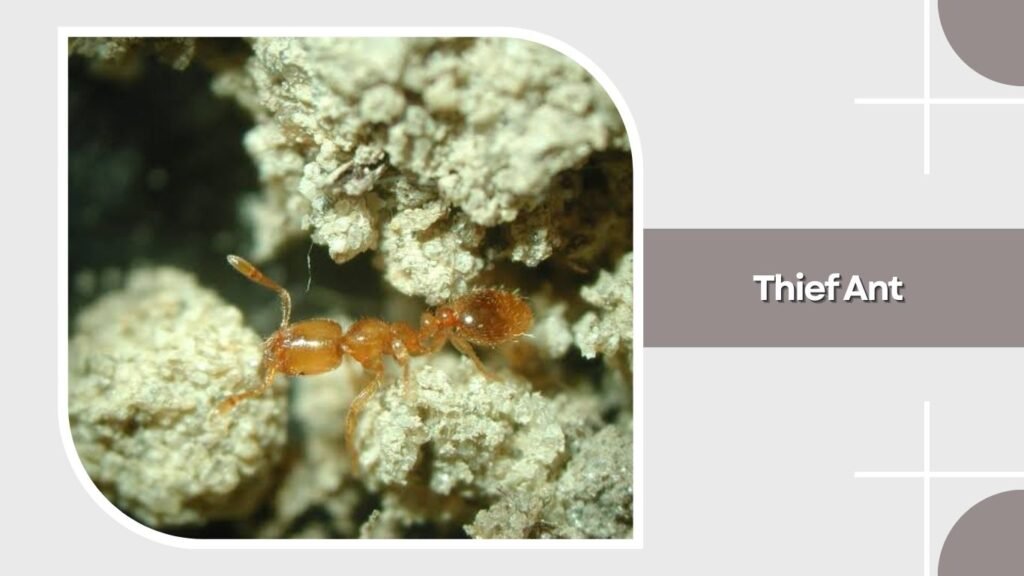
The thief ant is one of the smallest ants commonly found inside houses. It receives its name from its habit of nesting close to larger ant colonies and stealing their food or larvae. Indoors, thief ants often invade kitchens, pantries, cupboards, and areas containing greasy or protein-rich foods.
Identification
- Workers measure approximately 1/32 to 1/16 inch long.
- Their bodies are pale yellow, light brown, or golden.
- They have two small nodes between the thorax and abdomen.
- Their antennae end in a noticeable two-segmented club.
- Workers are extremely small and similar in size.
- Their tiny bodies allow them to enter sealed-looking food packages.
Habitat and Nesting Areas
Thief ants commonly nest outdoors beneath stones, soil, decaying wood, and leaf litter. They frequently establish colonies near the nests of other ants. Inside homes, they may nest behind baseboards, inside wall voids, beneath floors, inside cabinets, and around foundations. Their nests are often difficult to locate because the ants can travel through extremely narrow cracks.
Diet and Feeding Behavior
Unlike many ants that strongly prefer sweets, thief ants are especially attracted to greasy and protein-rich foods. They feed on meat, cheese, butter, cooking oil, peanut butter, nuts, dead insects, and pet food. They may also eat sweets when other foods are unavailable, but fatty materials are usually more attractive.
Signs of an Infestation
The main sign is a trail of extremely small yellow or light-brown ants moving around cupboards, food packages, countertops, and pet-feeding areas. They may be mistaken for pharaoh ants, but thief ants have a two-segmented antennal club. Their ability to enter packaged food and nest inside walls can make infestations difficult to eliminate.
9. Little Black Ant
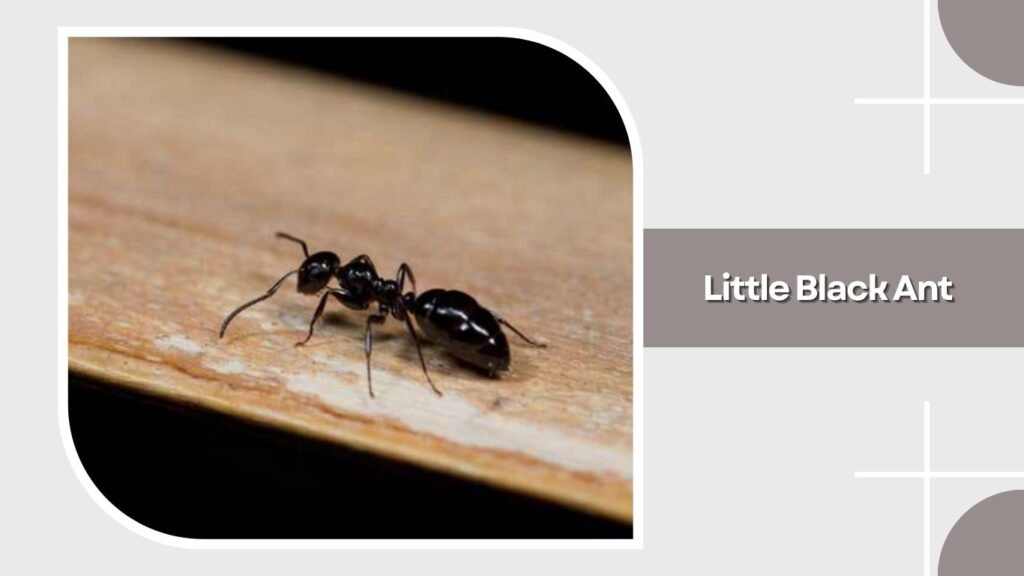
The little black ant is a tiny household pest commonly found in kitchens, bathrooms, basements, and other areas with accessible food or moisture. These ants often form noticeable trails along counters, walls, foundations, and baseboards. Their small size allows them to enter homes through extremely narrow cracks.
Identification
- Workers measure about 1/16 inch long.
- Their bodies are dark brown, shiny black, or nearly black.
- They have two small nodes between the thorax and abdomen.
- Their antennae end in a three-segmented club.
- Workers are similar in size throughout the colony.
- Their bodies appear compact and slightly shiny under bright light.
Habitat and Nesting Areas
Little black ants commonly nest outdoors beneath stones, logs, tree bark, mulch, and piles of decaying wood. They may also establish colonies in soil, lawns, and cracks in pavement. Indoors, they can nest inside wall voids, beneath floors, behind baseboards, and around damaged wood or plumbing.
Diet and Feeding Behavior
These ants consume many types of food, including honey, syrup, fruit, grease, meat, bread, pet food, and dead insects. Outdoors, they feed on nectar and honeydew produced by aphids and other sap-feeding insects. Inside homes, they often forage around sinks, cupboards, trash containers, and food-preparation areas.
Signs of an Infestation
The most common sign is a trail of tiny black ants moving between a food source and a crack, wall opening, or window frame. Large numbers may gather around sweet spills, pet bowls, or damp sinks. Because colonies can contain thousands of workers, removing visible ants without treating the nest usually provides only temporary control.
10. Crazy Ant
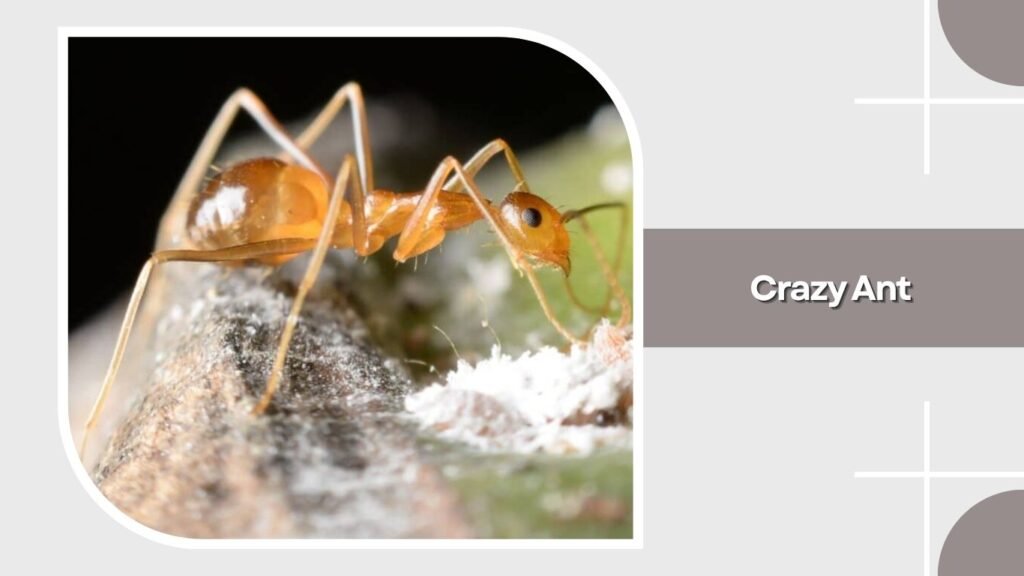
The crazy ant is a fast-moving household pest recognized by its irregular, unpredictable walking pattern. Instead of following neat trails, workers often run in different directions when disturbed. These ants commonly enter homes searching for moisture, sweet food, insects, and protected nesting spaces.
Identification
- Workers measure approximately 1/16 to 1/8 inch long.
- Their bodies may be dark brown, blackish, reddish-brown, or yellowish-brown.
- They have exceptionally long legs and antennae compared with their body size.
- A single waist node is present but may be difficult to see.
- Workers have slender bodies and move very quickly.
- Their erratic running behavior is one of their most noticeable features.
Habitat and Nesting Areas
Crazy ants usually nest in moist, protected areas beneath stones, mulch, logs, flowerpots, pavement, and decaying vegetation. Indoors, colonies may settle inside wall voids, cabinets, crawl spaces, electrical equipment, and areas around plumbing. They often move indoors during heavy rain, drought, or extreme temperatures.
Diet and Feeding Behavior
These ants eat a wide variety of foods, including honey, syrup, fruit, grease, meat, pet food, and dead insects. Outdoors, they commonly collect honeydew from aphids, scale insects, and other sap-feeding pests. Their broad diet allows colonies to survive in homes, gardens, commercial buildings, and outdoor landscapes.
Signs of an Infestation
The clearest sign is the presence of numerous long-legged ants running rapidly and unpredictably across floors, walls, counters, or exterior surfaces. Heavy infestations may occur around electrical boxes, appliances, air-conditioning units, and damp structural areas. Their colonies may contain several queens, making established infestations difficult to control with surface sprays alone.
11. Fire Ant
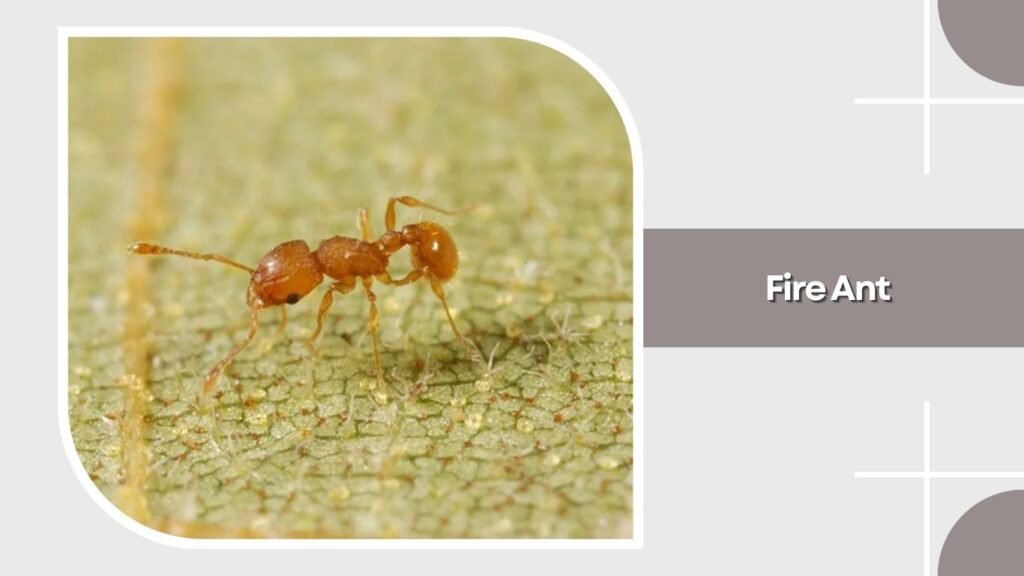
The fire ant is an aggressive ant best known for its painful sting and mound-shaped outdoor nests. Although fire ants normally live outside, workers may enter homes while searching for food, water, or shelter. Indoor activity is especially common near doors, foundations, plumbing, and pet-feeding areas.
Identification
- Workers measure about 1/16 to 1/4 inch long.
- Their bodies are reddish-brown, copper-colored, or dark red.
- The abdomen is usually darker than the head and thorax.
- Workers from the same colony vary noticeably in size.
- They have two nodes between the thorax and abdomen.
- Their antennae end in a two-segmented club.
- Disturbed workers behave aggressively and may sting repeatedly.
Habitat and Nesting Areas
Fire ants usually build nests in sunny soil around lawns, gardens, roadsides, sidewalks, foundations, and electrical equipment. Their mounds often lack a visible central entrance because workers use underground tunnels. Indoors, they may appear near wall openings, plumbing lines, potted plants, or areas connected to an outdoor colony.
Diet and Feeding Behavior
Fire ants eat insects, meat, grease, seeds, sugary liquids, pet food, and other available materials. They actively hunt small invertebrates and also scavenge dead animals. Indoors, workers may gather around food spills, trash containers, pet bowls, and damp areas where water is available.
Signs of an Infestation
Outdoor soil mounds near the house are the clearest sign of fire ants. Indoors, reddish ants of different sizes may appear near doors, baseboards, pipes, or food sources. Their painful stings can leave burning red bumps that may later develop small white pustules, so nests should not be disturbed by hand.
12. Rover Ant
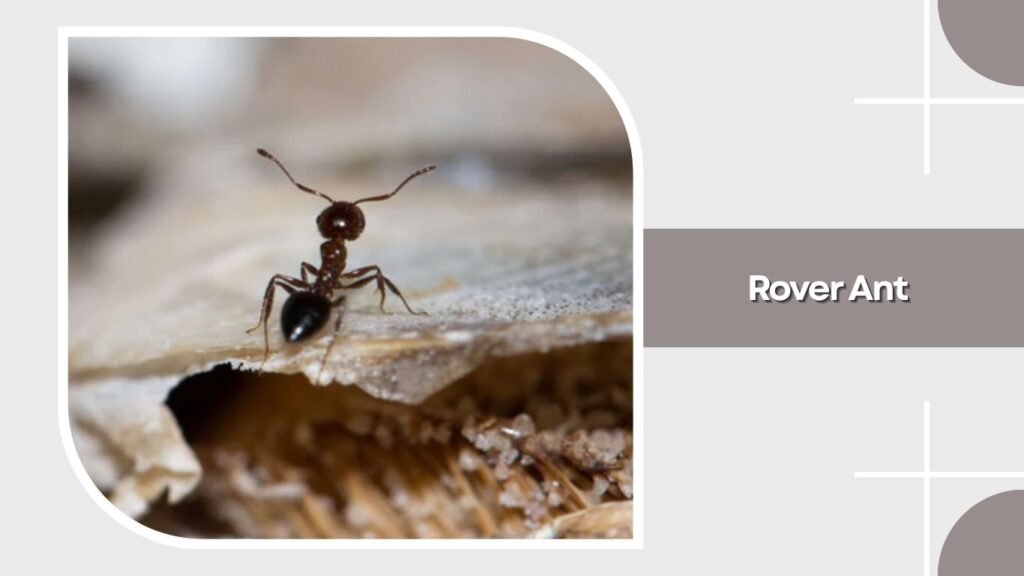
The rover ant is a tiny household invader commonly found in warm regions. These ants often enter homes in large numbers while searching for moisture and sugary food. Their extremely small bodies allow them to travel through narrow cracks around windows, doors, plumbing lines, foundations, and baseboards.
Identification
- Workers measure approximately 1/32 to 1/16 inch long.
- Their bodies may be pale yellow, reddish-brown, or dark brown.
- They have a single waist node, which is often hidden beneath the abdomen.
- Their antennae contain nine segments and do not have a distinct club.
- Workers are similar in size throughout the colony.
- Their bodies are compact, with relatively large abdomens.
- Winged reproductive ants may appear near lights, doors, and windows.
Habitat and Nesting Areas
Rover ants commonly nest outdoors in soil, mulch, leaf litter, rotting wood, and spaces beneath stones or pavement. They may also establish colonies inside potted plants. Indoors, nests can occur behind baseboards, within wall voids, around plumbing, and beneath kitchen or bathroom fixtures where moisture is available.
Diet and Feeding Behavior
These ants strongly prefer sweet liquids such as honey, syrup, fruit juice, nectar, and spilled soft drinks. Outdoors, they collect honeydew produced by aphids, scale insects, and other plant-feeding pests. Rover ants may also consume dead insects and protein-rich food when the colony is raising larvae.
Signs of an Infestation
The main sign is a trail of extremely small ants around sinks, countertops, windows, bathrooms, and pet-feeding areas. Winged rover ants may gather around indoor lights during mating periods. Because their colonies can be hidden inside walls or near foundations, killing visible workers may not remove the source of the infestation.
13. Field Ant
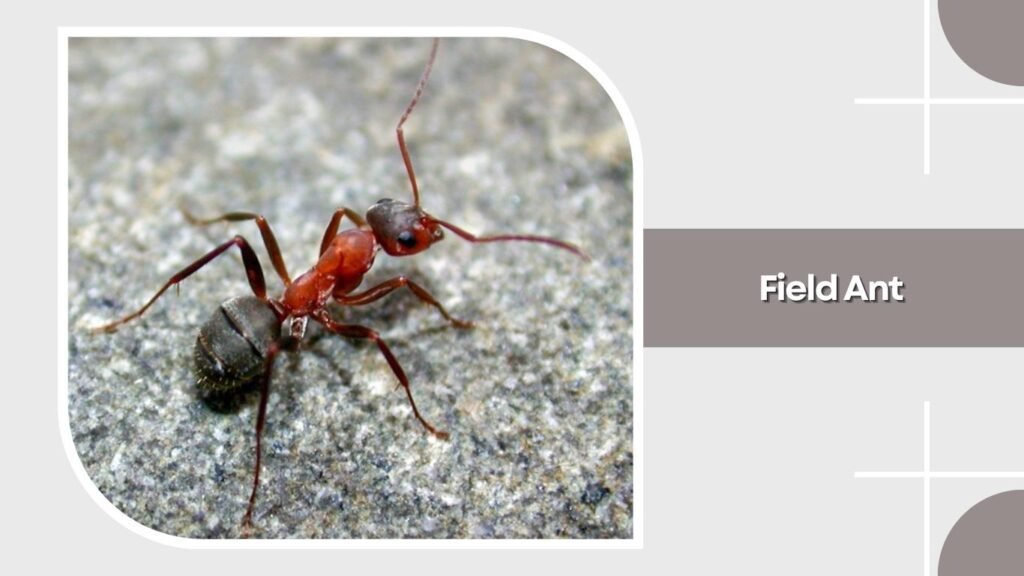
The field ant is a medium-sized ant commonly found in lawns, gardens, fields, and wooded areas. Although it usually nests outdoors, workers may occasionally enter homes while searching for food or shelter. Field ants are often noticed near foundations, patios, windows, and doors during warm weather.
Identification
- Workers measure about 1/8 to 3/8 inch long.
- Their bodies may be black, brown, reddish-brown, red and black, or yellowish.
- Workers from the same colony may vary slightly in size.
- They have a single waist node between the thorax and abdomen.
- Their thorax has an uneven profile when viewed from the side.
- Some species release a strong odor or spray formic acid when disturbed.
Habitat and Nesting Areas
Field ants usually build nests in exposed soil, lawns, gardens, meadows, and beneath stones or logs. Some colonies create noticeable soil mounds surrounded by grass or plant material. They rarely establish permanent indoor nests, but workers may enter through foundation cracks, door gaps, and window openings.
Diet and Feeding Behavior
These ants feed on nectar, honeydew, insects, meat, and sugary household foods. Outdoors, they often protect aphids and other sap-feeding insects to collect their sweet honeydew. Field ants may also hunt small insects or scavenge dead insects to provide protein for the colony.
Signs of an Infestation
The most obvious sign is a soil mound or active nest in the lawn near the house. Workers may be seen traveling across patios, exterior walls, and foundation edges. Indoor sightings are usually occasional, but repeated activity may indicate a large outdoor colony close to an entry point.
14. Cornfield Ant
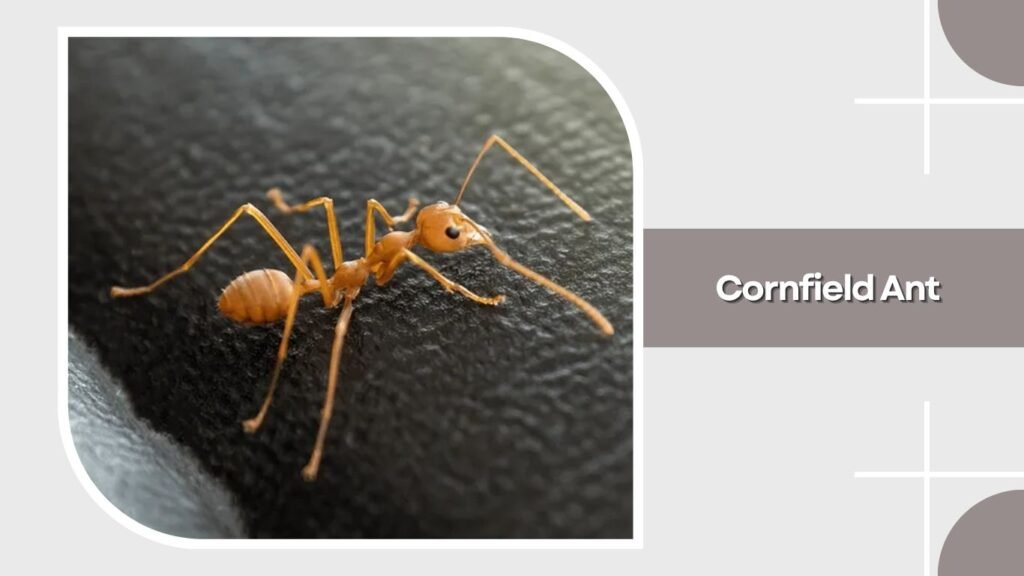
The cornfield ant is a small to medium-sized ant commonly found in lawns, gardens, fields, and areas around building foundations. Although it usually nests outdoors, workers may enter houses in search of sweet food, moisture, or insects. These ants are closely associated with aphids because they collect the sugary honeydew the insects produce.
Identification
- Workers measure about 1/10 to 1/8 inch long.
- Their bodies are light brown, reddish-brown, or dark brown.
- They have a single waist node between the thorax and abdomen.
- The body is relatively smooth and slightly shiny.
- Workers are generally similar in size.
- Their antennae are elbowed and do not end in a distinct club.
Habitat and Nesting Areas
Cornfield ants usually nest in exposed soil beneath lawns, stones, logs, sidewalks, and landscape materials. Colonies may also develop beneath concrete slabs or close to building foundations. Indoors, workers can travel through cracks around windows, doors, plumbing lines, and basement walls, but permanent indoor colonies are less common.
Diet and Feeding Behavior
These ants strongly prefer sweet substances. Outdoors, they collect honeydew from root aphids and other sap-feeding insects. They may protect these insects from predators to maintain a reliable food supply. Cornfield ants also eat nectar, dead insects, fruit, syrup, crumbs, and other available household foods.
Signs of an Infestation
Small soil mounds in lawns or beside foundation cracks may reveal a cornfield ant nest. Indoors, workers may form trails near windows, baseboards, kitchens, or damp basement areas. Repeated sightings often indicate an outdoor colony located close to the house rather than a nest deep inside the structure.
FAQs
What is the most common ant found inside houses?
Odorous house ants, pavement ants, Argentine ants, and carpenter ants are among the most common household species. The most likely species depends on the region, building conditions, available food, and moisture. Small ants in kitchens are often sugar-feeding species, while large ants may be carpenter ants.
Why do ants suddenly appear inside the house?
Ants usually enter homes while searching for food, water, warmth, or shelter. Heavy rain, drought, extreme heat, and cold weather can also push outdoor colonies indoors. A small spill, leaking pipe, pet-food bowl, or open container may attract many workers once a trail is established.
How can I identify the type of ant in my house?
Examine the ant’s size, color, worker-size variation, waist nodes, antennae, movement, and nesting location. Odor and behavior may also help. Collecting a clear close-up photograph and noting where the ants appear can make identification easier for a pest-control professional or local extension service.
Which house ants can damage wood?
Carpenter ants can excavate galleries inside damp, weakened, or decaying wood to build nests. They do not eat wood like termites, but established colonies can enlarge damaged areas. Acrobat ants may also occupy wood previously damaged by moisture, termites, or other wood-nesting insects.
What is the best way to get rid of ants in the house?
Remove accessible food and water, clean ant trails, store food in sealed containers, repair leaks, and place an appropriate slow-acting ant bait near active trails. Avoid spraying around bait because it may kill workers before they carry the treatment back to the hidden colony.