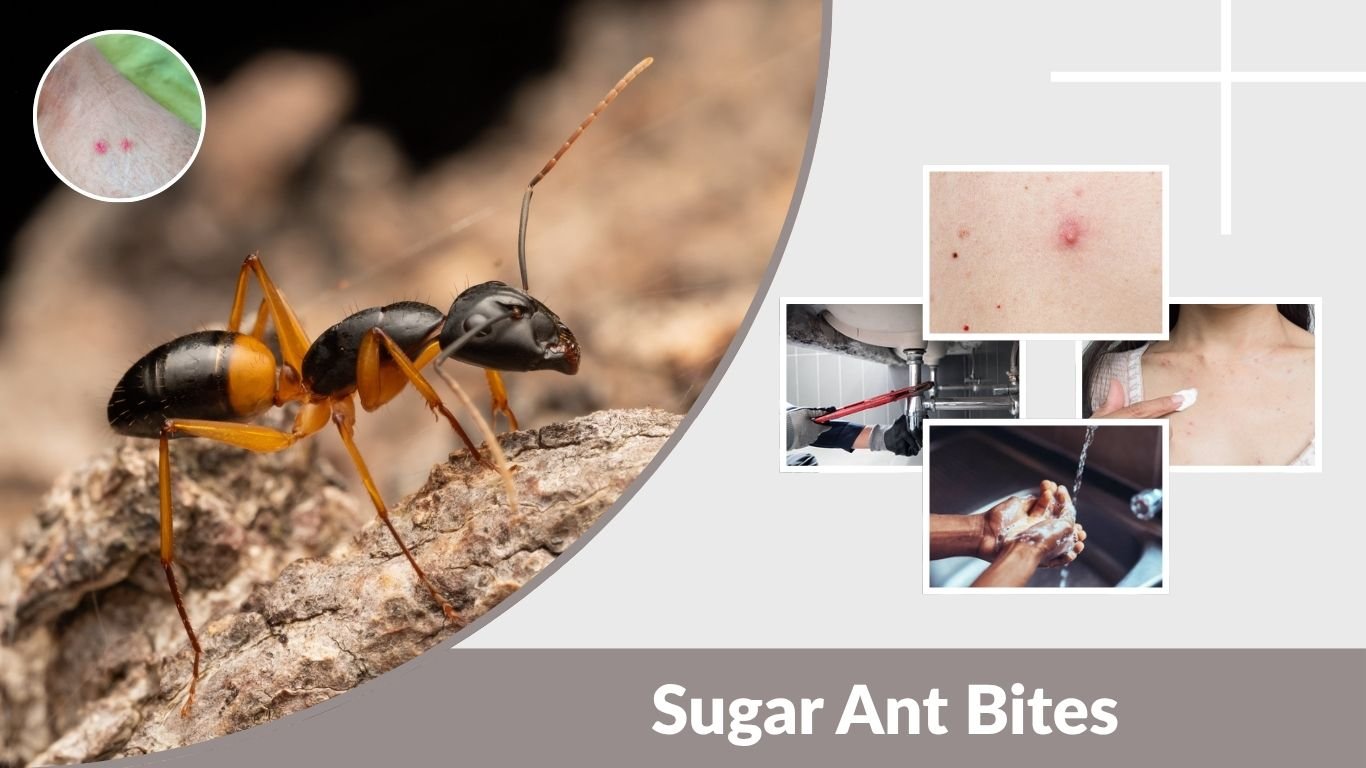
Sugar ants can bite, but most tiny household ants called “sugar ants” rarely bite people or cause noticeable injuries. The name does not describe one species; it may refer to odorous house ants, Argentine ants, pavement ants, or Australia’s much larger banded sugar ant. The symptoms therefore depend on the actual ant involved. A minor bite may cause a brief pinch, redness, itching, or a small swollen bump, while intense burning or pus-filled spots could indicate a different species, such as a fire ant.
Do Sugar Ants Bite Humans?
Ants possess pincer-like jaws called mandibles, so most species are physically capable of biting. However, common household species generally avoid people and rarely bite unless trapped against the skin, handled, or disturbed near their nest.
Tiny ants entering kitchens for syrup, fruit, honey, or crumbs may be informally called sugar ants. Because these workers are so small, a bite may be too weak to break the skin or may feel like a slight pinch.
Do Sugar Ants Bite or Sting?
Most ants described as household sugar ants do not have a medically significant sting. They may defend themselves with their jaws, but this differs from the venomous stinging behavior of fire ants and certain harvester ants.
Australia’s banded sugar ant, Camponotus consobrinus, is a larger ant measuring approximately 5–15 millimeters. It belongs to the carpenter ant genus Camponotus. These ants cannot sting, but members of this group can bite with strong jaws and may apply formic acid to the area, producing a burning sensation.
What Does a Sugar Ant Bite Look Like?
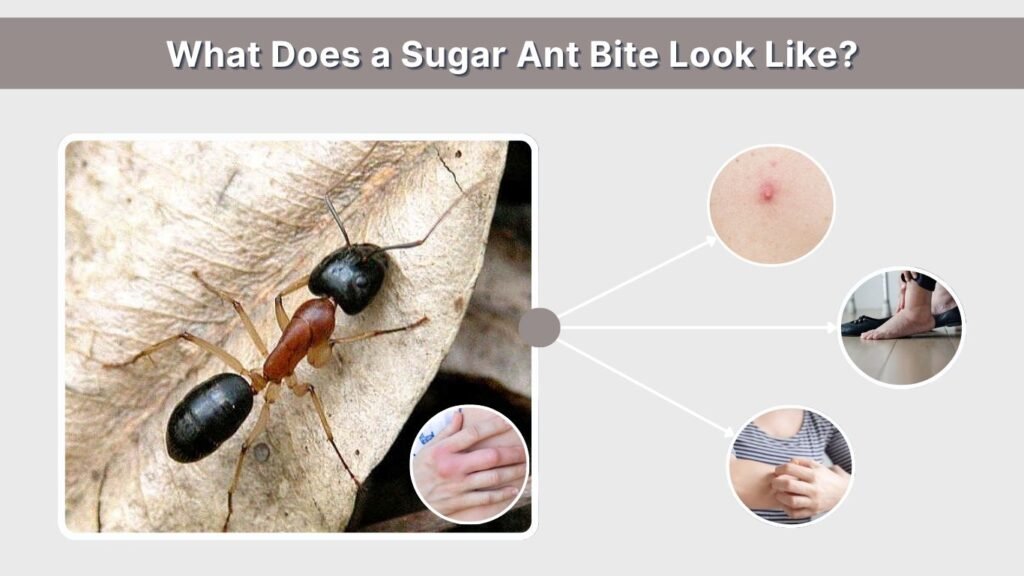
There is no unique mark that proves a person was bitten by a sugar ant. A mild ant bite may resemble many other minor insect bites.
Common signs may include:
- A small red or pink bump
- Mild localized swelling
- Itching or tenderness
- A brief pinching or burning feeling
- One mark or several closely grouped marks
Redness may be less noticeable on darker skin, so swelling, itching, warmth, and tenderness may be easier signs to observe.
Pictures of Sugar Ant Bites
Pictures alone are not a dependable way to identify sugar ant bites. Mosquitoes, fleas, bed bugs, mites, and other ants can produce similar-looking bumps. The strongest evidence is seeing the ant bite, finding the ant on the skin, or collecting a specimen for identification.
A white, pus-like blister is more characteristic of a fire ant sting than a typical bite from a tiny household sugar ant. Fire ant reactions commonly begin with burning and itching before a white pustule develops.
| Feature | Typical mild sugar-ant bite | Fire-ant sting |
| Initial feeling | Slight pinch or mild burning | Immediate burning or sharp pain |
| Skin mark | Small red or itchy bump | Red bump that may form a white pustule |
| Number of marks | Usually one or a few | Often multiple clustered stings |
| Expected severity | Usually minor | Can be painful and occasionally serious |
Why Do Sugar Ants Bite?
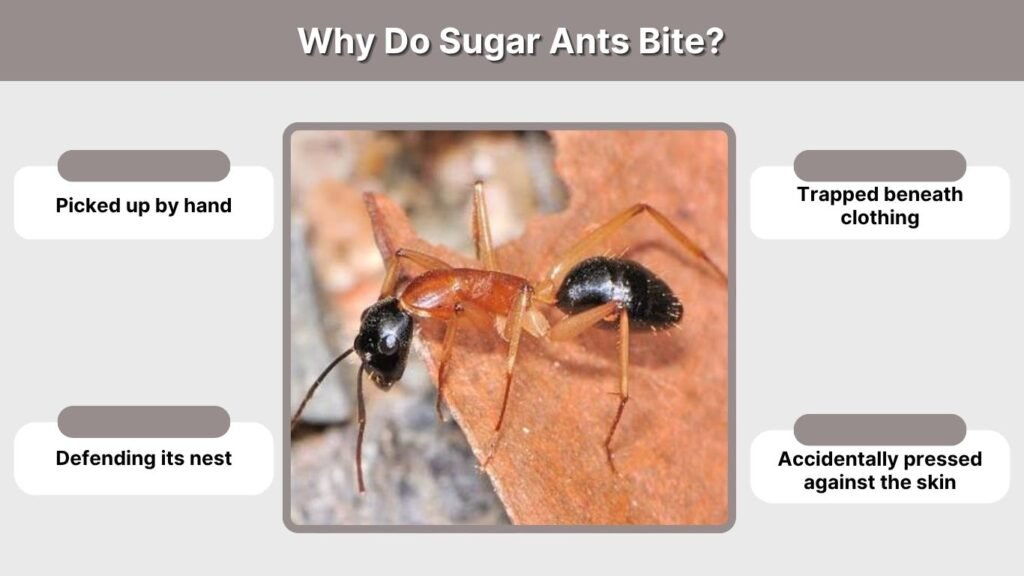
Sugar ants do not seek people as food and do not drink blood. Biting is usually defensive. An ant may bite when it is:
- Trapped beneath clothing
- Accidentally pressed against the skin
- Picked up by hand
- Defending its nest
- Disturbed while foraging
- Caught in bedding, towels, or footwear
Large banded sugar ants are more capable of delivering a noticeable bite than the tiny ants commonly found around kitchen counters.
Sugar Ant Bite Symptoms
Most reactions remain limited to the bite site. A person may experience mild redness, itching, swelling, warmth, or tenderness. Symptoms from an uncomplicated insect bite commonly improve within a day or two, although irritated or scratched skin may take longer to settle.
A larger sugar-ant or carpenter-ant bite may hurt more because its jaws are stronger. Formic acid applied to the broken skin can cause a temporary burning sensation.
Do Sugar Ant Bites Itch?
They can. Itching results from local irritation and the body’s response to the bite. Avoid scratching because damaged skin can become infected.
Signs suggesting infection include:
- Increasing redness or swelling
- Worsening pain after initial improvement
- Pus or cloudy drainage
- Red streaks extending from the area
- Fever or feeling unwell
Seek medical advice when these symptoms develop.
How to Treat Sugar Ant Bites
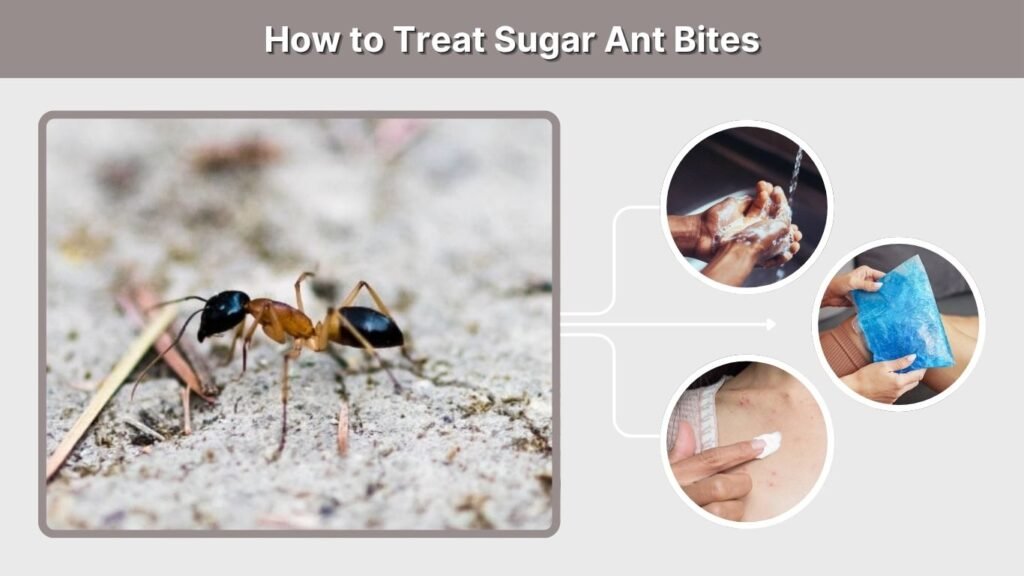
Most mild bites can be managed at home.
1. Remove the Ant
Brush the ant away instead of crushing it against your skin. An attached or trapped ant may bite repeatedly while defending itself.
2. Wash the Skin
Clean the area with soap and water. This removes dirt and any irritating material left on the skin.
3. Apply a Cold Compress
Place a cold, damp cloth or a wrapped ice pack over the area for 10–20 minutes. This can reduce pain, itching, and swelling. Do not apply ice directly to bare skin.
4. Control Itching
Calamine lotion or a low-strength hydrocortisone cream may help mild itching when used according to the product directions. A pharmacist or healthcare professional can advise whether an oral antihistamine is appropriate, particularly for children, pregnant people, or anyone taking other medication.
5. Avoid Scratching
Keep the bite clean and leave blisters intact. Scratching can damage the skin and increase the chance of infection.
Allergic Reaction to Sugar Ant Bites
A severe allergic reaction is uncommon after an ordinary household ant bite, but any insect exposure can potentially trigger a serious reaction in a sensitive person.
Seek emergency help immediately if the person develops:
- Difficulty breathing or wheezing
- Swelling of the lips, tongue, mouth, face, or throat
- Widespread hives
- Dizziness, confusion, collapse, or faintness
- A rapid heartbeat
- Severe nausea, vomiting, or abdominal symptoms
These may indicate anaphylaxis, a rapidly developing, life-threatening allergic reaction. Use a prescribed epinephrine auto-injector immediately when available and follow the person’s emergency plan.
Do Sugar Ants Bite Dogs or Cats?
Sugar ants may bite pets when trapped in their fur or when a dog or cat disturbs a nest. Mild reactions may cause licking, scratching, redness, or localized swelling.
Contact a veterinarian promptly if a pet develops facial swelling, breathing difficulty, vomiting, weakness, widespread hives, severe discomfort, or numerous bites. Do not give a pet human antihistamines without veterinary guidance because the appropriate medicine and dose depend on the animal.
Sugar Ant Bite vs. Other Pest Bites
Repeated bites noticed after sleeping are unlikely to be explained solely by ants walking through a kitchen. Consider other pests when no ants are seen on the body.
Bed bugs may produce grouped or linear itchy marks after nighttime feeding. Flea bites often occur around the ankles and lower legs. Mosquito bites commonly form soft, raised, itchy welts. Fire ants usually attack after their nest is disturbed and may leave multiple painful pustules.
Because skin reactions overlap, identifying the insect itself is more reliable than judging the marks alone.
How to Prevent Sugar Ant Bites
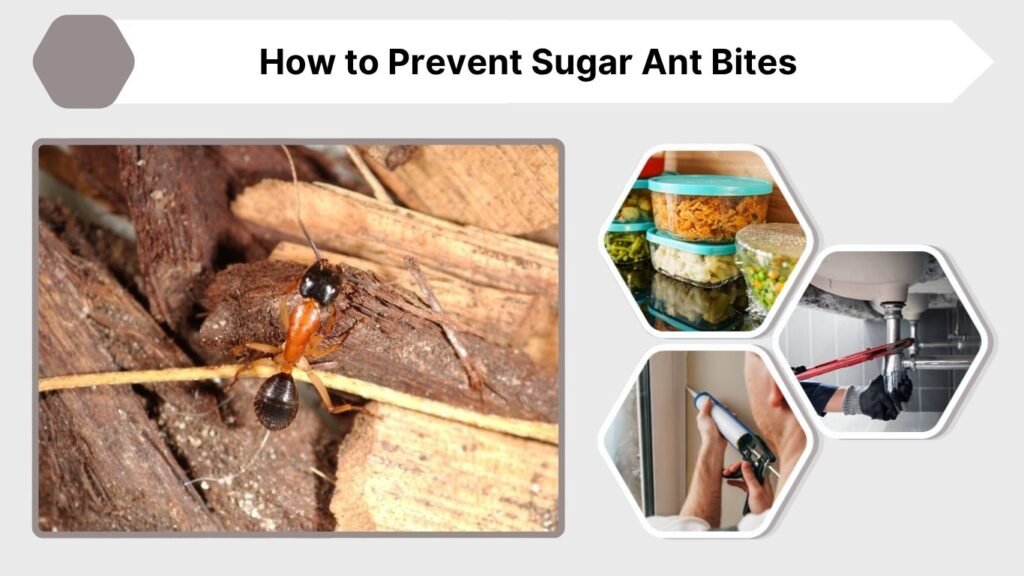
Preventing indoor infestations reduces the chance of accidental contact.
- Seal gaps around windows, doors, pipes, and baseboards.
- Store sweets and pet food in airtight containers.
- Clean syrup, juice, honey, and other sticky spills.
- Do not leave dirty dishes overnight.
- Repair leaking pipes and faucets.
- Shake out outdoor clothing, towels, and shoes.
- Avoid handling ants or disturbing visible nests.
- Use enclosed ant bait according to its label instead of crushing ants by hand.
FAQs
Can tiny sugar ants bite you?
Tiny sugar ants can use their jaws defensively, but most common household species rarely cause noticeable human bites. Their jaws may be too small to break the skin effectively. A larger ant that is mistakenly called a sugar ant is more likely to produce a painful bite.
How long do sugar-ant bites last?
A mild reaction may improve within one or two days. Itching or swelling can last longer when the skin has been scratched or the reaction is stronger. Seek medical care if symptoms worsen, spread, become infected, or fail to improve.
Do black sugar ants bite?
Some small black or dark-brown household ants can bite, but they usually avoid people. Large black carpenter-type ants have stronger jaws and may produce a more noticeable pinch or burning sensation when handled or trapped against the skin.
Can sugar-ant bites cause extreme itching?
Minor itching is possible, but extreme, widespread, or persistent itching may indicate a stronger allergic response or a different biting pest. Seek medical advice if itching is severe, accompanied by extensive swelling, or affects areas away from the original bite.
Are sugar-ant bites dangerous?
Most are minor and require only cleaning and symptom relief. The greatest concerns are infection from scratching, misidentifying a more aggressive ant, and a rare allergic reaction. Breathing difficulty or swelling of the mouth, face, tongue, or throat requires emergency care.