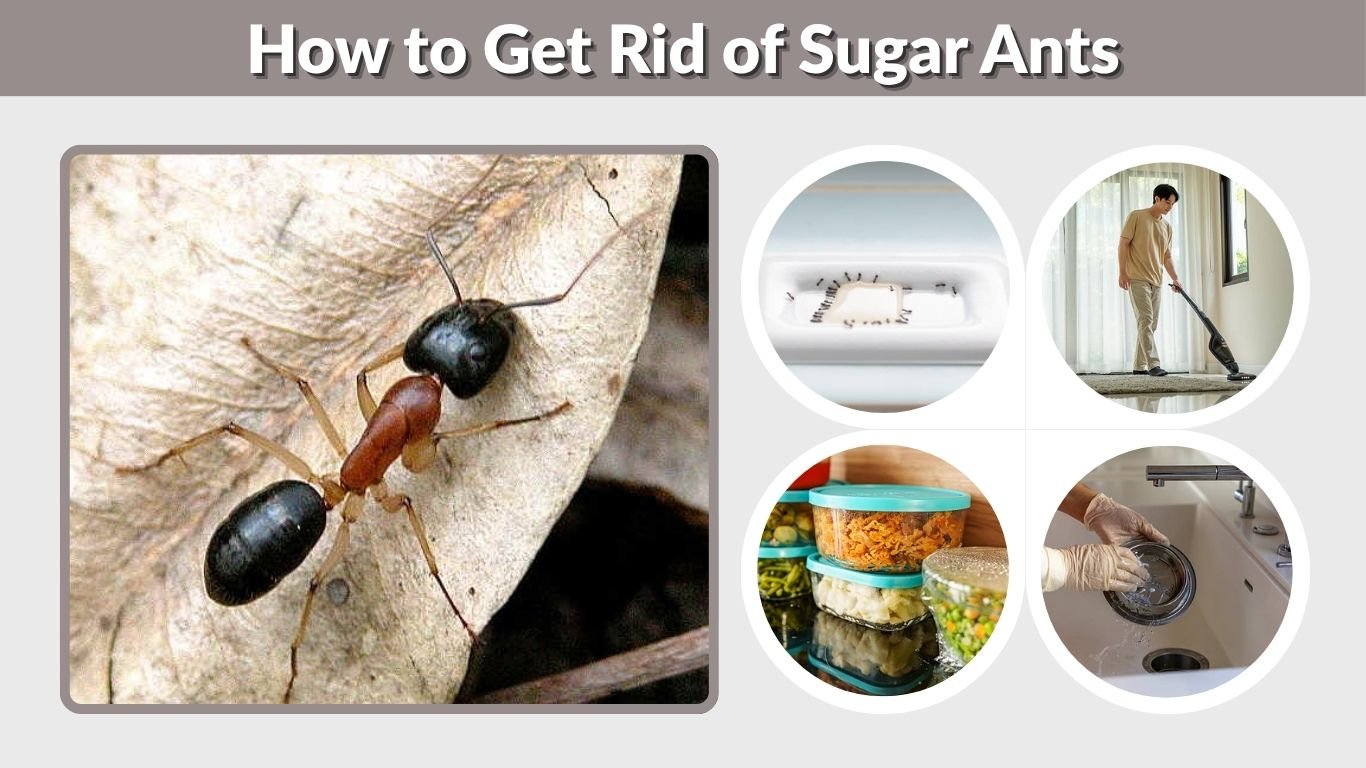
Sugar ants enter homes searching for sweet food, moisture, and shelter. Although wiping away visible ants provides temporary relief, it rarely affects the hidden colony. Effective control requires removing food sources, tracing entry points, cleaning ant trails, and using slow-acting bait that workers carry back to the nest. The following methods explain how to eliminate sugar ants from kitchens, bathrooms, walls, cars, yards, and other problem areas while reducing risks to children and pets.
What Are Sugar Ants?
“Sugar ant” is an informal name for several ants attracted to sweet foods. In the United States, people may use the term for odorous house ants, Argentine ants, pavement ants, pharaoh ants, and other tiny household species.
Because these ants may differ in nesting habits and food preferences, correctly identifying the species can improve treatment. However, the general combination of sanitation, exclusion, and appropriately placed bait works for many common sugar-feeding ants.
How to Get Rid of Sugar Ants Fast
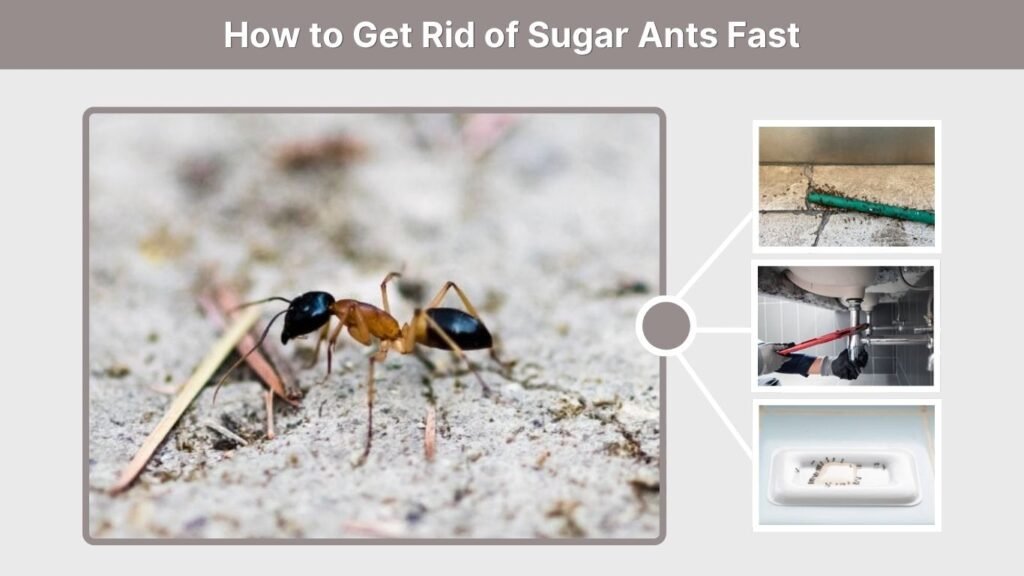
The fastest reliable approach is not simply spraying every ant you see. You must control the workers while allowing some of them to carry bait into the colony.
1. Follow the Ant Trail
Watch the ants before cleaning them away. Follow their trail to determine:
- Where they enter the room
- Which food or water source attracts them
- Whether they emerge from a wall, window, pipe, or cabinet
- Whether the trail continues outdoors
Place a small piece of tape beside the entry point so you can find it after cleaning. Ant trails often lead through extremely narrow openings around plumbing, flooring, windows, doors, and foundations.
2. Remove Food and Water
Ant control becomes much more effective when bait is their main available food source. Clean countertops, sweep underneath appliances, rinse recyclable containers, and empty trash regularly.
Store sugar, honey, cereal, flour, fruit, candy, and pet food in sealed containers. Repair dripping faucets, dry sinks overnight, and remove standing water from trays beneath appliances or plants. Sanitation alone may not destroy an established colony, but it reduces the reasons ants continue entering.
3. Clean the Scent Trail
Wipe ant trails with soapy water or a mild vinegar-and-water solution. This removes food residue and temporarily disrupts the chemical trail that workers use to guide other ants. Vinegar may reduce visible activity, but it generally does not eliminate the queen or hidden colony by itself.
4. Place Slow-Acting Ant Bait
Place enclosed ant bait stations near active trails or entry points. Foraging workers feed on the bait and distribute it among nestmates, allowing the treatment to reach ants that never leave the colony.
Sugar-feeding species often accept sweet liquid or gel baits, while some colonies may prefer protein- or grease-based bait at different times. If ants ignore one product, try another bait type rather than immediately applying more pesticide. Baits must act slowly enough for workers to carry them throughout the colony, so complete control can take days or several weeks.
5. Seal Entry Points
After ant activity declines, seal gaps with caulk around:
- Window and door frames
- Baseboards and cabinets
- Plumbing and utility lines
- Foundation cracks
- Wall penetrations
- Floor and countertop joints
Trim branches that touch the building because ants can use them as bridges. Do not permanently seal necessary ventilation or exterior weep holes; cover suitable openings with pest-resistant screening instead.
Best Sugar Ant Treatments Compared
| Treatment | What it does | Does it kill the colony? |
| Ant bait station | Workers carry slow-acting bait to the nest | Often, when correctly placed |
| Soapy water | Removes visible ants and scent trails | No |
| Vinegar solution | Temporarily disrupts trails | No |
| Vacuuming | Quickly removes groups of ants | No |
| Aerosol spray | Kills ants directly contacted | Usually not |
| Sealing cracks | Blocks known entry routes | Prevents entry but does not kill the colony |
Avoid spraying insecticide near bait. Spray can kill or repel foraging ants before they transport the bait to the colony, and pesticide odors can make bait less attractive. EPA guidance specifically warns against combining ant sprays and baits in the same treatment area.
How to Get Rid of Sugar Ants in the Kitchen
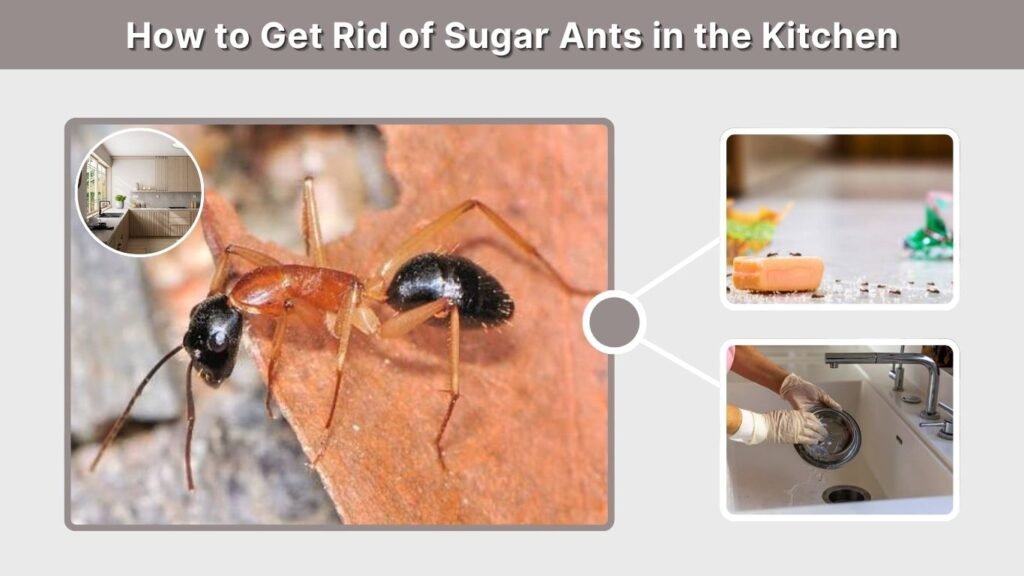
Remove all accessible food before placing bait. Clean sticky areas around syrup bottles, coffee makers, toasters, trash cans, recycling bins, and pet bowls. Check behind the refrigerator and stove for crumbs or moisture.
Place enclosed bait stations beside trails, underneath cabinets, or near the point where ants enter—not directly on food-preparation surfaces. Do not spray the trail after baiting. It is normal to see increased activity around a successful bait station because more workers have discovered it.
Discard food that ants have entered. If ants are inside a sugar jar, empty the contaminated sugar, wash and dry the container, and replace it with an airtight container.
How to Remove Sugar Ants from Other Areas
Bathroom and Bedroom
In bathrooms, inspect leaking pipes, damp cabinets, toothbrush residue, cosmetics, and gaps around sinks or bathtubs. Dry wet surfaces and place bait near the entry route.
In bedrooms, remove drink containers, snack wrappers, houseplant pests, and pet food. Vacuum ants from carpet edges and examine baseboards, outlets, and window frames for trails.
Walls, Outlets, and Dishwashers
Ants emerging from walls or outlets may be nesting inside a void or merely traveling through it. Do not pour liquids, powders, or aerosol pesticides into electrical outlets.
Place a labeled enclosed bait station beside the outlet or wall trail. Ant activity around dishwashers often indicates access to moisture, grease, or plumbing gaps. Clean beneath the appliance when accessible and inspect nearby water lines for leaks.
Persistent activity from multiple wall openings may require a pest-management professional who can identify the species and locate hidden nesting areas.
Cars, Campers, and RVs
Remove all food wrappers, drink spills, crumbs, and pet treats. Vacuum beneath seats, inside storage compartments, and around the center console. Wipe sticky surfaces and inspect door seals, wheel wells, and parking areas.
Ants may enter a vehicle when it is parked near a nest, overhanging vegetation, or infested pavement. Move the vehicle temporarily and treat the outdoor nesting area rather than applying large amounts of insecticide inside the passenger compartment.
Use only products whose labels specifically allow the intended location. Avoid loose homemade bait inside vehicles where it could spill or be reached by children or pets.
How to Get Rid of Sugar Ants Naturally
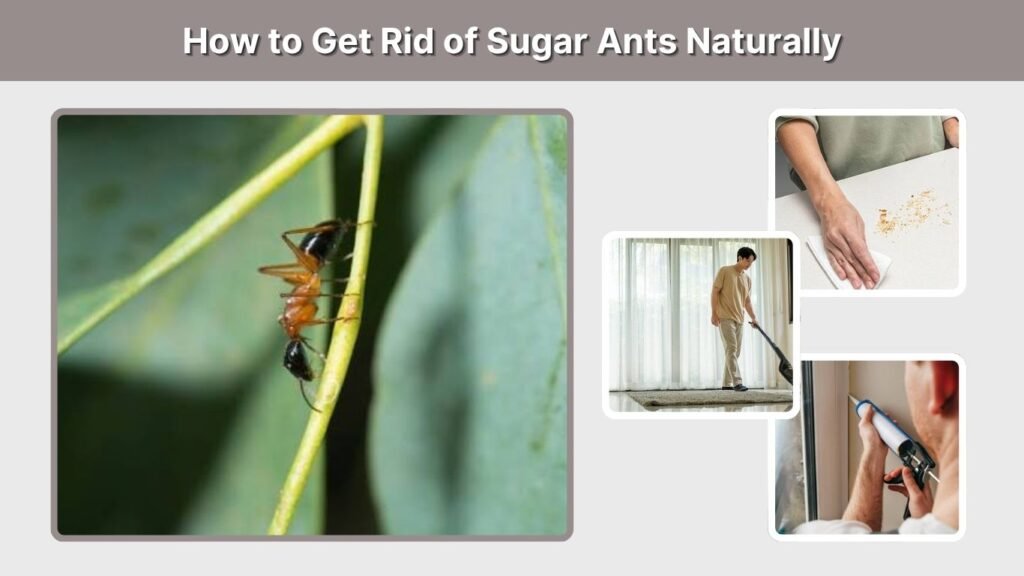
Nonchemical measures can reduce an infestation and help prevent its return:
- Vacuum visible ants and discard the collected debris.
- Wash trails with soap and water.
- Eliminate crumbs, spills, and open food.
- Dry sinks and repair leaks.
- Seal cracks after activity decreases.
- Trim plants away from the building.
- Use sticky barriers or soapy-water moats to protect selected plants or feeders.
Vinegar and essential oils may temporarily discourage ants from a treated surface, but repellents can redirect the trail without eliminating the nest. Baking soda is also not considered a dependable colony treatment. For an established infestation, sanitation and exclusion generally work best when combined with an appropriately labeled bait.
Can You Use Borax and Sugar for Ants?
Borate-based sugar bait can control certain sugar-feeding species when the concentration is low enough for ants to continue feeding and sharing it. However, homemade mixtures are easy to make too strong, too weak, or dangerously accessible.
Prepackaged or refillable bait stations are easier to position safely and provide a known active-ingredient concentration. UC Integrated Pest Management recommends low-concentration liquid borate bait for certain sugar-feeding ants and stresses placing stations where children and pets cannot reach them.
Never place loose borax-and-sugar mixtures on countertops, floors, open lids, or cardboard where a child or animal could contact them. Always follow the complete product label.
How to Get Rid of Sugar Ants Outside
Trace indoor trails back to exterior entry points. Place labeled outdoor bait stations near trails, nest openings, foundation edges, or plants where ants are active. Outdoor bait can draw ants away from the building and reduce the source colony.
Remove boards, leaf litter, stacked containers, and other debris touching the foundation. Correct drainage problems, reduce excessive mulch, and control honeydew-producing insects such as aphids when they are sustaining ant activity on plants.
Protect bait from rain and irrigation, and never allow pesticide bait to enter gutters, storm drains, ponds, or waterways.
How to Prevent Sugar Ants Permanently
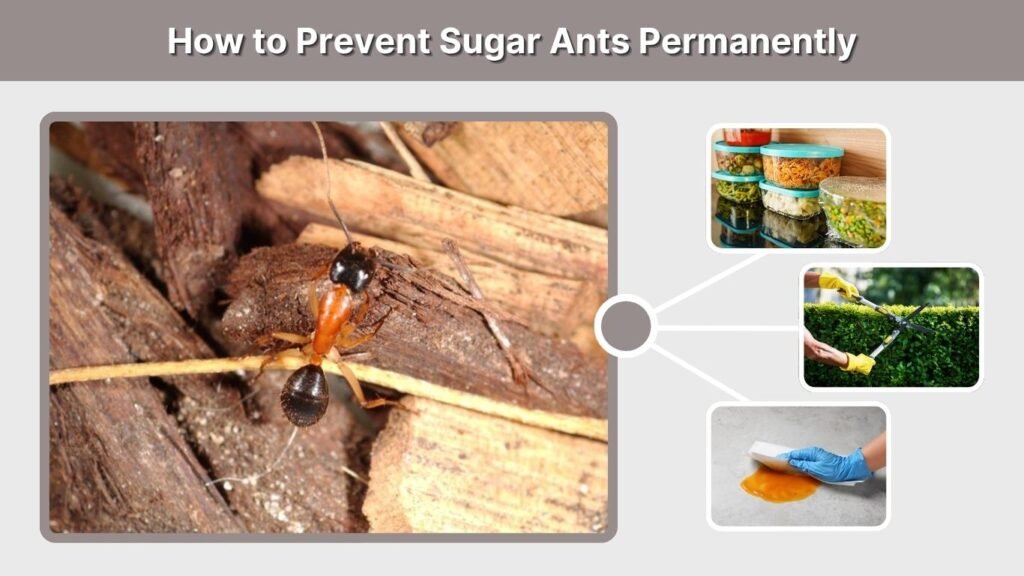
Permanent control depends on making the property less accessible and less rewarding:
- Store food in tightly sealed containers.
- Clean spills immediately.
- Do not leave pet food out overnight.
- Rinse recyclables before storage.
- Repair plumbing and roof leaks.
- Seal structural gaps.
- Trim vegetation away from walls.
- Inspect groceries, plants, and packages before bringing them inside.
- Monitor previous entry points for renewed activity.
Ant colonies can return from neighboring areas, especially in warm climates such as Florida. Regular inspection and early bait placement are more realistic than expecting a property to remain permanently ant-free without continued prevention.
FAQs
How long does it take to get rid of sugar ants?
Visible activity may decline within several days, but eliminating a large or divided colony can take a few weeks. Continue supplying fresh bait while ants are actively feeding. Do not spray ants around the station, and replace bait if it dries out, becomes contaminated, or is ignored.
Can I get rid of sugar ants overnight?
You can remove visible ants overnight by vacuuming and cleaning their trail, but the colony usually remains alive. Slow-acting bait takes longer because workers must carry it into the nest and share it with other workers, larvae, and queens.
Why do sugar ants keep returning?
Ants return when food, moisture, entry gaps, or nearby colonies remain available. Killing only visible workers creates temporary improvement. Long-term control requires baiting the colony, correcting leaks, improving food storage, cleaning trails, and sealing entry points after activity decreases.
Are ant baits safe around pets?
Ant bait contains pesticide and should never be treated as harmless. Use enclosed or tamper-resistant stations and position them where pets and children cannot reach, move, lick, or chew them. Follow the label exactly and store unused products in their original containers.
When should I call professional pest control?
Contact a professional when ants continue after several weeks of correct baiting, appear from multiple wall openings, repeatedly invade electrical equipment, or may be carpenter ants. Professional help is also appropriate when safe bait placement is impossible because of children, pets, or sensitive household conditions.