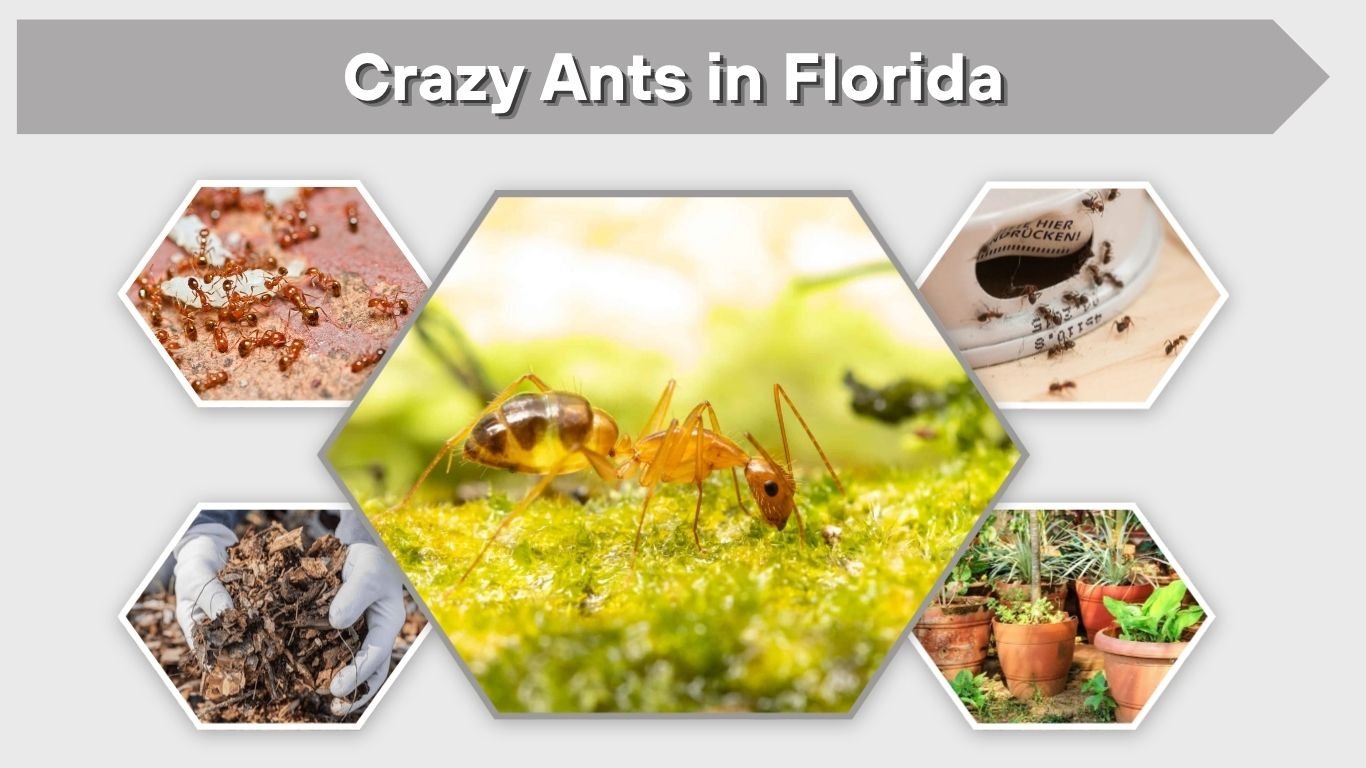
Crazy ants in Florida can become overwhelming because they form enormous colonies, move unpredictably, and invade homes in extremely large numbers. Several ants may be called crazy ants, but the invasive tawny crazy ant causes some of the most serious infestations in the state. These ants may enter electrical equipment, protect sap-feeding insects, displace other ants, and create piles of dead workers around buildings. Correct identification and a coordinated control program are essential because ordinary spot treatments rarely eliminate an established colony.
What Are Crazy Ants?
The name “crazy ant” describes several ant species known for running rapidly in irregular, seemingly confused patterns. It does not refer to just one species.
In Florida, the term is often associated with the tawny crazy ant, Nylanderia fulva. This invasive ant was previously called the Rasberry crazy ant or Caribbean crazy ant in some publications. Florida also has other fast-moving ants, including the longhorn crazy ant and several native or introduced Nylanderia species.
Because many of these ants look similar, identification based only on worker ants can be difficult. UF/IFAS notes that tawny crazy ant workers cannot be reliably separated from Caribbean crazy ant workers without examining males or using genetic testing.
What Do Crazy Ants in Florida Look Like?
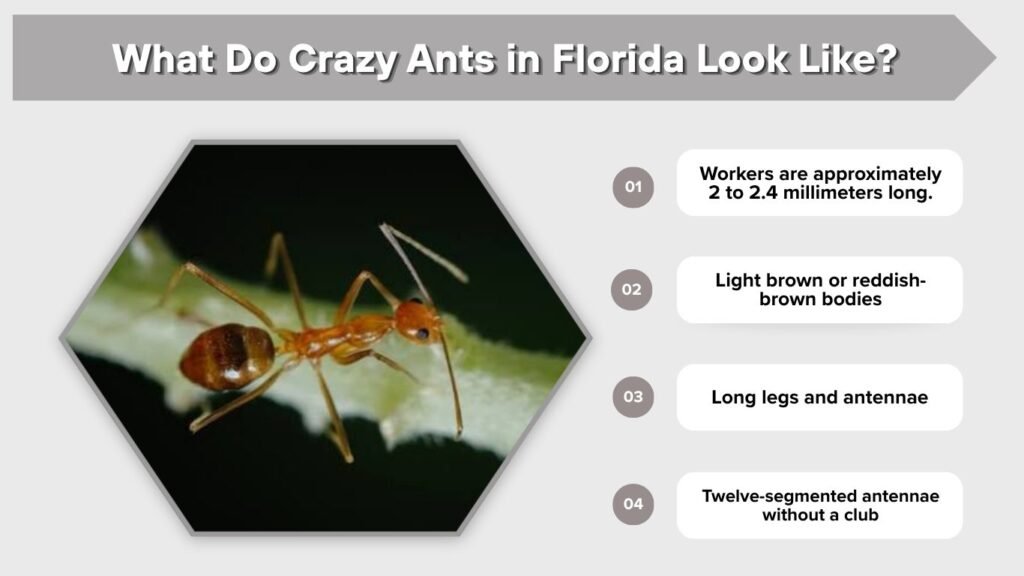
Tawny crazy ants are tiny, slender ants that are usually golden brown, reddish brown, or tawny. Workers are approximately 2 to 2.4 millimeters long, making them much smaller than many common ants.
Important identification features include:
- Light brown or reddish-brown bodies
- Long legs and antennae
- Twelve-segmented antennae without a club
- One small waist node
- Dense, fine body hairs
- Rapid and erratic movement
- Large trails containing thousands of workers
Their antennae and legs often make them appear larger than their bodies actually are. Unlike fire ants, tawny crazy ants do not have functional stingers. They can release defensive chemicals, but they are not normally considered a major stinging threat to people.
Crazy Ants vs. Fire Ants
| Feature | Tawny crazy ants | Imported fire ants |
|---|---|---|
| Color | Tawny to reddish brown | Reddish brown and dark |
| Worker size | Mostly uniform and very small | Workers vary noticeably in size |
| Movement | Fast and erratic | More organized trails |
| Nest | Hidden under debris or objects | Visible soil mounds are common |
| Sting | Do not have a functional stinger | Deliver painful, repeated stings |
| Colony structure | Multiple queens and multiple nests | Usually organized around distinct colonies |
Types of Crazy Ants Found in Florida
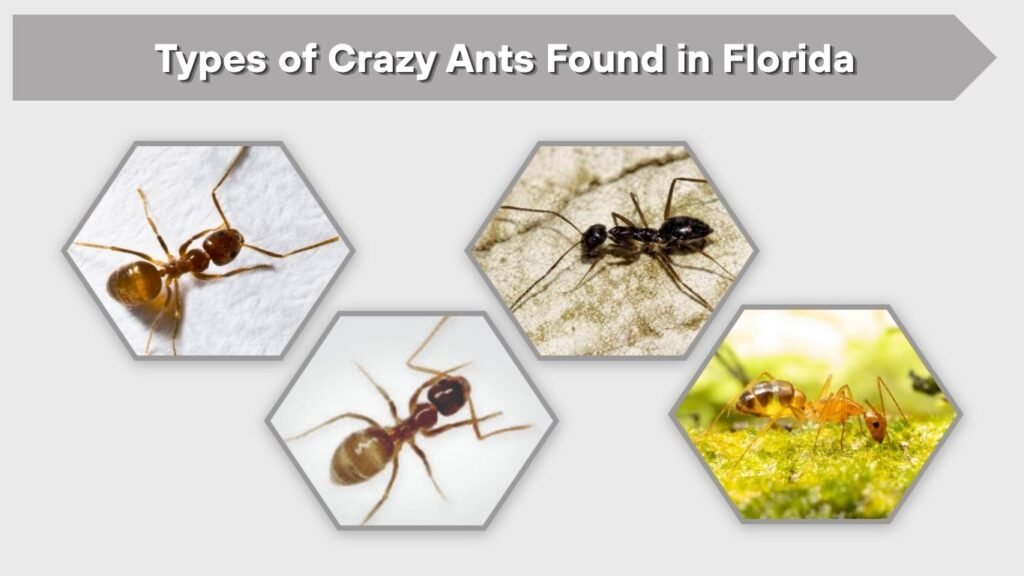
Several species or species groups may be described as crazy ants in Florida. Their behavior, color, and pest importance can differ considerably.
Tawny Crazy Ant
The tawny crazy ant is the species most strongly associated with massive outdoor infestations. Colonies contain multiple queens and occupy numerous interconnected nesting sites. Workers from different nests may cooperate as part of a huge supercolony.
UF/IFAS reports that this species has been documented in numerous Florida counties, although published county maps may not represent its latest distribution.
Caribbean Crazy Ant
The name Caribbean crazy ant commonly refers to Nylanderia pubens. It is extremely similar to the tawny crazy ant. In fact, the two cannot usually be distinguished by looking at workers alone.
Older Florida records sometimes used the Caribbean crazy ant name for infestations later associated with tawny crazy ants. Professional or laboratory identification may therefore be needed.
Longhorn or Black Crazy Ant
The longhorn crazy ant, Paratrechina longicornis, is often called a black crazy ant. It has a dark brown or nearly black body with unusually long legs and antennae.
It frequently occurs around buildings, kitchens, bathrooms, greenhouses, patios, and landscaped areas. It may establish indoor nests, particularly in warm and humid locations.
Yellow Crazy Ant
The yellow crazy ant, Anoplolepis gracilipes, is a serious invasive species in tropical regions. However, people should not assume that every pale, long-legged ant in Florida is a yellow crazy ant. Specimens should be submitted to a qualified pest professional or extension office when identification is uncertain.
Where Do Crazy Ants Live in Florida?
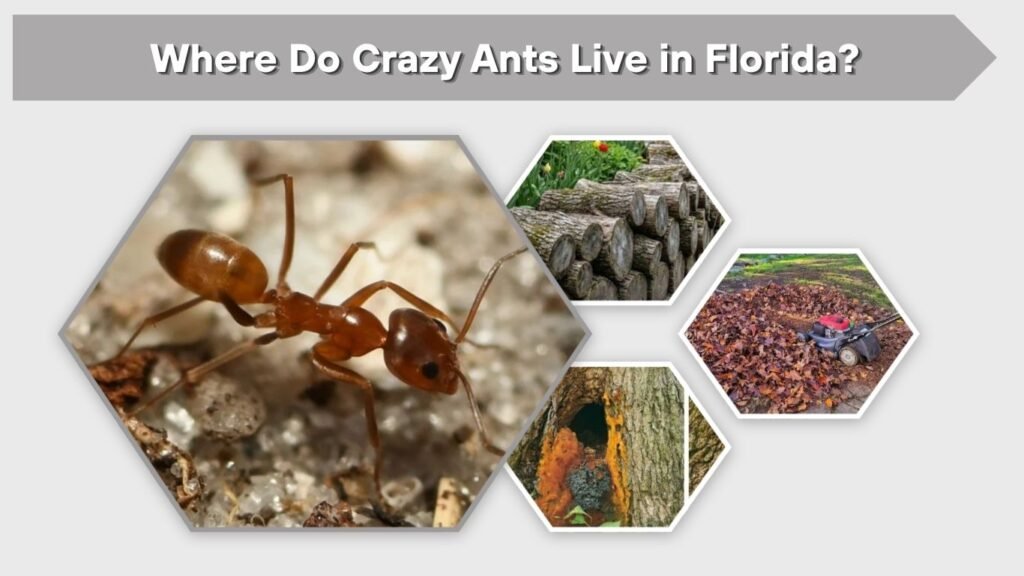
Florida’s warm temperatures, high humidity, abundant vegetation, and long growing season create suitable conditions for crazy ants. They are especially successful in disturbed habitats where food, water, and protected nesting spaces are plentiful.
Common nesting locations include:
- Beneath logs, boards, bricks, and landscape objects
- Under mulch, leaf litter, and fallen branches
- Inside rotten wood and tree cavities
- Beneath potted plants and outdoor equipment
- Around utility boxes and irrigation systems
- Inside wall spaces and structural voids
- Under stones, pavement edges, and debris
Tawny crazy ants do not usually build prominent soil mounds like fire ants. Their nests can be shallow, temporary, and widely scattered throughout a property.
Why Are Crazy Ants a Serious Florida Pest?
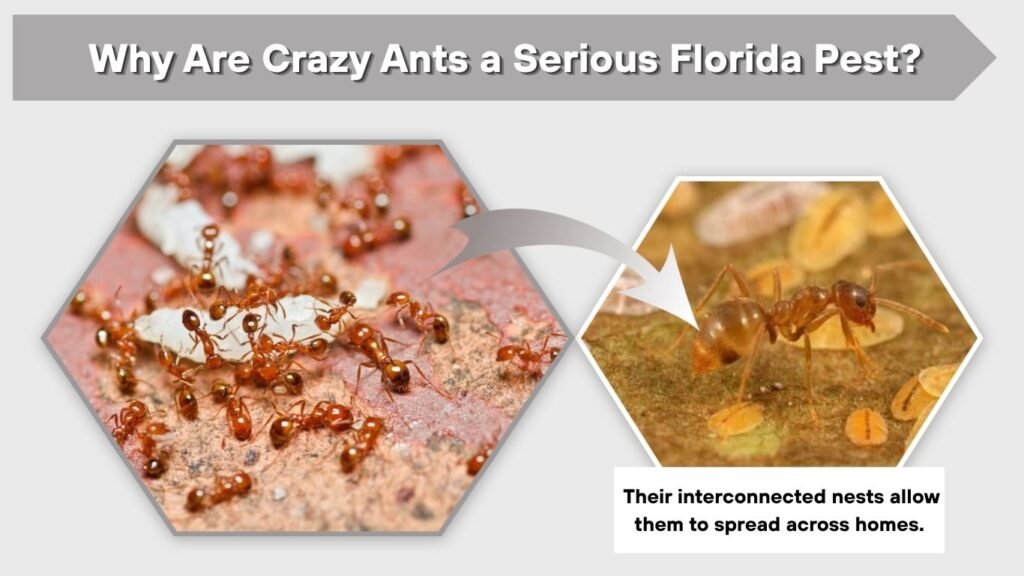
A few workers may not seem important, but established colonies can contain enormous numbers of ants. Their interconnected nests allow them to spread across homes, yards, businesses, farms, and natural areas.
Home Invasions
Crazy ants frequently enter buildings during heavy rain, drought, flooding, extreme heat, or sudden cold weather. They may appear around windows, doors, sinks, pet bowls, kitchens, bathrooms, and air-conditioning systems.
Once inside, their large numbers can make food preparation and normal household activities difficult.
Electrical Equipment
Crazy ants may enter air conditioners, pumps, computers, utility boxes, switches, and other electrical devices. Accumulated workers and debris can interfere with contacts or contribute to equipment failure.
UF/IFAS identifies disruption of electrical equipment as one of the important problems associated with tawny crazy ant infestations.
Honeybees and Other Animals
Large crazy ant populations may invade beehives, consume resources, and stress honeybee colonies. They also tend sap-feeding insects such as aphids, scales, mealybugs, and whiteflies to collect honeydew.
By protecting these plant pests from predators, crazy ants can indirectly increase damage to ornamental plants, fruit trees, and crops.
Native Wildlife
Dense infestations may displace native ants and affect small insects and other animals. Their ecological effects can extend beyond the immediate nuisance experienced by homeowners.
Why Are There Piles of Dead Crazy Ants?
Florida residents sometimes discover large piles of dead ants, frequently called middens, near walls, patios, garages, and nesting areas. These piles may contain dead workers, discarded brood, food remains, soil, and other colony waste.
The presence of middens often indicates that a large colony is active nearby. Cleaning up the pile may improve appearance, but it will not eliminate the nesting population.
Repeated piles in the same location should prompt an inspection of nearby mulch, vegetation, utility equipment, debris, and structural gaps.
How to Get Rid of Crazy Ants in Florida
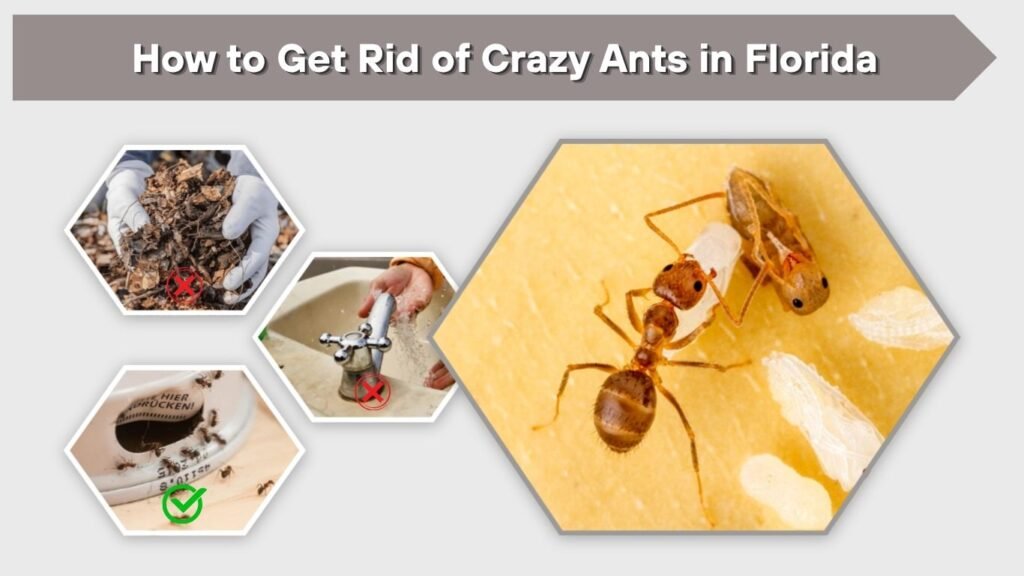
Crazy ant control is difficult because colonies have multiple queens and numerous nesting sites. Killing visible workers provides temporary relief but may leave most of the colony untouched.
1. Confirm the Species
Collect several ants in a sealed container or clear vial. A licensed pest-control professional, county extension office, or diagnostic laboratory may help determine whether they are tawny crazy ants, longhorn crazy ants, or another species.
Correct identification matters because bait preferences and colony behavior vary.
2. Remove Outdoor Harborage
Reduce the protected, moist spaces where ants establish satellite nests.
Remove or reorganize:
- Leaf litter and excessive mulch
- Fallen limbs and rotting wood
- Unused containers and landscape debris
- Stacks of bricks, lumber, or firewood
- Dense groundcover touching the building
- Standing water and leaking irrigation lines
Keep mulch several inches away from the foundation and trim vegetation that creates bridges into the house.
3. Eliminate Food and Water
Clean food spills promptly and store pantry products in sealed containers. Wash pet bowls regularly, repair plumbing leaks, close trash containers, and manage honeydew-producing insects on plants.
Outdoor sanitation will not destroy a supercolony, but it can make the property less attractive and improve the effectiveness of bait.
4. Use Slow-Acting Ant Baits
Baits work best when workers carry the product back to queens, larvae, and hidden colony members. Crazy ants may change their feeding preferences depending on season, weather, and colony needs, so one bait may not remain attractive year-round.
Place labeled ant bait near active trails but away from children, pets, rain, and irrigation. Never spray repellent insecticide directly over bait placements because contaminated bait may be rejected.
5. Treat Entry Points Carefully
Seal cracks around windows, doors, plumbing, cables, vents, and foundations. Install or repair screens and weather stripping.
A labeled exterior treatment may reduce ants entering the building, but perimeter spraying alone is unlikely to control a widespread outdoor infestation. Always follow the pesticide label, especially near waterways, edible plants, electrical equipment, and pollinators.
6. Hire a Professional for Large Infestations
Professional treatment is often necessary when ants cover multiple properties, repeatedly invade electronics, or return after homeowner treatments. A pest-management company can inspect the full site, identify nesting zones, rotate bait formulations, and select products labeled for the location.
Neighboring properties may also require treatment because ants can quickly move back into a controlled area.
Crazy Ant Prevention Tips for Florida Homes
Inspect outdoor objects before bringing them indoors. Potted plants, garden equipment, landscape materials, trailers, and stored items can transport ants to new locations.
Maintain a dry, open zone around the foundation, repair moisture problems, clean gutters, and avoid placing firewood against the house. Periodically inspect utility boxes, irrigation controls, outdoor appliances, and air-conditioning equipment for ant activity.
Residents should avoid moving infested mulch, soil, plants, or debris to another property.
FAQs
Are crazy ants common in Florida?
Several crazy ant species occur in Florida, but their abundance differs by location. Tawny crazy ants have been reported from numerous counties and may form severe local infestations. A property can contain another fast-moving species, so professional identification is recommended before beginning an extensive treatment program.
Do crazy ants bite or sting people?
Tawny crazy ants do not have functional stingers and are not known for producing the painful stings associated with fire ants. They may occasionally bite or release defensive chemicals when disturbed, but their enormous numbers and tendency to invade buildings usually create a greater problem than direct injury.
Why do crazy ants enter Florida homes?
They commonly enter homes while searching for food, moisture, protected nesting sites, or shelter from unfavorable weather. Heavy rain, flooding, drought, heat, and temperature changes can increase indoor activity. Cracks, plumbing openings, utility lines, doors, and vegetation provide convenient entry routes.
What is the best bait for crazy ants in Florida?
There is no single bait that works in every infestation. Crazy ants may prefer sweet, protein-based, or oily foods at different times. Use products specifically labeled for ants and the treatment location. Severe infestations may require bait rotation and professional monitoring rather than one application.
Can crazy ants damage electronics?
Large infestations may enter air conditioners, utility boxes, pumps, switches, computers, and other electrical equipment. Accumulated ants and colony debris can interfere with components. Turn off power before inspecting unsafe equipment and contact a qualified technician or pest-control professional when ants are inside electrical systems.