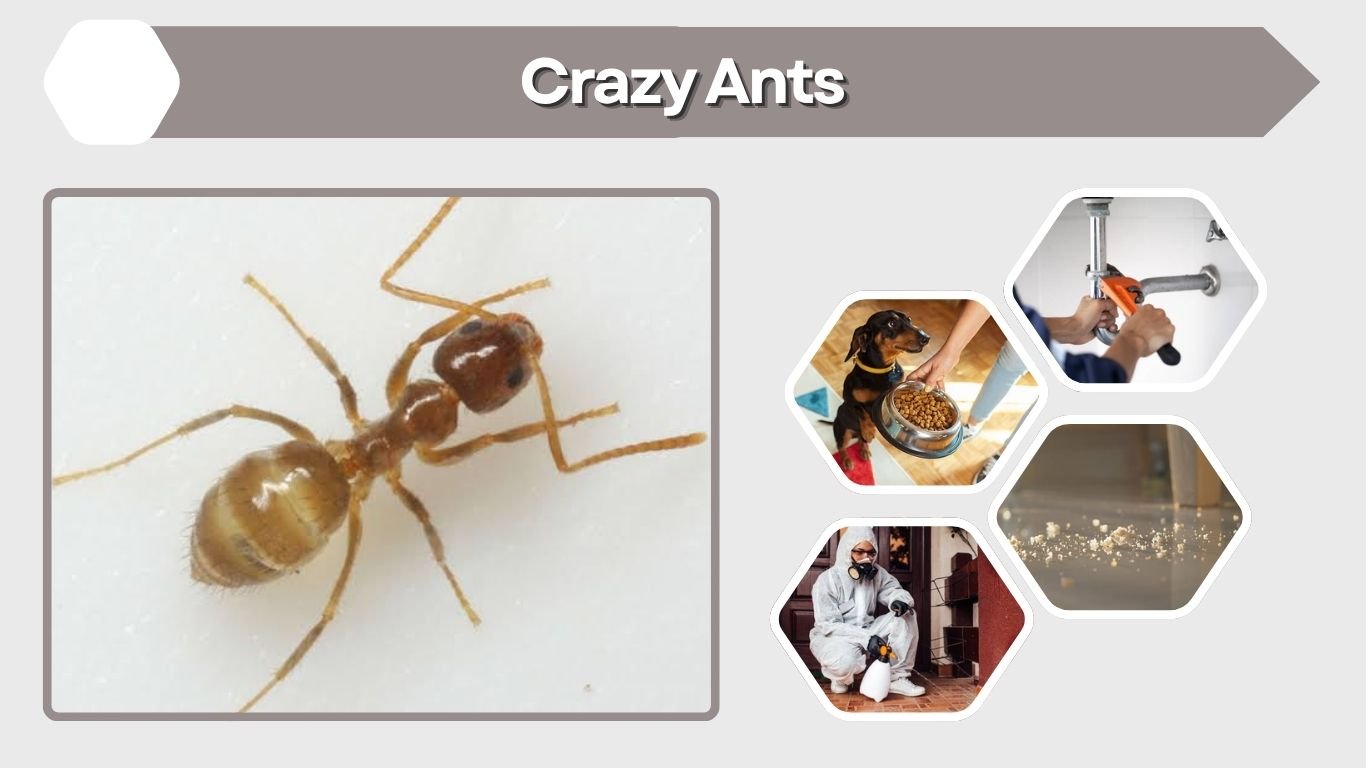
Crazy ants are small, fast-moving ants known for running in sudden, uneven directions instead of following neat trails. The name “crazy ant” does not describe just one species. It can refer to several ants, including tawny crazy ants, yellow crazy ants, black crazy ants, and longhorn crazy ants. Some are mostly nuisance pests, while others can become serious invasive ants around homes, gardens, farms, and electrical equipment.
What Are Crazy Ants?
Crazy ants get their name from their quick, erratic movement. Instead of walking in a straight line like many household ants, they scatter, turn sharply, and move rapidly when disturbed. The tawny crazy ant, for example, belongs to a group commonly called crazy ants because of this behavior.
They are often found outdoors under mulch, leaf litter, potted plants, stones, logs, and debris. In heavy infestations, they may move indoors searching for moisture, warmth, sweets, grease, or shelter.
How to Identify Crazy Ants
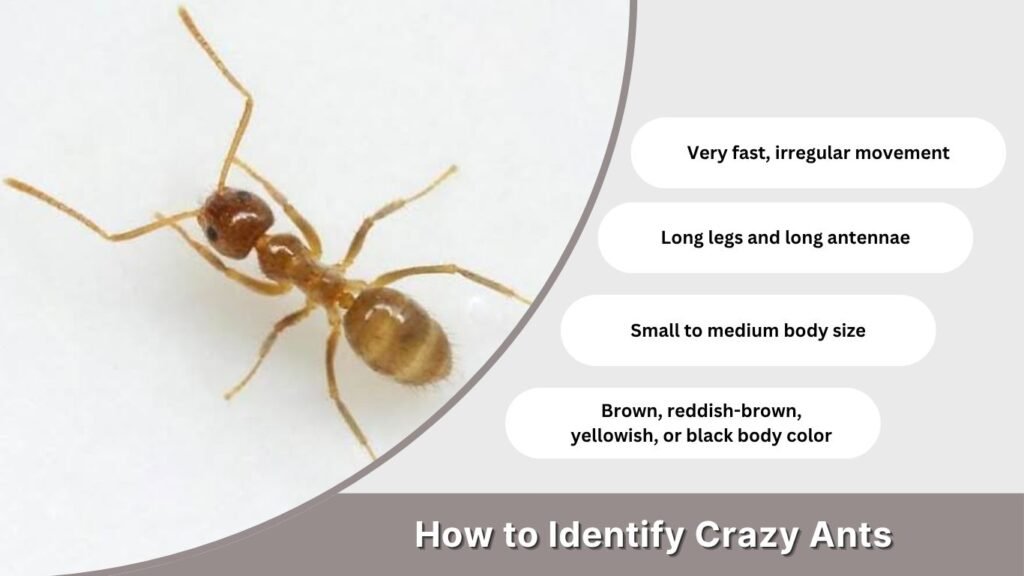
Crazy ants can be difficult to identify because several species look similar. However, they usually share a few noticeable features.
Common Identification Signs
- Very fast, irregular movement
- Long legs and long antennae
- Small to medium body size
- Brown, reddish-brown, yellowish, or black body color
- Heavy outdoor trails around walls, plants, or patios
- Large numbers appearing suddenly indoors
- No obvious mound like fire ants
The longhorn crazy ant is especially easy to recognize by its rapid movement, very long legs, long antennae, and visible body hairs when viewed with magnification.
Crazy Ant Size
Most crazy ants are small. Black crazy ants are often about 2.3–3 mm long, while yellow crazy ants are larger, usually around 4–5 mm.
Common Types of Crazy Ants
Different crazy ant names appear in searches because homeowners often identify ants by color, location, or common name.
| Type | Common Look | Main Concern |
| Tawny crazy ant | Reddish-brown to tawny | Large outdoor infestations, homes, electronics |
| Rasberry crazy ant | Same as tawny crazy ant | Texas/Gulf Coast pest issue |
| Yellow crazy ant | Yellow-orange, long-legged | Invasive tropical species |
| Black crazy ant | Dark brown to black | Indoor nuisance pest |
| Longhorn crazy ant | Dark, very long legs/antennae | Homes, buildings, disturbed areas |
Tawny Crazy Ants
Tawny crazy ants are also called Rasberry crazy ants. They became well known in Texas and have spread into several Gulf Coast states. Texas A&M notes that they can reach very high densities within a year or two and become major pests in urban, rural, and natural areas.
Yellow Crazy Ants
Yellow crazy ants are yellowish to orange ants with long legs and long antennae. They are considered highly invasive in many tropical and subtropical regions. They can dominate habitats, disturb native insects, and become household pests in some areas.
Black or Longhorn Crazy Ants
Black crazy ants are commonly linked with the longhorn crazy ant, Paratrechina longicornis. They are dark brown to blackish, have very long legs, and move quickly in random patterns. They are common in disturbed areas and can enter homes, kitchens, and buildings.
Are Crazy Ants Dangerous?
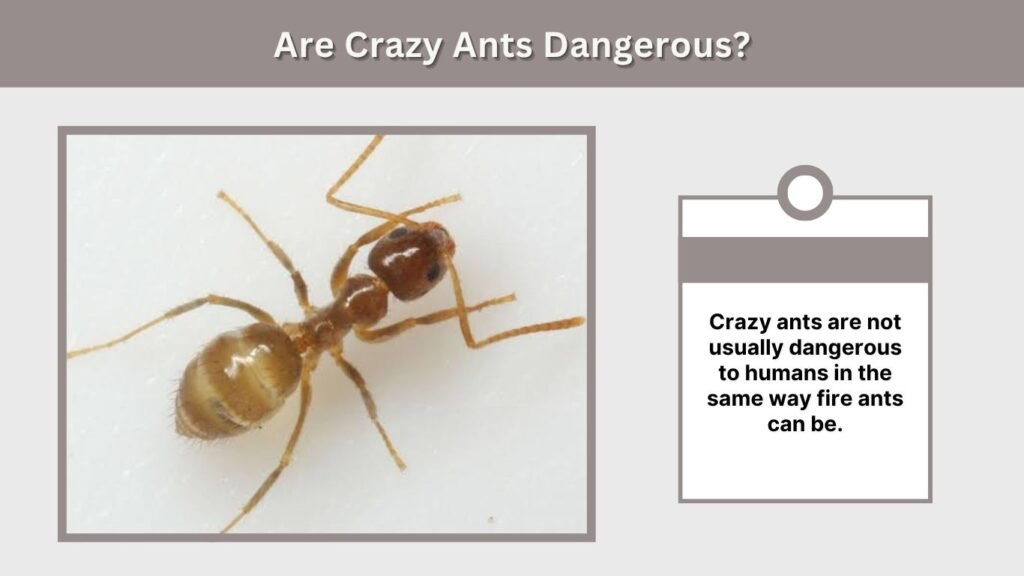
Crazy ants are not usually dangerous to humans in the same way fire ants can be. They do not have the same painful stinging behavior. Some may bite lightly or spray formic acid for defense, but they are usually more of a nuisance than a medical threat.
However, they can still cause problems. Large colonies may invade homes, cover outdoor surfaces, disturb pets, and make patios, gardens, or garages uncomfortable. In severe cases, tawny crazy ants are known for damaging electrical equipment and infesting structures.
Why Crazy Ants Invade Homes

Crazy ants enter homes mainly for food, water, and shelter. They may appear in kitchens, bathrooms, wall voids, electrical boxes, potted plants, and around windows or doors.
Common Attractants
- Sweet spills and food crumbs
- Pet food bowls
- Leaking pipes or damp areas
- Mulch touching the foundation
- Leaf litter and yard debris
- Outdoor garbage bins
- Potted plants near doors
- Gaps around windows, pipes, or siding
Once crazy ants find a reliable food source, many workers may appear quickly.
Crazy Ants and Electronics
One of the most searched concerns is crazy ants in electronics. Tawny crazy ants are especially known for entering electrical equipment. They may gather inside outlets, AC units, junction boxes, pumps, and other devices. Their bodies can cause short circuits, and dead ants may attract more ants to the same equipment.
This is one reason heavy infestations should not be handled with indoor sprays alone. Texas A&M explains that typical ant-control methods often do not give enough control for tawny crazy ants because colonies mainly nest outdoors.
How to Get Rid of Crazy Ants
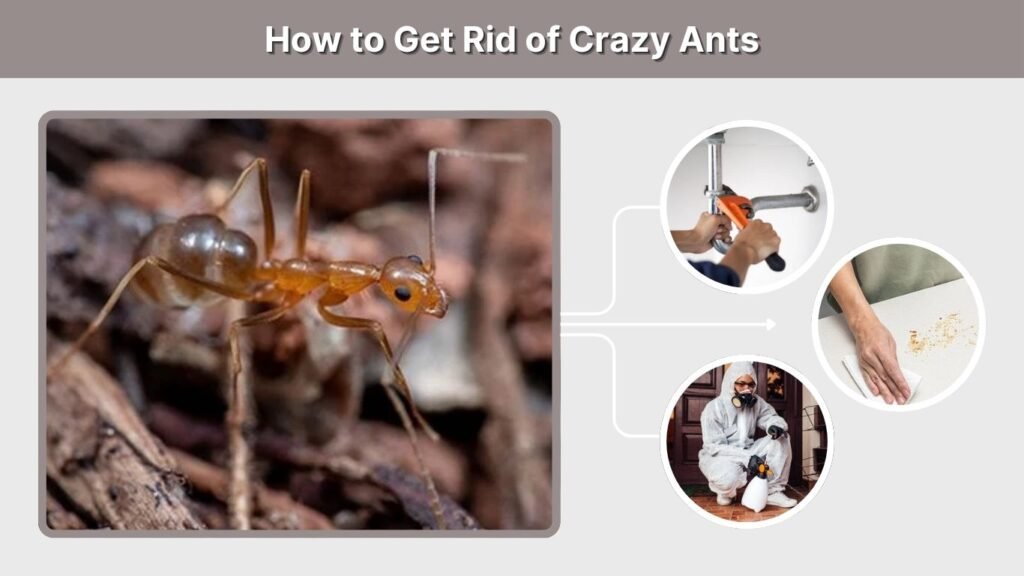
Crazy ant control works best when you target the colony, not just the ants you see indoors. Spraying visible trails may kill some workers, but it usually does not remove the main nest.
Step-by-Step Control
- Inspect outdoor areas for trails, nesting sites, mulch, logs, and debris.
- Remove leaf litter, stacked wood, and unnecessary ground cover near the house.
- Seal cracks around doors, windows, pipes, and foundation gaps.
- Fix leaks and reduce moisture indoors and outdoors.
- Keep food sealed and clean up crumbs, grease, and pet food.
- Use ant baits suitable for the species and rotate bait types if needed.
- Treat outdoor nesting zones when infestations are heavy.
- Call a pest-control professional for large tawny crazy ant infestations.
UGA Extension notes that managing large tawny crazy ant colonies often requires actively finding and treating central nest sites, plus perimeter treatments to reduce entry into structures.
Crazy Ants vs Fire Ants
Crazy ants and fire ants behave differently. Fire ants usually build visible mounds and deliver painful stings. Crazy ants usually do not build obvious mounds and are known for quick, scattered movement. Tawny crazy ants may even displace fire ants in some invaded areas, but that does not make them harmless. They can create huge nuisance populations around homes and equipment.
FAQs
What do crazy ants look like?
Crazy ants are small ants with long legs and long antennae. Depending on the species, they may be reddish-brown, yellow-orange, or dark brown to black. Their most noticeable trait is their fast, erratic running pattern when disturbed.
Do crazy ants bite?
Crazy ants may bite lightly, but they are not known for painful stings like fire ants. For most people, they are mainly a nuisance pest. If ants cause irritation, swelling, or allergic symptoms, avoid contact and seek medical advice.
Why are crazy ants in my house?
Crazy ants usually enter homes for food, moisture, or shelter. Kitchens, bathrooms, pet bowls, damp walls, and potted plants can attract them. Outdoor nests near mulch, debris, or foundations often lead to indoor trails.
Can crazy ants damage electronics?
Yes, especially tawny crazy ants. Large numbers may enter electrical equipment, where their bodies can cause short circuits or equipment failure. Heavy activity around outlets, AC units, or electrical boxes should be handled carefully.
What kills crazy ants fastest?
A quick spray may kill visible workers, but baiting and outdoor colony treatment usually work better long term. Large infestations, especially tawny crazy ants, often need professional control because indoor-only treatment is usually not enough.