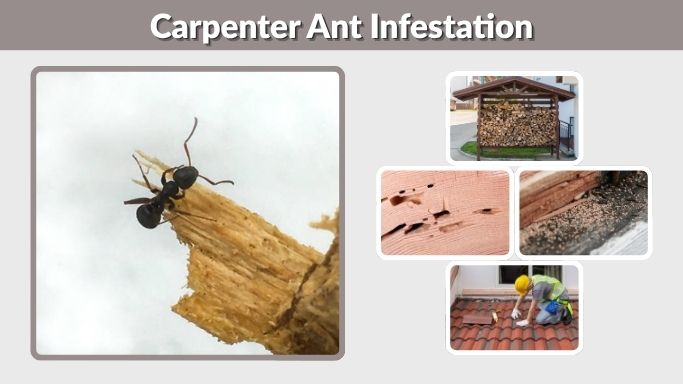
A carpenter ant infestation can be easy to miss at first because these ants often hide inside walls, floors, crawl spaces, trees, or damp wooden structures. Unlike termites, carpenter ants do not eat wood. Instead, they tunnel through it to build nests. Seeing one carpenter ant does not always mean you have an infestation, but repeated sightings, wood shavings, or winged ants indoors can signal a larger problem.
What Is a Carpenter Ant Infestation?
A carpenter ant infestation happens when carpenter ants build a nest inside or near a home. They prefer moist, soft, decaying, or damaged wood, but a large colony can also expand into dry wood.
Carpenter ants may nest in walls, window frames, decks, trees, stumps, attic beams, bathroom wood, kitchen areas, and crawl spaces.
Carpenter Ants vs Termites
| Feature | Carpenter Ants | Termites |
| Wood behavior | Tunnel through wood | Eat wood/cellulose |
| Body shape | Narrow waist | Thick waist |
| Antennae | Bent | Straight |
| Wings | Unequal wing size | Equal wing size |
| Evidence | Sawdust-like frass | Mud tubes, damaged wood |
Signs of Carpenter Ant Infestation
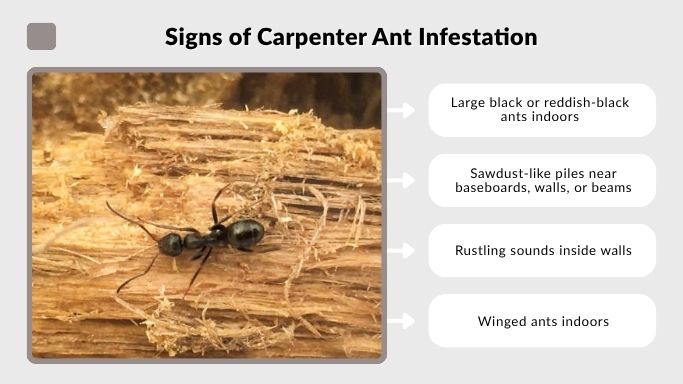
The most common signs are not always the ants themselves. Carpenter ants often move at night, so damage or debris may appear before you see many ants.
Common signs include:
- Large black or reddish-black ants indoors
- Sawdust-like piles near baseboards, walls, or beams
- Rustling sounds inside walls
- Winged ants indoors
- Shed wings near windows or doors
- Soft, hollow, or damaged wood
- Ant trails near food or moisture
- Repeated ants in bathrooms, kitchens, or basements
Does Seeing One Carpenter Ant Mean Infestation?
Seeing one carpenter ant does not always mean you have an infestation. A single ant may be a scout searching for food. However, repeated sightings indoors, especially at night or during winter, are more concerning.
If you see large ants often in the same area, there may be a nest nearby.
Early Signs of Carpenter Ant Infestation
Early signs can be subtle. You may notice a few ants near sinks, windows, or pet food. You may also see tiny wood shavings under trim or hear faint sounds in walls.
Early detection matters because colonies can grow and spread over time.
What Causes Carpenter Ant Infestation?
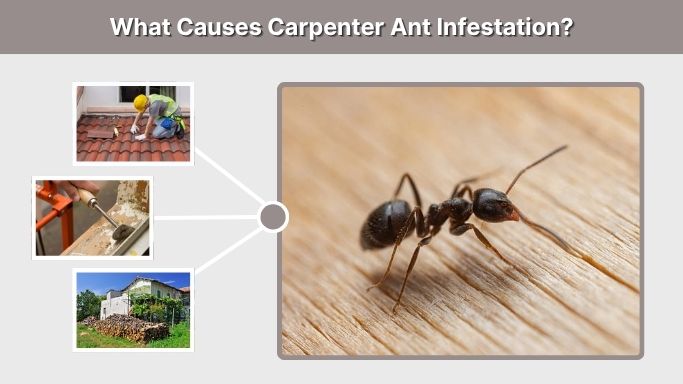
Carpenter ants are attracted to moisture, damaged wood, and easy food sources. Homes with leaks or old wood problems are more likely to attract them.
Common causes include:
- Roof leaks
- Plumbing leaks
- Damp crawl spaces
- Poor ventilation
- Rotting window frames
- Firewood stored against the house
- Tree branches touching the home
- Old stumps or logs near the foundation
- Food crumbs, grease, or pet food
Carpenter ants often begin outdoors, then move into the home through cracks, utility openings, or damaged wood.
Carpenter Ant Infestation in House
A carpenter ant infestation in the house often starts in damp areas. Bathrooms, kitchens, laundry rooms, basements, and wall voids are common nesting spots.
If ants are active inside during cold weather, it may mean they are nesting indoors rather than just entering from outside.
Carpenter Ant Infestation in Walls
Carpenter ants in walls can be difficult to treat because the nest is hidden. Signs may include rustling sounds, ants coming from outlets, or frass near baseboards.
Avoid sealing holes before treatment. Blocking entry points too early can trap ants inside and cause them to move deeper.
Carpenter Ant Infestation in Trees
Carpenter ants can also infest trees, especially trees with rot, wounds, or hollow sections. They usually nest in already weakened wood rather than attacking healthy wood first.
If a tree is close to your home, carpenter ants may use it as a satellite colony and travel indoors for food or shelter.
What Does Carpenter Ant Damage Look Like?
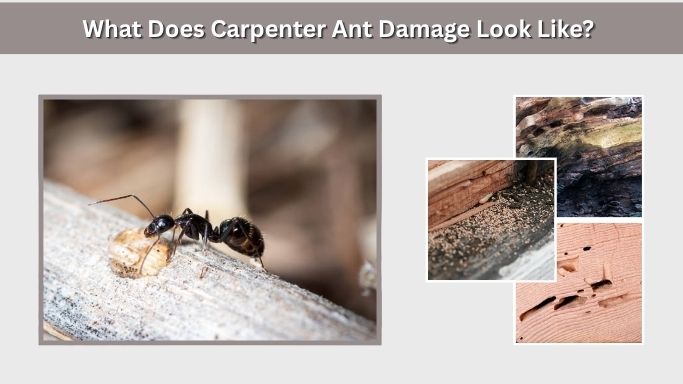
Carpenter ant damage often looks smooth and clean inside the wood because they carve galleries for nesting. The outside may look normal until the damage becomes more advanced.
| Damage Sign | What It Means |
| Frass piles | Ants are removing wood debris |
| Hollow wood | Galleries may be inside |
| Smooth tunnels | Carpenter ant nesting activity |
| Shed wings | Reproductive ants are swarming |
| Moist wood | Higher risk of nesting |
Unlike termite damage, carpenter ant tunnels do not usually contain mud. Their galleries are often clean and polished.
How Many Carpenter Ants Is an Infestation?
There is no exact number. A few ants may be scouts, but frequent sightings usually mean a nest is nearby. Seeing winged carpenter ants indoors is a stronger warning sign because it may indicate a mature colony.
If you see ants daily, find frass, or notice activity in several rooms, treat it as a likely infestation.
Carpenter Ant Infestation Treatment
The best treatment focuses on finding and eliminating the nest. Killing only the visible ants will not solve the problem.
How to Get Rid of Carpenter Ant Infestation
Use these steps:
- Follow ant trails to locate nesting areas
- Inspect damp wood, windows, bathrooms, kitchens, and crawl spaces
- Remove moisture by fixing leaks
- Vacuum visible ants and frass
- Use carpenter ant bait near trails
- Avoid spraying trails too quickly
- Remove rotten wood, stumps, and logs near the home
- Seal cracks after the colony is controlled
Bait works well because ants may carry it back to the colony. Sprays may kill surface ants but leave the nest alive.
Treatment in Walls
For wall infestations, professional treatment is often best. Experts may use targeted dusts, baits, or wall void treatments. Drilling or opening walls without knowing the nest location can make the problem worse.
How to Prevent Carpenter Ant Infestation
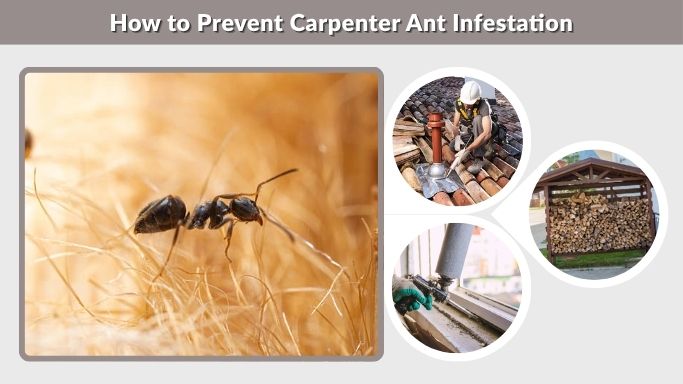
Prevention starts with moisture control and wood maintenance. Carpenter ants are much less likely to settle in dry, well-maintained wood.
Helpful prevention tips include:
- Fix roof and plumbing leaks quickly
- Keep gutters clean
- Improve crawl space ventilation
- Store firewood away from the house
- Trim branches away from siding and roof
- Seal cracks around pipes and foundation gaps
- Remove dead stumps and rotting logs
- Keep food sealed and clean up crumbs
Regular inspection is especially important in older homes or homes surrounded by trees.
When to Call a Professional
Call a pest control professional if you see flying carpenter ants indoors, find frass, hear wall sounds, or keep seeing ants after baiting.
Professional help is also smart when the infestation is inside walls, ceilings, crawl spaces, or structural wood. A large carpenter ant colony can be difficult to remove without finding the main nest and satellite nests.
FAQs
What are the signs of carpenter ant infestation?
Common signs include large black ants indoors, sawdust-like frass, rustling sounds in walls, winged ants, shed wings, and repeated ant trails. Activity near damp wood, bathrooms, kitchens, or basements can also suggest a hidden nest.
Does one carpenter ant mean infestation?
One carpenter ant does not always mean infestation. It may be a scout looking for food. However, repeated sightings, especially indoors at night or during cold months, may mean a nest is inside or very close to the house.
How do you get rid of a carpenter ant infestation?
Find the nest, remove moisture, use carpenter ant bait, clean food sources, and seal entry points after treatment. Avoid relying only on sprays because they may kill visible ants without eliminating the colony.
What causes carpenter ants in a house?
Carpenter ants are usually attracted by moisture, leaks, damaged wood, food crumbs, and easy access points. Rotting window frames, damp crawl spaces, roof leaks, and firewood stored near the home can increase the risk.
Can carpenter ants infest a tree?
Yes, carpenter ants can nest in trees, especially trees with rot, wounds, or hollow wood. They usually use already damaged areas. If the tree is close to a house, ants may travel indoors from the tree colony.