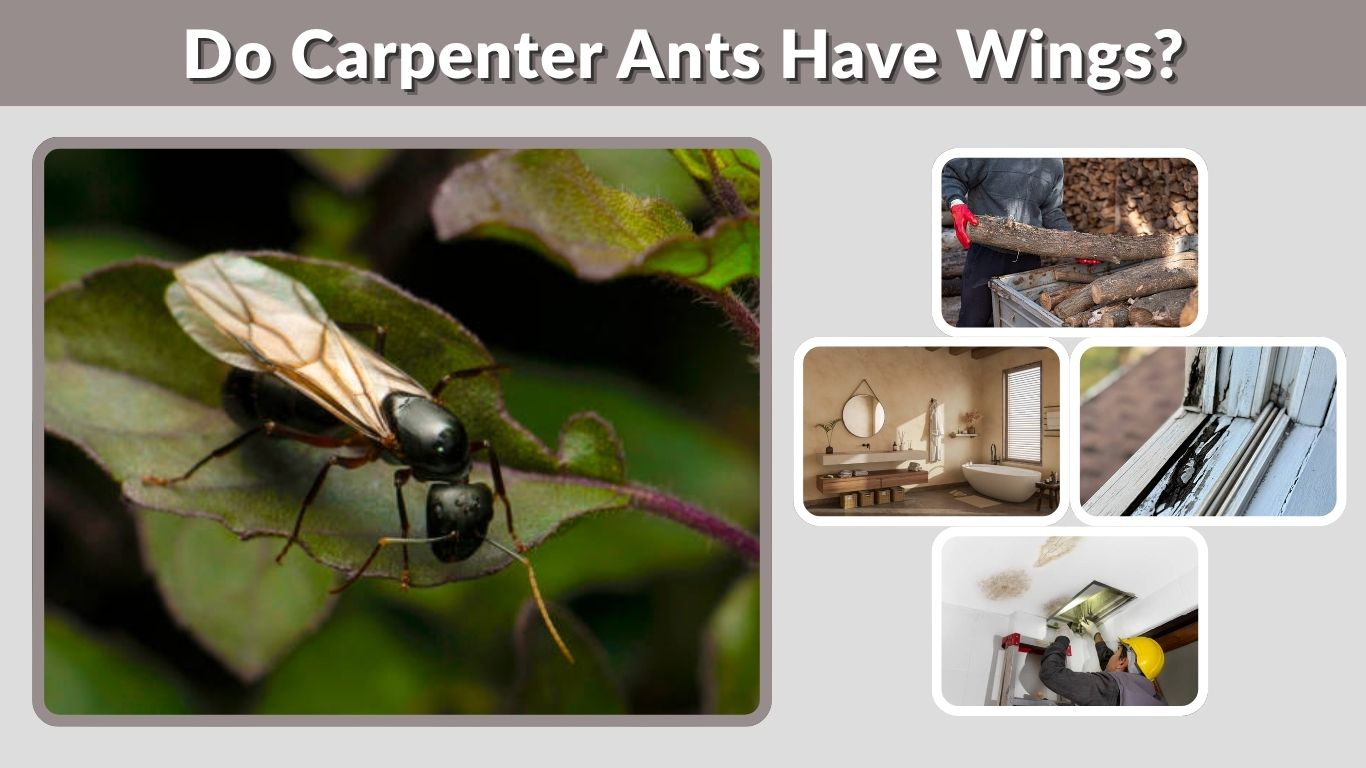
Yes, some carpenter ants have wings, but not all of them. Winged carpenter ants are usually reproductive males and females that leave a mature colony to mate and start new nests. Regular worker carpenter ants do not have wings. Seeing carpenter ants with wings inside your house can be an important warning sign, especially if you see many of them in late winter, spring, or early summer. This guide explains why carpenter ants have wings, how many wings they have, and how to tell them from termites.
Do Carpenter Ants Have Wings?
Carpenter ants can have wings, but only certain members of the colony are winged. The winged carpenter ants are called alates or swarmers. These are reproductive ants produced by a mature colony. Their job is to leave the nest, mate, and help start new colonies.
Most carpenter ants you see crawling around kitchens, bathrooms, decks, windows, and walls are workers. Worker carpenter ants are wingless. The University of Minnesota Extension notes that carpenter ant queens and males are larger than workers and have wings, while queens lose their wings after starting a new nest.
| Carpenter Ant Type | Has Wings? | Main Role |
| Worker carpenter ants | No | Forage, care for nest, excavate wood |
| Male carpenter ants | Yes | Mate with winged females |
| Young queen / female reproductive | Yes | Mate and start a new colony |
| Established queen | Usually no | Lays eggs after shedding wings |
| Baby carpenter ants | No | Develop through immature stages |
So, if you are asking, “Do all carpenter ants have wings?” the answer is no. Only reproductive carpenter ants have wings.
Why Do Carpenter Ants Have Wings?
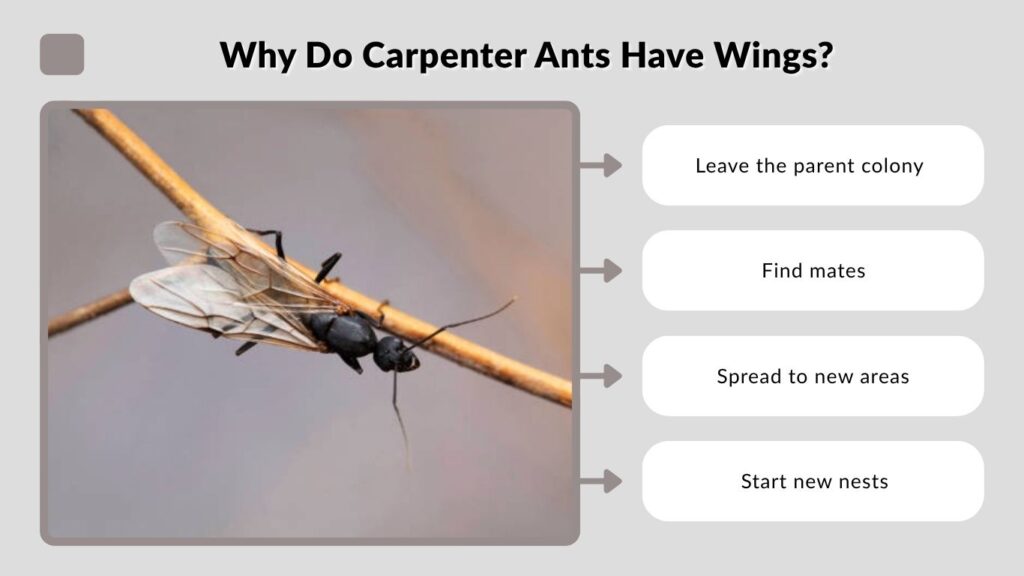
Carpenter ants have wings for reproduction and colony expansion. When a colony becomes mature, it may produce winged males and winged females. These ants leave the nest during a swarming period, mate, and then the fertilized females search for a place to start a new colony.
Why Some Carpenter Ants Fly
Winged carpenter ants fly because they need to:
- Leave the parent colony
- Find mates
- Spread to new areas
- Start new nests
- Expand the population
After mating, male carpenter ants usually die. The fertilized female, often called a queen, finds a nesting site and sheds her wings. She then begins laying eggs and building a new colony.
Do Carpenter Ants Have 2 Sets of Wings?
Yes, winged carpenter ants have two sets of wings, meaning four wings total. Like other ants, they have a front pair and a back pair. The front wings are usually larger than the hind wings.
This detail is important because winged carpenter ants are often confused with termite swarmers. Carpenter ants have unequal wing lengths, while termite swarmers have wings that are more equal in size. Kansas State University notes that winged ants and termites are commonly found in homes during warm seasons, and correct identification matters because they require different responses.
How Many Wings Do Carpenter Ants Have?
A winged carpenter ant has:
- 4 wings total
- 2 front wings
- 2 back wings
- Front wings longer than back wings
- Narrow waist
- Bent antennae
If the insect has four equal-sized wings, a thick waist, and straight antennae, it may be a termite, not a carpenter ant.
Do All Carpenter Ants Have Wings?
No, all carpenter ants do not have wings. Worker carpenter ants are wingless. Workers are the ants most people see searching for food inside the house or traveling along outdoor trails. They may appear in different sizes because carpenter ant workers can vary within the same colony.
The Illinois Department of Public Health describes typical worker carpenter ants as black, wingless adults that commonly range from about 1/4 to 1/2 inch long, though size and color can vary.
Carpenter Ant Castes and Wings
| Caste | Wing Status | What You May Notice |
| Workers | Wingless | Large black or red-black ants crawling |
| Males | Winged | Usually seen during swarming |
| Virgin queens | Winged | Larger flying ants during swarms |
| Mated queens | Wingless after shedding wings | May be found starting a nest |
| Larvae/pupae | Wingless | Usually hidden inside nest |
If you see only wingless carpenter ants, you may still have a colony nearby. If you see many winged carpenter ants indoors, the concern becomes stronger.
Do Queen Carpenter Ants Have Wings?
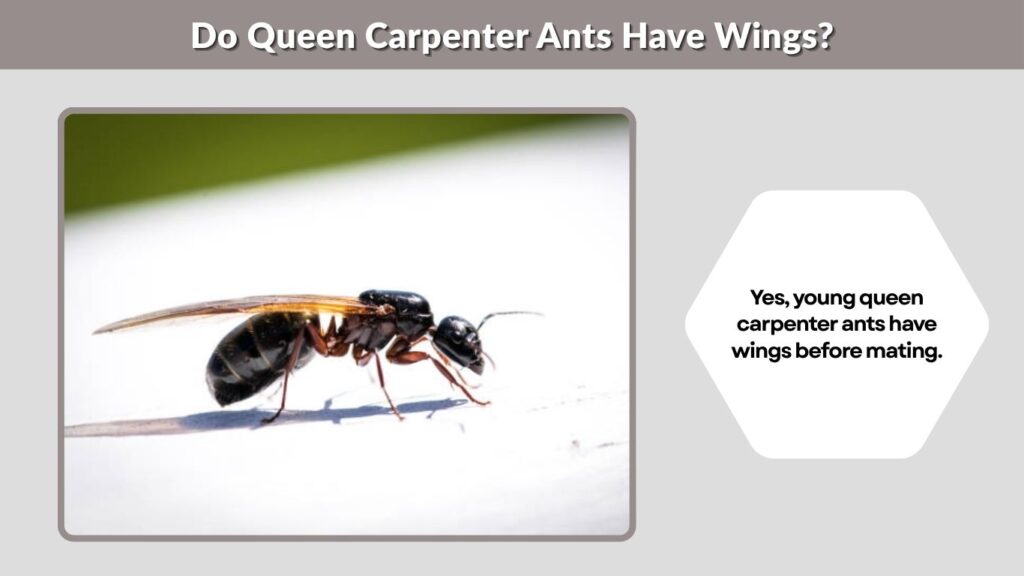
Yes, young queen carpenter ants have wings before mating. These winged females leave the colony during a swarm. After mating, a queen looks for a new nesting site and usually sheds her wings.
An established carpenter ant queen normally does not keep her wings. That is why you may find loose wings near windows, doors, floors, or baseboards after a swarm. A pile of discarded wings can be a sign that reproductive ants have been active nearby.
Queen Carpenter Ant Signs
A queen carpenter ant may be:
- Larger than worker ants
- Dark black or reddish-black
- Winged before mating
- Wingless after starting a new nest
- Found near damp or damaged wood
- Hidden inside a protected nesting site
Seeing one large winged ant does not automatically mean your house is badly infested. However, seeing many winged carpenter ants indoors should not be ignored.
Do Male Carpenter Ants Have Wings?
Yes, male carpenter ants usually have wings. Their main role is to mate with winged females during a swarm. After mating, males do not help build the colony and usually die soon after.
Male carpenter ants may look smaller or more delicate than queens, but they are still part of the reproductive caste. Homeowners usually do not need to identify males and queens separately. The more important point is whether you are seeing winged carpenter ants indoors.
Do Black Carpenter Ants Have Wings?
Yes, black carpenter ants can have wings if they are reproductive ants. The common black carpenter ant is one of the most familiar carpenter ant species in homes. Workers are usually black and wingless, while reproductive males and females may have wings.
Texas A&M notes that carpenter ant coloration can range from dull black to reddish or black-and-red combinations, and winged reproductives can be larger than many workers.
If you see a large black ant with wings, it could be a carpenter ant swarmer. But it could also be another flying ant species, so look closely at the waist, antennae, and wings.
Do Baby Carpenter Ants Have Wings?
No, baby carpenter ants do not have wings. Carpenter ants begin as eggs, then develop through larval and pupal stages before becoming adults. Immature ants stay inside the nest and are cared for by worker ants.
Baby carpenter ants are not usually seen walking around the house. If you see small ants indoors, they are more likely small worker ants from another species or smaller carpenter ant workers, not baby carpenter ants.
Do Carpenter Ants Always Have Wings?
No, carpenter ants do not always have wings. In fact, most carpenter ants in a colony are wingless workers. Winged carpenter ants only appear when the colony is mature enough to produce reproductives.
A small number of wingless carpenter ants in a home may mean workers are foraging from an outdoor nest. Large numbers of winged carpenter ants indoors can mean a mature nest may be inside or very close to the structure. The University of Minnesota Extension lists large numbers of winged ants indoors from late winter through spring as a possible sign of a carpenter ant nest.
Carpenter Ants With Wings in the House
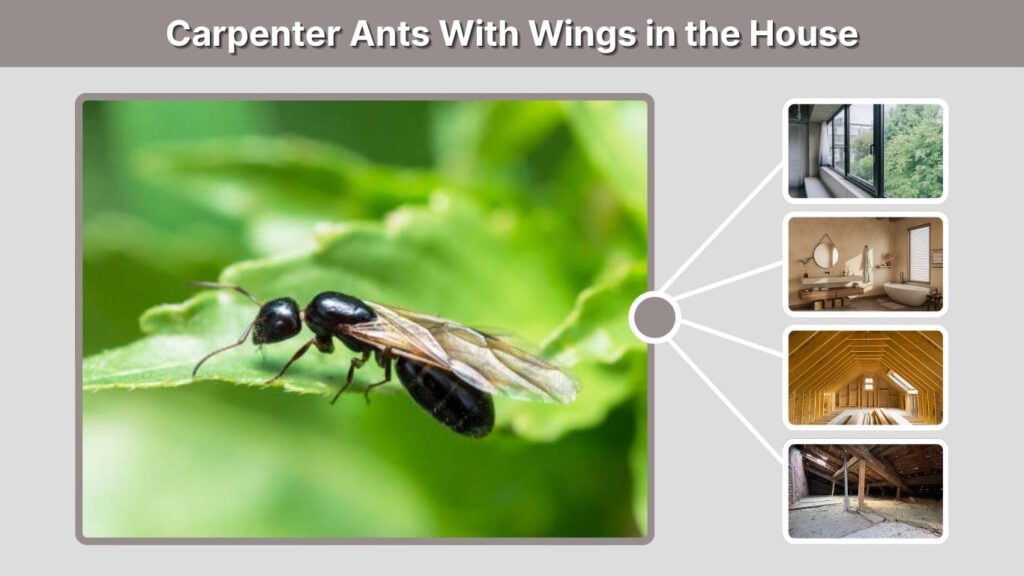
Finding carpenter ants with wings in the house is more concerning than finding one or two wingless workers. Winged ants inside may indicate that a nest has developed indoors, especially if the ants are emerging from walls, ceilings, windows, crawl spaces, or damp wood.
Common Places to See Winged Carpenter Ants Indoors
You may notice them near:
- Windows
- Sliding doors
- Bathroom walls
- Kitchen sinks
- Baseboards
- Attics
- Crawl spaces
- Fireplaces
- Damp wall voids
- Wood damaged by leaks
Carpenter ants often nest in moist or decayed wood. If winged ants are appearing indoors, check areas with roof leaks, plumbing leaks, condensation, rotten trim, wet insulation, or wood touching soil.
Carpenter Ant Wings vs Termite Wings
Winged carpenter ants and termite swarmers are often confused. This is one of the most important comparisons because termites eat wood, while carpenter ants excavate wood to make nests.
| Feature | Winged Carpenter Ant | Termite Swarmer |
| Antennae | Bent or elbowed | Straight |
| Waist | Narrow, pinched | Broad, thick |
| Wings | 2 pairs, unequal length | 2 pairs, equal length |
| Body shape | Ant-like with separated body parts | More straight-sided |
| Wood behavior | Excavates wood for nesting | Eats wood/cellulose |
| Common sign | Frass/sawdust, large ants | Mud tubes, hollow wood, discarded wings |
The University of Minnesota Extension identifies carpenter ants by features such as a one-node waist and an evenly rounded thorax, while K-State notes that winged ants and termites are often confused during swarm season.
If you are not sure whether you have winged ants or termites, collect a sample in a small bag or container and contact a pest professional or local extension office.
Are Carpenter Ants With Wings Poisonous?
Carpenter ants with wings are not poisonous. They do not sting like wasps or bees. However, carpenter ants can bite if handled or threatened. The bigger concern is not poison; it is the possibility of a nest in moisture-damaged wood.
If you see many black carpenter ants with wings indoors, focus on finding the source. Spraying the visible ants may kill some swarmers, but it will not solve the problem if the main nest remains hidden in a wall, ceiling, crawl space, stump, tree, or porch.
Why Are Winged Carpenter Ants a Warning Sign?
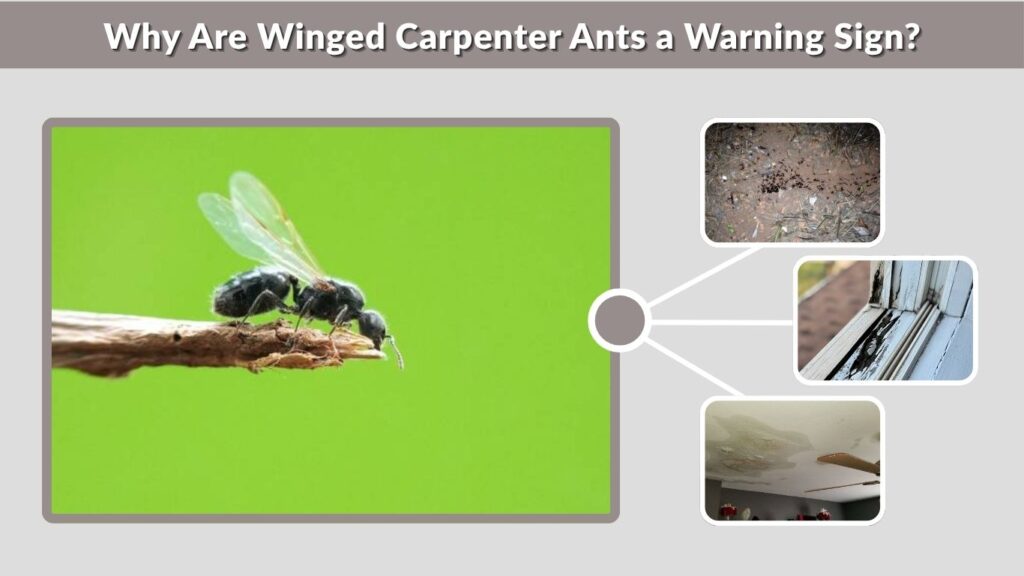
Winged carpenter ants can be a warning sign because colonies usually produce swarmers after they are mature. A mature colony may have been active for years before winged ants appear.
Carpenter ants do not eat wood like termites, but they can damage wood by hollowing it out for nests. The University of New Hampshire Extension explains that controlling carpenter ants requires locating and treating the nest, and sawdust-like material suggests activity but does not always prove the nest location.
Warning Signs to Look For
Along with winged ants, check for:
- Coarse sawdust-like frass
- Large black ants indoors
- Ant trails at night
- Rustling sounds in walls
- Damp or rotten wood
- Soft window frames
- Leaky roof areas
- Damaged porch posts
- Ants coming from wall cracks
If several of these signs appear together, a carpenter ant inspection is a smart next step.
What to Do If You See Carpenter Ants With Wings
If you find winged carpenter ants, do not panic, but do not ignore them either. The first step is identification. Make sure the insects are carpenter ants and not termites.
Step-by-Step Action Plan
Follow these steps:
- Take a clear photo of the insect.
- Save a few samples if possible.
- Check whether the wings are unequal in length.
- Look for a narrow waist and bent antennae.
- Inspect nearby damp wood, windows, and baseboards.
- Look for sawdust-like frass.
- Check crawl spaces, attics, decks, and porches.
- Fix leaks and moisture problems.
- Avoid spraying randomly before locating the nest.
- Call pest control if you see many winged ants indoors.
A few winged ants near an open door or window may have flown in from outside. But repeated indoor swarms or many winged ants near the same wall or window can suggest a hidden nest.
How to Prevent Winged Carpenter Ants Indoors
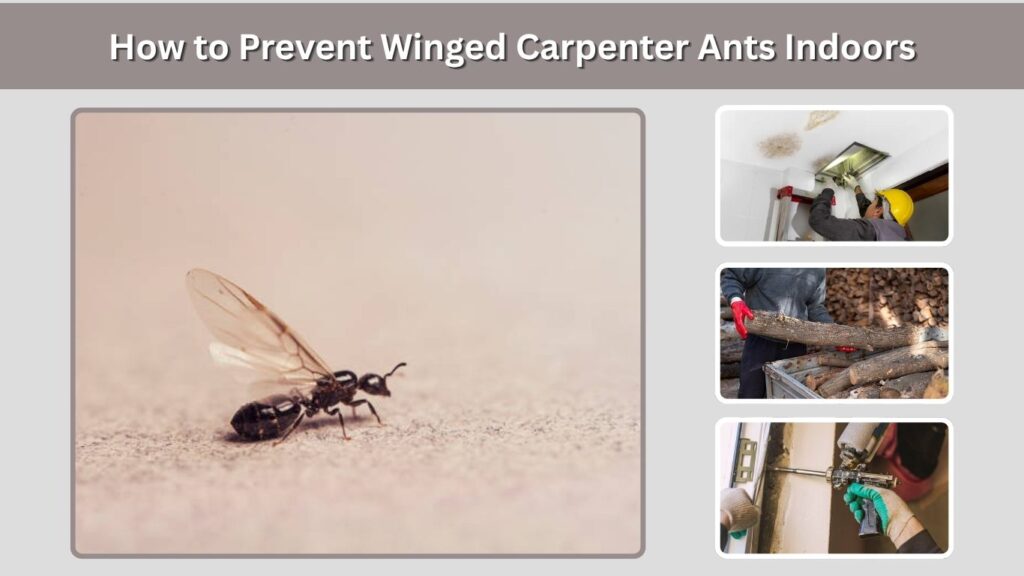
Prevention focuses on moisture control and wood maintenance. Carpenter ants are strongly linked with damp or decayed wood, so a dry home is less attractive to them.
Reduce risk by:
- Fixing roof and plumbing leaks
- Replacing rotten window or door trim
- Keeping gutters clean
- Trimming branches away from the roof
- Moving firewood away from the house
- Removing dead stumps near the foundation
- Sealing cracks around doors and windows
- Improving crawl-space ventilation
- Keeping wood siding away from soil
- Repairing damaged decks and porch posts
These steps help prevent carpenter ants from nesting near or inside your home.
FAQs
Do carpenter ants have wings?
Yes, some carpenter ants have wings. Winged carpenter ants are reproductive males and females. Worker carpenter ants do not have wings.
Do carpenter ants have 2 sets of wings?
Yes, winged carpenter ants have two sets of wings, or four wings total. Their front wings are usually longer than their back wings.
Do all carpenter ants have wings?
No, all carpenter ants do not have wings. Most carpenter ants are wingless workers. Only reproductive males and young queens have wings.
Do queen carpenter ants have wings?
Young queen carpenter ants have wings before mating. After mating and starting a new colony, the queen usually sheds her wings.
What does it mean if carpenter ants with wings are in my house?
Winged carpenter ants in the house may mean a mature nest is indoors or nearby, especially if you see many of them. Check for damp wood, sawdust-like frass, and repeated activity near walls, windows, or baseboards.