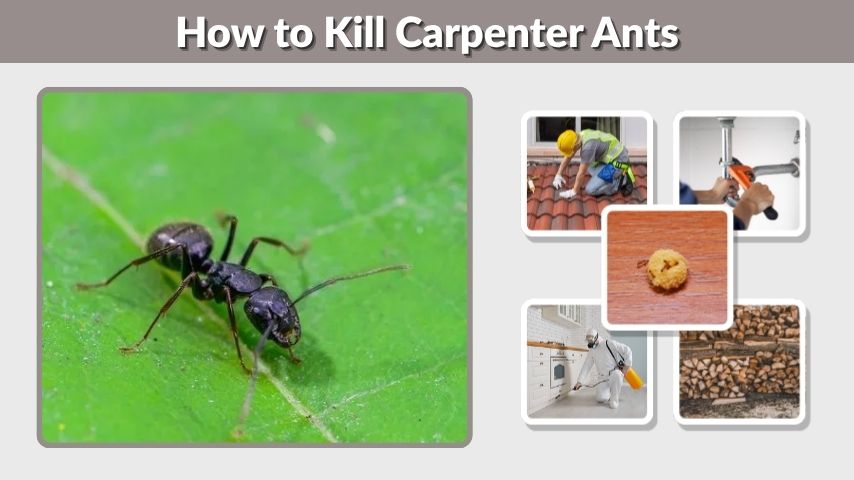
Carpenter ants can be hard to remove because the ants you see are often only workers from a larger hidden colony. The best way to kill carpenter ants is to find their nest, use slow-acting bait, treat wall voids or outdoor nesting areas carefully, and fix moisture problems that attract them. Unlike termites, carpenter ants do not eat wood; they tunnel through damp or damaged wood to build nests.
What Makes Carpenter Ants Hard to Kill?
Carpenter ants are not like small sugar ants that disappear after a quick spray. A visible trail may come from a satellite nest inside your home, while the main colony may be outside in a tree, stump, fence post, or woodpile. That is why killing only the ants on your counter usually does not solve the problem.
Know What You Are Dealing With
Carpenter ants are usually large, dark ants, though some species can be black and reddish. They have a rounded thorax and one node between the thorax and abdomen. Workers may vary in size within the same colony. Winged carpenter ants inside the home can be a stronger warning sign because it may mean a mature nest is nearby.
Signs of carpenter ants include:
- Large black or reddish-black ants indoors
- Ant activity near windows, sinks, doors, or damp wood
- Small piles of sawdust-like material called frass
- Rustling sounds inside walls at night
- Ant trails leading to trees, stumps, decks, or rooflines
- Winged ants indoors during spring or early summer
Carpenter Ants vs Termites
Carpenter ants and termites both damage wood, but they behave differently. Termites eat wood for food. Carpenter ants excavate wood to make galleries for nesting. This means carpenter ants usually prefer damp, softened, or decaying wood, especially around leaks, crawl spaces, bathrooms, window frames, and roof edges.
| Feature | Carpenter Ants | Termites |
|---|---|---|
| Wood damage | Tunnel through wood | Eat wood |
| Body shape | Narrow waist | Broad waist |
| Antennae | Bent or elbowed | Straight |
| Wings | Front wings longer than back wings | Wings usually equal size |
| Debris | May leave frass | Usually mud tubes or hidden damage |
How to Kill Carpenter Ants in the House
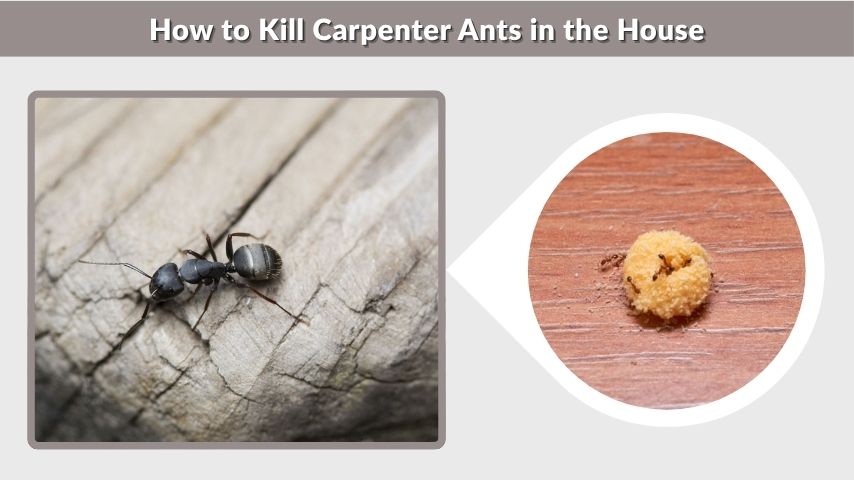
Indoor carpenter ant control works best when you avoid random spraying and focus on colony elimination. Sprays may kill visible workers quickly, but they can also scatter the ants and make the colony harder to track. Baits and targeted dust treatments are usually more effective because they can reach ants you cannot see.
Follow the Ant Trail First
Before applying any product, watch where the ants travel. Carpenter ants are often more active at night, so inspect after dark with a flashlight. Look near plumbing areas, window trim, baseboards, attic spaces, crawl spaces, and garage walls.
To track them:
- Place a small amount of honey, jelly, tuna, or peanut butter near activity.
- Wait to see which bait they prefer.
- Follow the ants as they return from the food.
- Check where they disappear into cracks, trim, siding, or wall gaps.
- Look outside for trails going to trees, logs, fences, or utility lines.
Carpenter ants may switch between sweet and protein foods depending on colony needs. If one bait does not attract them, try another bait type.
Use Slow-Acting Ant Bait
The goal is not to kill workers immediately. The goal is to let them carry bait back to the colony. Slow-acting bait gives workers time to share the active ingredient with other ants. This can help reduce the colony instead of only killing ants on the surface.
Place bait near trails, but not directly on areas sprayed with insecticide. Sprays can repel ants from bait stations. Keep bait away from children, pets, and food preparation surfaces. The EPA advises consumers to read pesticide labels carefully and use pest products safely around people, pets, and the environment.
How to Kill Carpenter Ants in Walls
Carpenter ants in walls are a serious sign because they may be nesting in damp wood behind drywall, window framing, or insulation. The main task is to locate the nesting area before treatment. Treating the wrong wall gap may waste product and leave the colony alive.
Find the Wall Nest
Common wall nest locations include areas around bathroom plumbing, kitchen sinks, roof leaks, poorly sealed windows, door frames, chimneys, and exterior walls near tree branches. Carpenter ants often choose moisture-damaged wood because it is easier to excavate.
Look for:
- Frass near baseboards or window trim
- Ants entering one crack repeatedly
- Faint rustling in wall voids at night
- Soft or stained wood
- Swollen trim or peeling paint
- Repeated ant activity in the same room
Use Dust or Foam Carefully
If you can identify the wall void or nest area, insecticidal dust or foam may be used according to the product label. Dust can work well in hidden voids because ants contact it while moving through galleries. However, drilling into walls without knowing the nest location can create unnecessary damage and spread dust into living areas.
For wall infestations, many homeowners should consider professional help, especially when ants are in ceilings, structural beams, rooflines, or multiple rooms. Carpenter ants can form satellite colonies, and treating only one visible area may not remove the whole problem. Rutgers Extension notes that carpenter ant control depends on locating and eliminating the nest, not just killing foraging workers.
How to Kill Carpenter Ants Outside
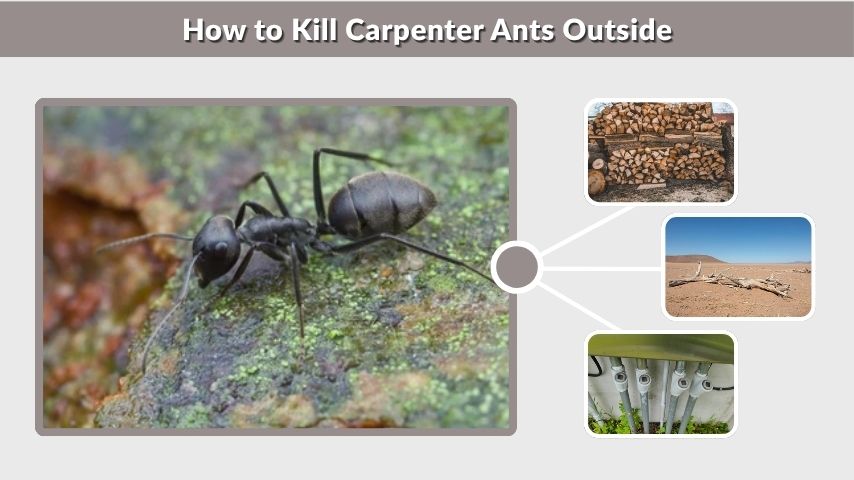
Outdoor control is important because many indoor carpenter ant problems begin outside. Colonies may live in dead trees, rotting stumps, logs, landscape timbers, wooden decks, or damp mulch near the foundation. If you only treat indoors, ants may continue entering from the yard.
Inspect Outdoor Nesting Sites
Walk around the house and inspect wood-to-soil contact points. Carpenter ants often travel along fences, deck rails, siding, tree branches, wires, and foundation cracks.
Check these areas:
- Rotting stumps
- Firewood stacks
- Dead tree limbs
- Wooden fences
- Landscape timbers
- Deck posts
- Moist mulch against the house
- Gaps around pipes and utility lines
- Tree branches touching the roof
Move firewood away from the home and keep it raised off the ground. Replace rotting wood around decks, porches, and sheds. Trim branches away from the roof so ants cannot use them as bridges.
Treat Outdoor Trails and Entry Points
Outdoor bait stations can help reduce colonies when placed near active trails. Perimeter treatments may also help, but they should be targeted, not overused. Apply products only where the label allows, such as foundation cracks, exterior entry points, or known trails. Avoid applying insecticides near ponds, edible plants, pollinator areas, or places where runoff can carry chemicals.
If the colony is in a dead stump or log, removing the wood may be the most direct solution. If the colony is in structural wood, a deck post, or a wall connected to the home, treatment may need to be more careful.
How to Kill Carpenter Ants in a Tree
Carpenter ants in a tree do not always mean the ants are killing the tree. They usually nest in decayed or dead wood inside the tree. Their presence may show that the tree already has internal rot, cavities, or storm damage. Purdue Extension notes that carpenter ants in trees are not directly harmful to tree health, but the tree may need inspection if it could fall on people, buildings, cars, or other structures.
When Tree Treatment Is Needed
If the tree is far from your home and not dangerous, killing the ants may not be necessary. Carpenter ants help break down dead wood in nature. However, action may be needed if ants are traveling from the tree into your house, nesting in a tree close to the roof, or the tree has a large hollow area that creates a safety risk.
Practical steps include:
- Trim branches that touch the roof or siding.
- Remove dead limbs and rotting wood.
- Keep mulch away from the trunk flare.
- Do not seal tree cavities with foam or cement.
- Ask an arborist to inspect large or weakened trees.
- Use bait near ant trails if ants are entering the home.
Avoid pouring chemicals into tree cavities unless the product label specifically allows that use. Misuse can harm the tree, nearby soil, wildlife, or water sources.
How to Use Borax to Kill Carpenter Ants
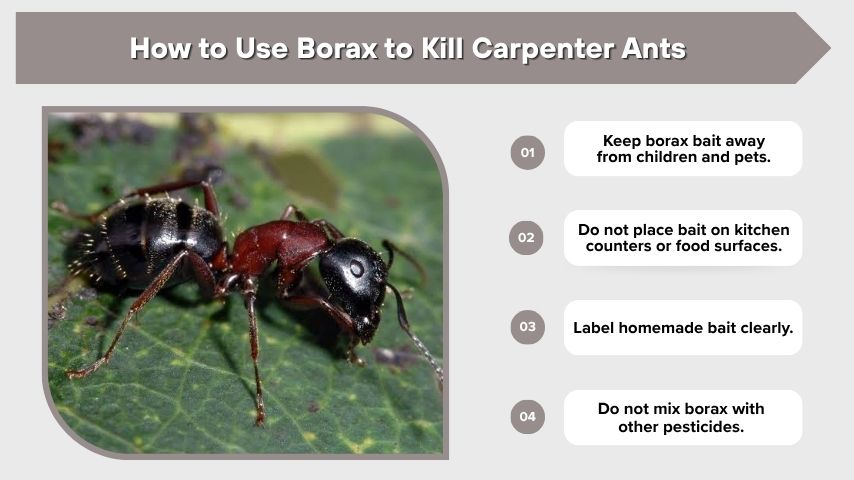
Borax and boric acid are often used in homemade ant baits, but they must be used correctly. Too much borax can kill workers before they carry bait back to the colony. Too little may not work. Carpenter ants can also be picky feeders, so borax bait may work better when ants are actively taking sweet foods.
Simple Borax Bait Method
A common homemade method is to mix a small amount of borax with sugar water. Place the bait near trails, not in the middle of busy living spaces. Use shallow lids, cotton balls, or tamper-resistant bait stations.
Safety tips:
- Keep borax bait away from children and pets.
- Do not place bait on kitchen counters or food surfaces.
- Label homemade bait clearly.
- Do not mix borax with other pesticides.
- Replace bait when it dries out.
- Stop using it if ants ignore it.
Borax is not an instant killer. It may take days or longer to reduce activity, and it may fail if the colony has many food sources or the bait is not attractive. For heavy infestations, commercial carpenter ant bait may be more reliable.
Natural Ways to Reduce Carpenter Ants
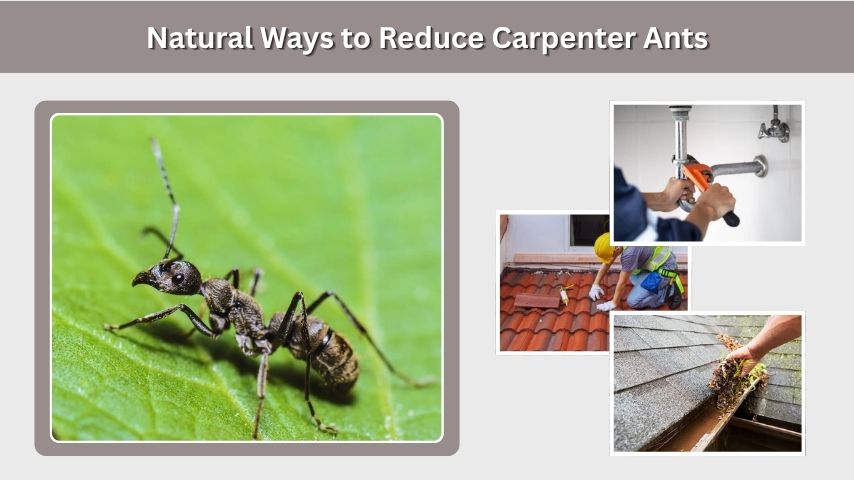
Natural methods can help reduce carpenter ant activity, especially when the infestation is small. However, natural repellents alone usually do not kill a full colony. They work best as part of a larger plan that includes moisture repair, sanitation, exclusion, and nest removal.
Moisture Control Comes First
Moisture is one of the biggest reasons carpenter ants enter homes. If wood stays damp, ants are more likely to nest there. Fixing moisture problems makes your home less attractive and helps prevent future infestations.
Important repairs include:
- Fix leaking pipes.
- Repair roof leaks.
- Improve attic and crawl space ventilation.
- Replace rotten trim and siding.
- Clean clogged gutters.
- Keep soil and mulch away from wood siding.
- Seal gaps around windows, doors, and pipes.
Diatomaceous Earth and Vinegar
Food-grade diatomaceous earth can be applied lightly into dry cracks where ants travel, but it loses effectiveness when wet. Do not spread thick piles, and avoid breathing dust. Vinegar can help erase ant scent trails on hard surfaces, but it does not kill the hidden colony. Use vinegar for cleaning trails, not as the main treatment.
How Long Does It Take to Kill Carpenter Ants?
Carpenter ant control can take several days to several weeks, depending on colony size, nest location, bait acceptance, and whether the main colony is found. A small satellite nest may be controlled quickly. A large colony with hidden nests in walls, trees, or outdoor wood may take longer.
Why Ants May Still Appear After Treatment
Seeing some ants after baiting does not always mean treatment failed. Workers may continue foraging while bait spreads through the colony. However, if activity increases, moves to new rooms, or continues for more than a few weeks, the nest may not have been reached.
Possible reasons include:
- The bait is not attractive.
- The main nest is outside.
- There are multiple satellite nests.
- Moisture damage is still present.
- Sprays repelled ants away from bait.
- Food sources are competing with bait.
- The colony is inside inaccessible structural wood.
When to Call a Professional
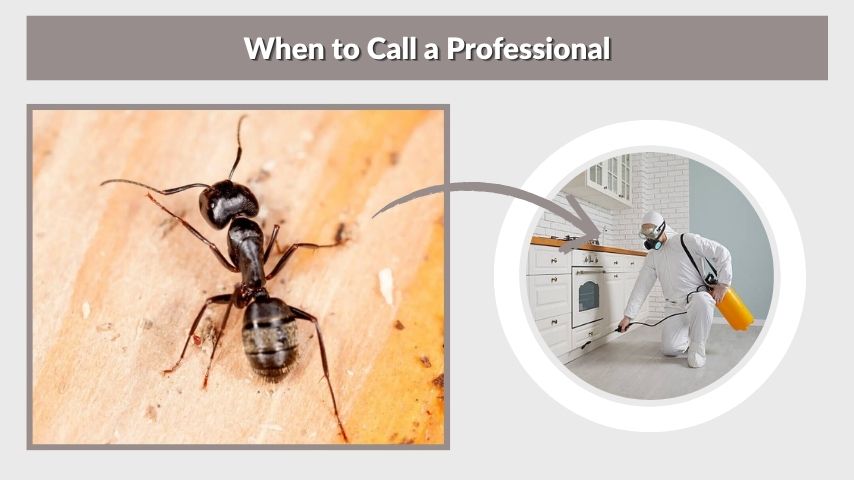
DIY control can work for small, early infestations, but professional treatment is often better for wall nests, ceiling nests, recurring infestations, and structural damage. A pest control professional can inspect hidden areas, identify the nest location, and use products safely in wall voids or exterior entry points.
Professional Help Is Best If
Call a professional if:
- You see winged carpenter ants indoors.
- Ants return every year.
- There is frass near walls or windows.
- You hear rustling inside walls.
- Multiple rooms have ant activity.
- Wood feels soft, damp, or damaged.
- The nest is in a ceiling, roof, or structural beam.
- DIY baiting has not worked after several weeks.
FAQs
What kills carpenter ants the fastest?
A direct spray can kill visible carpenter ants quickly, but it usually does not kill the hidden colony. For real control, slow-acting bait, targeted dust, and nest treatment work better. The fastest long-term method is to find the nest and treat it directly.
How do I kill carpenter ants in my house?
Track their trail, place slow-acting bait near activity, avoid spraying around bait, and inspect damp wood areas. If ants are coming from walls, ceilings, or window frames, the nest may be hidden inside damaged wood. Fix moisture problems to prevent them from returning.
Does borax kill carpenter ants?
Borax can kill carpenter ants when mixed into bait and carried back by workers. However, it must be used in the right amount. Too much borax kills ants too quickly, while too little may not affect the colony. Keep borax bait away from pets and children.
How do I kill carpenter ants in a tree?
First, decide if treatment is necessary. Carpenter ants usually nest in already decayed wood and may not be killing the tree. Trim branches touching the house, remove dead wood, and use bait near trails if ants are entering your home. For risky trees, call an arborist.
Can carpenter ants come back after treatment?
Yes, carpenter ants can return if moisture, rotting wood, or entry points remain. Killing the colony is only part of the solution. Long-term prevention requires fixing leaks, replacing damaged wood, sealing gaps, trimming branches, and keeping firewood or mulch away from the house.