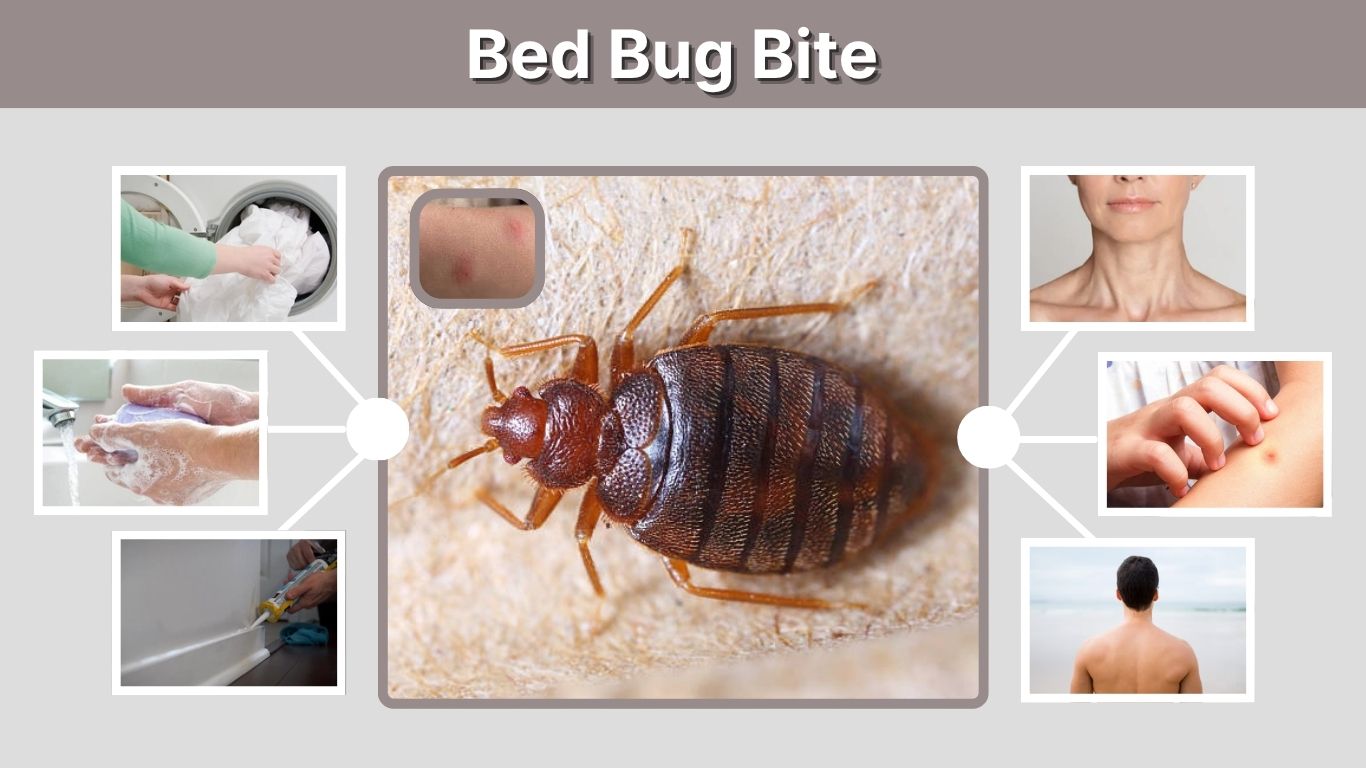
Bed bug bites are itchy skin marks caused by small, blood-feeding insects that usually bite people while they sleep. These bites can look like red bumps, small welts, rashes, or marks in a line or cluster. Because bed bug bites can resemble mosquito, flea, or allergic skin reactions, it is important to understand the symptoms, treatment options, and signs of an infestation.
What Are Bed Bug Bites?
Bed bug bites happen when bed bugs feed on human blood, usually at night. Bed bugs are small, reddish-brown, wingless insects that hide in mattress seams, bed frames, headboards, couches, cracks, and furniture near sleeping areas. They come out when people are resting and return to hiding spots after feeding.
Bed bugs are not known to spread diseases to people, but their bites can cause itching, sleep loss, allergic reactions, and sometimes secondary skin infection from scratching. The CDC notes that intense itching may lead to excessive scratching, which can increase infection risk.
Most people do not feel the bite when it happens. Symptoms may appear later, depending on the person’s skin sensitivity. Some people develop visible bumps quickly, while others may have little or no reaction.
What Do Bed Bug Bites Look Like?
Bed bug bites often appear as small, raised, itchy bumps. They may be red or pink on lighter skin and darker red, purple, brown, or slightly swollen on darker skin. In some people, bites look like tiny pimples. In others, they become larger welts or rash-like patches.
Common Signs of Bed Bug Bites
- Small raised bumps on exposed skin
- Itchy red, pink, brown, or purple marks
- Bites in a line, group, or zigzag pattern
- Swelling around the bite area
- Burning or mild pain in sensitive skin
- Rash-like patches after repeated bites
- Small scabs if the bites are scratched
Bites commonly appear on the arms, legs, hands, neck, shoulders, face, and back. These are areas often exposed during sleep. Mayo Clinic states that bedbug bites usually clear up without treatment within one or two weeks, but some people may have allergic or severe skin reactions.
Early Bed Bug Bites
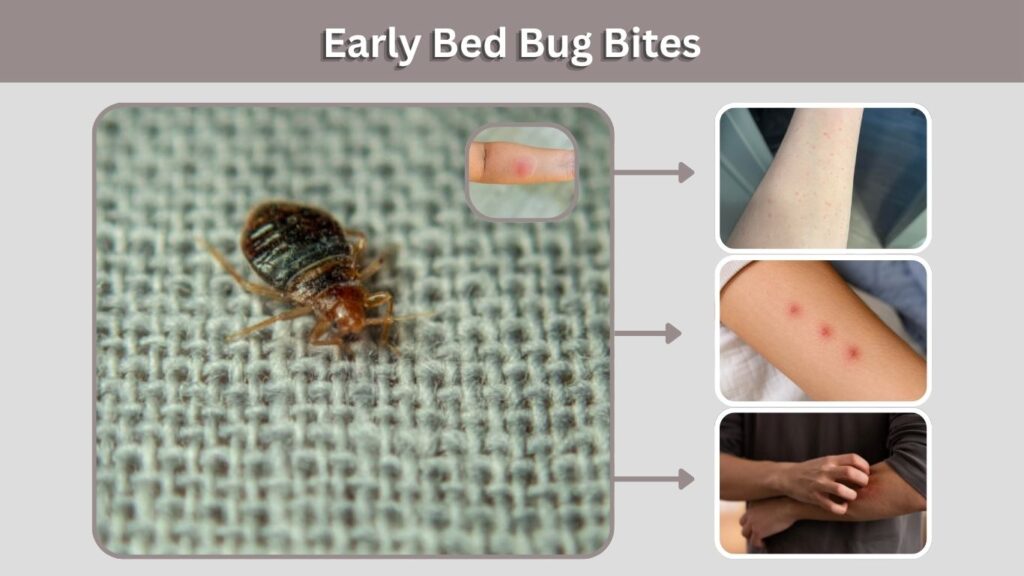
Early bed bug bites may be very small and easy to confuse with mosquito bites or mild skin irritation. At first, they may look like tiny red dots or small itchy bumps. After a few hours or days, the area can become more swollen and noticeable.
Some people search for “day 1 small bed bug bites” because they wake up with marks and are unsure what caused them. On day one, bed bug bites may not always show a clear pattern. The line or cluster appearance may become more visible later, especially if several bugs fed in the same area.
Early Bite Symptoms
- Mild itching after waking up
- Small bumps on arms, legs, or neck
- Redness or swelling around the bite
- Bites appearing overnight
- New marks after sleeping in the same bed
- No obvious mosquito or flea exposure
Bites alone cannot confirm bed bugs. If you notice repeated bites after sleeping, check your mattress, bedding, bed frame, and nearby furniture for signs of bed bugs.
Bed Bug Bites on Different Skin Tones
Bed bug bites do not look the same on every person. On lighter skin, bites often appear red or pink. On darker skin, they may appear purple, brown, dark red, or slightly raised without strong redness. This is why picture-based identification can be confusing.
People with darker skin may also notice itching, swelling, warmth, or small dark marks after the bite heals. In some cases, scratching can lead to post-inflammatory dark spots that last longer than the bite itself.
The best way to identify bed bug bites is to combine skin symptoms with signs of infestation. Look for live bugs, shed skins, white eggs, dark droppings, or small blood stains on sheets.
Do Bed Bug Bites Itch?
Yes, bed bug bites often itch. The itching happens because the body reacts to proteins in bed bug saliva. Some people feel mild itching, while others experience strong irritation that makes it difficult to sleep.
Scratching may provide temporary relief, but it can damage the skin and cause infection. Try to keep the area clean and avoid scratching as much as possible. If itching is severe, an over-the-counter anti-itch cream or antihistamine may help. The CDC says minimal symptomatic treatment to prevent itching is usually enough for most bed bug bites, and good hygiene helps prevent secondary infections.
Where Do Bed Bugs Bite?
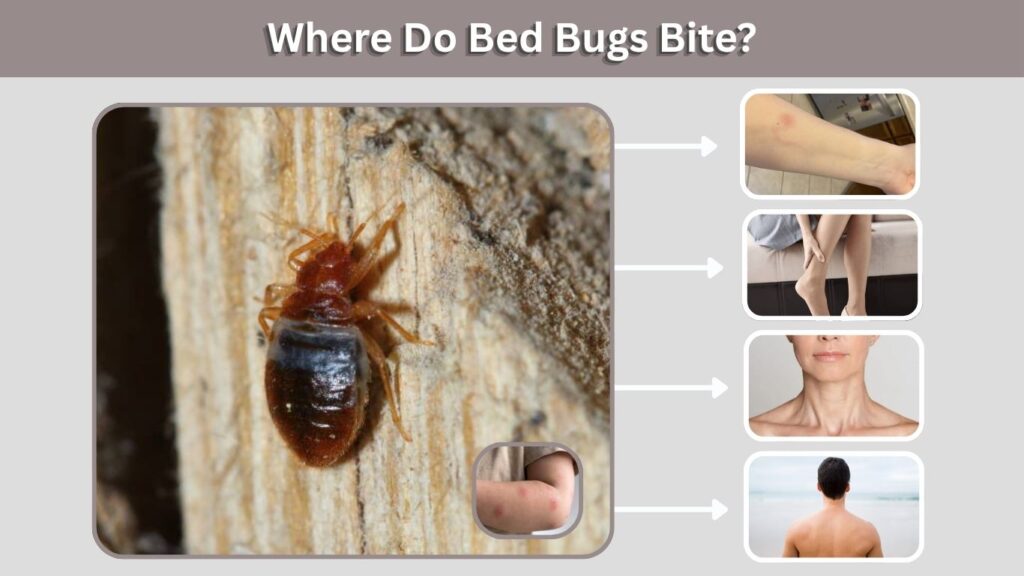
Bed bugs can bite any exposed skin. They are most likely to bite areas that are uncovered while you sleep. This includes arms, legs, hands, neck, shoulders, face, and back. If you sleep in short sleeves or shorts, bites may appear on the arms and legs.
Common Bite Locations
- Arms
- Legs
- Hands
- Neck
- Shoulders
- Face
- Back
- Feet or ankles
Bed bugs do not only bite in beds. They can also bite on couches, chairs, recliners, or anywhere people rest for long periods. If you wake up with new bites after sleeping or sitting in the same place, inspect that area carefully.
Bed Bug Bites vs Flea Bites vs Mosquito Bites
Bed bug bites can look similar to other insect bites. Flea bites often appear around the ankles and lower legs, especially when pets are present. Mosquito bites are usually more random and often happen outdoors. Bed bug bites are more likely to appear after sleeping and may form lines or clusters.
| Feature | Bed Bug Bites | Flea Bites | Mosquito Bites |
| Common timing | After sleeping | Anytime, often near pets | Outdoor or evening exposure |
| Common pattern | Line, cluster, zigzag | Small groups | Random single bumps |
| Common location | Arms, neck, face, legs | Ankles and lower legs | Any exposed skin |
| Itching level | Mild to strong | Strong | Mild to strong |
| Home clue | Mattress stains, bugs, eggs | Pets scratching, fleas | Mosquitoes nearby |
No bite pattern is 100% certain. Always look for physical evidence before deciding you have bed bugs.
No Signs of Bed Bugs But You Have Bites
It is possible to have bites but not find bed bugs right away. Bed bugs hide very well in small cracks, seams, screw holes, wall gaps, and furniture joints. A light infestation may be hard to detect in the beginning.
However, bites without signs can also be caused by fleas, mosquitoes, mites, allergic reactions, skin irritation, or other conditions. If you cannot find bed bugs, do a deeper inspection before treating the whole room.
What to Check First
- Mattress seams and corners
- Box spring fabric and frame
- Headboard cracks and screw holes
- Bed frame joints
- Couch seams and cushions
- Baseboards near the bed
- Luggage and bags
- Folded clothes near sleeping areas
You can also use bed bug interceptors under bed legs to monitor activity. If bites continue and you still cannot find the cause, consider asking a pest control professional or healthcare provider for help.
Bed Bug Bite Treatment
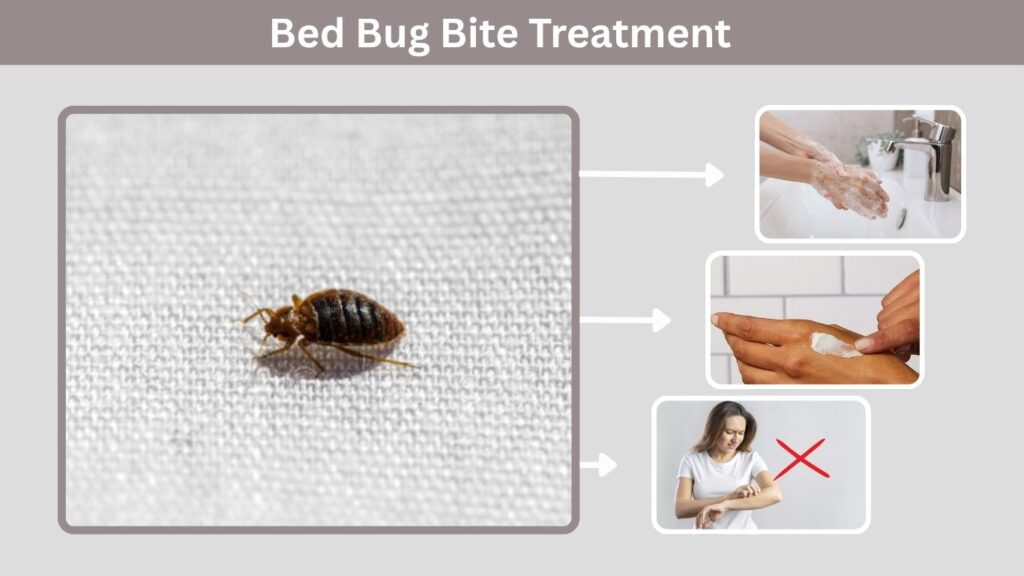
Most bed bug bites heal on their own. The main goal is to reduce itching, protect the skin, and prevent infection. Wash the bites with soap and water, then avoid scratching. A cold compress may help reduce swelling and irritation.
Mayo Clinic recommends that symptoms may be eased with hydrocortisone cream or an oral antihistamine, while the home infestation itself may require cleaning, vacuuming, and sometimes professional extermination.
Home Treatment Steps
- Wash the bite area with soap and water.
- Apply a cold compress for swelling.
- Use hydrocortisone cream for itching.
- Try calamine lotion for mild irritation.
- Take an oral antihistamine if needed.
- Keep fingernails short to reduce scratching damage.
- Do not break blisters or scabs.
- See a doctor if signs of infection appear.
If bites become painful, hot, swollen, or filled with pus, seek medical advice. You should also get urgent help if you have breathing trouble, dizziness, facial swelling, or a severe allergic reaction.
How Long Do Bed Bug Bites Last?
Bed bug bites usually improve within one to two weeks. Mild bites may fade in a few days, while stronger reactions can last longer. Scratching can make bites last longer because it irritates the skin and may cause scabs or infection.
Dark spots after bites may remain for weeks, especially on darker skin tones or sensitive skin. Keeping the area clean and avoiding scratching can help the skin heal faster.
Bed Bug Bites on Babies and Children
Bed bug bites on babies and children should be handled carefully. Children may scratch more, which increases the chance of infection. Their skin may also react more strongly than adult skin.
Wash the bite area gently and keep the child’s nails trimmed. Avoid using strong creams or medicines without checking the product label or asking a healthcare provider. If a baby has many bites, swelling, fever, pus, or unusual crying, seek medical advice.
How to Stop Bed Bug Bites
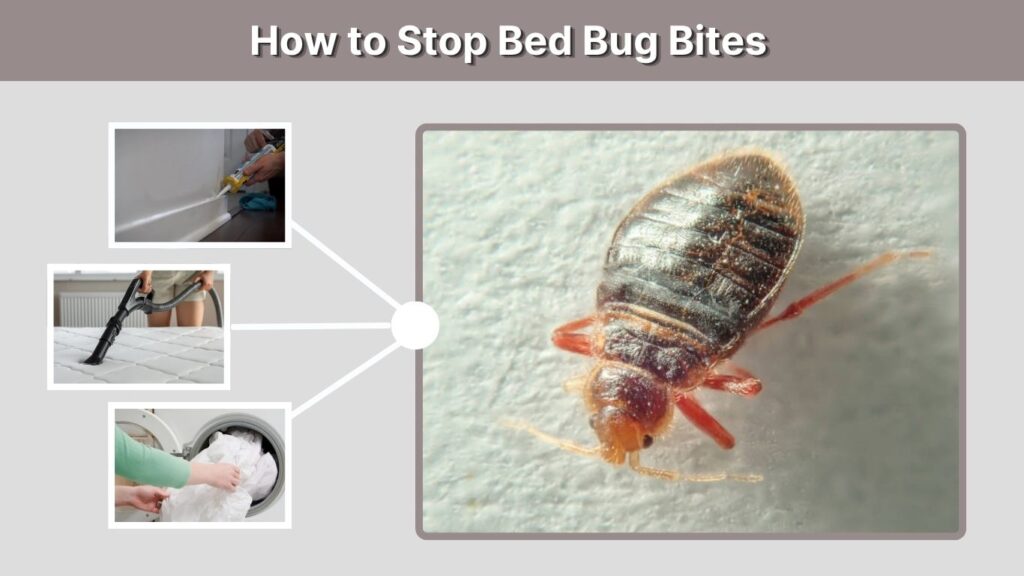
Treating the bites only helps your skin. To stop new bites, you must remove the bed bugs. Bed bugs hide well, so control usually needs several steps. The EPA recommends prevention, identification, treatment, and integrated pest management instead of relying on one quick method.
Ways to Reduce New Bites
- Wash bedding in hot water.
- Dry clothes and bedding on high heat.
- Vacuum mattresses, floors, and furniture.
- Use mattress and box spring encasements.
- Pull the bed slightly away from walls.
- Keep blankets from touching the floor.
- Use bed bug interceptors under bed legs.
- Reduce clutter near sleeping areas.
- Seal cracks around baseboards and furniture.
- Contact a professional for heavy infestations.
Do not move bedding or furniture through the house without sealing it first. This can spread bed bugs to other rooms.
Bed Bug Bite Myths
Many people believe bed bug bites always appear in threes. While bites can appear in groups, they do not always follow a perfect pattern. Some people may have one bite, while others may have many.
Another myth is that bed bug bites prove your home is dirty. Bed bugs are not caused by poor hygiene. They spread by hitchhiking in luggage, furniture, clothing, and bags.
Some people also think that bite pictures alone can confirm bed bugs. Pictures help, but they are not enough. Physical evidence of bed bugs is the strongest confirmation.
FAQs
What do bed bug bites look like?
Bed bug bites usually look like small, raised, itchy bumps. They may appear red, pink, brown, or purple depending on skin tone. Many bites show up in lines, clusters, or zigzag patterns, but not always. They are common on exposed areas like arms, legs, neck, face, and shoulders.
How do you treat bed bug bites?
Wash the bites with soap and water, avoid scratching, and use a cold compress for swelling. Hydrocortisone cream, calamine lotion, or an oral antihistamine may help with itching. If the bites become infected, painful, filled with pus, or severely swollen, contact a healthcare provider.
Do bed bug bites itch?
Yes, bed bug bites often itch because the skin reacts to bed bug saliva. Some people feel mild itching, while others develop strong irritation. Scratching can break the skin and cause infection, so it is better to use anti-itch treatment and keep the bite area clean.
Can you have bed bug bites but no signs of bed bugs?
Yes, especially in a small or early infestation. Bed bugs hide in mattress seams, furniture cracks, headboards, and baseboards, so they can be hard to find. However, similar bites can also come from fleas, mosquitoes, mites, or allergies, so inspect carefully before treating.
When should I see a doctor for bed bug bites?
See a doctor if bites become very swollen, painful, hot, or filled with pus. You should also seek help if you develop fever, spreading redness, severe allergic symptoms, breathing difficulty, dizziness, or swelling of the lips or face. Most mild bites heal without medical treatment.