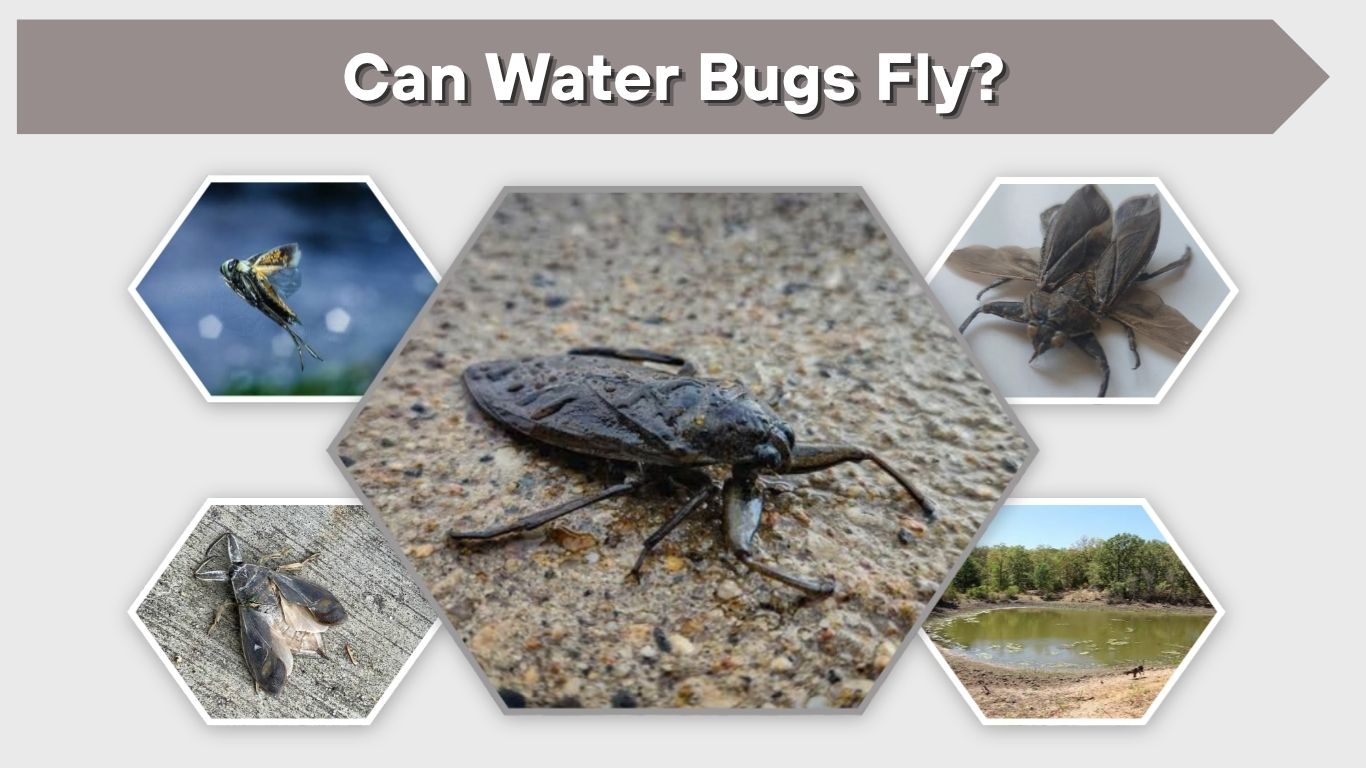
Water bugs are often seen in ponds, pools, drains, and sometimes inside homes. One common question is whether water bugs can fly. The answer depends on the type of water bug. Many true water bugs have wings and can fly, especially during warm weather or when they need to find a new water source. However, some insects called “water bugs” are actually cockroaches, which can also use wings in different ways.
Can Water Bugs Fly?
Yes, many water bugs can fly. True water bugs, including giant water bugs, water boatmen, and backswimmers, usually have wings as adults. They use flight to move between ponds, lakes, pools, streams, and wetlands. Flying helps them escape drying habitats and find better places to feed or breed.
Why Water Bugs Have Wings
Water bugs live in water, but they are still insects. Most adult insects have wings, and water bugs are no different. Their wings are usually folded flat over the body when they are not flying.
They may fly when:
- Their pond or puddle starts drying up
- They need to find food
- They are looking for a mate
- They are disturbed by predators
- Bright lights attract them at night
- They need a new breeding area
Some water bugs are strong fliers, while others fly only short distances.
Do All Water Bugs Fly?
Not all water bugs fly equally well. Some species have strong wings and can travel from one water body to another. Others have reduced flight ability or fly only when conditions are right.
Young water bugs, called nymphs, cannot fly because their wings are not fully developed. They live in water and molt several times before becoming adults. Once they reach adulthood, wings may become functional depending on the species.
When Are Water Bugs Most Likely to Fly?
Water bugs are more likely to fly during warm months. Spring and summer are common flying seasons because insects are more active and breeding conditions are better.
They may also fly after rain, during humid nights, or when a water source becomes overcrowded. Many water bugs fly at night and may land near porch lights, windows, swimming pools, or outdoor lamps.
Can Giant Water Bugs Fly?
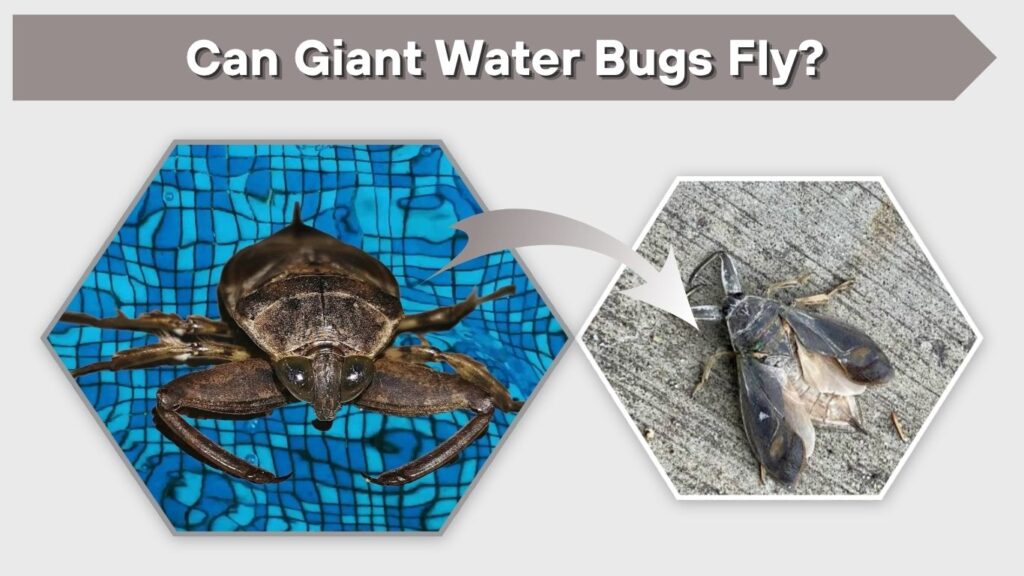
Giant water bugs can fly. These large insects are often called “toe-biters” because they can give a painful bite if handled. Despite their heavy-looking bodies, adult giant water bugs have wings and can fly from one pond, lake, or wetland to another.
How Giant Water Bugs Use Flight
Giant water bugs are aquatic predators, but they do not stay in one place forever. They fly when they need to reach another water source. This helps them survive if their current habitat becomes unsuitable.
They may fly to:
- Freshwater ponds
- Lakes and marshes
- Slow-moving streams
- Swimming pools
- Flooded fields
- Outdoor lights near water
Their flight may look clumsy compared with smaller insects, but it is effective enough for movement between habitats.
Why Giant Water Bugs Come Near Lights
Giant water bugs are often attracted to lights at night. This is one reason people sometimes find them near homes, garages, patios, or parking lots. They may mistake shiny surfaces or artificial lights for water reflections.
This behavior is more common in warm weather. A giant water bug near a porch light does not usually mean there is an infestation. It may simply be a wandering adult looking for water.
Are Flying Giant Water Bugs Dangerous?
Flying giant water bugs are not aggressive toward people. However, they can bite if picked up or pressed against the skin. Their bite can be painful because they use a sharp beak to pierce prey.
They are not like mosquitoes. They do not fly around looking for human blood. If one lands near your home, avoid handling it with bare hands. Use a container, broom, or gloves if you need to move it.
Can Water Bugs Fly in the House?
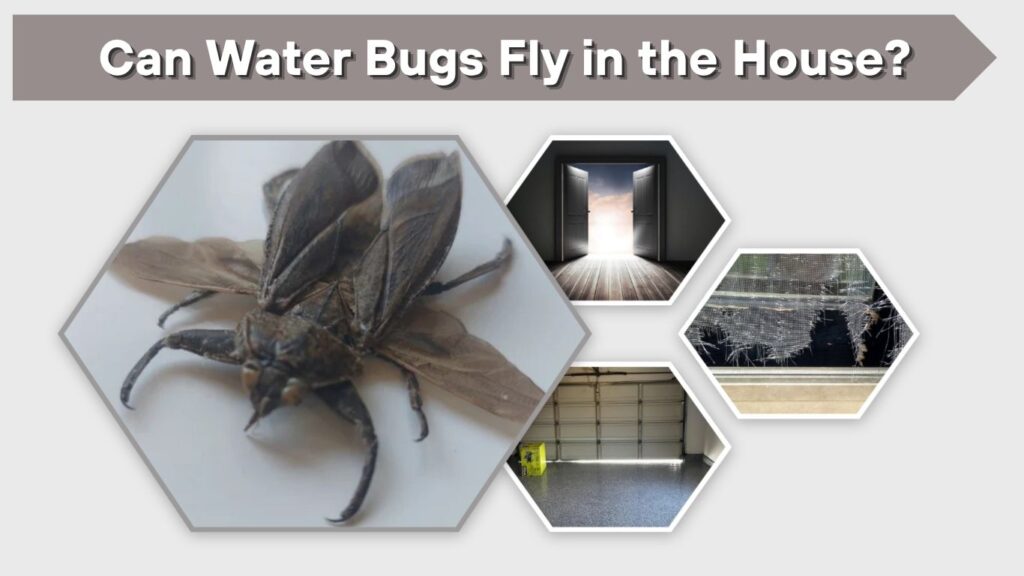
Water bugs can fly into houses, especially if lights are on and doors or windows are open. However, the insect people call a “water bug” indoors is often not a true aquatic water bug. In many homes, the term water bug is used for large cockroaches.
True Water Bugs Inside the House
True water bugs usually do not want to live indoors. They need water to hunt, breed, and survive. If one enters a house, it is often accidental.
A true water bug may enter through:
- Open doors
- Torn window screens
- Garage gaps
- Basement openings
- Brightly lit entryways
- Poolside doors
Once inside, it may become trapped and dry out if it cannot return to water.
Cockroach “Water Bugs” Indoors
In many places, people call large cockroaches “water bugs.” These may include American cockroaches or Oriental cockroaches. Some cockroaches have wings, but they do not all fly the same way.
American cockroaches can glide or fly short distances in warm areas. Oriental cockroaches usually do not fly well. These insects are different from true water bugs because they live in damp indoor or outdoor areas, not underwater.
How to Tell the Difference Indoors
A true water bug and a cockroach can look similar at first, especially if both are dark and large. But their bodies and behavior are different.
| Feature | True Water Bug | Cockroach Called “Water Bug” |
| Body shape | Oval, flat, often broad | Long, narrow, shiny |
| Legs | Often adapted for swimming or grabbing prey | Built for fast running |
| Habitat | Ponds, pools, lakes, wetlands | Drains, basements, kitchens, damp areas |
| Bite risk | Can bite if handled | Usually does not bite |
| Indoor survival | Usually accidental | Can live and breed indoors |
| Flight | Some adults fly well | Some species glide or fly short distances |
Can Black Water Bugs Fly?
Black water bugs may or may not fly depending on what insect you are seeing. The name “black water bug” is not always used for one exact species. It may refer to a true aquatic bug, a water scavenger beetle, a backswimmer, or even a dark cockroach.
Black True Water Bugs
Some dark-colored true water bugs can fly as adults. They may leave ponds or ditches and appear near lights. If the insect has a broad body, strong front legs, and a piercing beak, it may be a true water bug.
These insects often live in freshwater and hunt smaller aquatic animals. They may fly at night when searching for a new habitat.
Black Water Bugs in Pools
A black water bug in a pool may be a backswimmer, water boatman, or diving beetle. Some of these insects can fly and may land in pools by mistake. Pools can reflect light like natural water, attracting flying aquatic insects.
If you often see them in your pool, it may mean the pool is attracting insects with algae, small prey, or poor water balance.
Black Cockroach-Like Water Bugs
If the insect is found in kitchens, bathrooms, basements, or drains, it may be a cockroach. Oriental cockroaches are often dark and are commonly called black water bugs. They prefer damp areas and usually crawl more than fly.
Unlike true water bugs, cockroaches can become a household pest. If you see several indoors, it is worth checking moisture sources and hiding places.
Can Water Boatman Bugs Fly?
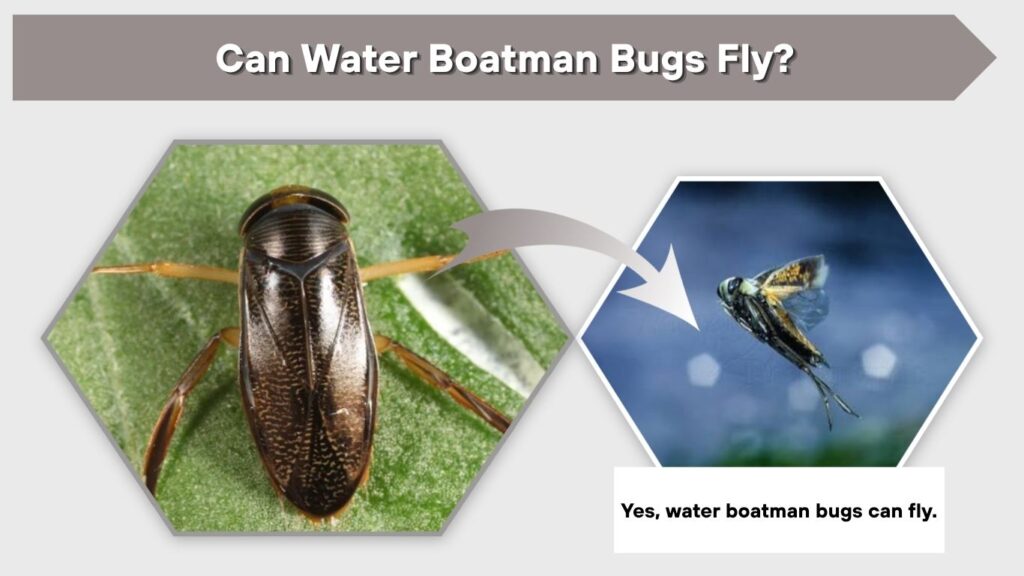
Yes, water boatman bugs can fly. Water boatmen are small aquatic insects that live in ponds, lakes, pools, and slow-moving water. They use their oar-like legs to swim and their wings to move to new water sources.
What Water Boatmen Look Like
Water boatmen are usually small, oval insects. They swim underwater and often feed on algae, plant material, and tiny organisms. Unlike giant water bugs, they are not large predators.
Common features include:
- Small oval body
- Flattened shape
- Back legs shaped like paddles
- Usually brown, gray, or dark-colored
- Often seen swimming in pools or ponds
- Wings present in adults
They may be confused with backswimmers, but water boatmen usually swim right-side up.
Why Water Boatmen Fly to Pools
Water boatmen may fly into swimming pools because pools look like natural water from above. Lights, reflections, and still water can attract them. They are especially common when pool water has algae or tiny food sources.
They do not usually bite people. If they appear often, cleaning the pool, brushing algae, and keeping water chemistry balanced can help reduce them.
Are Water Boatmen Harmful?
Water boatmen are generally harmless. They are not dangerous to humans and do not damage houses. Their presence in pools can be annoying, but they are mostly a sign that the pool environment is attractive to aquatic insects.
If many water boatmen appear, check for algae growth and other insects in the water. Removing their food source often reduces their numbers.
How High Can Water Bugs Fly?
Water bugs are not known for flying extremely high like some migrating insects. Most fly low to moderate distances, especially when moving from one water source to another. Their goal is usually not long-distance migration but finding suitable water.
Flight Distance and Height
The flying height of water bugs depends on the species, weather, wind, and light conditions. Some may fly just above the ground, while others may travel higher when moving at night.
They can fly over yards, roads, fields, and rooftops if they are searching for water. However, they usually land when they detect reflections or moisture.
Why They Land Near Homes
Water bugs may land near homes because of artificial lights, wet surfaces, pools, or reflective windows. A porch light can attract them from nearby ponds or ditches.
They may also land on:
- Driveways after rain
- Pool covers
- Window screens
- Patio furniture
- Garage doors
- Outdoor walls
This does not always mean they are living in your house.
Do Flying Water Bugs Infest Homes?
True flying water bugs usually do not infest homes. They need aquatic environments. If one enters a house, it is often a single insect that flew in by mistake.
Cockroaches are different. If the “water bugs” inside your house are cockroaches, they may breed indoors. In that case, moisture control, sealing cracks, cleaning food debris, and pest control may be needed.
Why Do Water Bugs Fly?
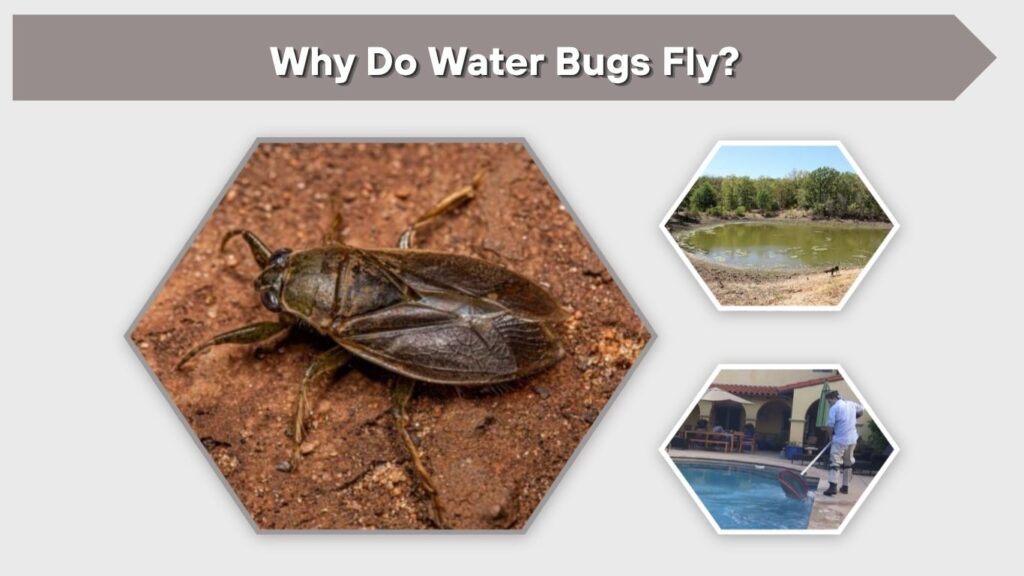
Water bugs fly for survival. Water habitats can change quickly. A pond may dry out, a pool may be cleaned, or food may become limited. Flying gives these insects a way to escape bad conditions and find better ones.
Searching for New Water
Many water bugs depend on ponds, marshes, ditches, and slow-moving streams. If their habitat becomes too crowded or dry, they may fly away.
Rainy weather can create temporary pools. Water bugs may use flight to find these new places. When the water disappears, they may move again.
Finding Food and Mates
Flying also helps water bugs find food and mates. Adult water bugs may leave one area to reach another location with more prey or better breeding conditions.
Giant water bugs hunt insects, tadpoles, small fish, and other aquatic animals. Smaller water bugs may feed on algae, mosquito larvae, or tiny organisms. A good habitat gives them a better chance to survive.
Escaping Poor Conditions
Water bugs may fly away from poor water quality, low oxygen, predators, or human disturbance. If a pool is treated with chemicals or a ditch dries out, adult insects may leave.
This is why water bugs can suddenly appear in new places after storms, heat waves, or changes in water levels.
How to Keep Flying Water Bugs Away
Flying water bugs are often attracted by water, lights, and damp places. You may not stop every insect from flying near your home, but you can reduce the chance of them landing, entering, or staying.
Outdoor Prevention Tips
To reduce flying water bugs around your home, focus on light and water sources.
Helpful steps include:
- Turn off unnecessary outdoor lights at night
- Use yellow bug lights near doors
- Keep swimming pools clean and balanced
- Remove standing water from buckets or containers
- Clean gutters and drains
- Trim vegetation around ponds and pools
- Repair torn window screens
- Seal gaps around doors and garages
These steps also reduce mosquitoes and other insects that may attract predators.
Pool Control Tips
Water bugs in pools are often drawn by algae, small insects, and reflections. Keeping the pool clean makes it less attractive.
Brush pool walls, remove debris, skim insects, and maintain proper chlorine levels. Running the pump regularly can also help. If water boatmen or backswimmers appear often, removing algae and tiny prey is usually the best first step.
Indoor Prevention Tips
If flying insects enter your home, check entry points first. Keep doors closed at night when lights are on. Use door sweeps and repair screens.
If you see large “water bugs” often in bathrooms, kitchens, or basements, they may be cockroaches. In that case, reduce moisture, fix leaks, clean food crumbs, and seal cracks near drains, pipes, and baseboards.
FAQs
Can water bugs fly at night?
Yes, many adult water bugs can fly at night. They are often attracted to lights near homes, pools, parking lots, and patios. Night flying helps them move between water sources while avoiding some daytime predators. If one appears near a porch light, it may have come from a nearby pond or ditch.
Can giant water bugs fly into houses?
Giant water bugs can fly into houses by accident, especially through open doors, windows, garages, or damaged screens. They do not usually live indoors because they need aquatic habitats. If you find one inside, avoid touching it with bare hands because it can bite if handled.
Can all water bugs fly?
No, not all water bugs can fly at every stage. Young water bugs cannot fly because their wings are not fully developed. Many adults can fly, but flight ability varies by species. Some are strong fliers, while others fly only short distances or only under certain conditions.
Why do water bugs fly around lights?
Water bugs may fly around lights because artificial lights confuse their natural navigation. They may also mistake shiny surfaces or bright reflections for water. This is why they sometimes land near porch lights, windows, parking lots, or swimming pools at night during warm weather.
Are flying water bugs the same as cockroaches?
Not always. True water bugs are aquatic insects that live in ponds, pools, lakes, and wetlands. Cockroaches are sometimes called water bugs because they like damp places. Some cockroaches can glide or fly short distances, but they are different from true water bugs in body shape, habitat, and behavior.