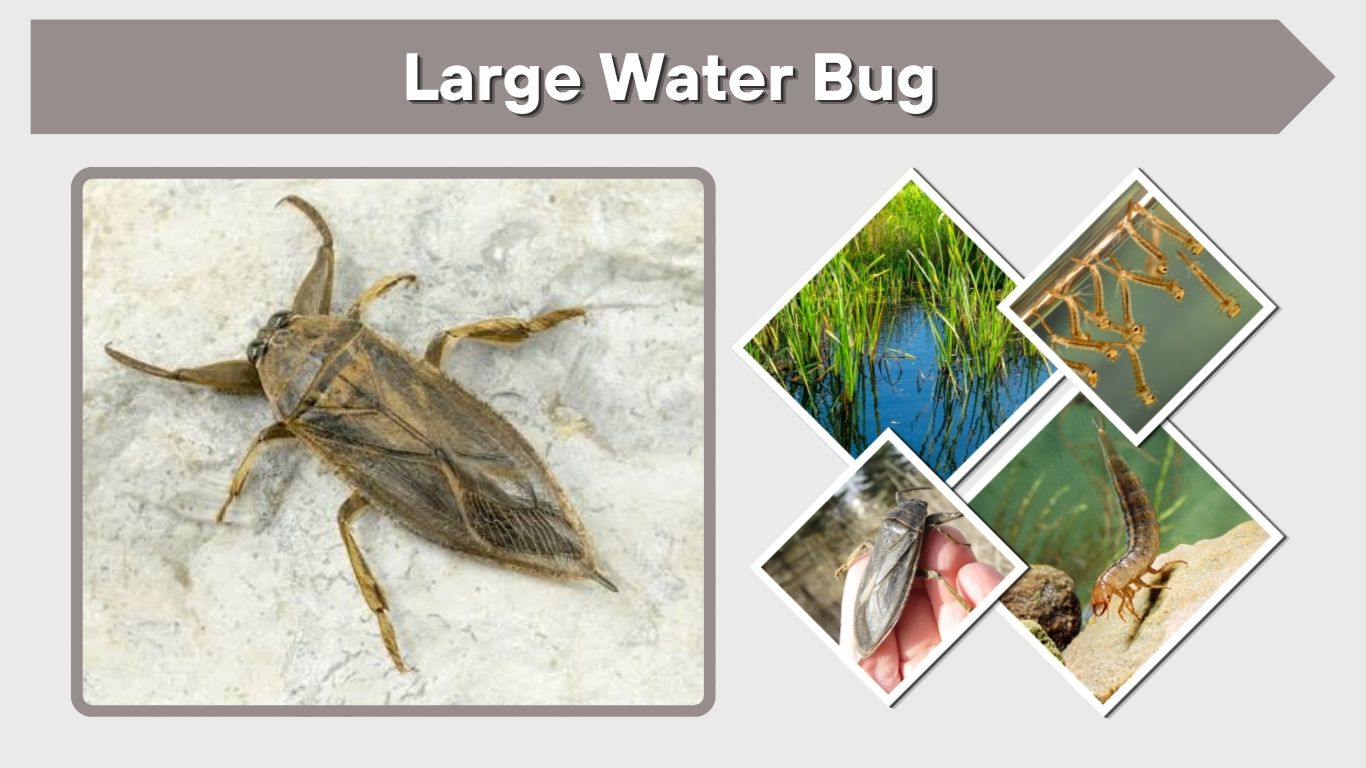
A large water bug can look shocking when it appears near a pool, porch light, bathroom, basement, or kitchen floor. The name can describe a true aquatic insect, such as a giant water bug, or it may be used for large cockroaches in homes. Correct identification matters because true water bugs and roach-like “water bugs” need different responses.
What Is a Large Water Bug?
A large water bug is usually a broad, dark aquatic insect that lives in or near freshwater. However, in everyday language, many people also use the name for large cockroaches, especially American and Oriental cockroaches. This makes the term confusing for homeowners.
True large water bugs belong to aquatic insect groups and are usually found around ponds, lakes, marshes, ditches, slow streams, or swimming pools. They are predators that hunt small aquatic animals. Cockroaches, on the other hand, are land-based scavengers that may infest kitchens, bathrooms, drains, basements, and damp indoor areas.
If the insect has long antennae, runs quickly across the floor, and appears indoors repeatedly, it is more likely a cockroach. If it has a broad body, strong front legs, short hidden antennae, and appears near water or outdoor lights, it may be a true water bug.
Large Water Bug Identification
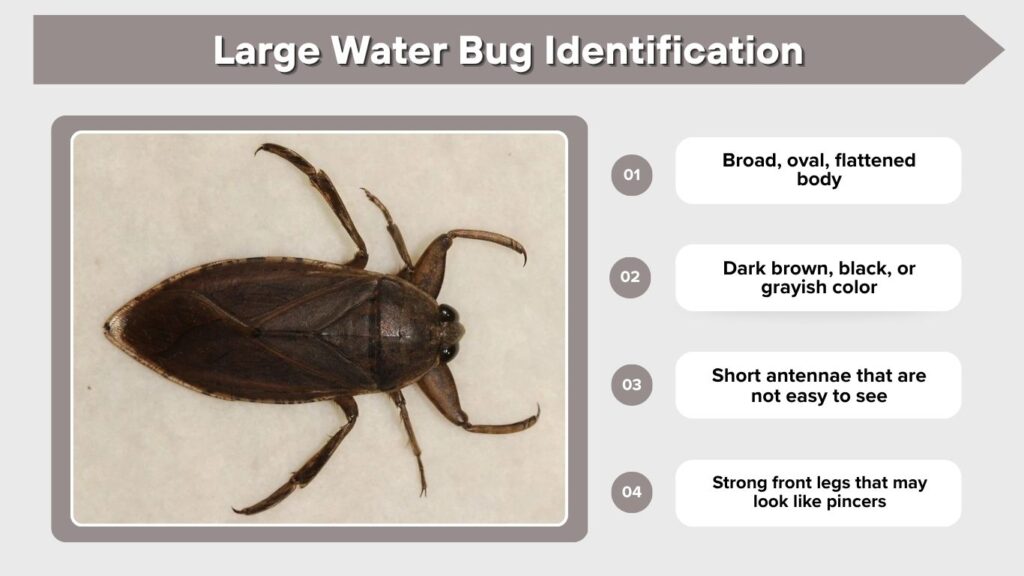
Large water bugs can vary in color and size, but most have a strong, flattened body and a dark brown, black, or grayish appearance. Some species look almost like a giant oval shield with powerful legs near the front.
Key Features
- Broad, oval, flattened body
- Dark brown, black, or grayish color
- Short antennae that are not easy to see
- Strong front legs that may look like pincers
- Piercing mouthpart under the head
- Body built for swimming or grabbing prey
- Often found near water, pools, ponds, or outdoor lights
A true large water bug does not usually have the long, thin antennae seen on cockroaches. This is one of the easiest ways to separate them. Cockroaches use long antennae to explore surfaces, while true water bugs have shorter antennae and a more compact appearance.
Large Black Water Bug
A large black water bug may be a true aquatic bug, but it can also be an Oriental cockroach. Oriental cockroaches are dark brown to black and are often called water bugs because they like damp places. They commonly appear in basements, drains, crawl spaces, garages, and ground-level rooms.
If the insect is shiny black, has long antennae, and is found indoors, it is likely an Oriental cockroach. If it has thick front legs, short antennae, and came from a pond, pool, or wet outdoor area, it may be a true water bug.
Large Brown Water Bug
A large brown water bug can also be confusing. American cockroaches are reddish-brown and are often mistaken for water bugs. They are large, fast, and may appear in bathrooms, kitchens, laundry rooms, basements, or sewer-connected areas.
True brown water bugs are usually connected to freshwater habitats. A brown insect found in a swimming pool, pond, or near a porch light may be a true water bug. A brown insect found repeatedly inside the home is more likely a cockroach problem.
Large Water Bug vs Roach
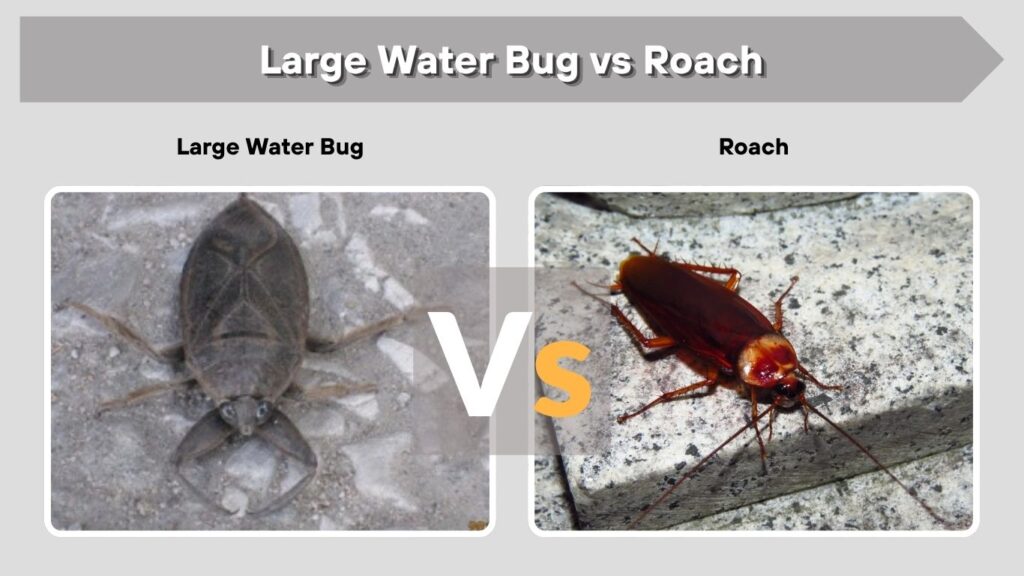
Many people search for a large water bug because they are actually seeing a roach. In many cities and warm regions, “water bug” is a common nickname for big cockroaches. This is especially true for American cockroaches and Oriental cockroaches.
Main Differences
| Feature | True Large Water Bug | Large Roach Called a Water Bug |
| Habitat | Ponds, lakes, pools, wetlands | Kitchens, drains, basements, bathrooms |
| Antennae | Short and hidden | Long and noticeable |
| Legs | Strong front legs, often pincer-like | Running legs |
| Diet | Aquatic prey | Food scraps, grease, waste, organic matter |
| Indoor infestation | Rare | Possible and common |
| Bite risk | Can bite if handled | Usually does not bite people |
| Control method | Remove and prevent entry | Sanitation, sealing, baiting, pest control |
The biggest difference is behavior. A true large water bug usually enters a home by accident. A cockroach may stay, hide, reproduce, and create an infestation.
Where Do Large Water Bugs Live?
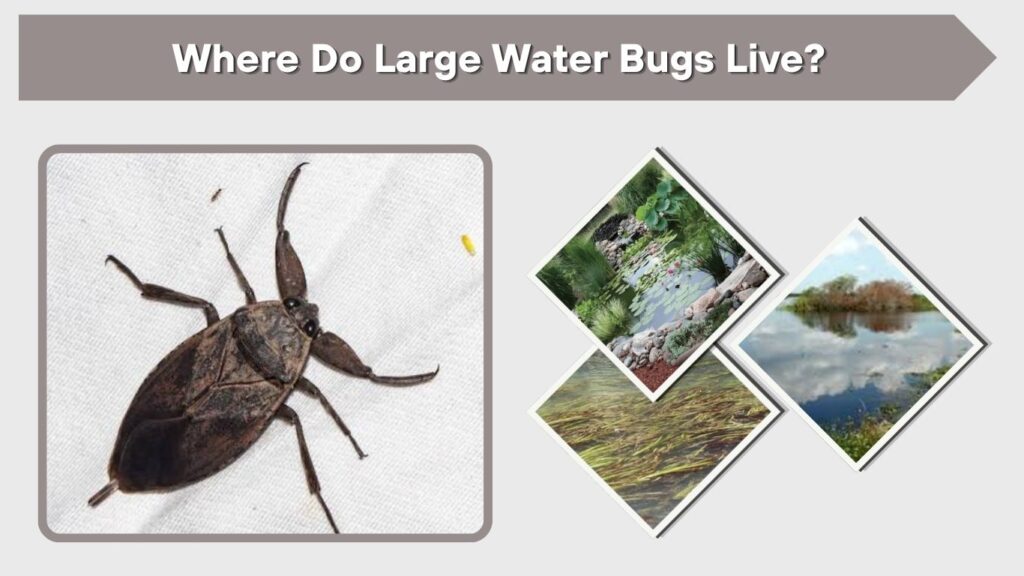
True large water bugs live in freshwater environments. They prefer slow-moving or still water where they can hide and hunt. They may rest among plants, mud, debris, or shallow edges where prey is easier to catch.
Common Habitats
- Ponds
- Lakes
- Marshes
- Wetlands
- Slow streams
- Drainage ditches
- Swimming pools
- Outdoor water features
- Areas near bright lights at night
Some large water bugs can fly and may travel toward lights. This is why people sometimes find them near porches, patios, parking lots, garages, and pool decks. They may look like they suddenly appeared from nowhere, especially after warm, humid nights.
Why Are Large Water Bugs in the House?
A true large water bug usually enters a house by accident. It may be attracted by light, moisture, or an open door. It does not usually come inside to eat crumbs or live in cabinets.
However, if the insect is actually a cockroach, the reason may be different. Large roaches enter homes for moisture, warmth, food, and shelter. They may use drains, cracks, door gaps, utility openings, and basement entry points.
Common Reasons You See Them Indoors
- Outdoor lights attracting flying insects
- Open doors or damaged screens
- Gaps under doors
- Leaky pipes or damp basements
- Standing water near the house
- Cracks around foundations
- Drains and sewer connections
- Food scraps or trash attracting cockroaches
- Clutter that gives roaches hiding places
One large water bug inside is not always a serious problem. Repeated sightings indoors, especially in kitchens or bathrooms, may mean you are dealing with cockroaches rather than true aquatic bugs.
Large Water Bug in Swimming Pool
Finding a large water bug in a swimming pool is common in some areas. True water bugs may land in pools because pools reflect light and resemble natural water. They may also be attracted by insects around the pool.
A pool sighting does not always mean infestation. The insect may simply be passing through. Use a pool net to remove it safely. Avoid handling it with bare hands because true water bugs can bite when threatened.
How to Reduce Pool Sightings
- Keep pool lights off when not needed
- Use a pool cover at night
- Remove floating insects and debris
- Clean the pool regularly
- Reduce standing water around the yard
- Move bright lights away from pool edges
- Trim dense vegetation near the pool
If you keep finding large insects in the pool, check nearby ponds, ditches, lights, and vegetation. These conditions may be drawing them close to your home.
Do Large Water Bugs Bite?
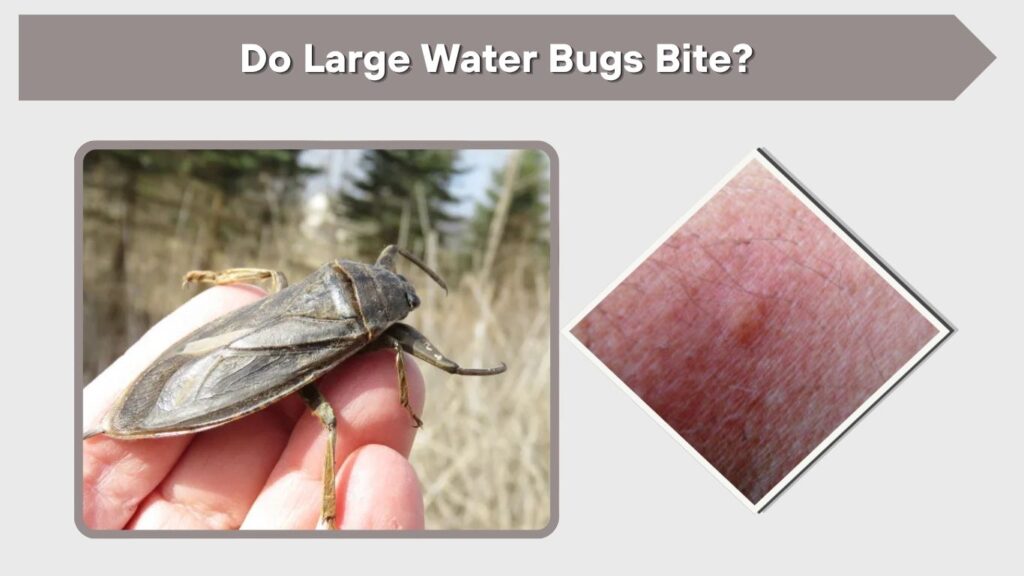
True large water bugs can bite if they are picked up, squeezed, stepped on, or handled. Their bite can be painful because they have a piercing mouthpart used to inject digestive saliva into prey.
They do not usually attack people. Most bites happen when someone tries to grab the insect or accidentally presses against it. The safest choice is to avoid touching it directly.
What to Do After a Bite
Wash the area with soap and water. Apply a cold compress to reduce pain or swelling. Avoid scratching the bite. If you notice severe swelling, breathing problems, spreading redness, or signs of infection, contact a medical professional.
For most people, the pain is temporary. Still, the bite can be intense, so careful handling is important.
Are Large Water Bugs Dangerous?
Large water bugs look frightening, but true aquatic water bugs are not usually dangerous to humans unless handled. Their main defense is a painful bite. They are not known for infesting food, spreading through kitchens, or living in walls like cockroaches.
Cockroaches are a bigger household concern. Large roaches can contaminate surfaces, move through dirty areas, and trigger allergies or asthma symptoms in some people. If the “large water bug” is actually a cockroach, it should be treated as a pest issue.
Risk Level
- True large water bug: painful bite risk if handled
- American cockroach: indoor contamination and infestation risk
- Oriental cockroach: damp-area infestation risk
- German cockroach: serious indoor infestation risk, though smaller than large water bugs
The correct response depends on what insect you actually have.
What Do Large Water Bugs Eat?
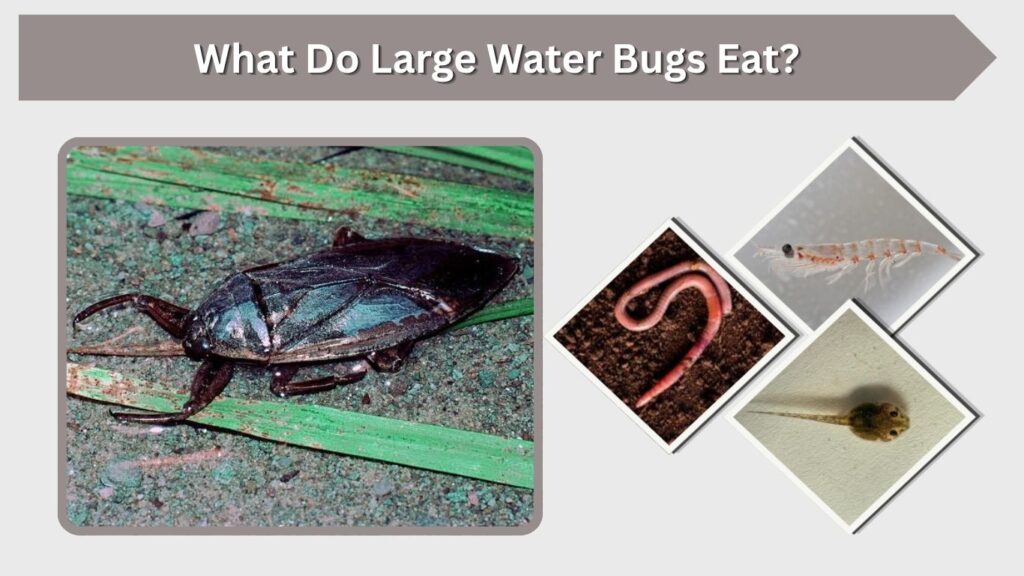
True large water bugs are predators. They feed on insects and small aquatic animals. Some may catch tadpoles, small fish, snails, larvae, and other water-dwelling creatures. Their strong front legs help them grab prey.
This feeding style is very different from cockroaches. Roaches are scavengers and eat crumbs, grease, trash, pet food, decaying material, and many small organic particles found in homes.
Because true water bugs are predators, they are not usually attracted to kitchen crumbs the way cockroaches are.
How to Get Rid of Large Water Bugs
The best method depends on whether you have a true water bug or a cockroach. For a true large water bug, removal and prevention are usually enough. For cockroaches, you may need a full pest-control plan.
For a True Large Water Bug
- Do not touch it with bare hands.
- Use a container, broom, dustpan, or gloves.
- Move it outside away from doors.
- Turn off unnecessary outdoor lights.
- Repair torn screens.
- Seal gaps around doors and windows.
- Reduce standing water near the home.
- Keep pool areas clean and covered when possible.
A true water bug usually does not need indoor pesticide treatment unless there are repeated entry problems.
For Large Roaches Called Water Bugs
- Fix leaking pipes and damp areas.
- Clean food crumbs and grease.
- Store food in sealed containers.
- Take out trash regularly.
- Seal cracks, door gaps, and pipe openings.
- Use sticky traps to locate activity.
- Use roach baits in hidden travel areas.
- Avoid heavy spraying that may scatter roaches.
- Call pest control for repeated sightings.
If you are seeing large roaches often, especially at night, the problem may be coming from drains, basements, crawl spaces, trash areas, or nearby outdoor harborage.
Large Water Bugs in Florida, Texas, and Other States
Large water bugs and large roaches are common in warm, humid areas. Florida, Texas, Georgia, North Carolina, and other southern states often have both true aquatic bugs and large roaches. This makes identification more important.
In Florida, people may call large cockroaches palmetto bugs or water bugs. In Texas, true water bugs may appear near ponds, pools, and outdoor lights, while roaches may appear inside homes. In northern states such as New York, Michigan, Minnesota, Ohio, and Ontario, the term may still be used for large roaches or true aquatic insects found near water.
Location gives an important clue. A large bug in a pond or pool may be a true water bug. A large bug under a sink or near a drain is more likely a cockroach.
FAQs
Are large water bugs cockroaches?
Not always. A true large water bug is an aquatic insect that lives near freshwater. However, many people use “water bug” as a nickname for large cockroaches, especially American and Oriental cockroaches. If the insect has long antennae and appears indoors often, it is probably a cockroach.
What does a large water bug look like?
A true large water bug has a broad, flattened body, short hidden antennae, and strong front legs that may look like pincers. It is often dark brown, black, or grayish. Large cockroaches look smoother, run faster, and have long, thin antennae.
Why are large water bugs in my house?
True water bugs usually enter by accident through open doors, damaged screens, or gaps near lights and moisture. If you see them often indoors, especially near kitchens, bathrooms, or basements, they may actually be cockroaches attracted to food, water, and shelter.
How do you get rid of large water bugs?
For true water bugs, remove them safely, seal entry points, reduce outdoor lighting, and eliminate standing water near the house. For roach-like water bugs, fix leaks, clean food sources, use traps or baits, seal cracks, and contact pest control if sightings continue.
Can large water bugs bite humans?
Yes, true large water bugs can bite if handled or threatened. The bite can be painful, but they do not usually attack people. Avoid touching them with bare hands. Use gloves, a container, or a tool if you need to remove one.