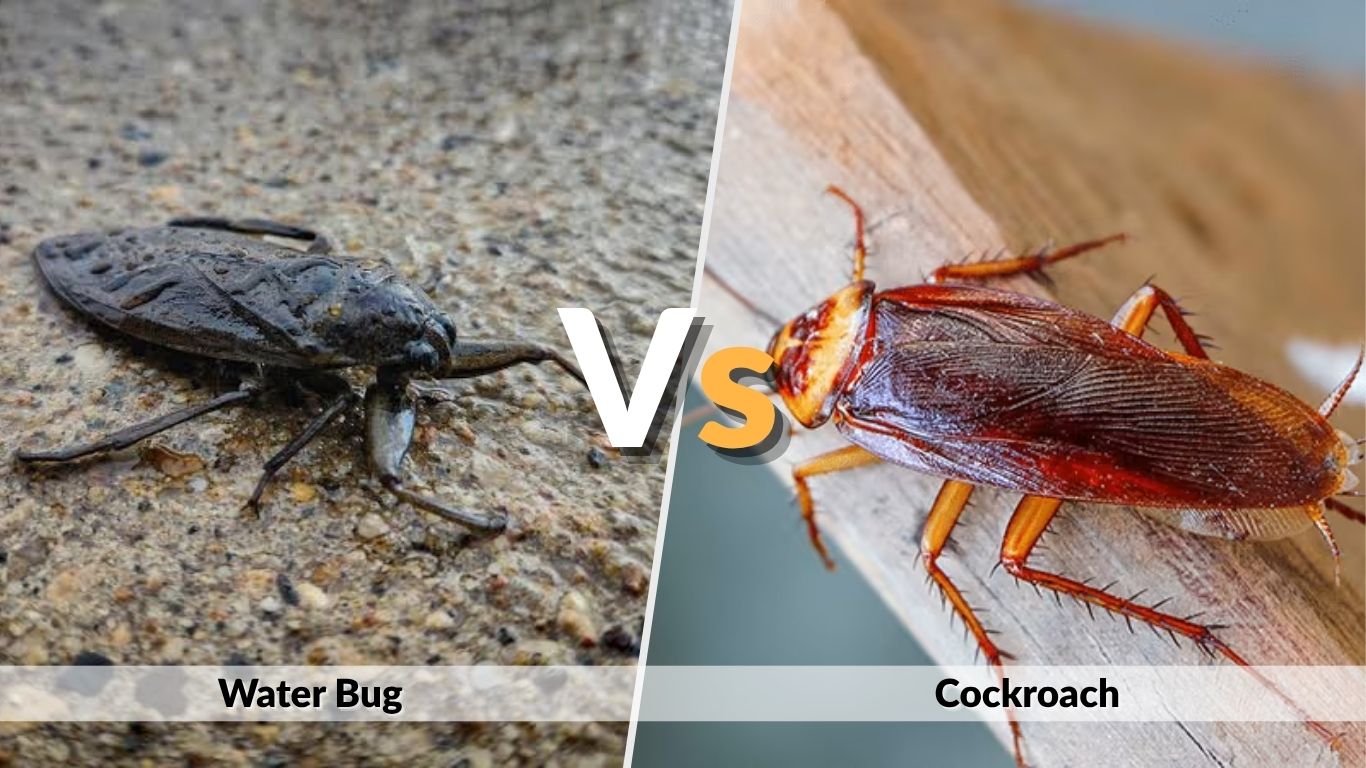
Water bugs and cockroaches are often confused because both can look dark, flat, and fast-moving. The name “water bug” is also used casually for large roaches in many cities, especially when they appear near drains, basements, or bathrooms. However, true water bugs and cockroaches are different insects with different habitats, body shapes, behavior, and risks inside the home.
Water Bug vs Cockroach: Quick Comparison
The easiest way to separate a true water bug from a cockroach is to look at where it lives, how its body is shaped, and how it behaves around people. Cockroaches are mostly land insects that enter homes for food, warmth, and shelter. True water bugs are aquatic insects that usually live in ponds, streams, ditches, and wetlands.
| Feature | True Water Bug | Cockroach |
| Main habitat | Water, wetland edges, ponds, drains outdoors | Kitchens, bathrooms, basements, walls, cabinets |
| Body shape | Broad, oval, often thick-bodied | Flattened, oval, usually smoother |
| Antennae | Short and less noticeable | Long, thin, very noticeable |
| Legs | Adapted for swimming or grabbing prey | Adapted for running and climbing |
| Diet | Other insects, small aquatic animals | Crumbs, grease, garbage, organic matter |
| Home infestation | Rare | Common in many species |
| Human risk | Can bite if handled | Can contaminate surfaces and trigger allergies |
What Is a Water Bug?
A true water bug is an aquatic insect that belongs to a group of insects adapted to living in or around water. Some species are called giant water bugs, toe-biters, electric light bugs, or water scorpions. They are predators, not household scavengers.
Identification
- True water bugs usually have a broad, oval body.
- Their antennae are short and often hard to see.
- Many have strong front legs used for grabbing prey.
- Their bodies may look thicker and heavier than a cockroach.
- Some species have a pointed beak used for feeding.
- They are more likely to be found near ponds, streams, pools, or wet outdoor lights.
Habitat and Behavior
True water bugs usually live in freshwater areas such as ponds, slow streams, wetlands, and ditches. Some may appear near swimming pools or outdoor lights at night because they are attracted to moisture and light. They do not usually build colonies inside kitchens or cabinets.
Their behavior is very different from cockroaches. A water bug is a predator. It hunts insects, tadpoles, small fish, and other aquatic animals. It may look scary, but it is not usually searching for human food inside a house.
Can Water Bugs Bite?
Some true water bugs can bite if picked up, stepped on, or handled. The bite can be painful because the insect uses a piercing mouthpart. However, they are not aggressive toward people and do not usually chase or attack humans.
The best response is to avoid handling them with bare hands. If one enters the home, use a container, gloves, or a tool to move it outside.
What Is a Cockroach?
A cockroach is a land-dwelling insect that often lives close to people. Some species stay outdoors, while others infest homes, restaurants, apartments, and commercial buildings. Cockroaches are scavengers and can survive on tiny food scraps, grease, paper glue, and decaying matter.
Identification
- Cockroaches have long, thin antennae.
- Their bodies are flat, oval, and smooth.
- Many species are brown, reddish-brown, black, or tan.
- They run quickly when exposed to light.
- Some adults have wings, though not all fly well.
- They are often found near food, moisture, warmth, and hidden cracks.
Common Indoor Species
German cockroaches are small, tan to light brown, and often found in kitchens and bathrooms. American cockroaches are larger and reddish-brown. Oriental cockroaches are dark brown to black and often appear in damp basements, drains, and ground-level areas.
The American cockroach and Oriental cockroach are commonly called “water bugs” in casual language. This is why the comparison can be confusing. In many homes, the insect called a water bug is actually a cockroach.
Why Cockroaches Enter Homes
Cockroaches enter homes because they need food, water, warmth, and shelter. Leaky pipes, dirty dishes, pet food, trash, clutter, and cracks around doors or drains can attract them. Once they find a good hiding place, some species can reproduce quickly.
Cockroaches are more serious indoors than true water bugs because they can contaminate surfaces and spread bacteria from dirty areas to food-preparation spaces.
Main Differences Between Water Bugs and Cockroaches
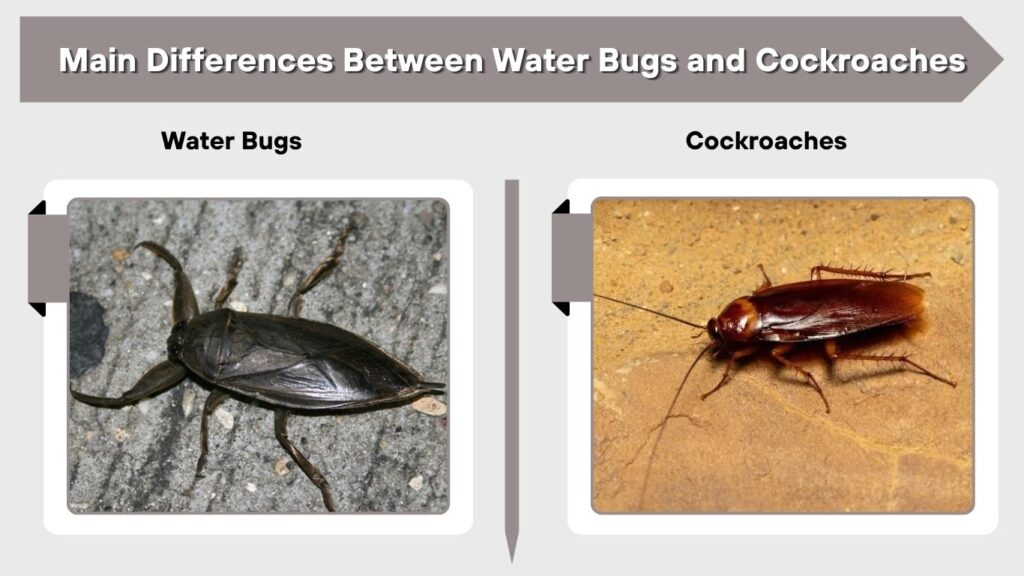
The difference is not only about appearance. Their lifestyle is the bigger clue. A true water bug usually belongs outdoors near water, while a cockroach may live and breed inside your home.
Body Shape and Antennae
Water bugs often look broader and heavier. Their antennae are short and not easy to notice. Cockroaches usually have long antennae that move constantly as they explore surfaces.
If the insect has very long antennae and runs fast across the floor, it is more likely a cockroach. If it has a thick body, short antennae, and was found near a pond, pool, or outdoor light, it may be a true water bug.
Movement and Speed
Cockroaches are excellent runners. They dart into cracks, under appliances, and behind cabinets when lights turn on. Many species are built for escaping quickly across dry surfaces.
True water bugs can move on land, but they are more adapted for water. Some swim well, while others use their legs to grab prey. They are not usually seen racing across kitchen counters in groups.
Diet and Feeding Style
Cockroaches are scavengers. They feed on crumbs, grease, garbage, food residue, cardboard glue, pet food, and decaying organic matter. This is why sanitation is important for control.
Water bugs are predators. They eat small animals and insects, especially in aquatic environments. A true water bug is not usually attracted to your pantry, sugar, crumbs, or garbage in the same way cockroaches are.
Water Bug vs American Cockroach
The American cockroach is one of the main reasons people confuse these insects. It is large, reddish-brown, and often appears in drains, basements, bathrooms, and sewer-connected areas. Because it likes damp places, many people call it a water bug.
How to Tell Them Apart
- An American cockroach has long antennae.
- It has a reddish-brown body with a lighter marking behind the head.
- It runs quickly on dry surfaces.
- It may appear indoors around drains, kitchens, bathrooms, and basements.
- A true giant water bug has shorter antennae and stronger front legs.
- A true water bug is more strongly connected to outdoor water habitats.
Home Risk
An American cockroach can become a real indoor pest, especially in large buildings, apartments, restaurants, and warm climates. It may move through drains, utility lines, and wall voids. True water bugs may wander inside by accident, but they do not usually create a household infestation.
Water Bug vs German Cockroach
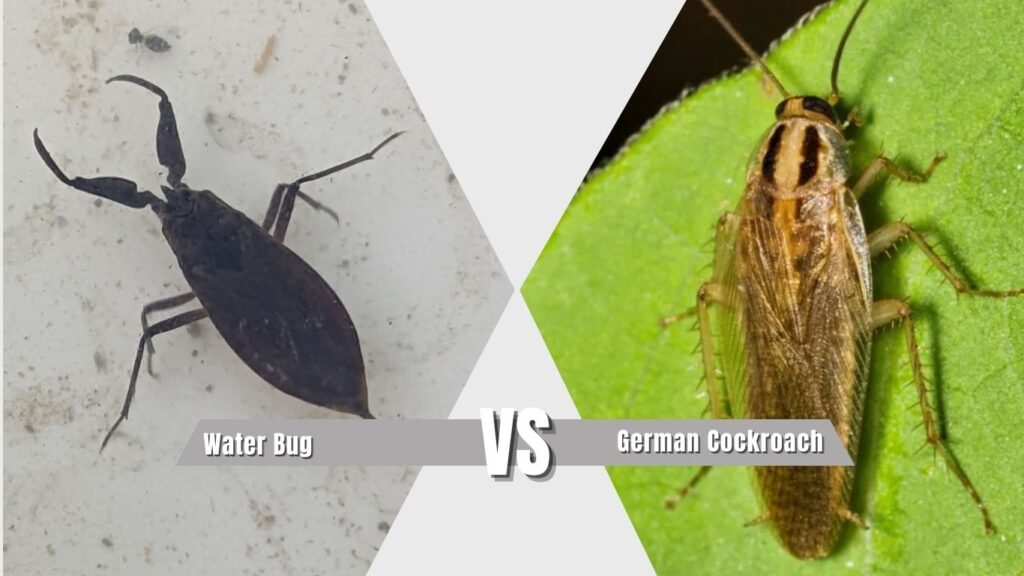
German cockroaches are much smaller than the insects people usually call water bugs. They are one of the most serious indoor cockroach pests because they reproduce quickly and hide close to food and moisture.
Size and Appearance
German cockroaches are usually light brown or tan with two darker stripes behind the head. They are much smaller than American cockroaches and most true water bugs. They are often seen near sinks, stoves, refrigerators, dishwashers, cabinets, and food storage areas.
Infestation Signs
German cockroaches are rarely alone. Seeing one can mean there are more hiding nearby. Their signs may include droppings, egg cases, shed skins, odor, and nighttime activity. A true water bug entering from outside does not usually leave these same indoor colony signs.
Water Bug vs Oriental Cockroach
Oriental cockroaches are dark brown to black and are also commonly called water bugs. They prefer cool, damp places such as basements, drains, crawl spaces, garages, and outdoor mulch beds.
Why Oriental Cockroaches Are Confusing
Oriental cockroaches look dark, shiny, and heavy-bodied. Because they are often found near moisture, people may think they are true water bugs. However, they are still cockroaches and can become an indoor or structural pest.
They do not move as fast as German cockroaches, but they still feed on decaying matter and may contaminate indoor areas.
Regional Names: NYC, Texas, Florida, and North Carolina
The name “water bug” changes by region. In some places, it means a true aquatic insect. In other places, it is a common nickname for a large cockroach.
NYC Water Bug vs Cockroach
In New York City, “water bug” often refers to a large American cockroach. These roaches may come from basements, drains, trash areas, or older building systems. If you see one in an apartment bathroom or kitchen, it is more likely a cockroach than a true aquatic water bug.
Texas Water Bug vs Cockroach
In Texas, both large cockroaches and true aquatic bugs may be present. Outdoor lights, pools, ponds, and warm weather can bring true water bugs near homes. Indoors, however, large reddish-brown or dark roaches are more likely to be American or Oriental cockroaches.
Florida Water Bug vs Cockroach
In Florida, people often use names like water bug and palmetto bug for large cockroaches. Warm, humid weather supports many roach species. A large roach near a bathroom, garage, or kitchen should be treated as a cockroach problem unless it clearly matches a true aquatic bug.
North Carolina Water Bug vs Cockroach
In North Carolina, the term water bug may describe large outdoor roaches or true water-associated insects. Location matters. A bug found near a pond or porch light may be a true water bug. A bug found repeatedly in a kitchen, basement, or bathroom is more likely a cockroach.
Are Water Bugs or Cockroaches Harmful?
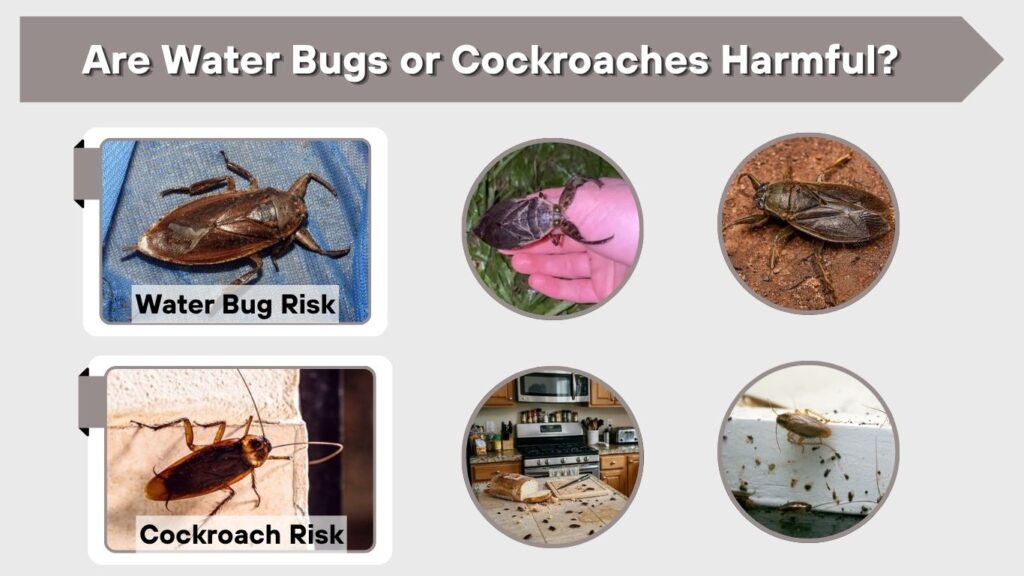
Both insects can cause concern, but they create different problems. True water bugs are mainly a handling risk because some can bite. Cockroaches are a bigger indoor health concern because they live around waste, food, moisture, and hidden indoor surfaces.
Water Bug Risk
- Some can deliver a painful bite if handled.
- They may frighten people because of their size.
- They usually do not infest food cabinets.
- They are not usually a sign of poor sanitation indoors.
- They often enter homes accidentally.
Cockroach Risk
- Cockroaches can contaminate food and surfaces.
- Their droppings and shed skins may trigger allergies or asthma symptoms.
- They can spread germs from dirty areas to kitchens.
- Some species reproduce quickly indoors.
- A repeated sighting usually means inspection is needed.
Why You May See Them in the House
A single insect indoors does not always mean infestation. The location, frequency, and species matter. A true water bug may enter by accident, while cockroaches may stay because the home provides food, water, and hiding space.
Common Entry Points
- Gaps under doors
- Cracks around windows
- Drain openings
- Basement gaps
- Utility line openings
- Garage doors
- Torn screens
- Foundation cracks
Indoor Attractants
Moisture is a major attraction for both roaches and water-associated insects. Leaky sinks, damp basements, standing water, clogged drains, and wet crawl spaces can increase sightings.
Food and clutter are stronger attractions for cockroaches. Crumbs, grease, cardboard, trash, pet food, and dirty dishes can support an indoor roach population.
How to Get Rid of Cockroaches and Prevent Water Bugs
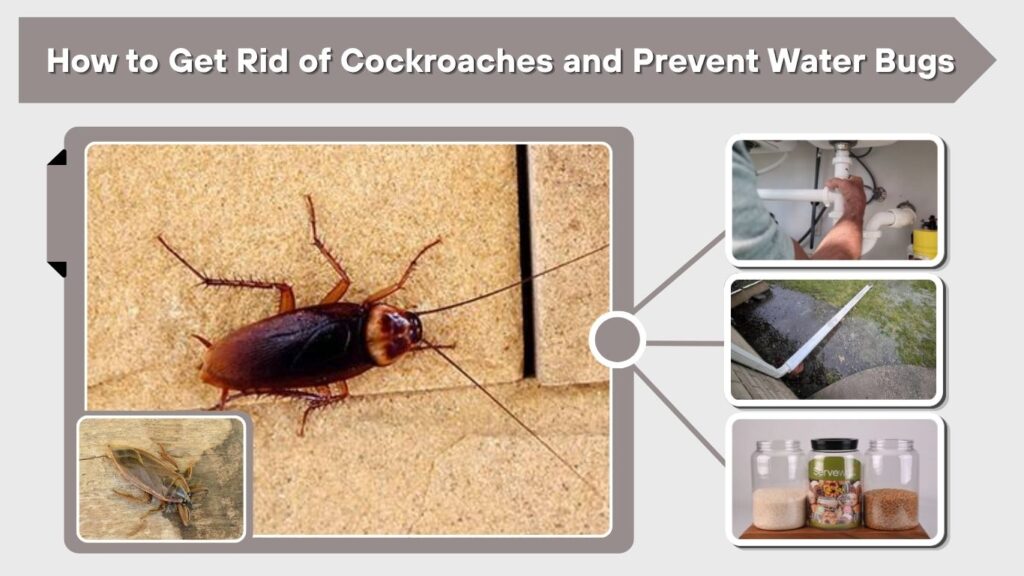
Control depends on correct identification. If it is a true water bug, prevention is usually enough. If it is a cockroach, especially German, American, or Oriental cockroach, a stronger control plan may be needed.
Prevention Steps
- Seal gaps around doors, windows, pipes, and utility lines.
- Fix leaking faucets, pipes, and drains.
- Remove standing water around the home.
- Keep food in sealed containers.
- Clean crumbs and grease from counters, floors, and appliances.
- Take out trash regularly and use tight-fitting lids.
- Reduce cardboard, paper clutter, and damp storage.
- Use door sweeps and repair torn screens.
- Keep outdoor lights away from entry points when possible.
When to Use Baits or Traps
Sticky traps can help you identify where insects are traveling. Roach baits are often more useful than sprays for indoor cockroach problems because baits target hidden roaches. Sprays may scatter roaches deeper into walls if used incorrectly.
For German cockroaches, repeated sightings usually need a careful baiting and monitoring plan. For large occasional roaches, sealing entry points and reducing moisture may solve much of the problem.
When to Call Pest Control
Call a pest professional if you see cockroaches often, find droppings, notice egg cases, or see small roaches in the kitchen or bathroom. A single true water bug near a door or pool may not require treatment, but repeated large roach sightings indoors should not be ignored.
FAQs
Is a water bug the same as a cockroach?
No, a true water bug is not the same as a cockroach. True water bugs are aquatic predators, while cockroaches are land-based scavengers. However, many people use “water bug” as a nickname for large cockroaches, especially American or Oriental cockroaches found in damp indoor areas.
How can I tell if I have water bugs or cockroaches?
Look at the antennae, location, and behavior. Cockroaches usually have long antennae, run quickly, and hide near food or moisture indoors. True water bugs often have shorter antennae, stronger front legs, and are more connected to ponds, pools, wetlands, or outdoor lights.
Are water bugs more dangerous than cockroaches?
True water bugs can bite if handled, and the bite may be painful. Cockroaches are usually more concerning indoors because they can contaminate surfaces, trigger allergies, and reproduce inside homes. So, water bugs may hurt if touched, but cockroaches are usually the bigger household problem.
Why do people call cockroaches water bugs?
People call some cockroaches water bugs because large roaches often appear near drains, bathrooms, basements, sewers, and damp areas. American and Oriental cockroaches are especially likely to get this nickname. The name is common, but it can create confusion with true aquatic water bugs.
What should I do if I see one in my apartment?
First, identify whether it is a true water bug or a cockroach. One large bug near a door may have entered by accident. Repeated sightings in kitchens, bathrooms, or basements suggest cockroaches. Seal gaps, remove moisture, clean food sources, set traps, and consider pest control if sightings continue.