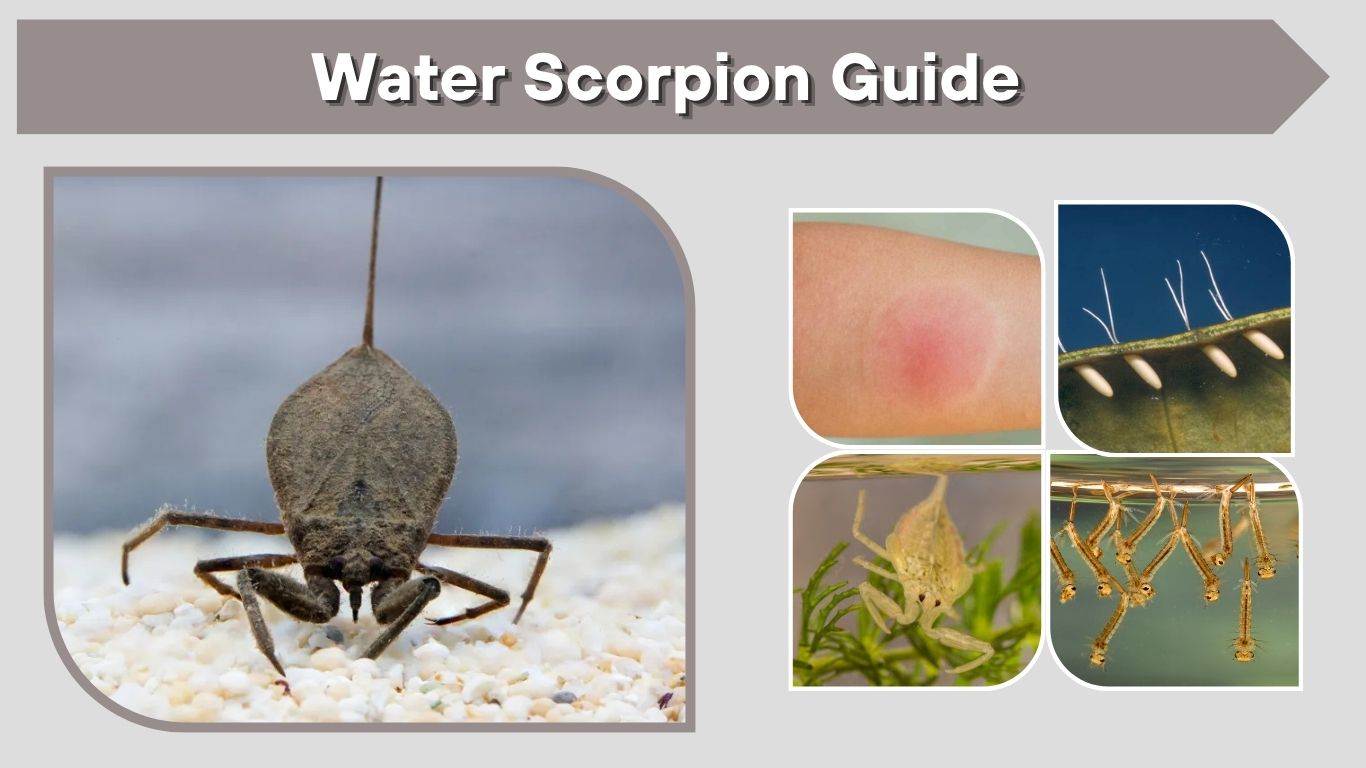
A water scorpion is not a true scorpion, even though its name sounds alarming. It is an aquatic insect from the family Nepidae, known for its long breathing tube, grasping front legs, and slow-moving hunting style. Water scorpions live in ponds, marshes, lakes, and slow streams, where they ambush small aquatic animals. This guide explains their bite, habitat, diet, life cycle, and safety facts.
What Is a Water Scorpion?
A water scorpion is a freshwater insect that belongs to the family Nepidae. It is part of the true bug order, Hemiptera, not the scorpion group. True scorpions are arachnids, while water scorpions are insects with six legs, a beak-like mouthpart, and an aquatic lifestyle.
Water scorpions get their common name from their appearance. Some species have a flattened body and front legs that resemble pincers. They also have a long breathing tube at the end of the abdomen, which can look like a scorpion tail. However, this “tail” is not used for stinging.
Water Scorpion Family
Water scorpions belong to the family Nepidae. Two well-known forms are broad-bodied water scorpions and long, stick-like species in the genus Ranatra. Both types are predators, but they can look very different.
The broad-bodied type often looks like a dead leaf underwater. Ranatra water scorpions look more like thin underwater walking sticks. Their shape helps them hide among plants and ambush prey.
Water Scorpion Identification
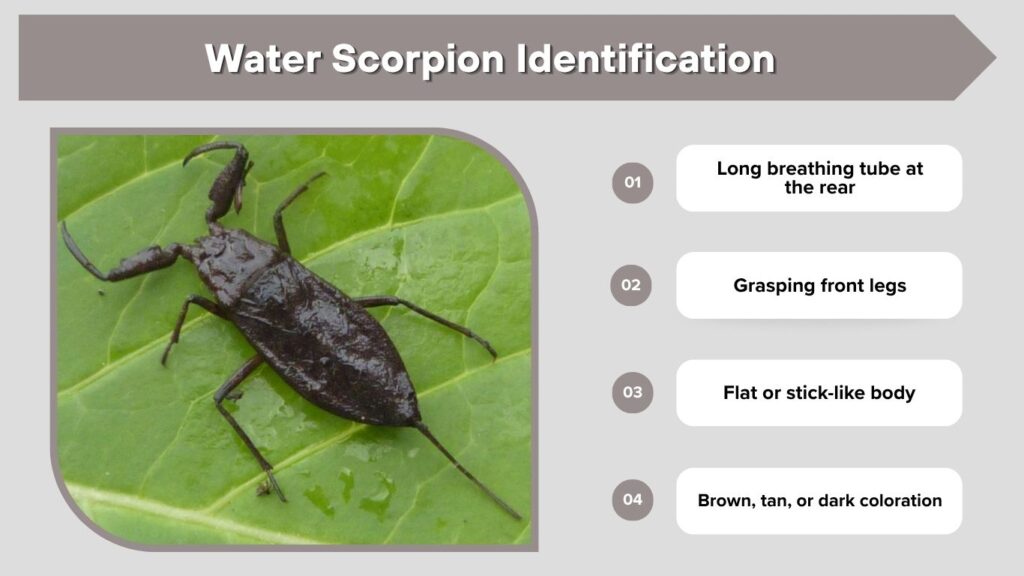
Water scorpions are usually easy to recognize once you know what to look for. Their front legs are adapted for grabbing prey, and their long breathing tube is one of their most noticeable features.
They move slowly and often remain still among aquatic plants. This behavior helps them blend into their surroundings and wait for prey to come close.
Key Features
A water scorpion may have:
- Long breathing tube at the rear
- Grasping front legs
- Flat or stick-like body
- Brown, tan, or dark coloration
- Slow walking movement underwater
- Piercing mouthpart for feeding
- Camouflage that resembles leaves or stems
Water scorpions are often brown because this helps them hide in muddy water, dead leaves, and plant debris. The keyword “brown water scorpion” usually refers to this natural coloration.
Broad Water Scorpion vs Ranatra Water Scorpion
Some water scorpions are broad and flat, while others are long and narrow. Ranatra water scorpions are especially thin and stick-like. They may be mistaken for aquatic plant stems or small twigs.
| Type | Body Shape | Common Appearance | Main Habitat |
| Broad water scorpion | Flat and oval | Leaf-like, brown body | Ponds, marshes, slow water |
| Ranatra water scorpion | Long and thin | Stick-like body | Aquatic vegetation |
| Water scorpion nymph | Smaller immature form | Similar to adult but smaller | Shallow freshwater edges |
| Giant water scorpion term | Often confused with other insects | May refer to large water bugs or fossils | Depends on context |
Where Do Water Scorpions Live?
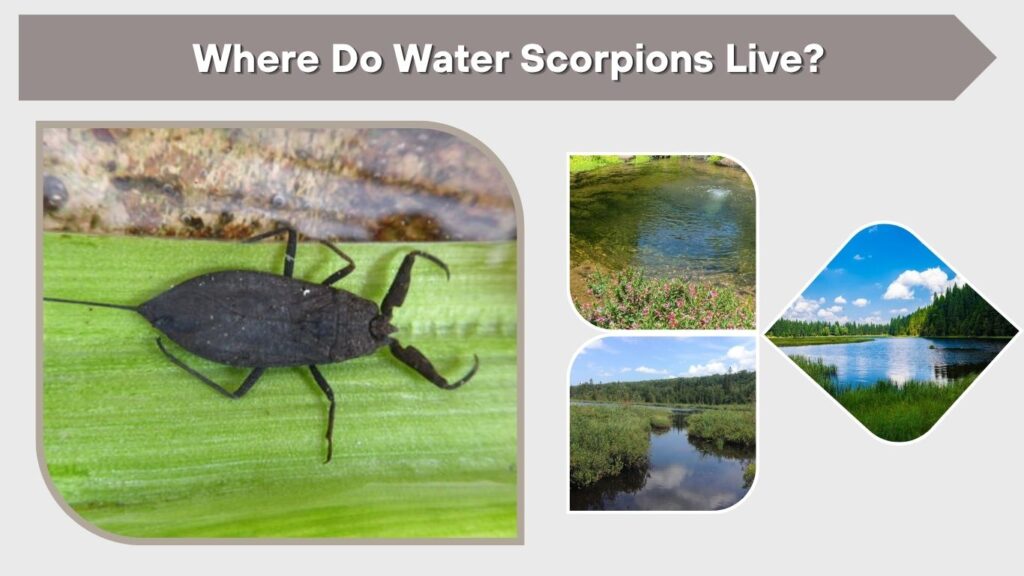
Water scorpions live in freshwater habitats where the water is slow-moving or still. They are not usually found in fast, rocky streams because they rely on camouflage and ambush hunting.
They prefer places with aquatic plants, soft sediment, leaf litter, and shallow edges. These habitats provide cover and bring small prey within reach.
Common Water Scorpion Habitat
Water scorpions may live in:
- Ponds
- Marshes
- Lakes
- Wetlands
- Ditches
- Slow streams
- Shallow pools
- Vegetated river margins
- Water gardens and natural ponds
They often rest near the surface with their breathing tube extended upward. This allows them to remain underwater while still getting air.
Water Scorpions Around the World
Water scorpions occur in many regions, including parts of North America, Europe, Africa, Asia, and Australia. Search terms like “water scorpion QLD,” “water scorpion South Africa,” and “water scorpion Michigan” show that people encounter similar insects in different freshwater habitats.
Local species may differ in size and appearance, but their general lifestyle is similar. They hide, breathe through a tube, and ambush small aquatic animals.
What Do Water Scorpions Eat?
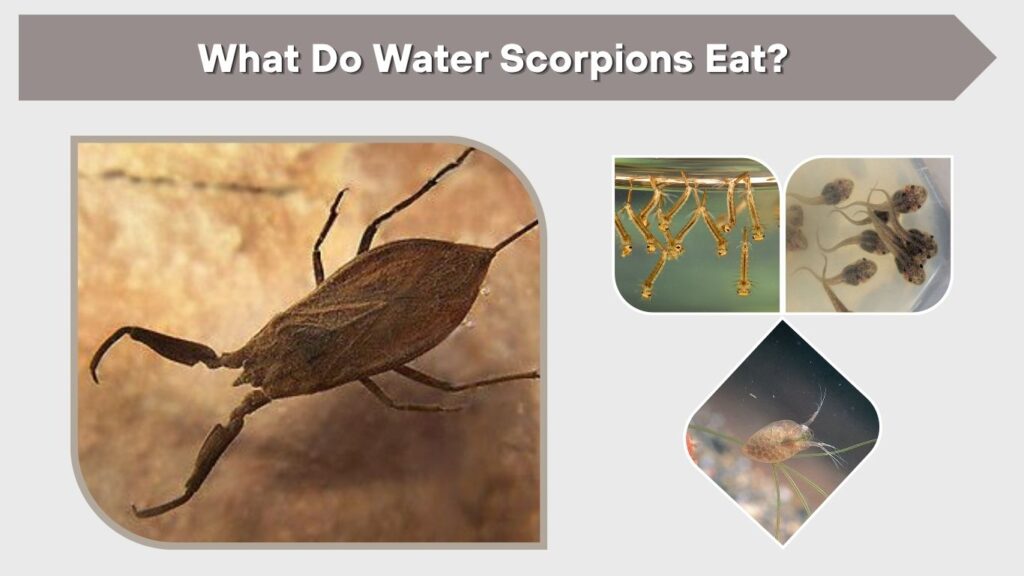
Water scorpions are predators. They feed on small animals that come close enough to catch with their front legs. They do not chase prey quickly. Instead, they wait in cover and strike when an animal moves nearby.
Their piercing mouthpart allows them to inject digestive fluids and suck up the liquefied contents of prey. This feeding method is common among many aquatic true bugs.
Common Food Sources
Water scorpions may eat:
- Mosquito larvae
- Small aquatic insects
- Tadpoles
- Tiny fish
- Water fleas
- Small crustaceans
- Midge larvae
- Other soft-bodied aquatic animals
Although they can catch tiny fish or tadpoles, they usually target prey small enough to overpower. They are not dangerous predators to humans, pets, or large fish.
Water Scorpion Bite
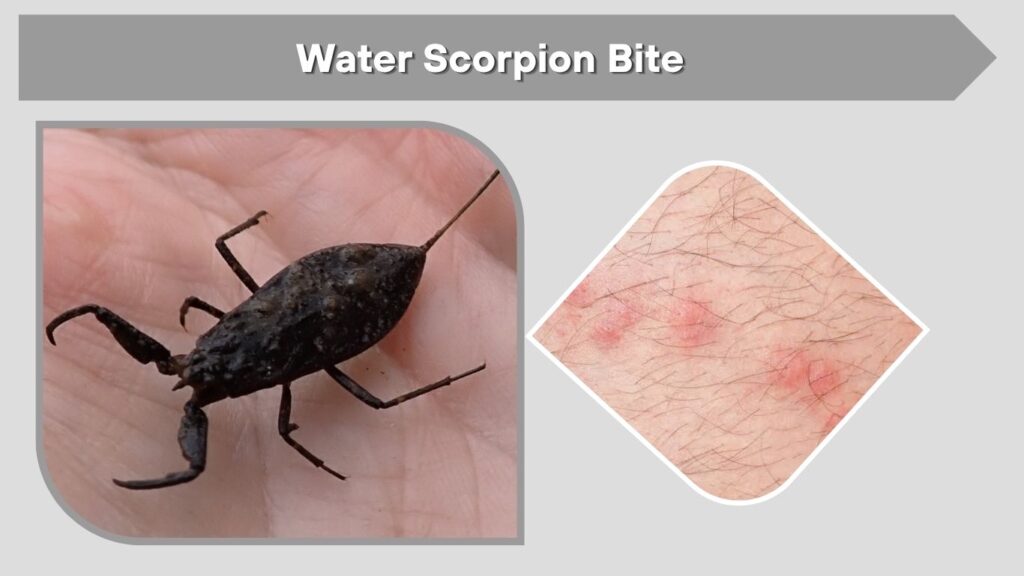
A water scorpion bite can happen if the insect is handled carelessly. Water scorpions do not sting, but they can pierce skin with their sharp mouthpart. The bite may be painful, similar to a sharp pinch or insect bite.
They are not aggressive toward people. Most bites occur when someone picks one up, traps it, or accidentally presses it against the skin.
Is a Water Scorpion Poisonous?
A water scorpion is not poisonous in the way many people imagine. It does not have a venomous tail like a true scorpion. Its rear tube is used for breathing, not stinging.
However, its bite may feel painful because it uses piercing mouthparts to feed. The bite is usually not medically serious for healthy adults, but the area should be cleaned like any minor insect bite.
What to Do After a Water Scorpion Bite
If a water scorpion bites you, basic first aid is usually enough.
Helpful steps include:
- Wash the area with soap and clean water
- Avoid scratching the bite
- Apply a cold compress for swelling
- Watch for unusual redness or irritation
- Seek medical advice if symptoms worsen
- Get help quickly if you have signs of an allergic reaction
People with allergies, children, or anyone with severe pain should be more cautious and contact a medical professional if needed.
Are Water Scorpions Dangerous?
Water scorpions are not considered dangerous to humans. They can bite, but they do not chase people or attack swimmers. Their main concern is catching small aquatic prey.
The scary name often causes confusion. A water scorpion is an insect, not a true scorpion. It does not have claws like an arachnid scorpion, and it does not have a venomous stinger.
Can a Water Scorpion Kill You?
A water scorpion is extremely unlikely to kill a person. It is too small and does not have the kind of venomous sting people associate with true scorpions. The bite may hurt, but it is generally treated as a minor insect bite.
The best approach is simple: observe water scorpions without handling them. They are interesting aquatic insects, but they do not need to be touched.
Water Scorpion in Pool
Finding a water scorpion in a pool can surprise homeowners. It may enter a pool by flying, crawling from nearby vegetation, or being carried in with aquatic plants or debris. Pools near ponds, ditches, wetlands, or bright outdoor lights may attract more aquatic insects.
A pool is not ideal habitat for a water scorpion. Chlorinated water, lack of prey, and smooth pool surfaces make long-term survival difficult.
How to Get Rid of Water Scorpions in a Pool
You can remove a water scorpion from a pool with simple, safe steps:
- Use a pool net instead of your hands
- Check skimmer baskets carefully
- Remove leaves and organic debris
- Keep pool lights off when not needed
- Trim nearby vegetation
- Maintain proper pool chemistry
- Cover the pool when possible
Avoid crushing or handling the insect directly. If you want to relocate it, use a container and release it near a natural freshwater area away from people.
Water Scorpion Life Cycle
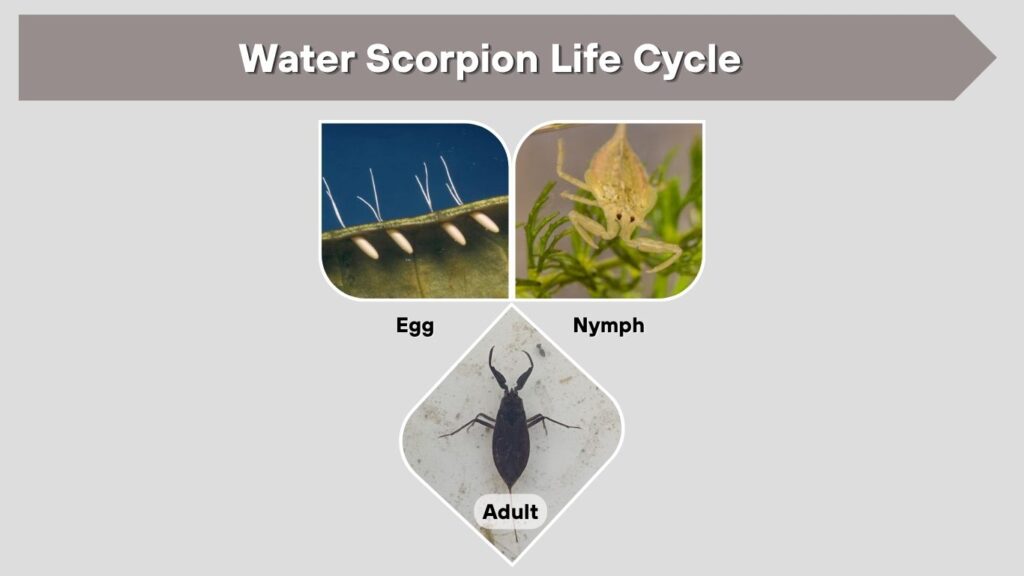
The water scorpion life cycle includes egg, nymph, and adult stages. Like other true bugs, water scorpions do not go through a complete metamorphosis with a pupal stage. Instead, the young nymphs look somewhat like smaller adults.
As nymphs grow, they molt several times. With each molt, they become larger and more developed. Adult water scorpions can reproduce and may fly to find new habitats.
Water Scorpion Nymph
A water scorpion nymph is the immature stage. It resembles the adult but is smaller and lacks fully developed wings. Nymphs still hunt small aquatic prey and use similar camouflage.
Because nymphs are small, they may be harder to notice in water. They often stay among plants, leaves, and shallow edges where food and protection are available.
How Do Water Scorpions Breathe?
Water scorpions breathe air through a long tube at the end of the abdomen. This tube works like a snorkel. The insect can remain underwater while extending the tube to the surface.
This adaptation allows water scorpions to wait quietly below the surface without swimming up constantly. It also helps them hunt from hidden positions among aquatic plants.
Can Water Scorpions Fly?
Many adult water scorpions have wings and can fly, although they may not be strong or frequent fliers. Flying helps them move between ponds, ditches, marshes, and other freshwater habitats.
People may find water scorpions in unexpected places because adults can disperse. This is one reason they sometimes appear in pools, outdoor tubs, or artificial ponds.
Water Scorpion vs True Scorpion
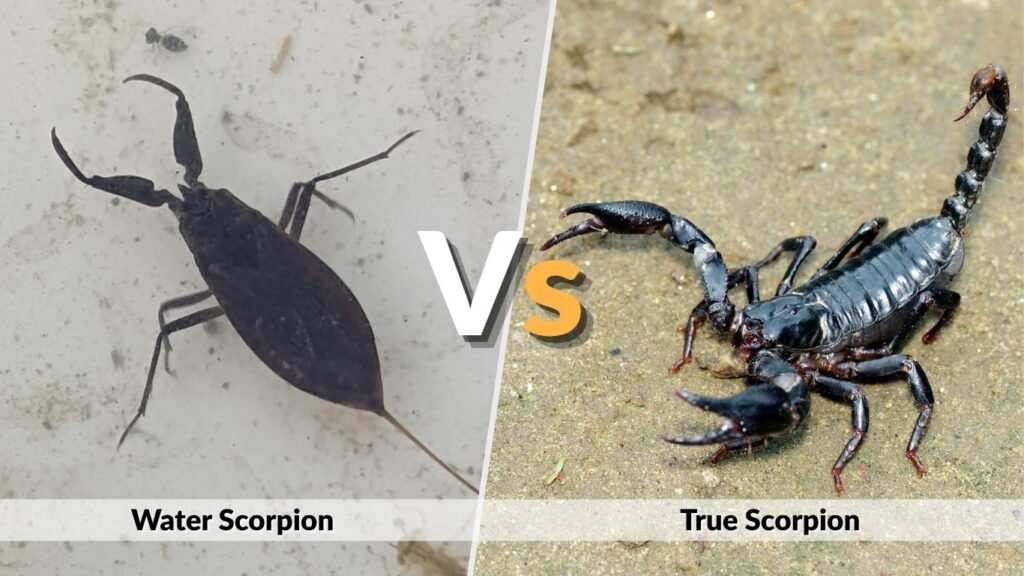
Many keyword searches mix up water scorpions with land scorpions. These are very different animals. A true scorpion is an arachnid with eight legs, pincers, and a venomous tail. A water scorpion is an aquatic insect with six legs and a breathing tube.
The question “can scorpions live in water?” usually refers to true scorpions, not water scorpions. True scorpions do not live underwater. They may survive brief contact with water, and some can tolerate difficult conditions, but they are not aquatic animals.
Do Scorpions Drink Water?
True land scorpions do drink water when available, and many also get moisture from prey. Desert species can survive with very little water, but they still need moisture in some form.
Water scorpions, on the other hand, live in freshwater but breathe air. They are adapted for aquatic hunting, not for life on dry land.
Prehistoric Water Scorpion
The phrase “prehistoric water scorpion” usually refers to ancient sea scorpions, also called eurypterids. These extinct animals were not the same as modern water scorpions. They were ancient aquatic arthropods related to arachnids.
Some eurypterids grew very large, which is why people search for terms like “giant water scorpion,” “ancient water scorpion,” or “giant water scorpion fossil.” Modern water scorpions are much smaller insects and should not be confused with those prehistoric creatures.
Giant Water Scorpion Confusion
The phrase “giant water scorpion” can also be confused with giant water bugs. Giant water bugs are different aquatic insects from a different family. They are larger, stronger swimmers, and some can deliver a very painful bite.
Water scorpions are usually slower, more camouflaged, and recognized by their long breathing tube. Giant water bugs have a different body shape and no long tail-like breathing tube.
Water Scorpion Predators
Water scorpions are predators, but they are also prey. Larger animals may eat them if they can get past their camouflage and defensive bite.
Common predators may include:
- Fish
- Frogs
- Birds
- Larger aquatic insects
- Turtles
- Dragonfly nymphs
- Some amphibians
Their brown color, slow movement, and plant-like shape help protect them. Staying still is one of their best defenses.
FAQs
Are water scorpions poisonous?
Water scorpions are not poisonous like true scorpions. They do not have a venomous tail, and their long rear tube is used for breathing. However, they can give a painful bite with their piercing mouthpart if handled. Most bites are minor but should be cleaned properly.
Do water scorpions bite humans?
Yes, water scorpions can bite humans, but they usually only do so when handled or trapped against the skin. They are not aggressive and do not chase people. A bite may feel sharp or painful, but it is generally treated like a minor insect bite.
Where do water scorpions live?
Water scorpions live in freshwater habitats such as ponds, lakes, marshes, wetlands, ditches, and slow streams. They prefer shallow areas with aquatic plants, leaf litter, and soft sediment. These places provide cover for ambush hunting and access to the surface for breathing.
What do water scorpions eat?
Water scorpions eat small aquatic animals, including mosquito larvae, tiny fish, tadpoles, midge larvae, small insects, and crustaceans. They are ambush predators, so they wait quietly in vegetation or debris and grab prey with their specialized front legs when it comes close.
Are water scorpions real scorpions?
No, water scorpions are not real scorpions. They are aquatic insects in the family Nepidae. True scorpions are arachnids with eight legs and a venomous tail. Water scorpions have six legs, a piercing mouthpart, and a long breathing tube that only looks like a tail.