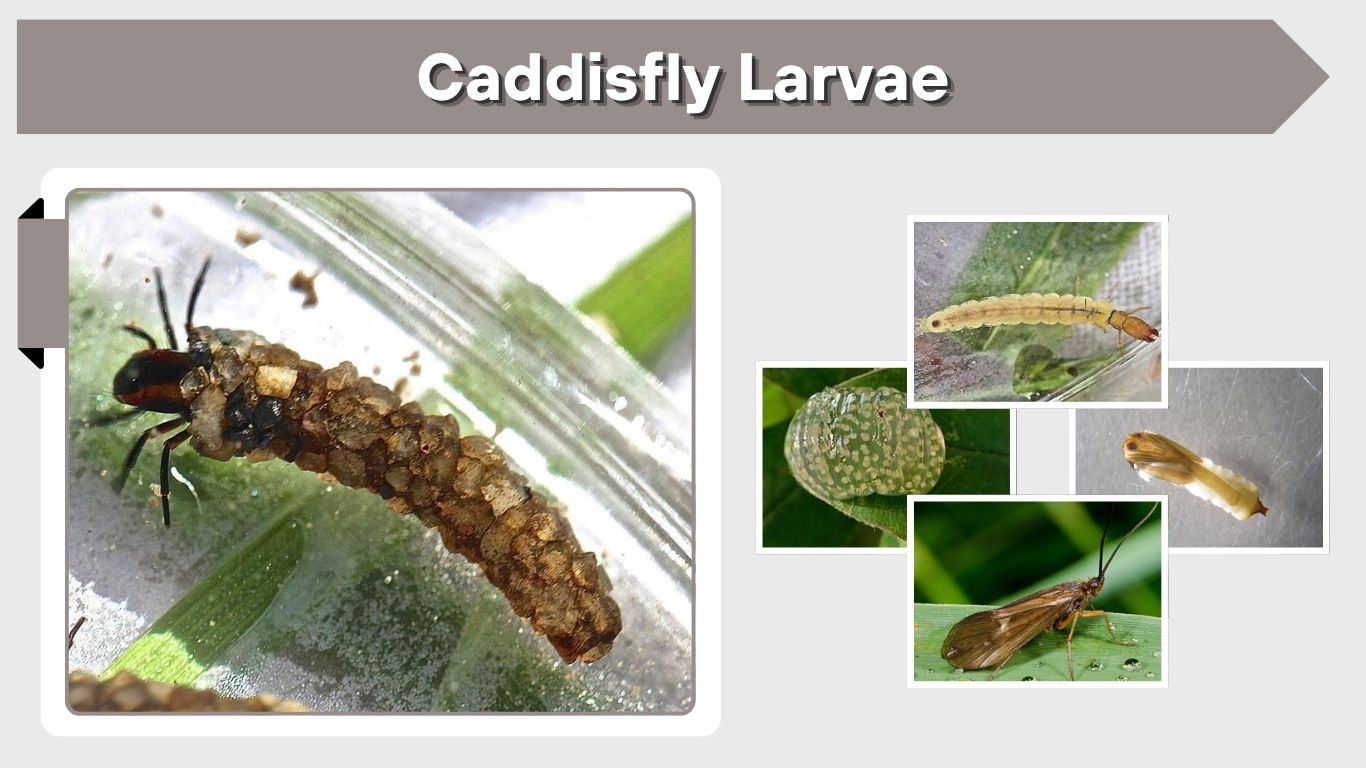
Caddisfly larvae are aquatic insects found in freshwater streams, rivers, ponds, and lakes. They are best known for building protective cases from sand, stones, leaves, or twigs. These larvae play an important role in aquatic ecosystems because they recycle organic material and provide food for fish. Learning how to identify caddisfly larvae can also help you understand water quality and freshwater biodiversity.
What Are Caddisfly Larvae?
Caddisfly larvae are the immature stage of caddisflies, insects that belong to the order Trichoptera. Adult caddisflies look somewhat like small moths, but their larvae live underwater for most of their early life. They are common in freshwater habitats and are especially important in streams with clean, oxygen-rich water.
The word “larvae” is the plural form of larva, so “caddisfly larvae” refers to more than one immature caddisfly. A single insect is called a caddisfly larva.
Caddisfly Larvae Scientific Name
Caddisflies belong to the order Trichoptera. This order includes many families and thousands of species worldwide. Because there are so many types, there is no single scientific name for all caddisfly larvae beyond their order classification.
Different families have different habits. Some build portable cases, some spin nets, and others move freely without a case. This variety is one reason caddisfly larvae are so interesting to naturalists, anglers, students, and freshwater researchers.
Caddisfly Larvae Identification
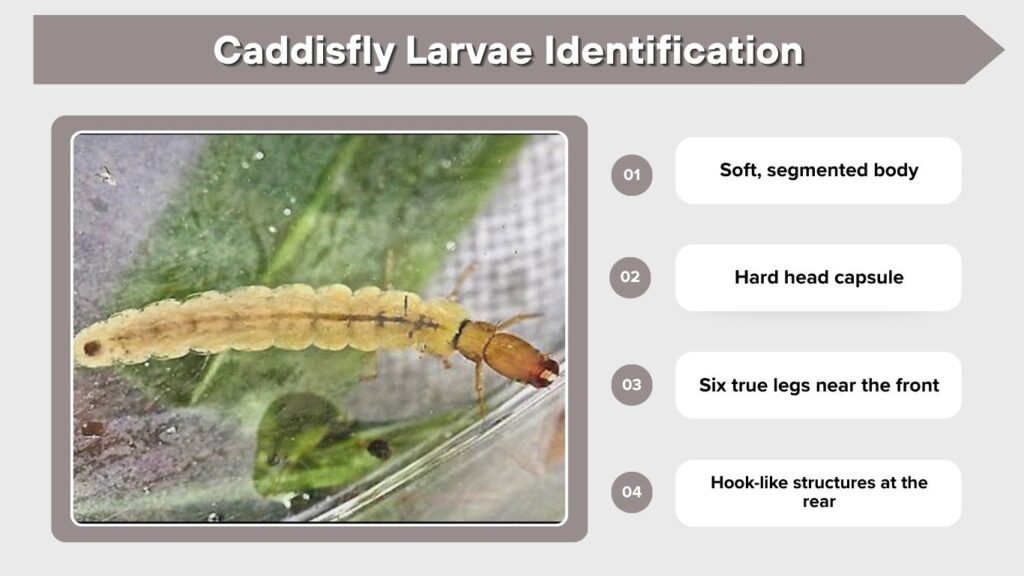
Caddisfly larvae identification usually starts with body shape and case-building behavior. Most have a soft, caterpillar-like body with a harder head. Many species protect themselves by living inside a case or shelter.
Some larvae are easy to notice because their cases look like tiny tubes made of stones, sand grains, plant pieces, or shells. Others are harder to identify because they are caseless or live in silk shelters attached to rocks.
Key Features to Look For
Caddisfly larvae can vary in appearance, but they often share several features:
- Soft, segmented body
- Hard head capsule
- Six true legs near the front
- Hook-like structures at the rear
- Silk-producing glands
- Case, shelter, or net in many species
- Aquatic lifestyle in freshwater
The body may be green, cream, brown, yellowish, or gray depending on the species and habitat. Cased larvae are often easiest to spot because their protective “shell” stands out against rocks or plants.
Caddisfly Larvae Size
Caddisfly larvae size depends on species and age. Many are small, often less than an inch long, but some grow larger. Their cases can make them look bigger than the actual larva inside.
Young larvae are usually tiny and difficult to identify without close inspection. Mature larvae are easier to recognize because their head, legs, and case structure are more developed.
Caddisfly Larvae in Water
Caddisfly larvae in water are usually found near rocks, plants, leaf litter, logs, or stream gravel. They need freshwater habitats that provide food, oxygen, and protection from predators.
They are especially common in streams and rivers, but many species also live in ponds, wetlands, and lakes. Some prefer fast-flowing water, while others live in slower areas with more plant material.
Where Do Caddisfly Larvae Live?
Caddisfly larvae live in a wide range of freshwater habitats. Their exact location depends on the species and feeding style.
Common habitats include:
- Rocky stream bottoms
- Gravel beds
- Leaf packs in streams
- Submerged plants
- Pond edges
- Lake bottoms
- Wetland vegetation
- Logs and underwater debris
Cased species often crawl along the bottom while carrying their protective case. Net-spinning species usually attach silk nets to rocks in flowing water, where the current brings them food.
Caddisfly Larvae Case and Shell
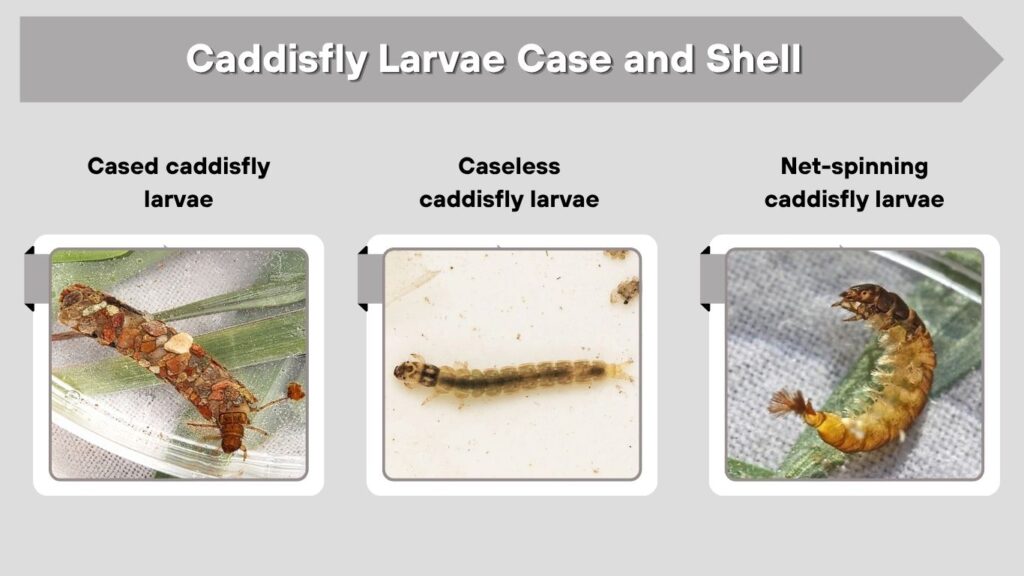
One of the most famous features of caddisfly larvae is the case, sometimes called a shell or casing. Many larvae build portable cases from materials found in their environment. These cases protect their soft bodies from predators and rough water.
A caddisfly larvae shell is not a true shell like a snail shell. Instead, it is a handmade protective case created with silk and natural materials. The larva produces silk and uses it like glue to hold sand, stones, plant fragments, or tiny shells together.
Types of Caddisfly Larvae Cases
Different species build different kinds of cases. Some cases are smooth and neat, while others look rough and irregular. The material often reflects the habitat where the larva lives.
| Type of Caddisfly Larva | Case or Shelter Style | Common Materials | Typical Habitat |
| Cased caddisfly larvae | Portable tube-like case | Sand, stones, leaves, twigs | Streams, ponds, lakes |
| Caseless caddisfly larvae | No portable case | None or minimal silk | Rocks and stream bottoms |
| Net-spinning caddisfly larvae | Fixed silk net | Silk and attached debris | Flowing streams |
| Retreat-making larvae | Attached shelter | Silk, gravel, plant matter | Rocks, logs, vegetation |
Why Do Caddisfly Larvae Build Cases?
Caddisfly larvae build cases for protection, camouflage, and stability. A case helps hide the larva from fish, dragonfly nymphs, and other predators. It also helps the larva stay in place in moving water.
The case can also reduce the risk of drying out in shallow water and may help some species move safely across rough surfaces. Since the larva’s body is soft, the case acts like portable armor.
Cased and Caseless Caddisfly Larvae
Not all caddisfly larvae build the same type of structure. The two common groups people search for are cased caddisfly larvae and caseless caddisfly larvae. Both belong to the same insect order, but their behavior can be very different.
Cased Caddisfly Larvae
Cased caddisfly larvae carry a protective case wherever they go. The larva’s head and legs extend from the front of the case when it crawls or feeds. When threatened, it can pull back inside.
These larvae often feed on plant material, algae, or organic debris. Their cases are useful for identification because the shape and materials may suggest the family or species group.
Caseless Caddisfly Larvae
Caseless caddisfly larvae do not carry a portable case. Some are free-living predators that crawl around hunting smaller aquatic animals. Others make fixed shelters or silk nets instead of cases.
Net-spinning caddisfly larvae are especially interesting because they build silk nets underwater. These nets catch tiny food particles from flowing water, allowing the larvae to feed efficiently in streams.
What Do Caddisfly Larvae Eat?
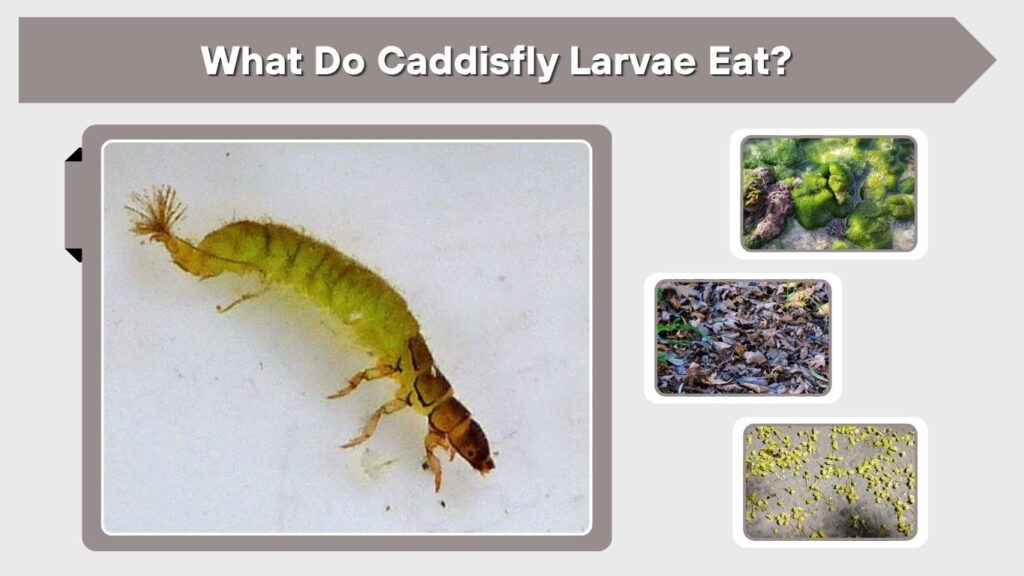
Caddisfly larvae diet depends on the species. Some eat algae and plant material, while others eat decaying leaves, fine organic particles, or small aquatic animals. Because different species feed in different ways, caddisfly larvae play many roles in freshwater ecosystems.
Common Food Sources
Caddisfly larvae may eat:
- Algae growing on rocks
- Decaying leaves
- Plant fragments
- Fine organic particles
- Bacteria and biofilm
- Small aquatic insects
- Tiny invertebrates
- Food particles caught in silk nets
Some species are shredders, meaning they break down leaves and plant matter. Others are grazers, collectors, filter feeders, or predators. This makes them important in moving energy through aquatic food webs.
What Eats Caddisfly Larvae?
Caddisfly larvae are food for many freshwater animals. Trout, minnows, sunfish, salamanders, frogs, dragonfly nymphs, and larger aquatic insects may all eat them.
For fish, caddisfly larvae are a valuable food source because they are common and nutritious. This is why fly anglers often use caddisfly larvae fly patterns when fishing streams and rivers.
Caddisfly Larvae Life Cycle
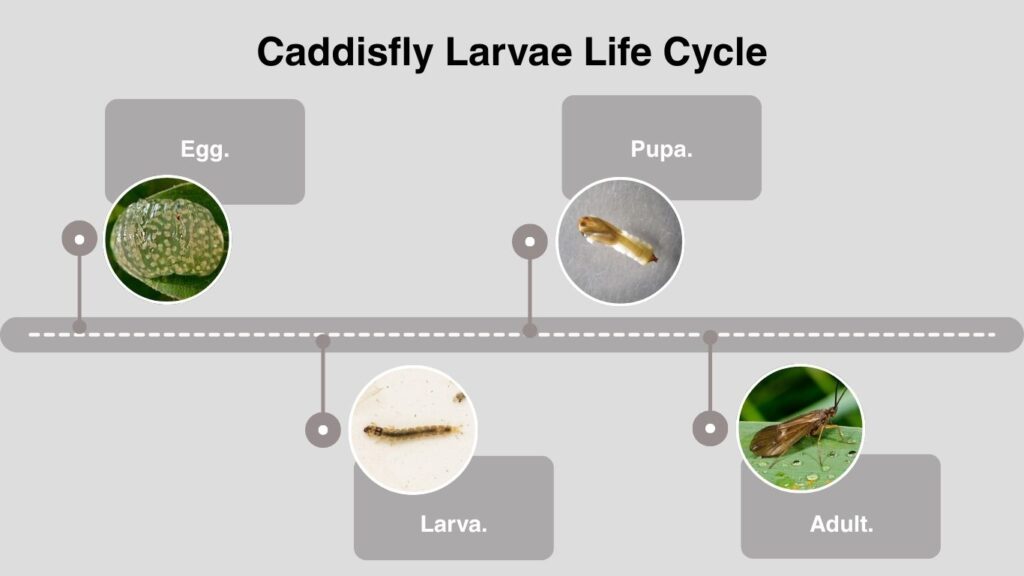
The caddisfly life cycle includes egg, larva, pupa, and adult stages. The larval stage is the longest and most visible aquatic stage. Depending on the species and local conditions, larvae may spend several months to a year or more underwater.
From Egg to Adult
Adult caddisflies lay eggs near or in water. After hatching, the larvae begin feeding and growing. Many species build cases or shelters as they develop. When ready to transform, the larva enters the pupal stage.
During pupation, the insect changes into an adult form. The adult eventually emerges from the water, flies, mates, and lays eggs, beginning the cycle again.
Caddisfly Larvae Cocoon
People sometimes use the word “cocoon” when talking about caddisfly larvae. In many species, the larva seals itself inside a case or shelter before pupating. This protected structure helps the insect complete its transformation safely.
The pupal stage is especially important because the insect changes from an aquatic larva into a winged adult. Adult caddisflies usually live much shorter lives than the larvae.
Caddisfly Larvae Adaptations
Caddisfly larvae have several adaptations that help them survive underwater. These adaptations include silk production, case building, specialized feeding methods, and breathing structures.
Their ability to use silk is one of their most important traits. Silk helps them build cases, attach shelters, create nets, and secure themselves in current.
How Do Caddisfly Larvae Breathe?
Caddisfly larvae breathe underwater using dissolved oxygen. Many species have gills along their body that help absorb oxygen from the water. Clean, moving water often contains more oxygen, which is why many species thrive in streams.
Some larvae move water through their cases by body movements. This helps bring fresh oxygenated water across their gills while they remain protected inside.
Are Caddisfly Larvae Dangerous?
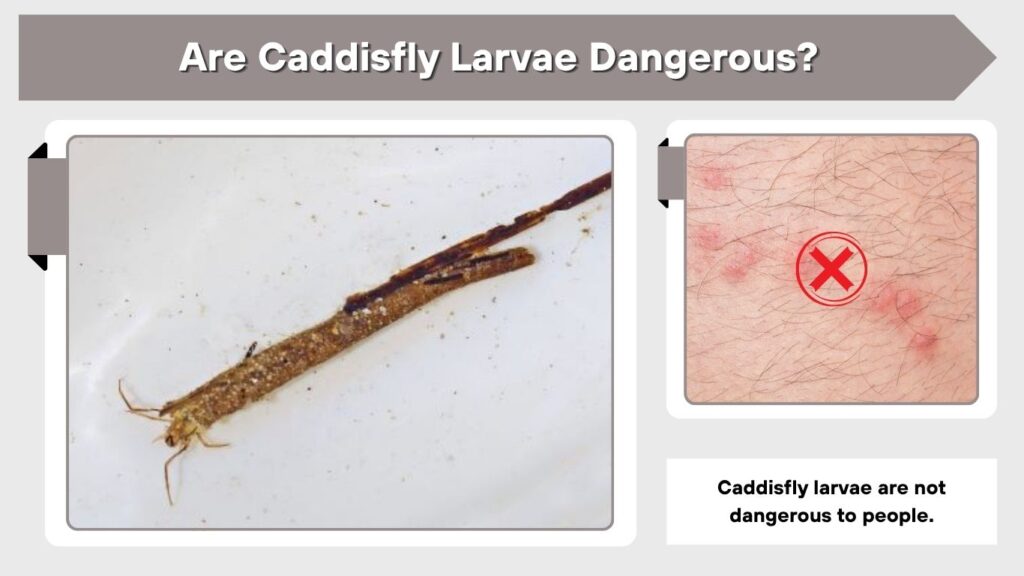
Caddisfly larvae are not dangerous to people. They do not sting, and they are not harmful in normal freshwater settings. Some people may wonder, “Do caddisfly larvae bite?” Most do not bite humans, and they are generally safe to observe.
A few predatory larvae have mouthparts for catching small aquatic prey, but they are not a threat to people. If handled roughly, a larva may wiggle or retreat into its case, but it is not aggressive.
Caddisfly Larvae in Aquariums
Caddisfly larvae may appear in aquariums if plants, rocks, or water are collected from natural freshwater sources. They can be interesting to watch, especially case-building species, but they may also disturb small plants or tiny tank animals.
In most home aquariums, they are not intentionally kept unless the aquarium is designed for native freshwater observation. They need clean, oxygenated water and suitable food to survive.
Caddisfly Larvae and Water Quality
Caddisfly larvae are often linked with freshwater health. Many species are sensitive to pollution, low oxygen, and poor habitat conditions. Their presence can suggest that a stream or pond has suitable water quality, though tolerance varies by species.
Some caddisfly larvae are more tolerant than others. Because of this, scientists usually look at the whole aquatic insect community rather than one species alone when assessing water quality.
Are Caddisfly Larvae Sensitive to Pollution?
Many caddisfly larvae are considered moderately to highly sensitive to pollution. They are often grouped with mayflies and stoneflies in freshwater monitoring because these insects can reflect environmental conditions.
If a stream has many different aquatic insects, including caddisflies, it may indicate healthy habitat. If only pollution-tolerant organisms are present, the water may be stressed by low oxygen, sediment, chemicals, or habitat damage.
Caddisfly Larvae Art and Jewelry
Caddisfly larvae are also known for their connection to art and jewelry. Some artists have placed larvae in controlled environments with tiny pieces of gold, gemstones, or decorative materials. The larvae then build cases using those materials.
This unusual practice became famous through artists such as Hubert Duprat, who explored the natural case-building behavior of caddisfly larvae. The result is a collaboration between insect behavior and human-selected materials.
Caddisfly larvae jewelry and case art are popular search topics because the insects’ building behavior is so unique. However, in nature, larvae usually use ordinary stream materials such as sand, gravel, leaves, and twigs.
Caddisfly Larvae Fly Patterns
Caddisfly larvae fly patterns are popular in fly fishing because trout eat larvae and pupae throughout the year. These patterns imitate cased larvae, green rock worms, net-spinning larvae, and emerging caddis pupae.
Common fly styles include simple green larvae, cased caddis patterns, bead-head caddis larvae, and soft-hackle caddis imitations. Anglers usually fish them near the bottom or during caddis activity.
Fishing With Caddisfly Larvae Patterns
When fishing caddisfly larvae patterns, choose the size and color based on the local insects. Green, cream, tan, brown, and olive are common colors. Weighted patterns help the fly reach the streambed, where many larvae naturally live.
A caddis larva pattern can be fished alone or as part of a two-fly rig. It is especially useful in rocky streams, riffles, runs, and areas with visible caddis cases on stones.
FAQs
What is a caddisfly larva?
A caddisfly larva is the immature aquatic stage of a caddisfly, an insect in the order Trichoptera. It lives in freshwater before becoming a pupa and then a winged adult. Many larvae build protective cases from sand, stones, leaves, or twigs using silk.
What do caddisfly larvae eat?
Caddisfly larvae eat different foods depending on the species. Some feed on algae, decaying leaves, plant fragments, and organic particles. Others are predators that eat small aquatic insects and invertebrates. Net-spinning species catch tiny food particles from flowing water using silk nets.
Where do caddisfly larvae live?
Caddisfly larvae live in freshwater habitats such as streams, rivers, lakes, ponds, and wetlands. Many prefer clean, oxygen-rich water with rocks, plants, gravel, or leaf litter. Some crawl along the bottom in cases, while others attach shelters or nets to underwater surfaces.
Are caddisfly larvae dangerous?
Caddisfly larvae are not dangerous to people. They do not sting, and they are not harmful in normal freshwater environments. Most do not bite humans. They are safe to observe, although they should be handled gently because their bodies and cases can be delicate.
Why do caddisfly larvae build cases?
Caddisfly larvae build cases to protect their soft bodies from predators and rough water. They use silk to attach sand, stones, leaves, twigs, or shells together. The case also provides camouflage and helps some larvae stay stable while crawling through moving freshwater habitats.