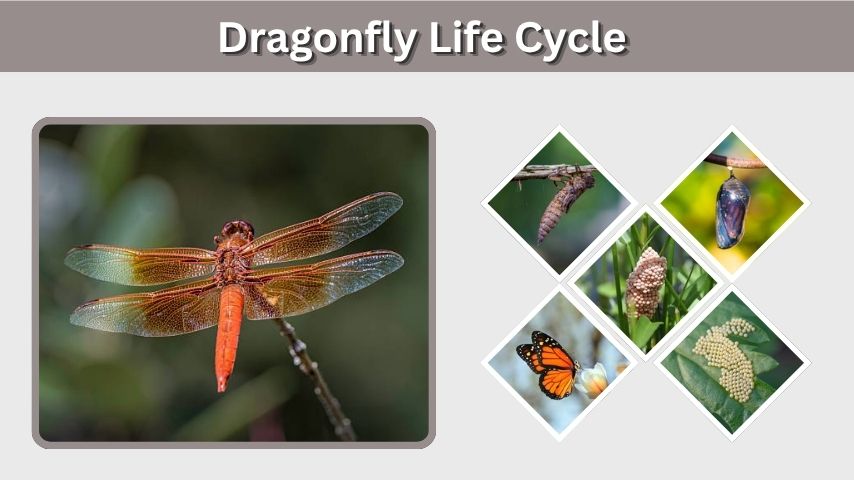
The dragonfly life cycle is one of the most fascinating transformations in the insect world. A dragonfly begins life in or near water, spends much of its early life as an aquatic nymph, and later becomes the fast-flying adult we see around ponds, lakes, and gardens. Unlike butterflies, dragonflies do not have a pupal stage. Their life cycle has three main stages: egg, nymph, and adult.
What Is the Life Cycle of a Dragonfly?
The life cycle of a dragonfly is the process a dragonfly goes through from egg to adult. Dragonflies develop through incomplete metamorphosis, which means they change gradually and do not form a chrysalis or pupa.
The three stages of a dragonfly life cycle are:
- Egg
- Nymph, also called larva or naiad
- Adult dragonfly
The nymph stage is usually the longest part of the cycle. During this stage, the young dragonfly lives underwater, hunts small aquatic animals, and molts many times before emerging as an adult.
Dragonfly Life Cycle Stages
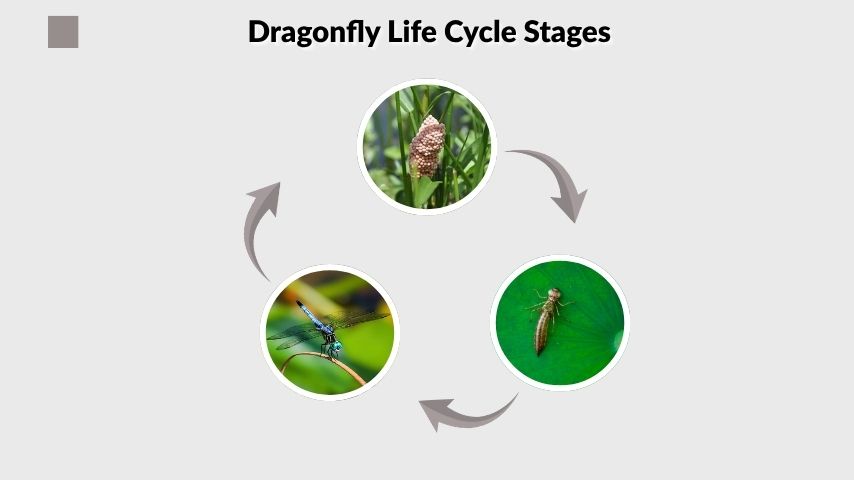
The dragonfly insect life cycle can be explained in three simple stages. Each stage has a different habitat, body form, and purpose.
| Stage | Habitat | Main Activity | Typical Duration |
|---|---|---|---|
| Egg | In or near water | Development before hatching | Days to weeks |
| Nymph | Underwater | Feeding, growing, molting | Months to years |
| Adult | Air and near water | Flying, mating, laying eggs | Weeks to months |
This table is useful for a dragonfly life cycle diagram, worksheet, or kids’ activity because it shows the full process in a simple way.
Stage 1: Dragonfly Egg
The first stage of the dragonfly life cycle is the egg. Adult female dragonflies lay eggs in places where the young can survive after hatching. Since dragonfly nymphs live in water, eggs are usually laid in or near freshwater habitats.
Females may lay eggs:
- Directly into water
- On aquatic plants
- In floating vegetation
- In mud near the water
- On wet plant stems
- In shallow pond edges
Different dragonfly species lay eggs in different ways. Some dip the tip of the abdomen into the water while flying. Others rest on plants and insert eggs into plant tissue.
After the eggs develop, tiny young dragonflies hatch and enter the nymph stage.
Stage 2: Dragonfly Nymph
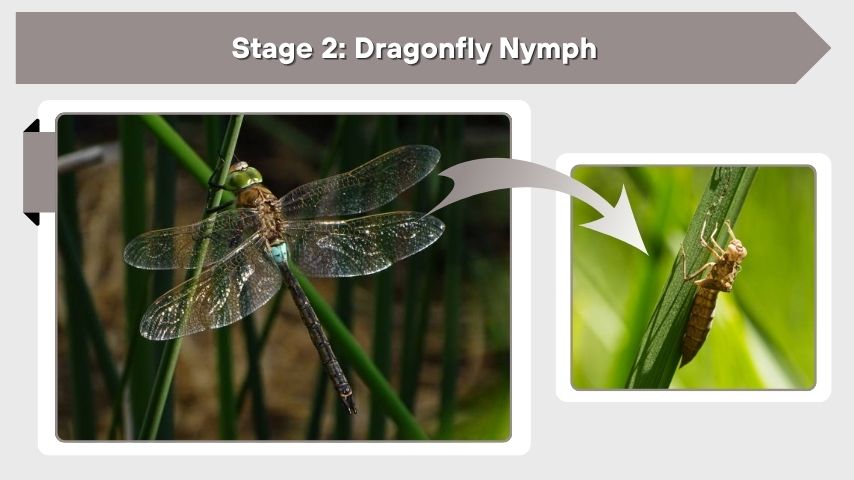
The second stage is the dragonfly nymph. This stage is also called the dragonfly larva stage. Both terms are commonly used, but “nymph” is often more accurate because dragonflies have incomplete metamorphosis.
The nymph lives underwater. It does not have working wings yet, but it has legs, eyes, mouthparts, and a strong body built for hunting. Many people never see this stage because it happens below the water surface.
Dragonfly nymphs are predators. They eat mosquito larvae, aquatic insects, worms, tadpoles, and sometimes very small fish. They catch prey using a special extendable lower jaw called a labium.
Dragonfly Nymph Life Cycle
The dragonfly nymph life cycle is the longest and most active part of the dragonfly’s development. After hatching from the egg, the nymph begins feeding and growing. As it gets larger, it sheds its outer skin in a process called molting.
A dragonfly nymph may molt many times before it becomes an adult. With each molt, the body grows larger and the wing pads become more noticeable.
Important things that happen during the nymph stage include:
- Underwater breathing
- Hunting small aquatic prey
- Hiding from fish and larger insects
- Molting several times
- Growing wing pads
- Preparing for emergence
The nymph stage may last a few months in some species and several years in others. The exact time depends on species, temperature, food supply, and water conditions.
Stage 3: Adult Dragonfly
The final stage is the adult dragonfly. When the nymph is fully developed, it climbs out of the water onto a plant stem, rock, log, or other surface. Then the adult dragonfly begins to emerge from the old nymph skin.
This process is called emergence. The adult pulls itself out slowly, expands its wings, and waits for its body to harden. At first, the new adult is soft and vulnerable. It cannot fly well until the wings dry and strengthen.
Once ready, the adult dragonfly flies away. Adult dragonflies spend their time hunting flying insects, finding mates, defending territories, and laying eggs to begin the cycle again.
Dragonfly Emerging From Nymph Stage
The moment when a dragonfly emerges from the nymph stage is one of the most dramatic parts of the life cycle. The nymph leaves the water and attaches itself to a surface. Its skin splits open, and the adult dragonfly slowly comes out.
After emergence, the empty skin remains behind. This dry shell is called an exuvia. You may find dragonfly nymph shells attached to pond plants, rocks, walls, or wooden posts near water.
This stage is risky because the new adult is soft and cannot fly immediately. Birds, ants, spiders, and other predators may catch it before it can escape.
How Long Is a Dragonfly’s Life Cycle?
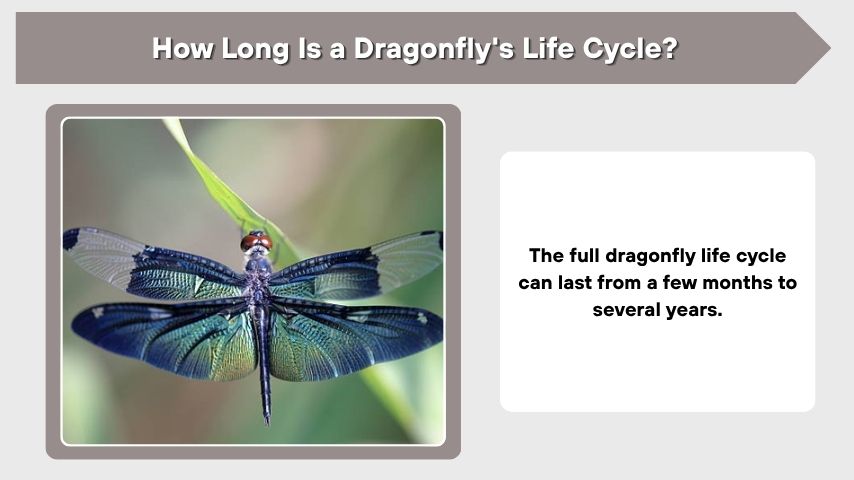
The full dragonfly life cycle can last from a few months to several years. The biggest difference comes from the nymph stage. In many species, the nymph lives underwater much longer than the adult lives in the air.
A general timeline looks like this:
- Egg stage: days to weeks
- Nymph stage: months to years
- Adult stage: weeks to months
In warm climates, some dragonflies develop faster. In colder places, nymphs may grow more slowly and remain underwater for a longer time. Food supply and water quality also affect development.
Dragonfly Life Cycle Diagram Explanation
A simple dragonfly life cycle diagram should show the process as a circle:
Egg → Nymph → Emerging Adult → Adult Dragonfly → Egg
This circular pattern shows that the adult lays eggs, and the cycle begins again. For a worksheet, drawing, or classroom activity, you can add water at the egg and nymph stages, then show the adult flying above the water.
A kid-friendly dragonfly life cycle diagram may include:
- Eggs on or near a pond plant
- Nymph swimming underwater
- Nymph climbing a stem
- Adult dragonfly emerging
- Adult flying and laying eggs
This makes the life cycle easier to understand visually.
Dragonfly Life Cycle for Kids
For kids, the dragonfly life cycle can be explained simply:
A dragonfly starts as an egg near water. The egg hatches into a nymph that lives underwater. The nymph eats small water animals and grows bigger. When it is ready, it climbs out of the water and becomes an adult dragonfly. The adult flies, finds a mate, and lays eggs.
The most important point for kids is that dragonflies live two very different lives. Young dragonflies live in water, while adult dragonflies live in the air.
Dragonfly Larvae Life Cycle
Dragonfly larvae and dragonfly nymphs are the same stage. The word “larva” is commonly used in everyday language, while “nymph” is often preferred because dragonflies do not have complete metamorphosis.
During the dragonfly larvae life cycle, the young dragonfly is aquatic and predatory. It hides among plants, mud, and debris while waiting for prey. It breathes underwater and grows by molting.
This stage is very important because it prepares the insect for adult life. Without clean water and enough prey, the nymph may not survive to become an adult.
Dragonfly and Butterfly Life Cycle Difference
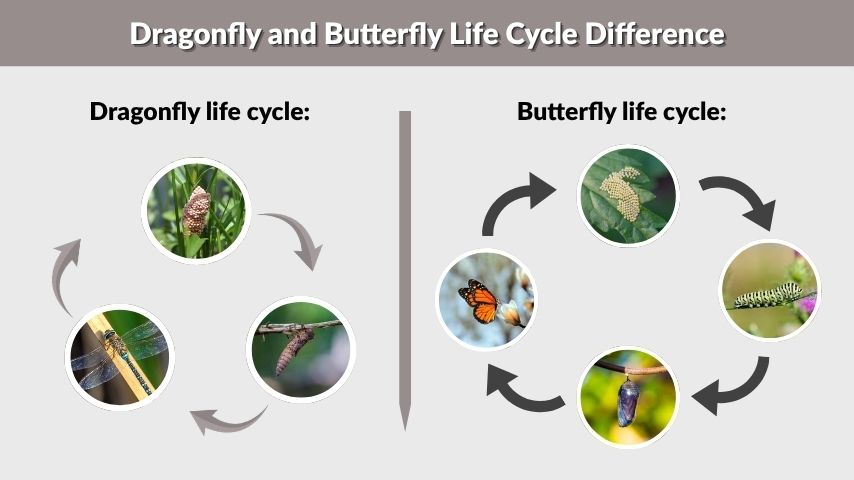
Dragonflies and butterflies both change as they grow, but their life cycles are different. Butterflies go through complete metamorphosis, while dragonflies go through incomplete metamorphosis.
Butterfly life cycle:
Egg → Caterpillar → Pupa → Adult
Dragonfly life cycle:
Egg → Nymph → Adult
The key difference is that dragonflies do not have a pupa or chrysalis stage. Their young stage lives underwater and later transforms directly into a flying adult.
Dragonfly Life Cycle Facts
Here are some quick facts about the life cycle of dragonflies:
- Dragonflies have three main life stages.
- The stages are egg, nymph, and adult.
- The nymph stage happens underwater.
- Dragonfly nymphs are predators.
- Nymphs may live underwater for months or years.
- Dragonflies do not have a pupal stage.
- Adults usually live much shorter lives than nymphs.
- Dragonfly nymphs molt many times as they grow.
- The empty nymph skin is called an exuvia.
- Adult dragonflies return to water to lay eggs.
Why the Dragonfly Life Cycle Matters
The dragonfly life cycle is important because dragonflies are connected to both water and land. As nymphs, they help control aquatic insects. As adults, they eat mosquitoes, flies, and other small flying insects.
Dragonflies also show the health of freshwater habitats. Clean ponds, wetlands, and streams support more dragonflies. If water becomes polluted or habitat disappears, dragonfly populations may decline.
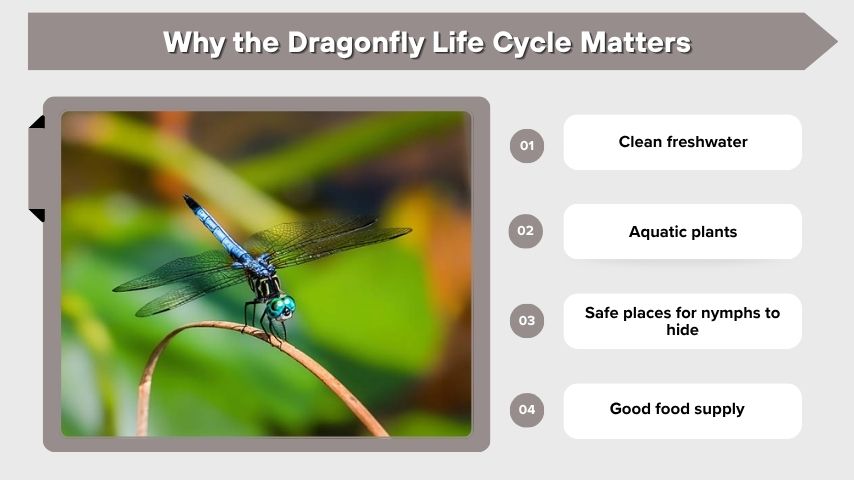
A healthy dragonfly life cycle depends on:
- Clean freshwater
- Aquatic plants
- Safe places for nymphs to hide
- Good food supply
- Natural pond edges
- Places for adults to emerge
Protecting freshwater habitats helps dragonflies complete their life cycle successfully.
FAQs
What are the stages of a dragonfly life cycle?
The dragonfly life cycle has three stages: egg, nymph, and adult. The egg hatches into an aquatic nymph. The nymph grows underwater, molts many times, and finally emerges as a winged adult dragonfly.
How long is the life cycle of a dragonfly?
The life cycle of a dragonfly can last from a few months to several years. Most of that time is spent underwater as a nymph. The adult stage usually lasts only weeks to months.
Is a dragonfly nymph the same as a larva?
Yes, a dragonfly nymph is commonly called a larva. Both words refer to the young aquatic stage. However, “nymph” is more accurate because dragonflies develop through incomplete metamorphosis and do not have a pupal stage.
Does a dragonfly have four life cycle stages?
No, a dragonfly does not have four life cycle stages. It has three main stages: egg, nymph, and adult. Unlike butterflies, dragonflies do not go through a pupa or chrysalis stage.
Where does the dragonfly life cycle begin?
The dragonfly life cycle begins in or near water. Female dragonflies lay eggs in ponds, lakes, wetlands, streams, or aquatic plants. After hatching, the young nymph lives underwater until it is ready to become an adult.