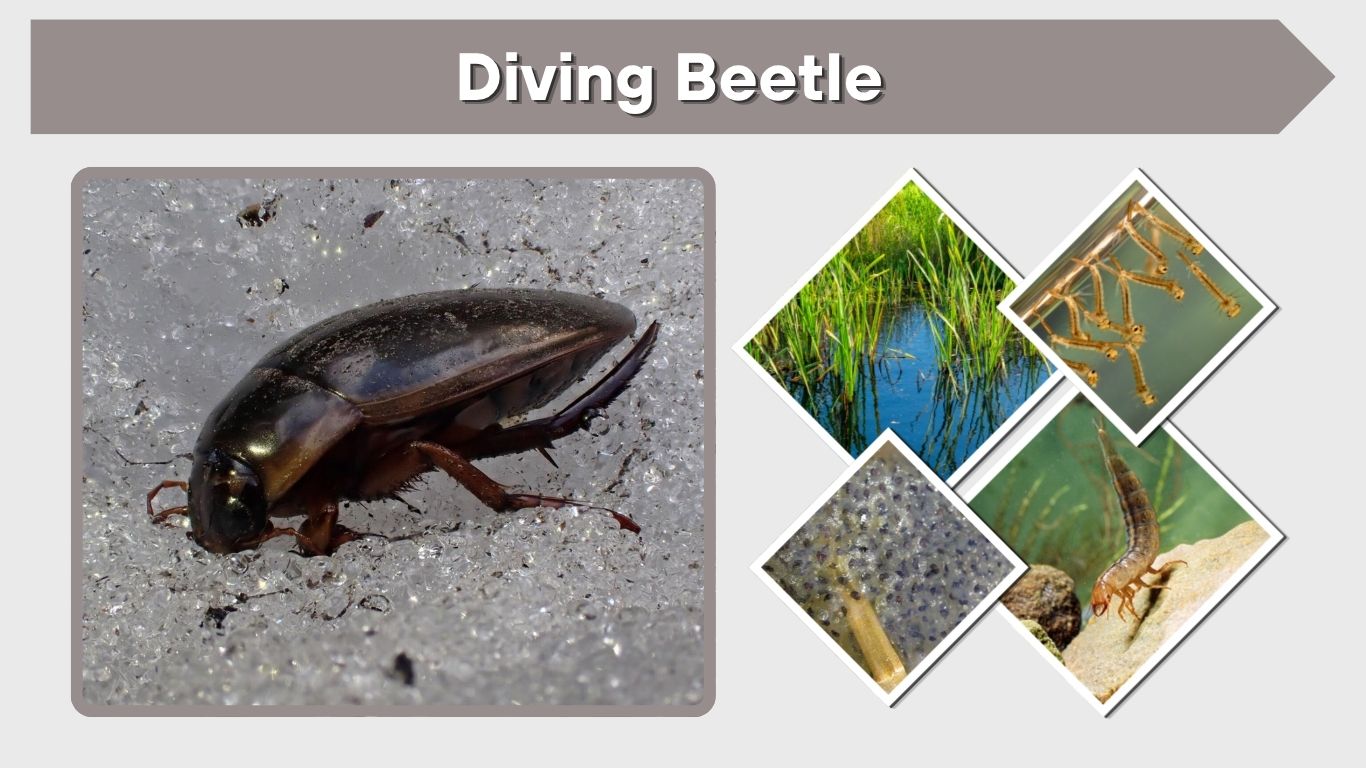
A diving beetle is one of the most interesting predators found in ponds, lakes, marshes, and slow-moving freshwater. Also called a predaceous diving beetle, this aquatic insect is built for swimming, hunting, and surviving underwater. From its paddle-like legs to its fierce larvae, the diving beetle plays an important role in freshwater ecosystems and often surprises people who find one in a pond or swimming pool.
What Is a Diving Beetle?
A diving beetle is an aquatic beetle from the family Dytiscidae. These beetles are commonly called predaceous diving beetles because both adults and larvae are active predators. They live in freshwater habitats and hunt small aquatic animals, insects, larvae, tadpoles, and sometimes even small fish.
Most diving beetles have a smooth, oval, streamlined body. Their shape helps them move through water with less resistance. They usually appear black, dark brown, olive, or yellowish-brown, depending on the species. Some have lighter bands or patterns on the wing covers.
Why Are They Called Diving Beetles?
They are called diving beetles because they dive underwater to hunt and swim, then return to the surface to collect air. Adults carry air under their wing covers, which allows them to stay underwater for a period before surfacing again.
Their hind legs are flattened and fringed with tiny hairs. These legs work like paddles, helping the beetle swim quickly and turn sharply while chasing prey.
Diving Beetle Identification
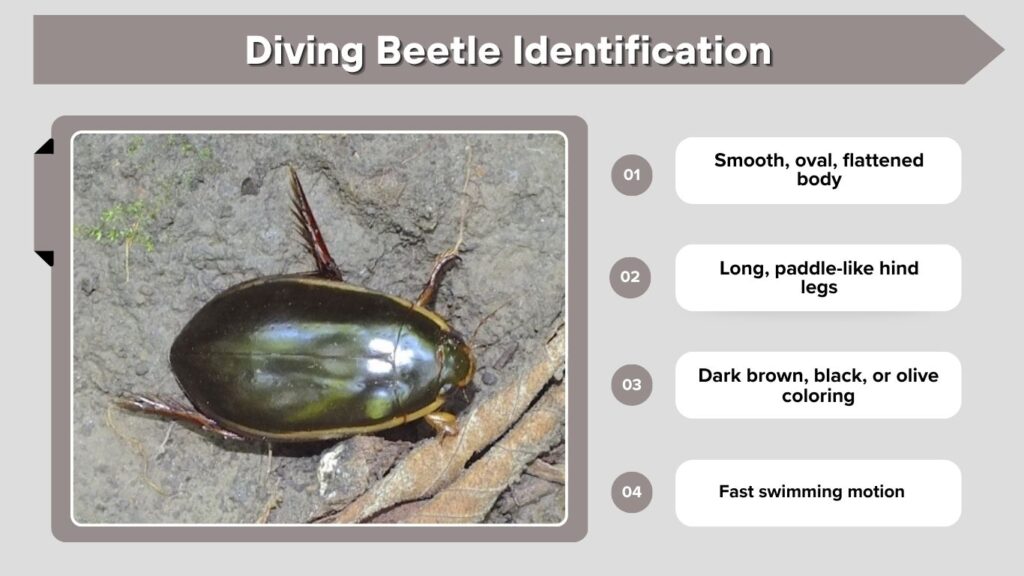
Diving beetles can look similar to other water beetles, but a few features make them easier to recognize.
Look for these common traits:
- Smooth, oval, flattened body
- Long, paddle-like hind legs
- Dark brown, black, or olive coloring
- Fast swimming motion
- Frequent trips to the water surface for air
- Predatory behavior toward small aquatic animals
Adult diving beetles are usually easier to spot than larvae because they swim actively near the surface, plants, or pond edges. Some species are small, while giant diving beetles can grow much larger and look more noticeable in outdoor ponds.
Diving Beetle vs. Water Scavenger Beetle
Diving beetles are often confused with water scavenger beetles. The main difference is how they swim and feed. Diving beetles are strong predators and use their hind legs together like oars. Water scavenger beetles are often more rounded and may swim less smoothly.
| Feature | Diving Beetle | Water Scavenger Beetle |
|---|---|---|
| Main diet | Mostly predatory | Often scavenging and plant matter |
| Body shape | Oval and streamlined | More rounded or convex |
| Swimming style | Fast, using hind legs like paddles | Slower and less direct |
| Common behavior | Hunts live prey | Feeds on decaying matter and small organisms |
Where Do Diving Beetles Live?
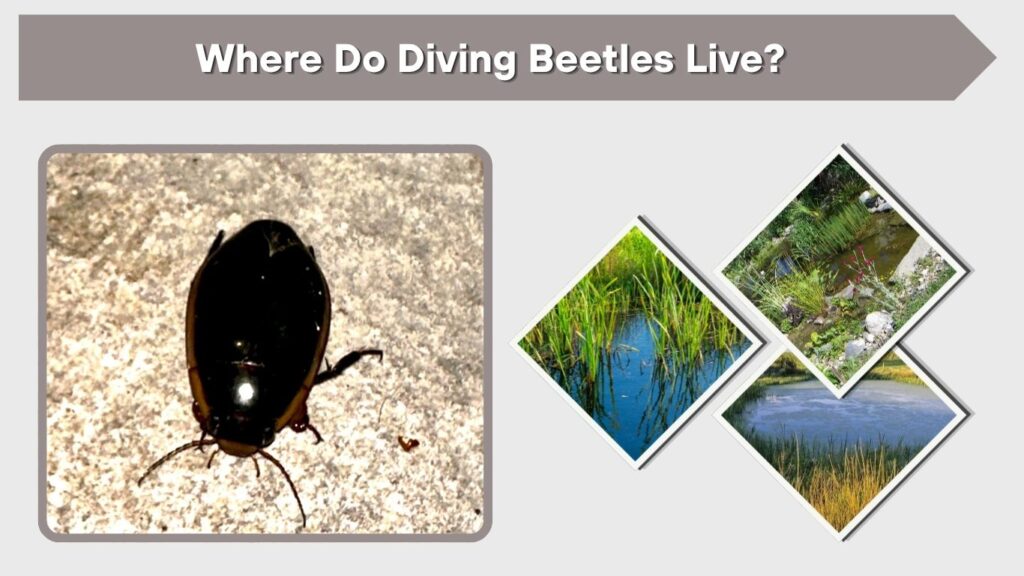
Diving beetles live in many freshwater habitats. They are common in ponds, lakes, wetlands, marshes, ditches, slow streams, and temporary pools. They usually prefer still or slow-moving water where they can hunt easily and hide among aquatic plants.
Common diving beetle habitats include:
- Garden ponds
- Farm ponds
- Wetlands and marshes
- Lakes and pond edges
- Slow streams
- Temporary rain pools
- Aquariums or outdoor water tanks
- Swimming pools, especially if insects collect there
Diving beetles are good fliers, so they can move from one water body to another. This is why people sometimes find diving beetles in swimming pools, rain barrels, or newly built ponds. They may mistake shiny surfaces for water or follow other aquatic insects into the area.
What Do Diving Beetles Eat?
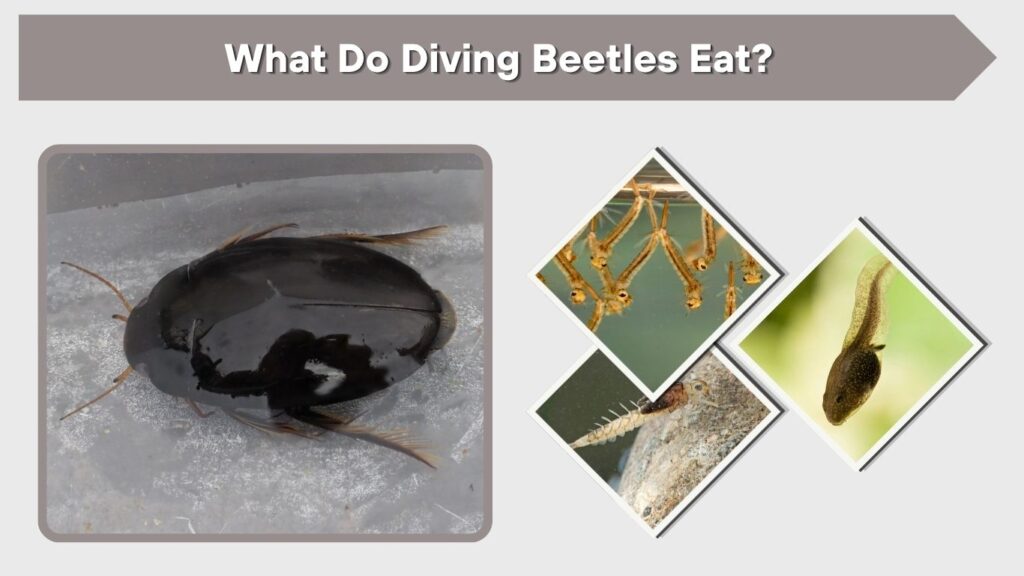
Diving beetles are carnivorous predators. Their diet depends on their size, species, and life stage. Adult diving beetles eat small aquatic animals, while larvae are often even more aggressive hunters.
A diving beetle diet may include:
- Mosquito larvae
- Aquatic insect larvae
- Small worms
- Tadpoles
- Small fish
- Snails
- Crustaceans
- Dead insects
- Other small beetles
- Carrion
Because they feed on mosquito larvae and other small organisms, diving beetles can help balance pond life. However, in small aquariums or wildlife ponds, large species may also eat tadpoles or small fish.
Do Diving Beetles Eat Mosquito Larvae?
Yes, diving beetles can eat mosquito larvae. Both adults and larvae may feed on mosquito larvae when available. This makes them useful predators in natural ponds, although they should not be viewed as the only method for mosquito control.
Do Diving Beetles Eat Tadpoles?
Yes, larger diving beetles and especially diving beetle larvae may eat tadpoles. They are opportunistic predators and may attack prey that fits their size range. This is one reason frog ponds often contain complex predator-prey relationships.
Diving Beetle Larvae: The “Water Tigers”
Diving beetle larvae are often called water tigers because they are powerful freshwater predators. A diving beetle larva looks very different from the adult. Instead of an oval beetle shape, the larva is long, narrow, and often has curved jaws.
The larva uses its sharp jaws to grab prey. It can inject digestive fluids and then feed on the softened body contents of its prey. This feeding style makes diving beetle larvae some of the most efficient small predators in freshwater habitats.
What Do Diving Beetle Larvae Eat?
Diving beetle larvae eat many small aquatic animals, including insect larvae, tadpoles, small fish, and other soft-bodied prey. They are active hunters and may attack prey close to their own size.
Common prey includes:
- Mosquito larvae
- Midge larvae
- Tadpoles
- Small fish fry
- Aquatic worms
- Small crustaceans
- Other insect larvae
Larvae usually live in water until they are ready to pupate. When mature, many leave the water and pupate in damp soil, mud, or nearby plant material.
Diving Beetle Life Cycle
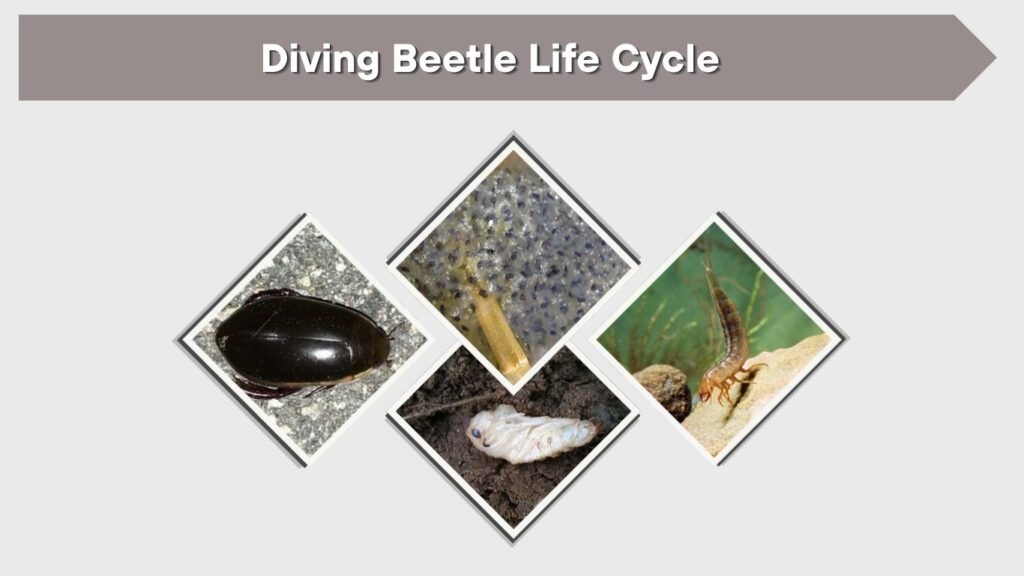
The diving beetle life cycle has four stages: egg, larva, pupa, and adult. Like other beetles, they go through complete metamorphosis.
Egg Stage
Female diving beetles lay eggs in or near water. Some species place eggs in aquatic plant stems, while others use wet soil, debris, or plant tissue close to the water.
Larva Stage
After hatching, the larva begins hunting. This stage is often the most aggressive feeding period. The larva grows by molting several times before it is ready to pupate.
Pupa Stage
When mature, the larva usually leaves the water and buries itself in damp soil or mud. There, it transforms into a pupa. This stage prepares the insect for adulthood.
Adult Stage
The adult diving beetle returns to water, where it swims, hunts, mates, and may fly to new habitats. Adults can live for months or longer depending on species and environmental conditions.
Do Diving Beetles Bite?
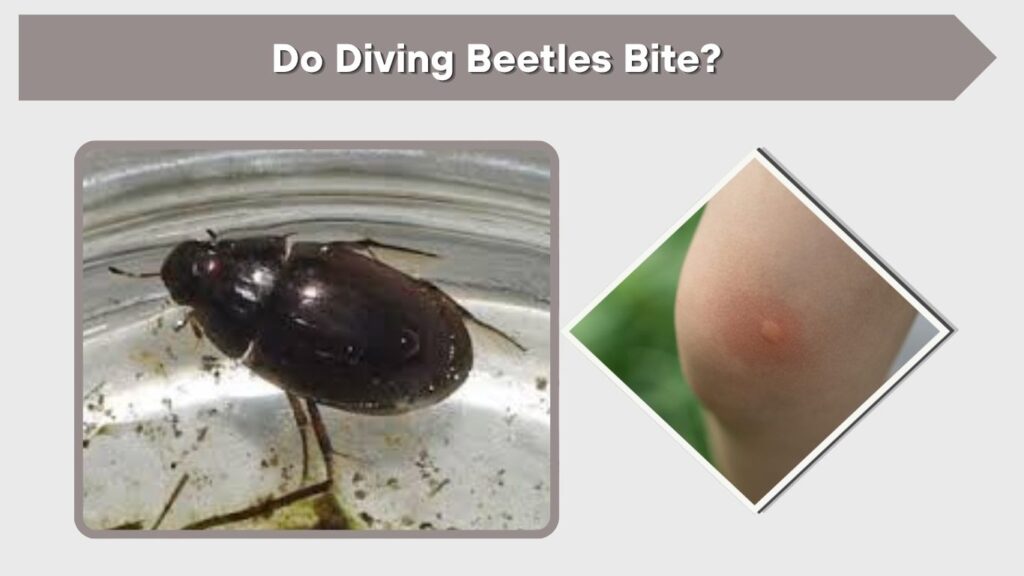
Yes, diving beetles can bite if handled. A diving beetle bite is usually a defensive reaction, not an attack on humans. Larger species may pinch hard enough to cause brief pain, especially if trapped in a hand.
A bite from a diving beetle is usually not dangerous to healthy people. However, it can be uncomfortable. The best approach is to avoid handling them with bare hands. If you need to move one, use a small container, net, or scoop.
Are Diving Beetles Dangerous?
Diving beetles are not considered dangerous to people. They do not seek out humans, and they are not household pests in the usual sense. Their bite may hurt, but they are mainly a concern for small aquatic animals in ponds or aquariums.
They can be a problem if:
- They enter a fish fry tank
- They live in a small tadpole pond
- They appear in swimming pools
- Children try to pick them up
- They are placed with small aquarium animals
In natural ponds, they are part of the ecosystem and usually should be left alone.
Can Diving Beetles Fly?
Yes, many adult diving beetles can fly. This surprises many people because they are so well adapted for swimming. Flying allows them to leave drying ponds, find new water, escape poor conditions, and colonize temporary pools.
Diving beetles may fly at night and can be attracted to lights or reflective surfaces. This is one reason they sometimes appear in swimming pools, outdoor tubs, or artificial ponds.
Why Are Diving Beetles in My Pool?
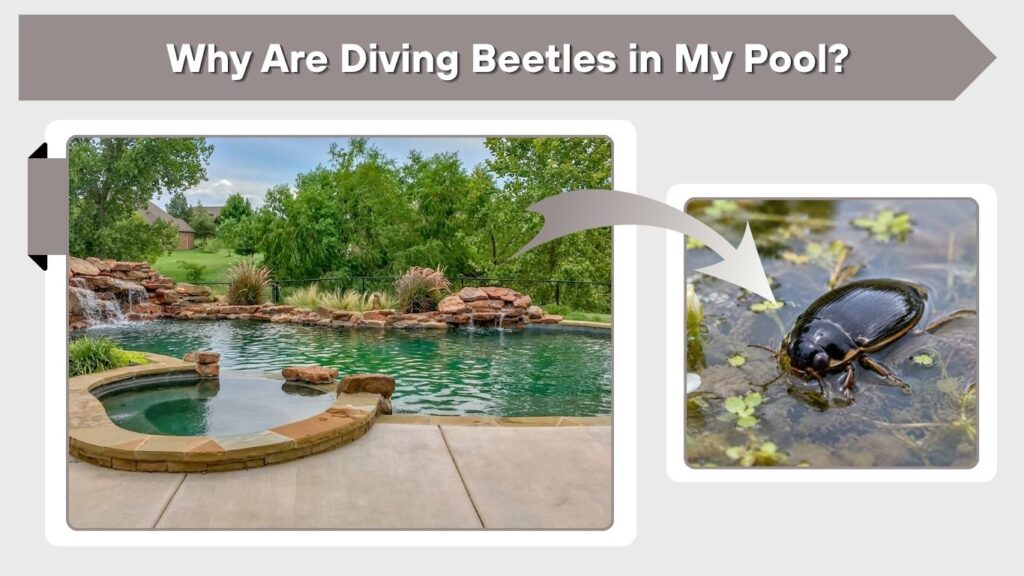
Diving beetles may enter a swimming pool because they are searching for water or attracted by insects already trapped there. Pools can look like natural water bodies to flying beetles.
To reduce diving beetles in a pool:
- Remove floating insects regularly
- Keep the pool covered when not in use
- Maintain proper pool cleaning
- Reduce bright lights near the pool at night
- Remove nearby standing water if it breeds insects
A diving beetle in a pool does not mean the pool is dirty, but it may mean insects are collecting in the water.
Diving Beetle Adaptations
Diving beetles have several adaptations that help them survive underwater. Their bodies are built for speed, hunting, and air storage.
Important adaptations include:
- Streamlined body for easy swimming
- Paddle-like hind legs for movement
- Ability to carry air underwater
- Strong jaws for catching prey
- Large eyes for detecting movement
- Wings for moving between water bodies
- Dark coloring for camouflage
These adaptations make diving beetles successful predators in many freshwater habitats.
Giant Diving Beetle
The term giant diving beetle usually refers to large species of predaceous diving beetles. These beetles can look intimidating because of their size, strong legs, and noticeable jaws. Giant diving beetle larvae are also impressive predators and may attack tadpoles, fish fry, and other aquatic animals.
Despite their fierce appearance, giant diving beetles are still part of the normal freshwater food web. They help control insect populations and provide food for birds, fish, amphibians, and larger aquatic predators.
Should You Keep Diving Beetles as Pets?
Some people keep predaceous diving beetles in aquariums, but they need proper care. They are predators, so they should not be kept with small fish, tadpoles, shrimp, or delicate aquatic animals. They also need access to air and a secure lid because adults may fly.
A diving beetle aquarium should include:
- Clean freshwater
- Aquatic plants or hiding places
- Access to the surface
- A secure lid
- Suitable live or frozen food
- No small tank mates that may be eaten
Keeping diving beetles is best for people who understand aquatic insects and predator behavior.
Diving Beetle Facts
Here are some quick facts about diving beetles:
- Diving beetles belong to the family Dytiscidae.
- They are also called predaceous diving beetles.
- Adults swim using flattened hind legs.
- Larvae are called water tigers.
- They eat mosquito larvae, insects, tadpoles, and small fish.
- Many adults can fly.
- They carry air underwater.
- They may bite if handled.
- They live in ponds, lakes, marshes, and slow water.
- They are important freshwater predators.
FAQs
What is a diving beetle?
A diving beetle is an aquatic beetle from the family Dytiscidae. It is also called a predaceous diving beetle because it hunts small aquatic animals. Diving beetles live in freshwater habitats and are known for their smooth bodies, paddle-like legs, and strong swimming ability.
What do diving beetles eat?
Diving beetles eat mosquito larvae, aquatic insects, worms, tadpoles, small fish, snails, and carrion. Their exact diet depends on their size and life stage. Larvae are especially aggressive predators and may attack prey close to their own size.
Do diving beetles bite humans?
Yes, diving beetles can bite if handled, especially larger species. The bite may hurt, but it is usually not dangerous. They do not attack people on purpose. Use a net, cup, or container if you need to move one.
Are diving beetles good for ponds?
Diving beetles can be good for natural ponds because they help control insect larvae and contribute to the freshwater food web. However, large diving beetles may eat tadpoles or small fish, so they may not be ideal in small wildlife ponds or fish tanks.
Can diving beetles fly?
Yes, many adult diving beetles can fly. They use flight to find new ponds, escape drying habitats, and move between water bodies. Because of this, they may suddenly appear in pools, rain barrels, or outdoor ponds.