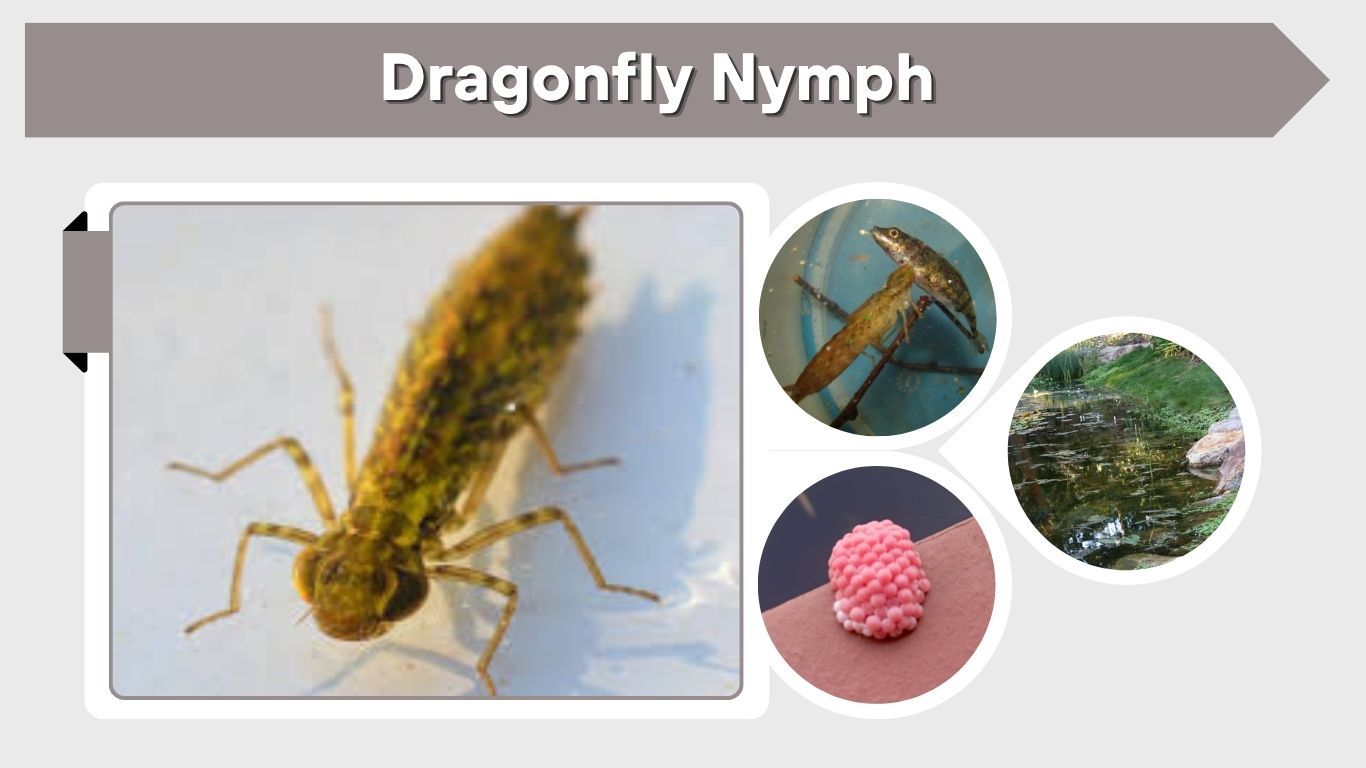
A dragonfly nymph is the underwater juvenile stage of a dragonfly. Before becoming a fast-flying adult, a dragonfly spends much of its life hidden in ponds, streams, lakes, and wetlands. Dragonfly nymphs are powerful aquatic predators with unusual jaws, strong bodies, and impressive hunting skills. They may look strange at first, but they play an important role in freshwater ecosystems.
What Is a Dragonfly Nymph?
A dragonfly nymph is the immature stage of a dragonfly. It is sometimes called a dragonfly larva, although “nymph” is more accurate because dragonflies do not have a pupal stage like butterflies or beetles.
Dragonflies go through incomplete metamorphosis. Their life cycle has three main stages: egg, nymph, and adult. The nymph lives in water, grows through several molts, and eventually climbs out to transform into a winged adult dragonfly.
Dragonfly nymphs are not gentle pond insects. They are active predators that hunt small aquatic animals. Their hidden lifestyle makes them easy to miss, but they are among the most important hunters in freshwater habitats.
What Do Dragonfly Nymphs Look Like?
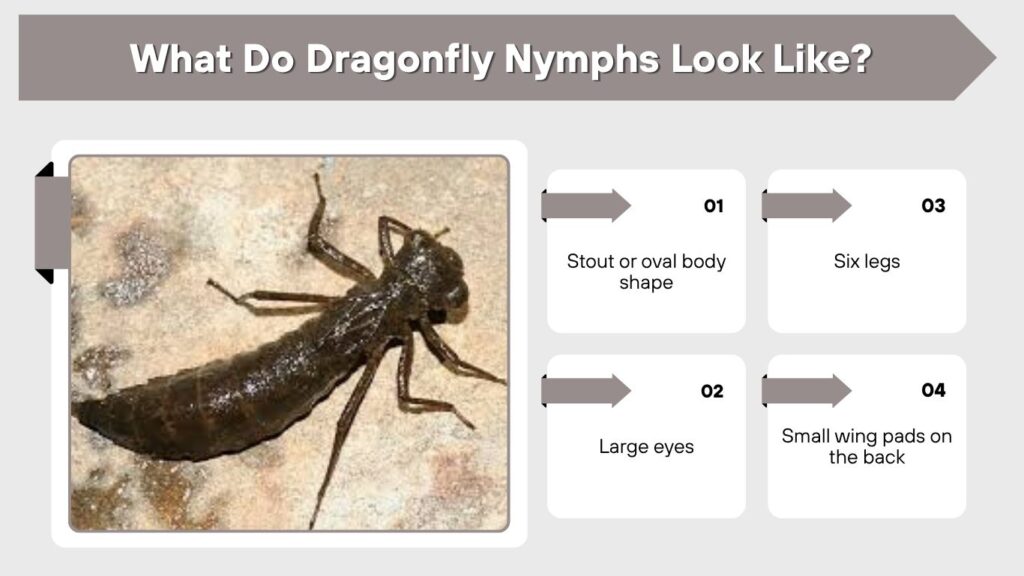
Dragonfly nymphs look very different from adult dragonflies. They do not have long wings or bright flying bodies. Instead, they usually have a short, chunky, brown or greenish body that blends into mud, plants, and pond debris.
Common features include:
- Stout or oval body shape
- Six legs
- Large eyes
- Small wing pads on the back
- Extendable lower jaw
- Brown, tan, olive, or dark coloring
- No long external tail gills
Some dragonfly nymphs look broad and flattened, while others are longer and more torpedo-shaped. Their appearance depends on the species and habitat. A darner dragonfly nymph, for example, is often longer and more active, while some skimmer nymphs are stockier and better camouflaged on the pond bottom.
Dragonfly Nymph Identification
Identifying a dragonfly nymph is easier when you look at body shape, gills, and mouthparts. Dragonfly nymphs usually have a strong body and no three leaflike tails at the end of the abdomen. Those three tails are more typical of damselfly nymphs.
The most useful identification signs are their large eyes, wing pads, and extendable jaw. The jaw is usually folded under the head when not in use, which can make the face look almost mask-like.
| Feature | Dragonfly Nymph | Damselfly Nymph |
|---|---|---|
| Body shape | Stocky, broad, or robust | Slim and delicate |
| Tail end | No three leaflike gills | Three leaflike gills |
| Movement | Crawls, stalks, or jet-propels | Swims with body and tail gills |
| Habitat | Pond bottom, plants, mud, debris | Plants, stems, and shallow edges |
| Hunting style | Ambush predator | Ambush predator |
Dragonfly Nymph in Water
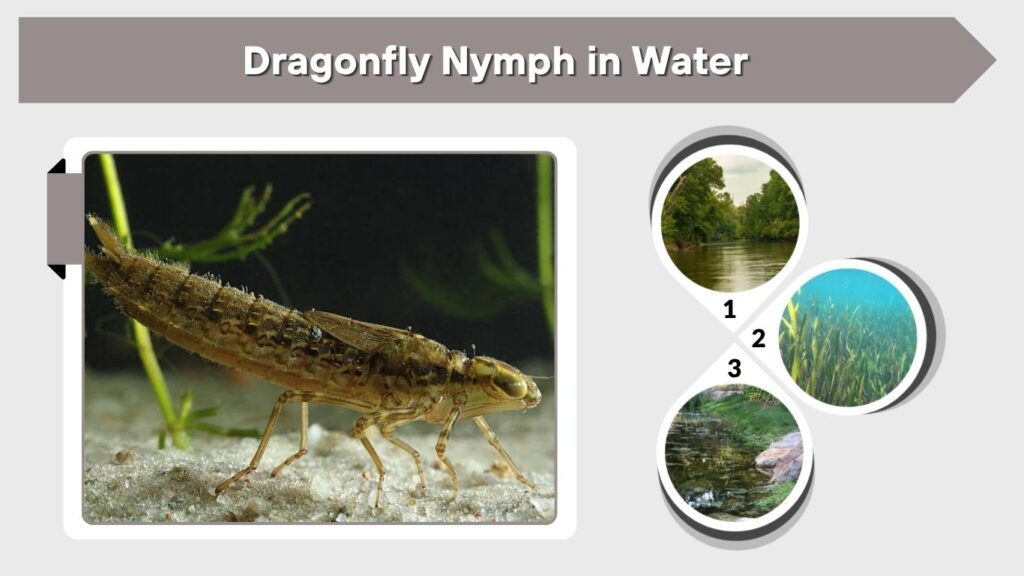
A dragonfly nymph lives in water throughout its immature stage. It may live among aquatic plants, under leaves, in mud, along pond edges, or on the bottom of streams and wetlands.
Good dragonfly nymph habitat often includes:
- Still or slow-moving freshwater
- Aquatic plants
- Mud or leaf litter
- Shallow pond edges
- Plenty of small prey
- Places to hide from fish and birds
Dragonfly nymphs breathe underwater using internal gills. They draw water into the rear part of the body and pass it over the gills. Some can also forcefully push water out, helping them move quickly in a short burst.
Dragonfly Nymph Jaws and Mouthparts
One of the most interesting parts of dragonfly nymph anatomy is the jaw. A dragonfly nymph has a special extendable lower lip called a labium. This mouthpart folds under the head like a mask and shoots forward when prey comes close.
This is why searches for “dragonfly nymph jaws,” “dragonfly nymph mouth,” and “dragonfly nymph mouthparts” are common. The jaw is the main hunting tool.
When a small insect larva, tadpole, or fish fry gets close, the nymph rapidly extends the labium and grabs the prey. This fast strike makes dragonfly nymphs excellent ambush hunters.
What Do Dragonfly Nymphs Eat?
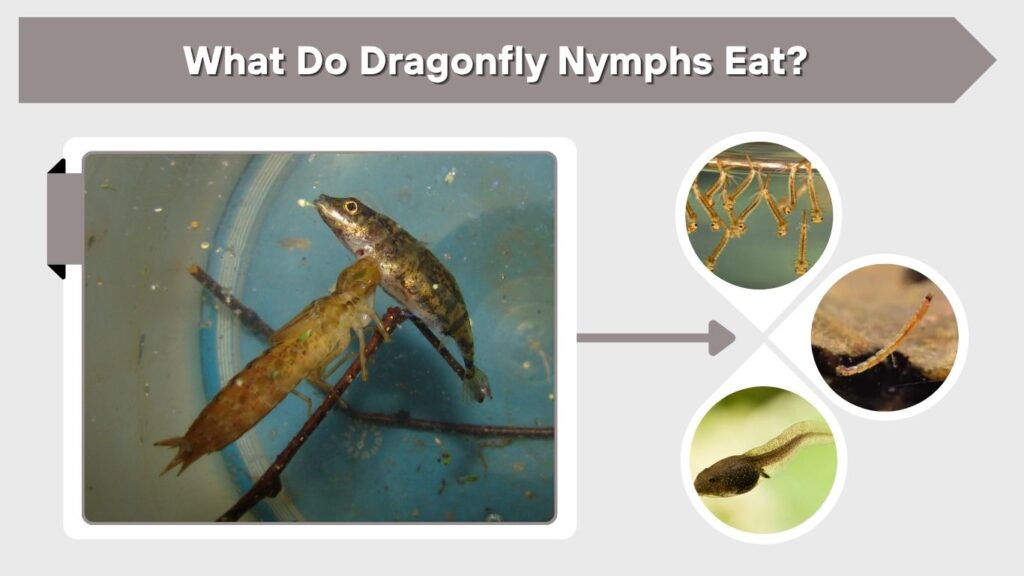
Dragonfly nymphs are carnivores. They eat small aquatic animals and will take almost anything they can overpower. Their diet changes with their size, species, and available prey.
Common dragonfly nymph food includes:
- Mosquito larvae
- Midge larvae
- Mayfly nymphs
- Small aquatic insects
- Tiny crustaceans
- Worms
- Tadpoles
- Small fish fry
- Other small nymphs
Many people ask, “Do dragonfly nymphs eat mosquito larvae?” Yes, they do. Mosquito larvae are a common prey item when available. However, dragonfly nymphs are general predators, not mosquito-only hunters.
Do Dragonfly Nymphs Eat Tadpoles?
Yes, larger dragonfly nymphs can eat tadpoles. This is normal in ponds and wetlands. Tadpoles are part of the freshwater food web, and they have many predators, including fish, beetle larvae, newts, birds, and dragonfly nymphs.
In a large natural pond, this predation is usually balanced. In a small container or aquarium, a dragonfly nymph may cause more noticeable losses.
Do Dragonfly Nymphs Eat Fish?
Some larger dragonfly nymphs can eat very small fish, especially fish fry. They usually cannot harm healthy adult fish, but they can be a problem in breeding tanks, shrimp tanks, and small aquariums.
If you keep tiny fish, shrimp, or tadpoles, remove unknown aquatic nymphs carefully with a net.
Dragonfly Nymph Life Cycle
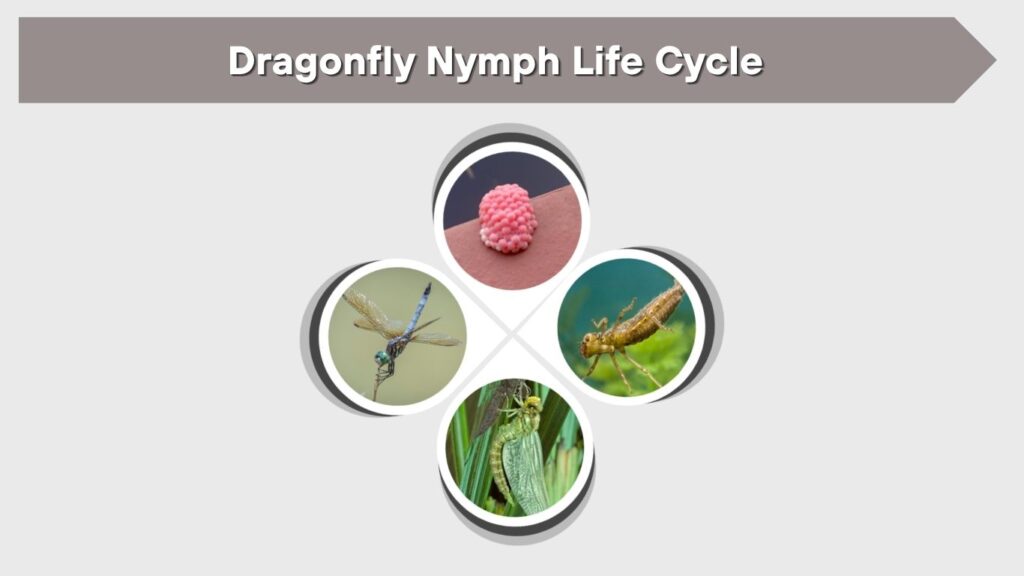
The dragonfly nymph life cycle begins when an adult female lays eggs in or near water. Depending on the species, eggs may be laid directly into water, inserted into aquatic plants, or placed near wet habitat.
Egg Stage
The egg develops in a freshwater environment. When it hatches, a tiny nymph emerges and begins life underwater.
Nymph Stage
The nymph stage is the longest part of the dragonfly life cycle. During this time, the nymph hunts, grows, and molts many times. Some species complete this stage in a few months, while others may remain underwater much longer.
Emerging Adult Stage
When fully grown, the nymph climbs out of the water onto a plant stem, rock, log, or pond edge. Its outer skin splits, and the adult dragonfly slowly emerges.
Adult Dragonfly Stage
The new adult expands and dries its wings before flying away. The empty dragonfly nymph shell left behind is called an exuvia. People often find these dry casings attached to pond plants or walls near water.
Dragonfly Nymph vs Adult Dragonfly
A nymph is different from an adult dragonfly in almost every way. The nymph lives underwater, has no functional wings, and hunts aquatic prey. The adult lives in the air, has large wings, and catches flying insects.
Dragonfly nymphs breathe underwater, while adults breathe air. Nymphs move by crawling, climbing, swimming, or jetting through water. Adults fly, hover, and perch near ponds, streams, and wetlands.
The two stages look so different that many people do not realize they are the same insect at different points in life.
Dragonfly Nymph in Aquarium or Fish Tank
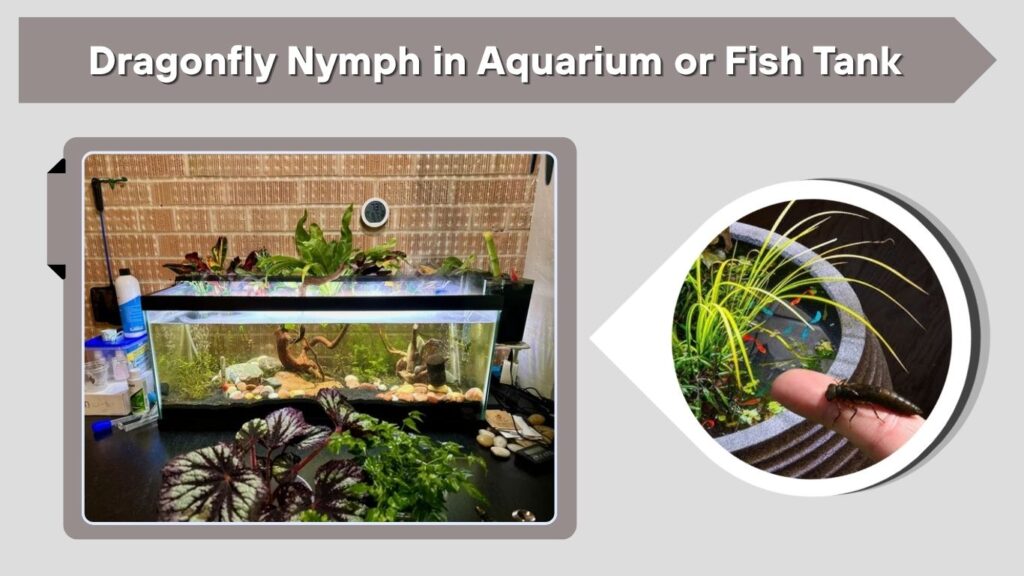
A dragonfly nymph in an aquarium can be a problem. It may arrive with pond plants, outdoor water, live food, or decorations collected from natural water. Once inside, it can hide well and hunt small tank animals.
A dragonfly nymph may eat:
- Baby fish
- Shrimp
- Small snails
- Tadpoles
- Tiny aquatic insects
If you find one, remove it with a net or cup. Do not crush it unnecessarily. If local rules allow and the habitat is suitable, it can be placed in an outdoor pond or natural water source where it belongs.
Do Dragonfly Nymphs Bite?
Dragonfly nymphs can pinch or bite if handled, especially larger ones. They are not dangerous to people, but their jaws are made for catching prey. A bite may feel like a small pinch.
Avoid picking them up with bare fingers. Use a net, spoon, or container if you need to move one. Children should be told not to handle unknown pond insects.
Are Dragonfly Nymphs Dangerous?
Dragonfly nymphs are not dangerous to humans. They do not attack people, spread major household pests, or infest homes. Their main impact is in water, where they act as predators.
They can be dangerous to very small aquatic animals in tanks or containers. In ponds and wetlands, however, they are valuable predators and part of a healthy ecosystem.
Dragonfly Nymph Adaptations
Dragonfly nymphs have several adaptations that help them survive underwater and hunt effectively.
Important adaptations include:
- Camouflage coloring
- Extendable labium for catching prey
- Large eyes for detecting movement
- Internal gills for breathing underwater
- Strong legs for gripping plants and debris
- Jet propulsion for quick escape
- Molting ability as they grow
These adaptations make dragonfly nymphs successful predators long before they become flying adults.
Dragonfly Nymph Food Chain
Dragonfly nymphs are both predators and prey. They eat smaller aquatic animals, but they can also be eaten by larger pond wildlife.
Their predators may include:
- Fish
- Frogs
- Newts
- Birds
- Larger aquatic insects
- Turtles
- Bigger dragonfly nymphs
This makes them an important link in the food chain. They help control smaller organisms while providing food for larger animals.
FAQs
What is a dragonfly nymph?
A dragonfly nymph is the underwater juvenile stage of a dragonfly. It lives in freshwater, hunts small aquatic animals, molts as it grows, and eventually climbs out of the water to emerge as an adult dragonfly.
What do dragonfly nymphs eat?
Dragonfly nymphs eat mosquito larvae, aquatic insects, worms, tiny crustaceans, tadpoles, and small fish fry. They are ambush predators and use an extendable lower jaw to catch prey quickly.
Do dragonfly nymphs live in water?
Yes, dragonfly nymphs live in water. They are found in ponds, lakes, wetlands, ditches, streams, and other freshwater habitats. They remain underwater until they are ready to emerge as adults.
What is the difference between a dragonfly nymph and a damselfly nymph?
Dragonfly nymphs are usually stockier and do not have three leaflike tail gills. Damselfly nymphs are usually slimmer and have three external gills at the end of the body.
Are dragonfly nymphs good for ponds?
Yes, dragonfly nymphs are good for natural ponds because they help control mosquito larvae and other small aquatic animals. However, they may eat tadpoles or fish fry in small ponds, tanks, or containers.