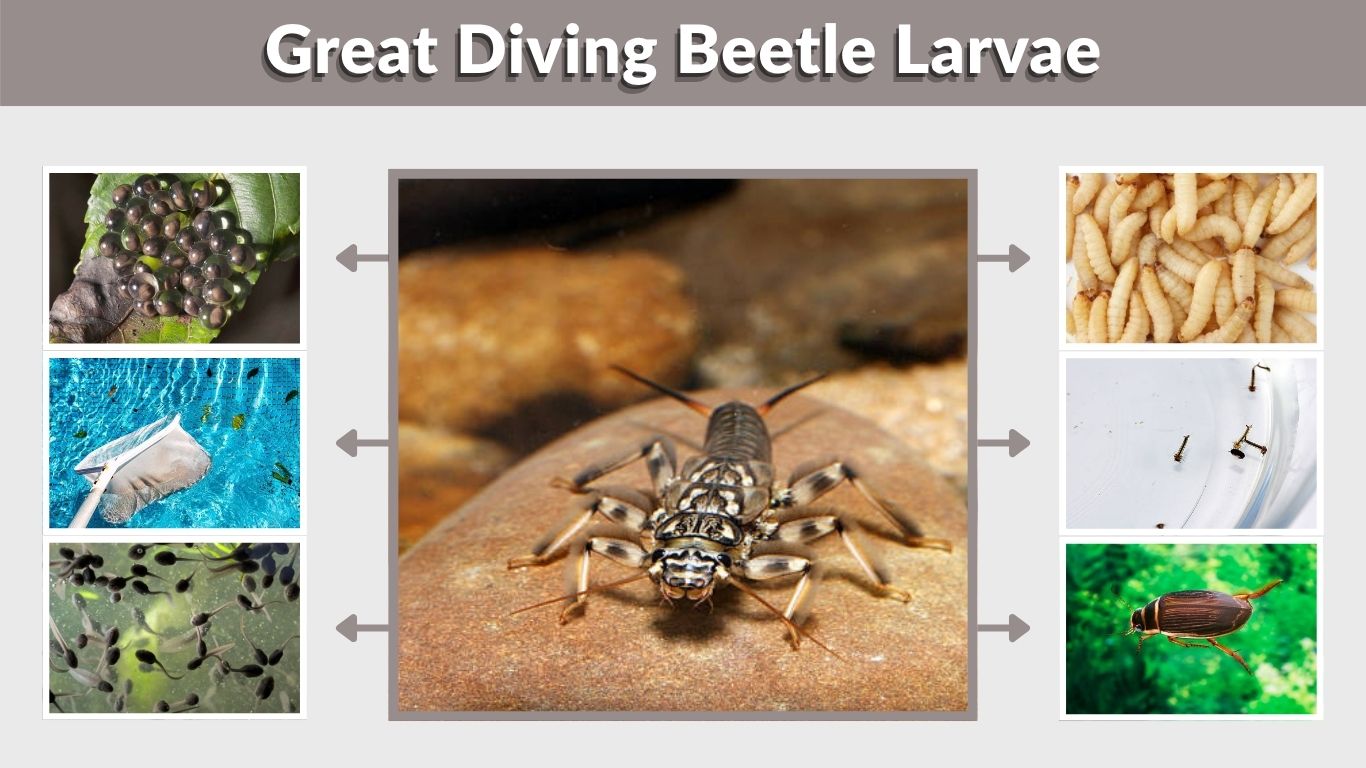
Great diving beetle larvae are fierce aquatic predators often found in ponds, ditches, lakes, and slow-moving freshwater habitats. Sometimes called “water tigers,” these larvae are known for their powerful jaws, active hunting style, and ability to catch prey larger than themselves. Although they can give a painful bite if handled, they are not usually dangerous when left alone in natural ponds.
What Are Great Diving Beetle Larvae?
Great diving beetle larvae are the immature stage of the great diving beetle, one of the best-known aquatic beetles in the UK and Europe. The adult beetle is large, oval, and dark-colored, while the larva looks long, narrow, and fierce.
Why They Are Called Water Tigers
The nickname “water tiger” comes from their hunting behavior. Great diving beetle larvae are aggressive predators that wait for prey and strike quickly with curved jaws. They do not graze on plants or algae. Instead, they hunt other aquatic animals in the water.
Great Diving Beetle Larvae UK
In the UK, great diving beetle larvae are commonly found in ponds, garden ponds, marshes, canals, lakes, and slow streams. They are often seen in spring and summer, especially in wildlife ponds with plenty of aquatic insects, tadpoles, and other small animals.
They are part of a healthy pond ecosystem, but their predatory nature can worry pond owners who keep fish fry, tadpoles, or small aquatic animals.
Great Diving Beetle Larvae Size
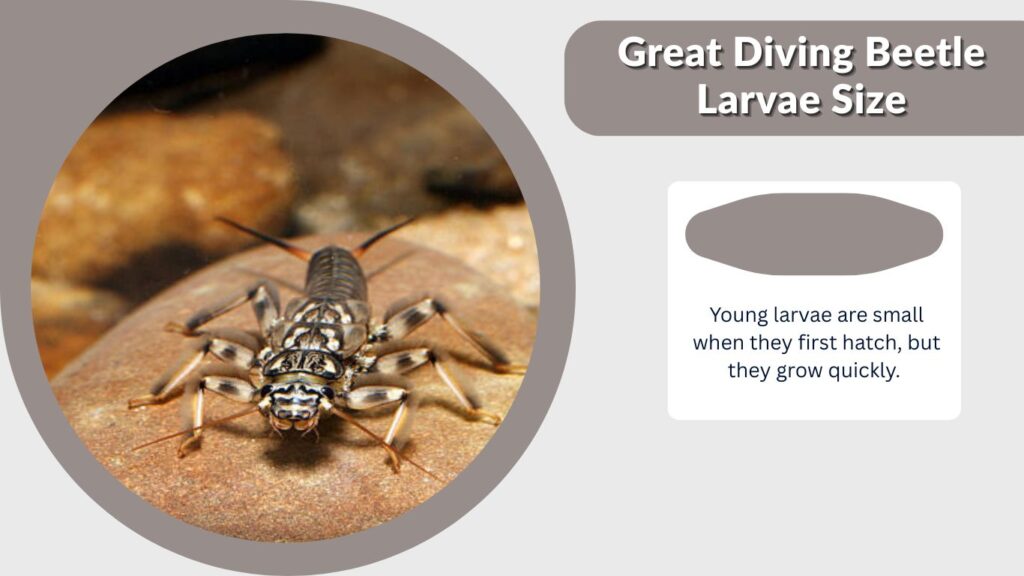
Great diving beetle larvae can grow quite large compared with many other pond insects. Their exact size depends on age, species, food supply, and stage of development.
How Big Do They Get?
Young larvae are small when they first hatch, but they grow quickly. Mature larvae may reach several centimeters long and can look intimidating because of their long body and large jaws.
Great Diving Beetle Size vs Larvae Size
Adult great diving beetles are also large insects. Adults are usually oval and streamlined, while larvae are longer and thinner. The adult is built for swimming and flying, while the larva is built for ambush hunting.
| Stage | Appearance | Typical Role |
|---|---|---|
| Egg | Small and hidden in aquatic plants | Development stage |
| Larva | Long body with large curved jaws | Active aquatic predator |
| Pupa | Resting stage on land or near water | Transformation stage |
| Adult | Oval, dark, swimming beetle | Predator, swimmer, and flyer |
What Do Great Diving Beetle Larvae Eat?
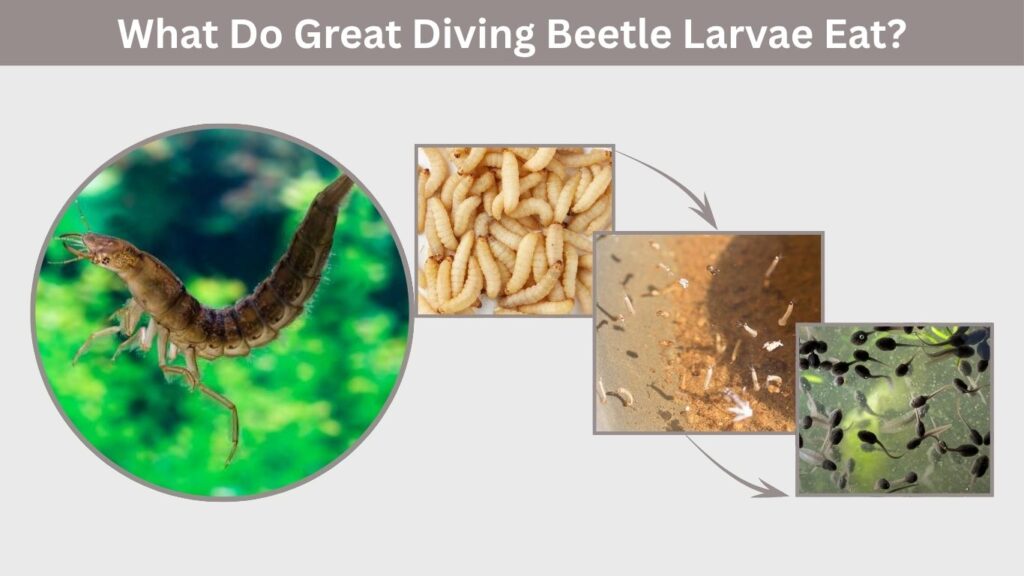
Great diving beetle larvae are carnivores. They feed on small aquatic animals and are among the top insect predators in many ponds.
Common Foods
Their diet may include:
- Mosquito larvae
- Midge larvae
- Tadpoles
- Small aquatic insects
- Worms
- Small crustaceans
- Fish fry
- Other beetle larvae
- Dragonfly larvae, if small enough
They usually attack moving prey. Their jaws are designed for gripping and piercing, allowing them to hold prey while feeding.
Do They Eat Tadpoles?
Yes, great diving beetle larvae can eat tadpoles. This is one reason they are often noticed in wildlife ponds during spring. They may catch weak, small, or slow-moving tadpoles. However, they are part of the natural pond food web and do not necessarily wipe out all amphibian life.
Do They Eat Fish?
They can eat very small fish or fish fry, especially if the fish are newly hatched or weak. Larger fish are usually too big for them. In ornamental ponds, this can be a concern if you are raising young fish.
How Great Diving Beetle Larvae Hunt
Great diving beetle larvae are ambush predators. They may wait among pond plants, debris, or shallow water before striking quickly.
Their Powerful Jaws
Their curved jaws are their main hunting tool. When prey comes close, the larva grabs it and pierces it. The jaws help inject digestive fluids, which break down the prey’s tissues. The larva then sucks up the liquid food.
They Breathe Air
Although they live underwater, great diving beetle larvae breathe air. They often rise to the surface and use the rear end of their body to take in oxygen. This means they are usually found in places where they can reach the surface easily.
They Prefer Cover
Larvae often hide in places that provide shelter and hunting opportunities, such as:
- Pond plants
- Submerged leaves
- Algae mats
- Muddy edges
- Shallow water
- Plant stems
- Underwater debris
These hiding places help them avoid predators and ambush prey.
Great Diving Beetle Larvae Bite
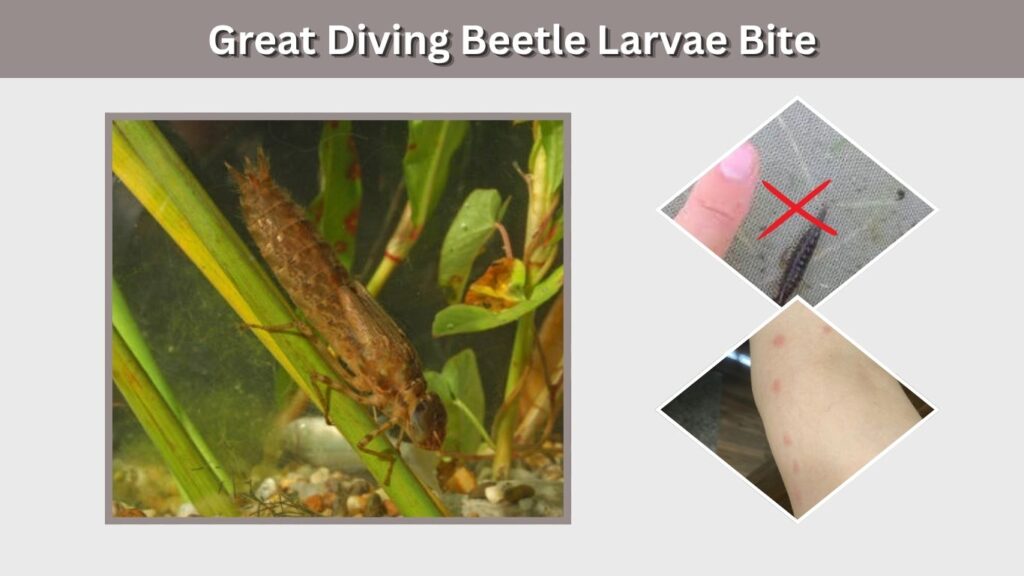
Great diving beetle larvae can bite if picked up or handled. Their bite is defensive, not aggressive toward humans. They do not chase people or seek out contact.
Does the Bite Hurt?
Yes, the bite can hurt. Because their jaws are sharp and strong for their size, a bite may feel like a sharp pinch. Some people describe it as surprisingly painful for such a small animal.
Is the Bite Dangerous?
A bite from a great diving beetle larva is usually not dangerous. It may cause temporary pain, redness, or mild swelling. Serious reactions are uncommon.
If bitten, it is sensible to:
- Wash the area with soap and water
- Avoid scratching the bite
- Use a cold compress if sore
- Watch for unusual swelling or irritation
Do not handle larvae with bare hands. If you need to move one, use a pond net, container, or gloves.
Great Diving Beetle Life Cycle
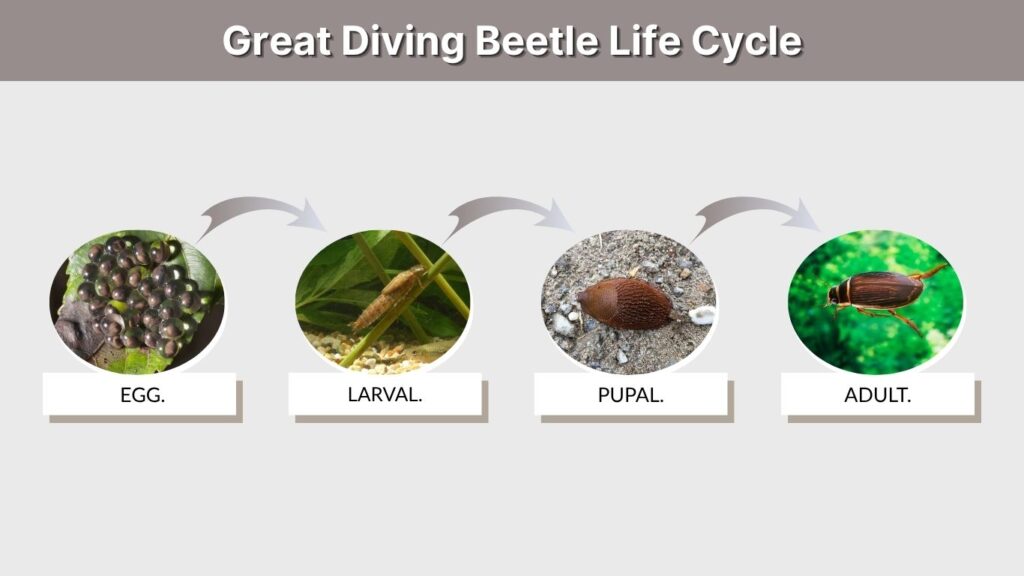
The great diving beetle has a complete life cycle with four main stages: egg, larva, pupa, and adult. Each stage looks different and has a different role.
Egg Stage
Female great diving beetles lay eggs in or near aquatic plants. The eggs are usually protected within plant tissue or hidden in pond vegetation. This gives the young larvae access to water and food after hatching.
Larval Stage
The larval stage is the most predatory part of the life cycle. Larvae grow by feeding heavily on aquatic prey. They molt several times as they increase in size.
This is the stage where people most often notice “water tiger” behavior.
Pupal Stage
When the larva is fully grown, it leaves the water and pupates in damp soil or a sheltered area near the pond. During pupation, it transforms into an adult beetle.
Adult Stage
Adult great diving beetles return to the water. They are strong swimmers and can also fly to new ponds. Adults continue to hunt but have a different body shape and lifestyle from the larvae.
Great Diving Beetle Larvae vs Dragonfly Larvae
Great diving beetle larvae and dragonfly larvae are both pond predators, but they are not the same. They differ in body shape, hunting method, and life cycle.
Appearance Differences
Great diving beetle larvae are long, narrow, and have large curved jaws. Dragonfly larvae are usually stockier, with a wider head and extendable lower mouthpart used to grab prey.
Hunting Differences
Great diving beetle larvae bite and pierce prey with their jaws. Dragonfly larvae use a fast, extendable mouthpart that shoots forward to catch prey.
Life Cycle Differences
Great diving beetles become adult beetles after pupation. Dragonfly larvae become adult dragonflies without a pupal stage. They climb out of the water, split their larval skin, and emerge as flying adults.
Great Silver Diving Beetle Larvae
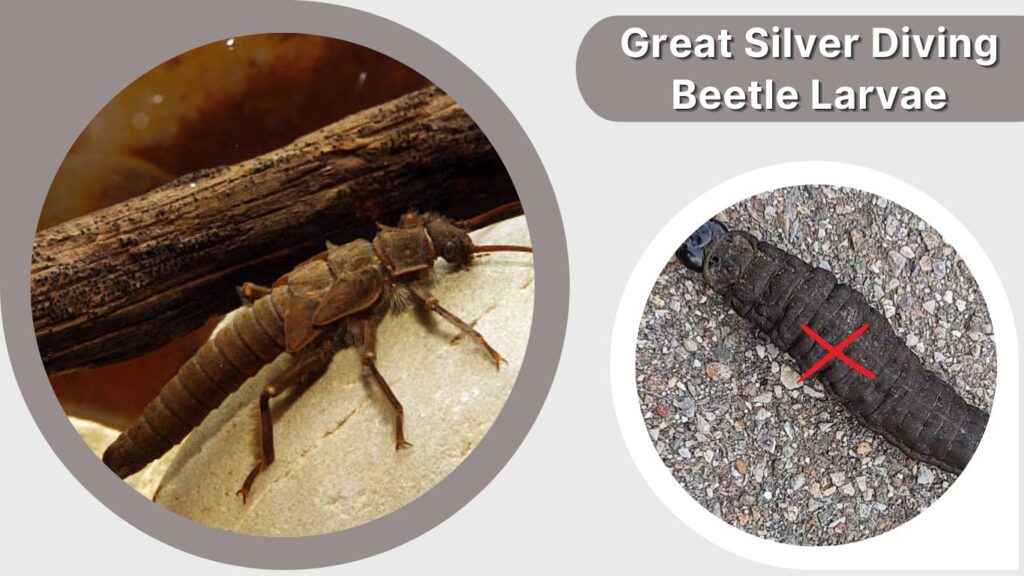
The phrase “great silver diving beetle larvae” is often searched because people confuse different large aquatic beetles. The great silver water beetle is not the same as the great diving beetle.
Great Diving Beetle vs Great Silver Water Beetle
Great diving beetles are active predators as both larvae and adults. Great silver water beetles are also aquatic beetles, but adults are more associated with plant material and decaying organic matter than the highly predatory great diving beetle.
Their larvae, however, can still be predatory. Because aquatic beetle larvae can look similar to non-experts, identification may require close observation of body shape, jaws, habitat, and adult beetles nearby.
Great Diving Beetle Male vs Female
Adult male and female great diving beetles have some visible differences, though larvae are harder to sex by appearance.
Adult Male Features
Male great diving beetles often have smoother wing cases and special suction pads on the front legs. These pads help them grip females during mating.
Adult Female Features
Females may have grooved wing cases, depending on the species and form. These grooves can make the top of the body look more textured than the male’s.
In the larval stage, male and female differences are not usually obvious to casual observers.
King Diving Beetle
“King diving beetle” is sometimes used informally for large diving beetles or confused with other big aquatic beetle species. It is not always a precise common name. In many cases, people searching this term are looking for information about large predatory diving beetles, including great diving beetles and related species.
Large diving beetles share similar traits:
- Streamlined bodies
- Strong swimming legs
- Predatory larvae
- Aquatic lifestyle
- Ability to fly as adults
- Powerful jaws in the larval stage
Great Diving Beetle for Sale
Some people search for great diving beetles for sale because they are interested in aquatic insects, pond wildlife, or unusual invertebrate pets. However, keeping them requires care, proper identification, and attention to local wildlife rules.
Should You Buy Them?
In many cases, it is better to create a wildlife-friendly pond and allow native insects to arrive naturally. Adult great diving beetles can fly and may colonize suitable ponds on their own.
Before buying or collecting any aquatic beetle, consider:
- Whether the species is native
- Local wildlife protection rules
- The needs of the beetle
- Risk to fish fry or tadpoles
- Ethical sourcing
- Avoiding release of non-native species
Never release non-native beetles into the wild.
How to Get Rid of Great Diving Beetle Larvae
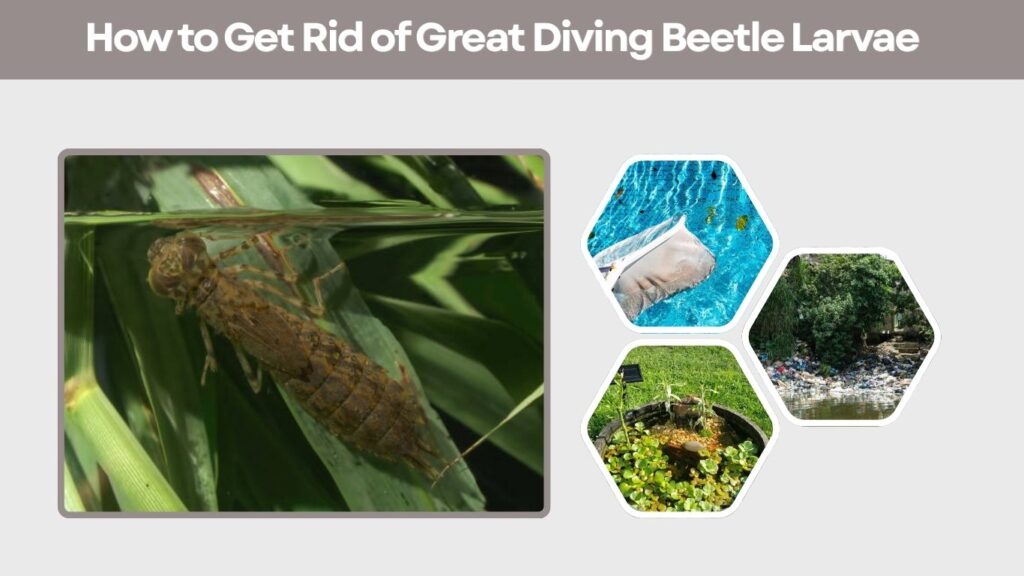
In most wildlife ponds, you do not need to remove great diving beetle larvae. They are natural predators and help maintain balance. However, if you are protecting fish fry or a small tadpole population, you may want to reduce their numbers gently.
Safe Removal Methods
Use non-chemical methods whenever possible:
- Scoop larvae out with a pond net
- Relocate them only where legally and ecologically appropriate
- Add more plant cover for tadpoles and small animals
- Avoid overstocking small ponds with vulnerable fish fry
- Maintain a balanced pond ecosystem
- Reduce excess insects if the pond is overcrowded with prey
Avoid insecticides, bleach, or harsh chemicals. These can kill beneficial pond life, harm amphibians, and damage water quality.
Are Great Diving Beetle Larvae Good or Bad?
Great diving beetle larvae can seem “bad” because they eat tadpoles, fish fry, and other pond animals. However, in nature, they are important predators. They help control insect populations and provide food for larger wildlife.
Benefits in a Pond
They can help by:
- Controlling mosquito larvae
- Feeding on weak or sick aquatic animals
- Supporting a balanced food web
- Serving as prey for birds, fish, and other predators
When They Become a Problem
They may be a problem in small garden ponds where people are trying to raise fish fry, rare tadpoles, or delicate aquatic animals. In those cases, manual removal and habitat adjustments are better than chemical control.
FAQs
What do great diving beetle larvae eat?
Great diving beetle larvae eat mosquito larvae, tadpoles, worms, small aquatic insects, fish fry, and other pond animals. They are carnivorous predators and hunt mostly in freshwater habitats.
Do great diving beetle larvae bite?
Yes, great diving beetle larvae can bite if handled. Their bite may feel like a sharp pinch and can be painful, but it is not usually dangerous. It is best to avoid touching them with bare hands.
How big are great diving beetle larvae?
Great diving beetle larvae can grow several centimeters long. Young larvae are much smaller, but mature larvae look long, narrow, and powerful, with noticeable curved jaws used for catching prey.
Are great diving beetle larvae found in the UK?
Yes, great diving beetle larvae are found in the UK. They live in ponds, lakes, ditches, canals, marshes, and slow-moving freshwater habitats, especially where there is plenty of aquatic prey.
How do you get rid of great diving beetle larvae?
The safest way is to remove them manually with a pond net. Avoid chemicals because they can harm fish, frogs, tadpoles, and beneficial insects. In wildlife ponds, it is often better to leave them alone.