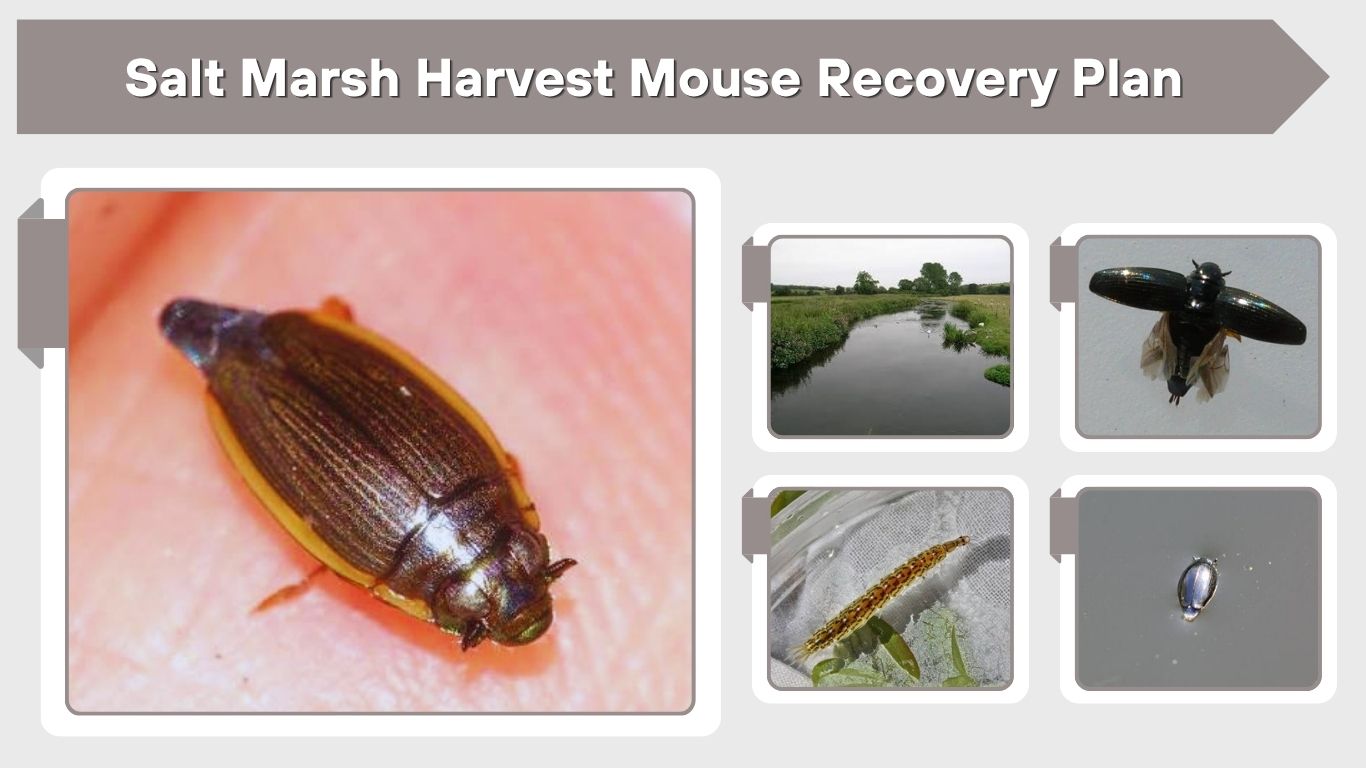
Whirligig beetles are small aquatic insects famous for spinning in circles on the surface of ponds, lakes, and slow-moving streams. Their shiny bodies, split eyes, and fast group movements make them easy to notice near calm water. Although they may look strange, whirligig beetles are usually harmless and play a useful role by feeding on small insects, larvae, and organic matter.
What Are Whirligig Beetles?
Whirligig beetles are aquatic beetles that belong to the family Gyrinidae. They get their common name from their habit of swimming in quick circular patterns on the water’s surface. When seen in groups, they often look like tiny black dots spinning, turning, and darting across the water.
Whirligig Beetles Gyrinidae
The scientific family name for whirligig beetles is Gyrinidae. Members of this family are specially adapted for life at the boundary between air and water. Unlike many aquatic insects that stay underwater, adult whirligig beetles spend much of their time on the surface.
They are true beetles, which means they have hardened front wings called elytra. These wing covers protect the delicate flying wings underneath. Many whirligig beetles can fly, which helps them move to new ponds, streams, or wetlands when conditions change.
What Do Whirligig Beetles Look Like?
Whirligig beetles are usually small, oval, and shiny. Most are black, dark brown, or metallic-looking. Their smooth bodies help them move quickly through water.
Common features include:
- Oval, streamlined bodies
- Glossy black or dark brown coloring
- Short, paddle-like middle and hind legs
- Long front legs used for grabbing food
- Split eyes that help them see above and below water
- Fast spinning or circling movement on the surface
Whirligig Beetles Size
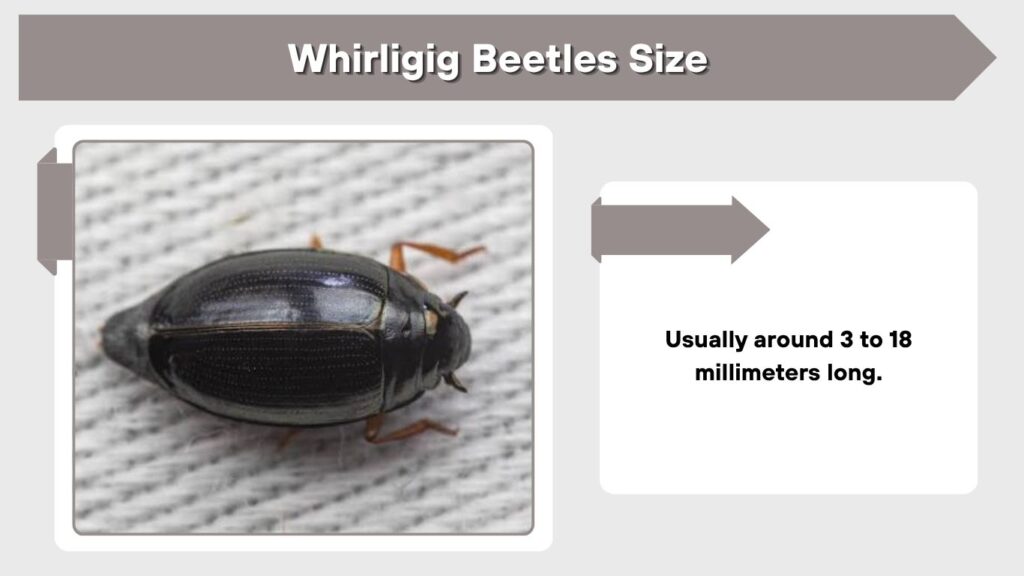
Most whirligig beetles are small, usually around 3 to 18 millimeters long, depending on the species. Many common species are about the size of a small seed or grain of rice. Their small size makes them easy to overlook until they gather in groups.
Why Their Size Matters
Their compact bodies help them move quickly and avoid predators. A small, smooth body creates less drag in the water, allowing whirligig beetles to dart away when disturbed. Their size also helps them gather in large groups without needing much space.
Where Do Whirligig Beetles Live?
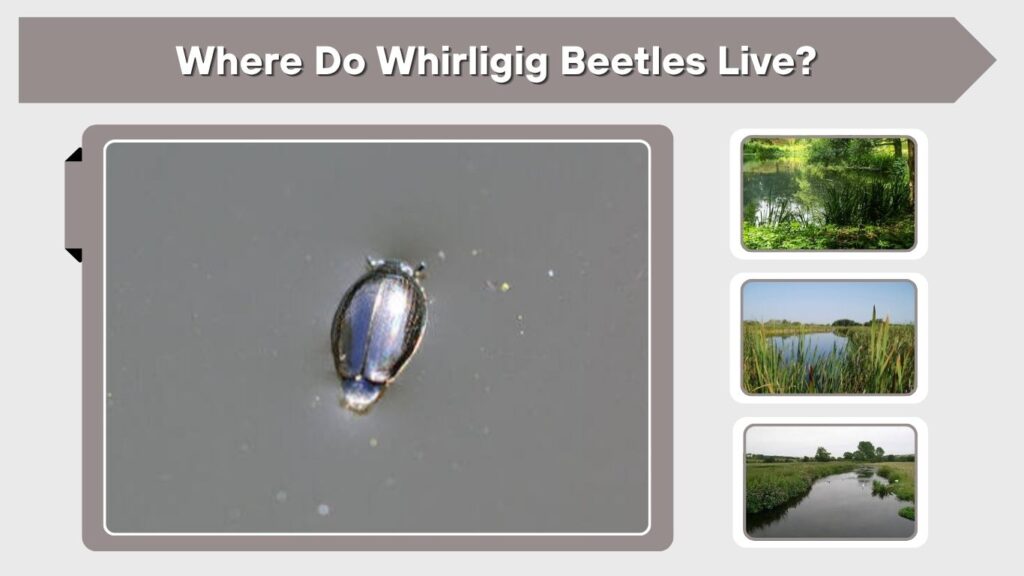
Whirligig beetles live in freshwater habitats, especially calm or slow-moving water. They prefer places where they can swim on the surface and find small insects or floating organic material.
Common Habitats
You may find whirligig beetles in:
- Ponds
- Lakes
- Slow streams
- Marshes
- Wetlands
- Ditches
- Canals
- Quiet river edges
- Garden ponds
They are most common in areas with clean or moderately clean water, though some species can tolerate different conditions.
Whirligig Beetles in Water
Whirligig beetles are most often seen on the water surface. Adults swim in groups, but they can also dive underwater when threatened. When diving, they may carry a small bubble of air with them, allowing them to stay below the surface for a short time.
Their lives are closely tied to water, but they are not trapped in one pond forever. Winged adults can fly to new water sources if needed.
Whirligig Beetles Quick Facts
| Topic | Details |
|---|---|
| Common name | Whirligig beetle |
| Scientific family | Gyrinidae |
| Habitat | Ponds, lakes, streams, wetlands |
| Diet | Small insects, larvae, dead insects, organic matter |
| Size | Usually 3 to 18 millimeters |
| Bite risk | Rare and not usually serious |
| Special feature | Split eyes for seeing above and below water |
| Can they fly? | Many adult whirligig beetles can fly |
What Do Whirligig Beetles Eat?
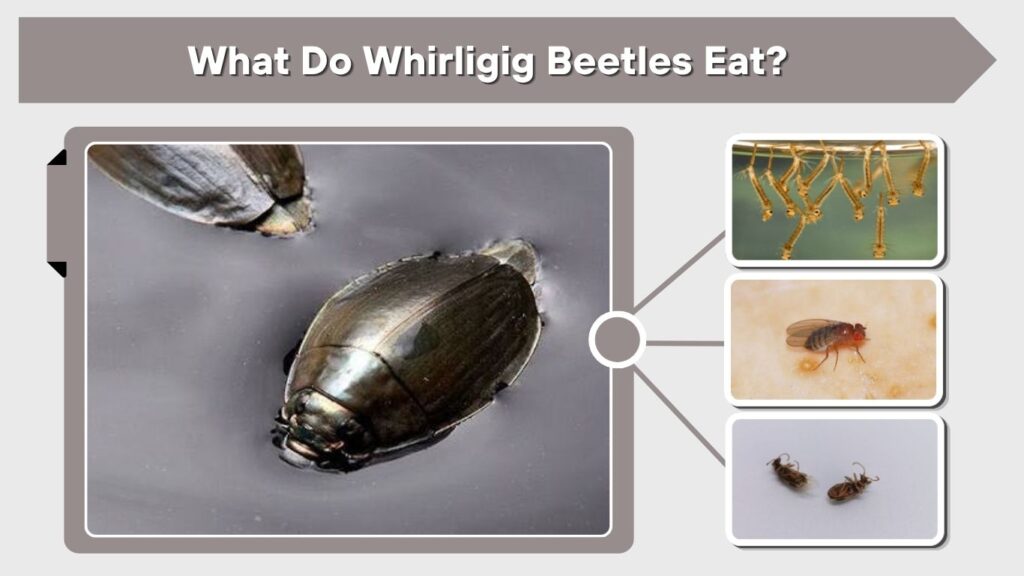
Whirligig beetles are mostly predators and scavengers. Adult whirligig beetles feed on small insects and other tiny organisms that fall onto the water surface. They may also eat dead insects and bits of organic matter.
Whirligig Beetles Diet
Their diet commonly includes:
- Small flies
- Mosquito larvae
- Dead or weakened insects
- Tiny aquatic organisms
- Small surface-dwelling insects
- Insect larvae
- Floating organic debris
Whirligig beetles are opportunistic feeders. This means they eat whatever suitable food is available on or near the water surface.
Are Whirligig Beetles Omnivores?
Whirligig beetles are often described as predators and scavengers, but they may sometimes behave like omnivores because they can consume organic material as well as animal prey. Their main food source, however, is usually animal-based, especially small insects and larvae.
They are not plant pests. They do not chew pond plants, damage water lilies, or feed heavily on algae.
What Do Whirligig Beetle Larvae Eat?
Whirligig beetle larvae live underwater and are more predatory than adults. They often feed on small aquatic animals, insect larvae, and other tiny organisms. Larvae have narrow bodies and are adapted for hunting below the surface.
Why Do Whirligig Beetles Spin?
Whirligig beetles spin and circle for several reasons. Their movement helps them find food, avoid predators, communicate with nearby beetles, and stay organized in groups.
Spinning Helps Them Detect Food
As they move, whirligig beetles can sense vibrations and disturbances on the water surface. If a small insect falls into the water, the beetles may quickly detect it and move toward it.
Spinning Helps Them Avoid Predators
Their fast, unpredictable motion makes them difficult for predators to catch. A fish, bird, or larger insect may struggle to target one beetle when a whole group is spinning and darting in different directions.
Group Movement Provides Safety
Whirligig beetles often gather in groups called aggregations. Being in a group can make it harder for predators to single out one individual. It may also help them locate food more efficiently.
Whirligig Beetles Eyes
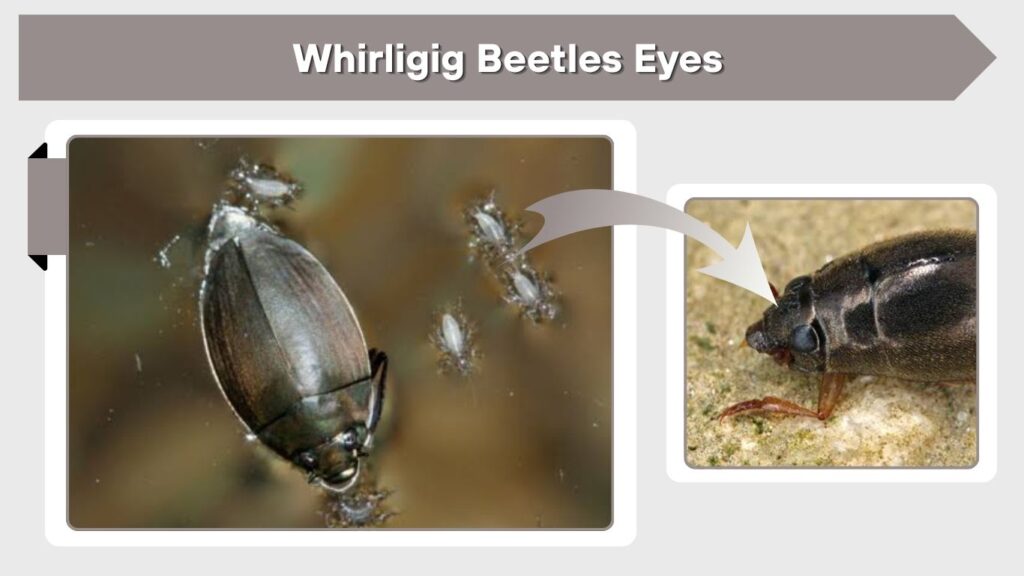
One of the most fascinating things about whirligig beetles is their eyes. They have divided eyes that allow them to see above and below the water at the same time.
How Their Split Eyes Work
Each eye is divided into two parts. The upper part looks above the water, while the lower part looks below the water. This gives the beetle a major advantage because it can watch for flying predators, floating food, underwater threats, and nearby movement all at once.
Why Their Eyes Are Useful
Their split eyes help them survive in a challenging habitat. Life on the water surface exposes them to danger from both air and water. Birds may attack from above, while fish may attack from below. Their eye structure helps them react quickly.
Do Whirligig Beetles Bite?
Whirligig beetles can bite, but bites are rare. They are not aggressive toward humans and usually try to escape when handled. If one is picked up or trapped against the skin, it may bite defensively.
Are Whirligig Beetle Bites Dangerous?
A whirligig beetle bite is not usually dangerous. It may cause a small pinch or brief discomfort, but serious reactions are uncommon. They are not known to spread disease to humans.
If bitten, washing the area with soap and water is usually enough. Avoid handling them directly if you are concerned about bites.
Are Whirligig Beetles Harmful?
Whirligig beetles are generally not harmful. In natural ponds and wetlands, they are beneficial insects. They help clean up dead insects, eat small prey, and serve as food for fish and other wildlife.
Are They Bad for Ponds?
Whirligig beetles are not bad for ponds. They do not usually harm fish, pond plants, or water features. Their presence often means there is a functioning food web with small insects and other organisms available.
Are They Harmful to Humans or Pets?
Whirligig beetles are not considered harmful to people or pets. They do not infest homes, damage wood, eat clothing, or attack animals. At most, they may be a nuisance if large numbers gather in decorative ponds or water features.
Can Whirligig Beetles Fly?
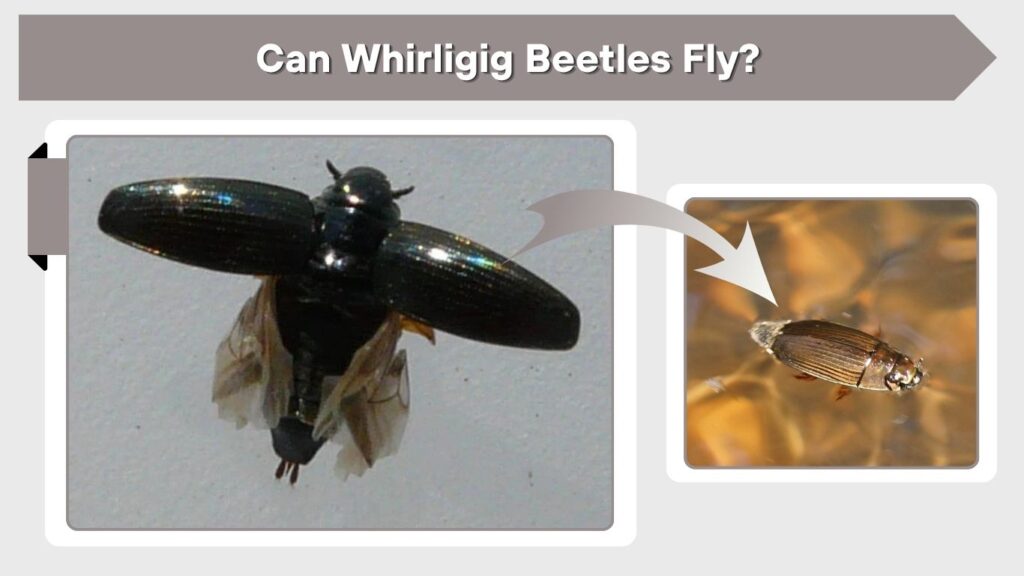
Many adult whirligig beetles can fly. Their hard wing covers protect a pair of flight wings underneath. Flying allows them to leave a pond or stream and search for another suitable habitat.
Why They Fly to New Water
Whirligig beetles may fly when:
- Their current pond dries up
- Food becomes scarce
- Water quality changes
- There is too much competition
- They need to find mates
- Seasonal conditions shift
This ability helps them survive in changing environments.
What Eats Whirligig Beetles?
Whirligig beetles are predators, but they are also prey. Many animals eat them, especially when they are young, injured, or separated from a group.
Common Predators
Animals that may eat whirligig beetles include:
- Fish
- Frogs
- Toads
- Birds
- Dragonfly nymphs
- Larger aquatic insects
- Spiders near the water
Adult whirligig beetles reduce their risk by moving quickly, grouping together, diving underwater, and using their split eyes to detect danger.
Do Fish Eat Whirligig Beetles?
Yes, some fish eat whirligig beetles. However, catching them can be difficult because adult beetles are fast and often move in groups. Fish may have better success eating larvae or beetles that are weak, injured, or underwater.
Whirligig Beetles Larvae
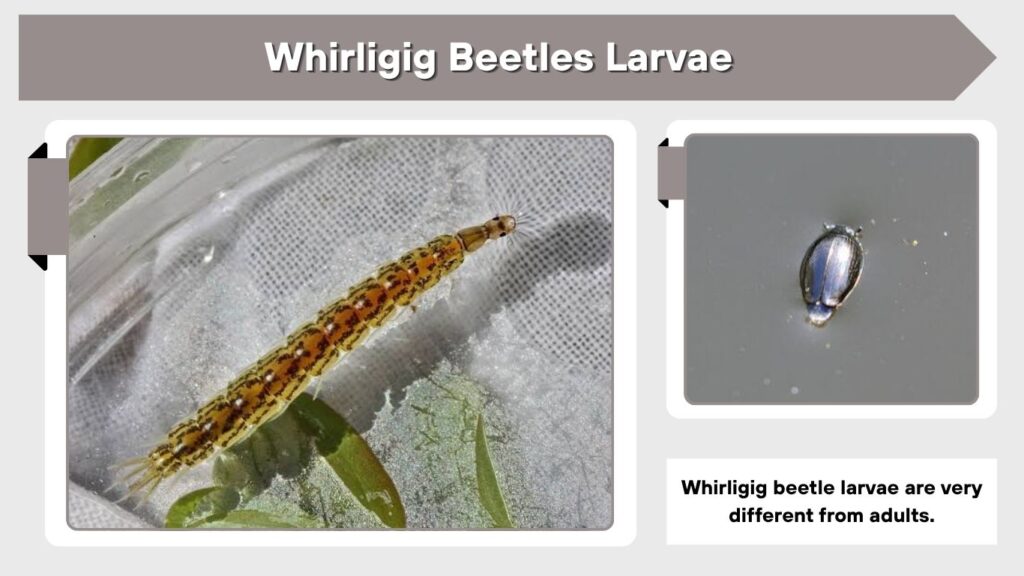
Whirligig beetle larvae are very different from adults. While adults are seen spinning on the surface, larvae live underwater. They have long, narrow bodies and are active hunters.
Where Larvae Live
Larvae are found below the surface in freshwater habitats. They may live among plants, debris, mud, or shallow underwater areas where small prey is available.
How Larvae Become Adults
Like other beetles, whirligig beetles go through complete metamorphosis. Their life cycle includes egg, larva, pupa, and adult. The larvae grow and molt before eventually pupating and becoming adult beetles.
Whirligig Beetles in the UK
Whirligig beetles are found in the UK, especially in ponds, lakes, canals, and slow-moving rivers. They are often seen in groups on calm water during warmer months.
Where to See Them in the UK
Good places to look include:
- Wildlife ponds
- Nature reserves
- Canal edges
- Slow rivers
- Marshy wetlands
- Garden ponds with clean water
They are easiest to spot on sunny days when adults gather and spin on the water surface.
How to Get Rid of Whirligig Beetles
In most cases, you do not need to get rid of whirligig beetles. They are beneficial and usually do not cause damage. If they are gathering in a decorative pond or pool and you want fewer of them, focus on making the water less attractive.
Ways to Reduce Whirligig Beetles
You can reduce their numbers by:
- Removing dead insects from the water
- Cleaning organic debris regularly
- Reducing outdoor lights that attract insects
- Maintaining water circulation
- Keeping pond edges tidy
- Using a pool skimmer for swimming pools
Avoid using insecticides in ponds, especially if fish, frogs, or other wildlife are present. Chemicals can harm the whole aquatic ecosystem.
Whirligig Beetles Poem: Why People Notice Them
“Whirligig beetles poem” is a common search because these insects often inspire nature writing. Their spinning movements, shiny bodies, and group behavior make them visually interesting. They are easy to describe in poems about ponds, childhood, summer, or freshwater wildlife.
A Short Whirligig Beetle Poem
Tiny beetles spin and glide,
Circling where the waters hide.
Eyes above and eyes below,
Watching ripples come and go.
Round and round in silver light,
Dancing dots in morning bright.
FAQs
What do whirligig beetles eat?
Whirligig beetles eat small insects, mosquito larvae, dead insects, and tiny organisms found on or near the water surface. Adults are both predators and scavengers, while larvae are mostly underwater predators that hunt small aquatic animals and insect larvae.
Do whirligig beetles bite?
Whirligig beetles can bite, but bites are rare and usually happen only if they are handled. They are not aggressive toward humans. A bite may feel like a small pinch, but it is not usually dangerous or medically serious.
Why do whirligig beetles spin?
Whirligig beetles spin to find food, avoid predators, and move safely in groups. Their quick circular motion makes them hard to catch. It also helps them detect ripples and disturbances caused by prey or danger on the water surface.
Can whirligig beetles fly?
Yes, many adult whirligig beetles can fly. They use flight to move between ponds, lakes, streams, and wetlands. Flying helps them escape poor conditions, find food, locate mates, or colonize new freshwater habitats.
Are whirligig beetles harmful?
Whirligig beetles are not usually harmful. They do not damage pond plants, harm people, or infest homes. In most freshwater habitats, they are beneficial because they eat small insects, clean up dead bugs, and provide food for fish and wildlife.