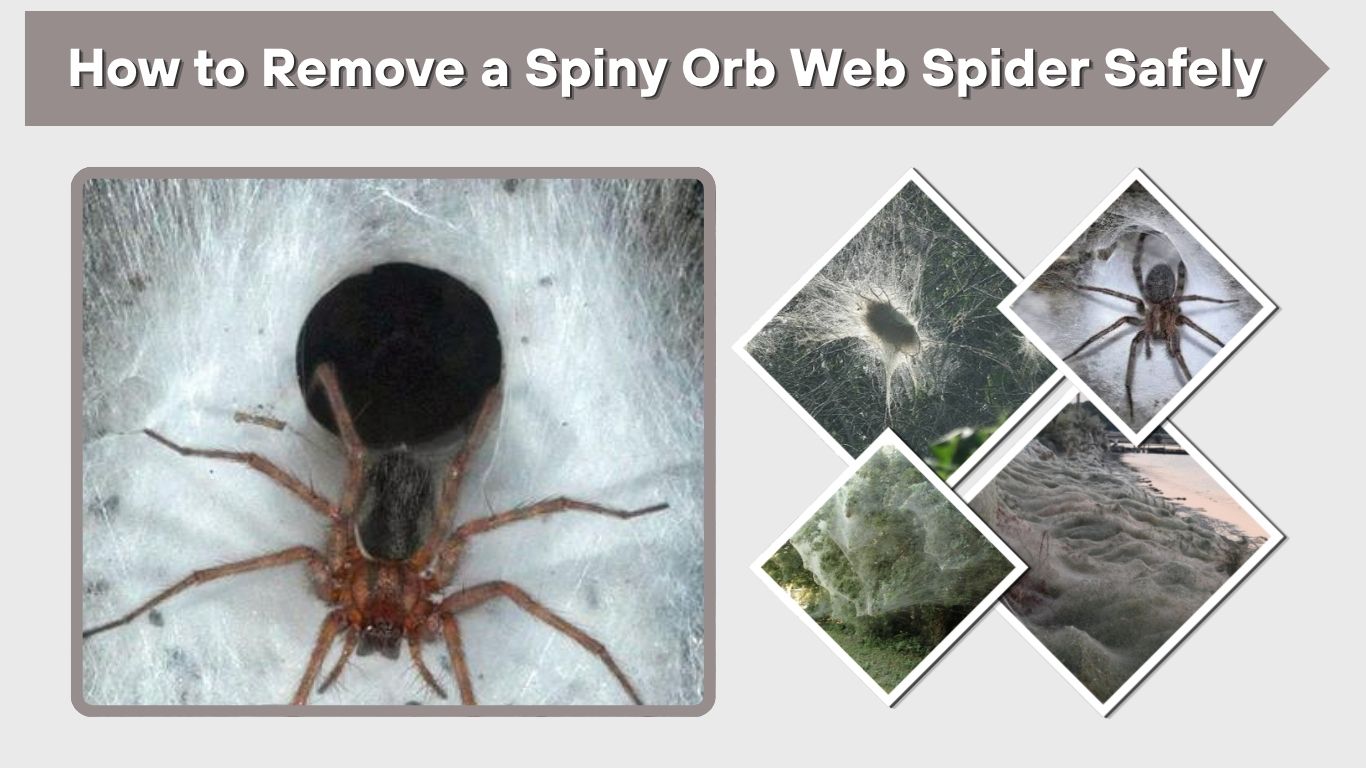
Seeing a giant spider in a web can feel like something from a horror movie, but many huge spider webs are real natural events. Some are made by thousands of spiders living close together. Others are caused by insects, not spiders at all. Giant webs have appeared in caves, trees, parks, lakesides, and even towns, creating viral photos that make people wonder what they are looking at.
What Does “Giant Spider in Web” Usually Mean?
The phrase “giant spider in web” can mean several different things. Some people are searching for a large spider sitting in a normal web. Others are asking about huge webs covering trees, cave walls, grass, or lakeside vegetation. Some searches are about Halloween decorations, movie scenes, or fictional giant spiders.
In real life, the web is usually more interesting than the spider itself. Most giant webs are not made by one enormous spider. Instead, they are often made by many small or medium-sized spiders taking advantage of perfect conditions, such as warm weather, high humidity, and a sudden boom in flying insects.
A huge web may also come from caterpillars, especially when the webbing is in tree branches. That is why identification matters before assuming the web belongs to spiders.
Are Giant Spider Webs Real?
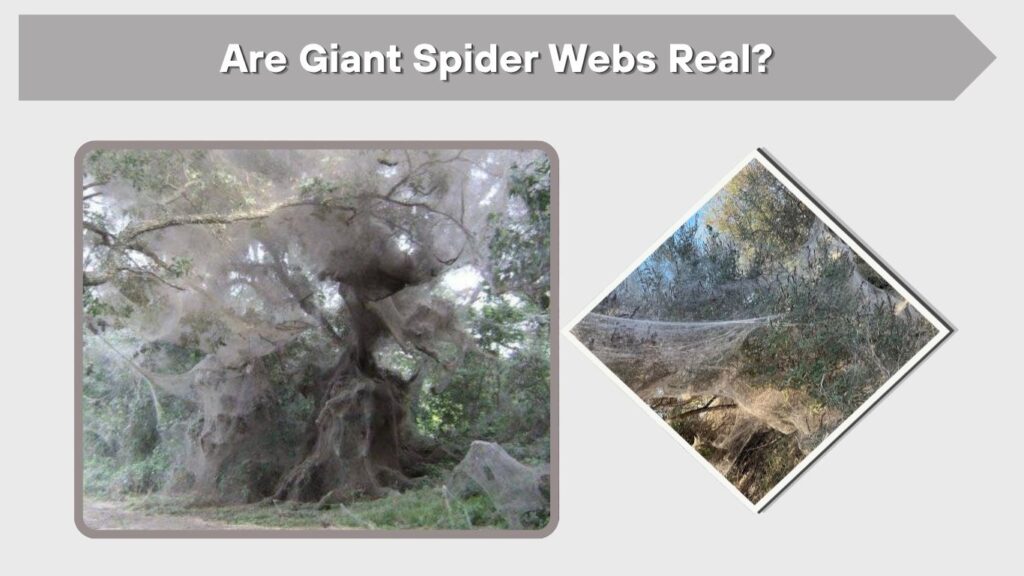
Yes, giant spider webs are real. However, they are usually not made by giant spiders. In most cases, giant webs form when large numbers of spiders build silk in the same area. This can happen when food is extremely abundant and the environment allows spiders to tolerate each other more than usual.
Some spiders are normally solitary. But under certain conditions, they may build close together. The result can look like one massive sheet of silk covering trees, shrubs, cave walls, fences, or trails.
Giant spider webs have been reported in several places, including Texas, Greece, and cave systems near the Greece-Albania border. These events often go viral because the webs look unnatural, but they are usually temporary and tied to local environmental conditions.
Giant Spider Web Found in Cave
One of the most fascinating recent examples is the giant spider web found in Sulfur Cave near the Greece-Albania border. This cave web was reported as one of the largest known spider webs, covering more than 1,000 square feet and containing over 100,000 spiders from two different species.
The cave is unusual because it is dark, sulfur-rich, and full of tiny insects that provide food for spiders. Instead of one monster spider, the giant web is a colony made of many interconnected webs. Scientists reported that two spider species were living together in the same massive structure, which is rare because many spiders are territorial or cannibalistic.
This explains the keyword “scientists discovered two spider species cohabiting in a giant web.” The discovery attracted attention because it showed an unusual case of spider cohabitation in an extreme cave ecosystem.
Giant Spider Web in Texas
The giant spider web in Texas is another famous real example. In 2007, Lake Tawakoni State Park in East Texas became known for a huge communal spider web that covered trees and vegetation along a trail. Reports described the web as stretching across a large area of oak-elm woodland.
At first, some people thought it looked like a scene from science fiction. The web was not made by one giant spider. It was created by many spiders, including long-jawed orb weavers and other species that built in the same area.
Why did it happen? Experts connected the event to abundant insects and favorable weather. When food is plentiful, many spiders may gather in one place. Their individual webs can overlap until the whole area looks like one giant web.
Giant Spider Web in Greece
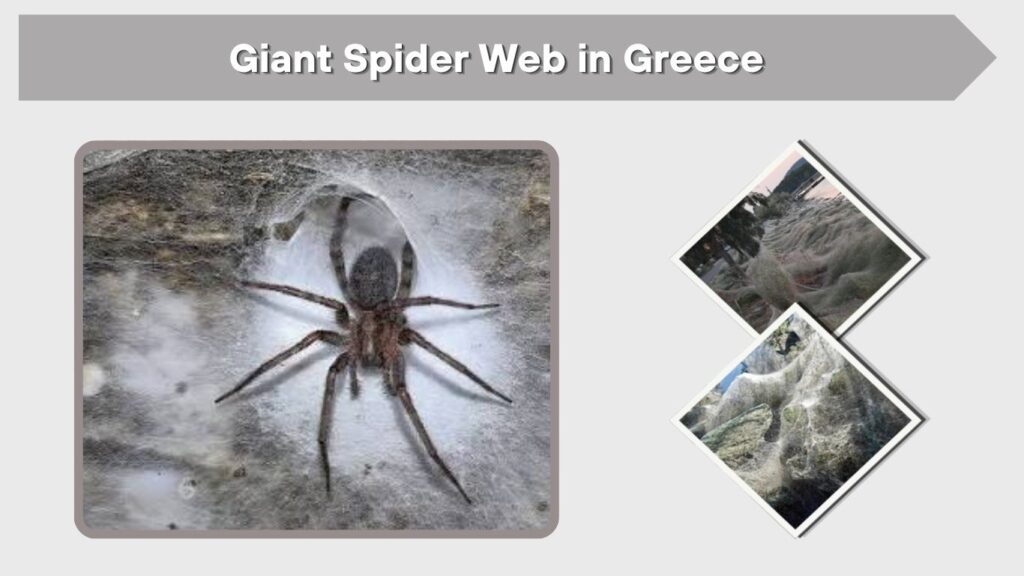
The giant spider web in Greece became famous in 2018 when webbing covered a long stretch of vegetation near the lagoon town of Aitoliko. Photos and videos showed trees, shrubs, and shoreline plants wrapped in thick, ghostly silk.
This event was linked to large numbers of Tetragnatha spiders, also called stretch spiders. Warm weather, humidity, and an abundance of gnats or mosquitoes helped create ideal conditions. The spiders built webs over vegetation while feeding and reproducing.
Although the scene looked alarming, it was not a sign of danger to people. It was a temporary natural event. Once the insect boom ended and conditions changed, the webbing declined.
Giant Spider Webs in Trees
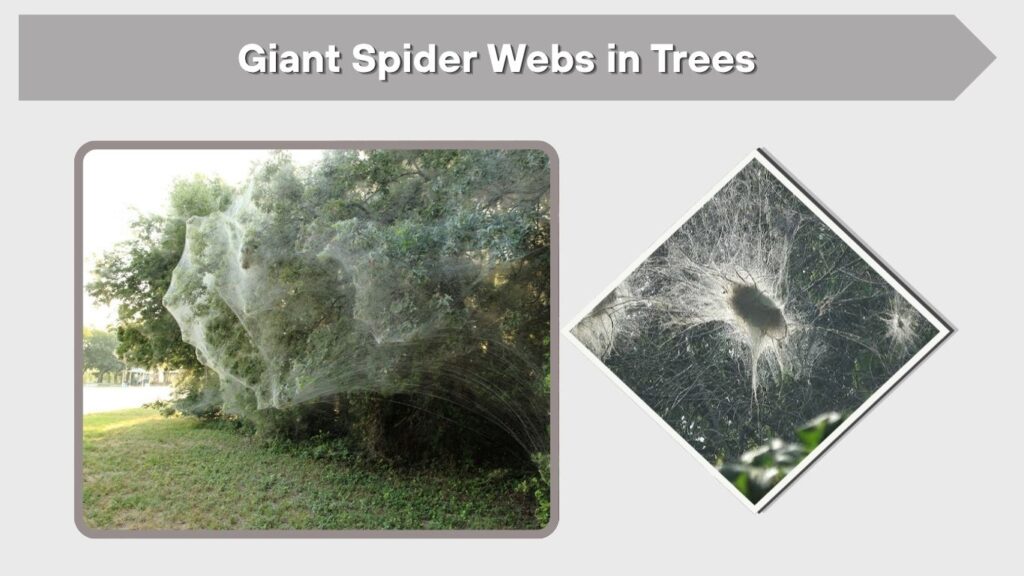
Searches like “giant spider web in tree,” “giant spider webs in trees,” and “what are the giant spider web looking things in trees” often have a different answer. In many yards, the webbing in trees is not made by spiders at all.
Large web nests in tree branches are often caused by fall webworms. These are caterpillars that spin silk around leaves and branches while feeding. Their webs can look like spider webs, especially from a distance, but the insects inside are caterpillars.
Spider Webs vs Fall Webworm Webs
| Feature | Spider Web | Fall Webworm Web |
| Maker | Spiders | Caterpillars |
| Location | Between branches, shrubs, grass, walls, or structures | Around tree branch tips and leaves |
| Purpose | Catch prey or create shelter | Protect feeding caterpillars |
| Appearance | Sheet, funnel, orb, or messy silk | Bag-like web around leaves |
| Common season | Varies by spider and region | Often late summer to fall |
| Harm to trees | Usually harmless | Usually cosmetic, but can defoliate small branches |
If the “giant spider web” is wrapped around leaves at the end of branches, fall webworms are a strong possibility. If the web stretches between plants, covers shrubs, or contains many visible spiders, it may be a real spider web event.
Giant Spider Webs in Australia
Australia is famous for dramatic spider events, especially after floods. In some areas, spiders climb to higher ground and release silk, creating large sheets of webbing across grass, shrubs, fences, and fields. This behavior can be linked to dispersal or escape from flooding.
People may call these scenes “giant spider webs,” but they are usually formed by many spiders producing silk at once. The webbing can look like snow or a white blanket over the landscape. While dramatic, these events are usually temporary.
Australia also has spiders that are medically significant, so people should avoid handling unknown spiders. However, a large sheet of webbing does not automatically mean there is one giant dangerous spider nearby.
Giant Spider Webs in Georgia, Oregon, Missouri, and Other States
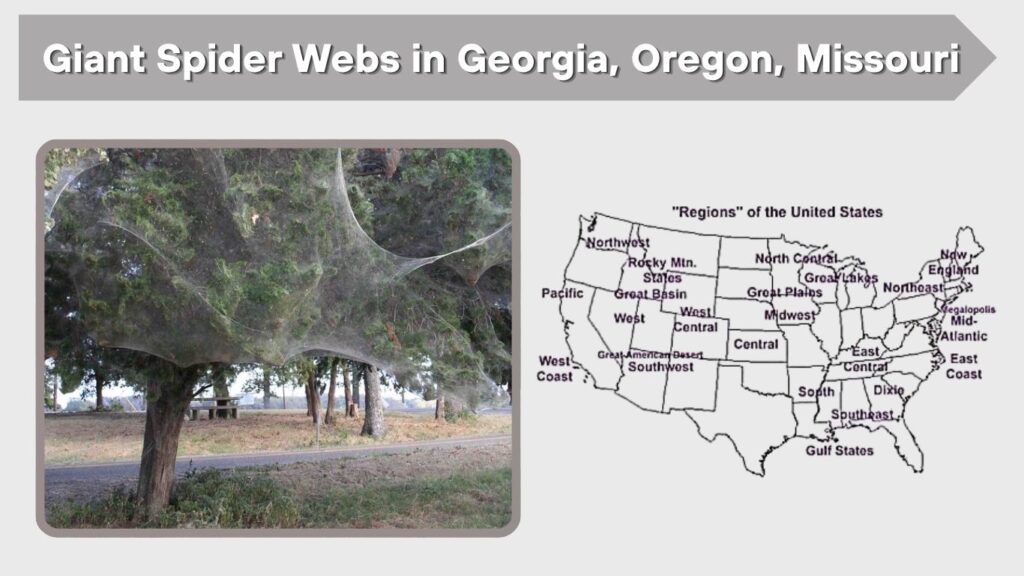
Many state-based searches come from people seeing unusual webbing outdoors. These include “giant spider webs in trees Georgia,” “giant spider webs in Oregon,” “giant spider web in Missouri,” and similar searches.
The explanation depends on the setting:
- Webbing in tree branches may be fall webworms.
- Webbing across grass may be spider silk after damp weather.
- Webbing near water may come from large numbers of spiders feeding on insects.
- Webbing in shrubs may be communal or overlapping spider webs.
- Webbing on Halloween displays may simply be decoration.
Local weather, insect populations, and season all matter. Late summer and fall often bring more visible webbing because spiders are larger, insects are abundant, and caterpillar web nests become noticeable.
Can a Human Get Stuck in a Giant Spider Web?
A person can walk into a large spider web, but real spider silk will not trap a human the way movies show. Even strong spider silk is produced in thin strands. A human can easily break through most natural webs.
The idea of a human stuck in a giant spider web is mostly fiction, fantasy, or horror imagery. Real giant webs may be sticky, annoying, and hard to brush off, but they are not built to capture people. They are designed for insects and small prey.
That said, people should avoid disturbing large wild webs. They may contain many spiders, egg sacs, insects, or irritating debris. In parks and natural areas, webs are part of the ecosystem and should be left alone when possible.
Giant Hornet or Asian Giant Hornet in a Spider Web
Searches like “giant hornet in spider web” or “Asian giant hornet in spider web” usually come from viral videos or curiosity about predator-prey battles. Some spiders can catch wasps, hornets, or large insects if the insect becomes tangled and the spider can safely subdue it.
However, not every spider can handle a hornet. Large stinging insects are dangerous prey. Some escape, damage the web, or injure the spider. Orb-weaving spiders and other web builders sometimes capture surprisingly large insects, but the outcome depends on the spider species, web strength, and insect size.
Why Do Giant Spider Webs Form?
Giant spider webs usually form when several conditions happen together.
Common causes include:
- Large numbers of flying insects
- Warm temperatures
- High humidity
- Moist areas near lakes, rivers, or wetlands
- Flooding that pushes spiders into the same area
- Dense vegetation that supports many web anchor points
- Reduced competition or abundant food
- Seasonal spider reproduction
In caves, the cause can be even more unusual. A cave ecosystem may support dense populations of midges or other insects, giving spiders enough food to live in large numbers.
Are Giant Spider Webs Dangerous?
Most giant spider webs are not dangerous to people. They may look frightening, but the spiders involved are usually focused on insects, not humans. The biggest issues are surprise, discomfort, and the possibility of bites if someone handles spiders directly.
Avoid touching unknown spiders or putting your hands into thick webbing. If a web is in a public trail or doorway, use a stick, broom, or safe tool to move it aside rather than using bare hands.
Seek medical advice if a spider bite causes severe pain, spreading redness, muscle cramps, trouble breathing, dizziness, fever, or signs of infection.
What Should You Do If You Find a Giant Web?
If you find a giant web outdoors, first identify where it is and what it contains. A web in a tree branch may be caterpillars. A web across grass or shrubs may be spiders. A web around a porch light may be there because insects gather at night.
Practical steps include:
- Do not panic.
- Avoid touching the web with bare hands.
- Look for spiders, caterpillars, or egg sacs.
- Take clear photos for identification.
- Leave harmless outdoor webs alone when possible.
- Remove webs from doorways or walkways with a broom.
- Contact a local extension office if tree damage is a concern.
- Call pest control only if webbing is extensive around living spaces.
Most outdoor webs are temporary and will disappear as weather and insect activity change.
Giant Spider Web Decor vs Real Webs
Some keywords in this topic relate to Halloween decorations, such as “giant glow in the dark spider web” or “way to celebrate Halloween giant spider in web decor.” These searches have a different intent from natural web events.
Artificial giant webs are designed to look dramatic and may include plastic spiders, glow-in-the-dark fibers, or large outdoor displays. Real giant webs are usually irregular, layered, and connected to vegetation or structures in ways that match natural spider behavior.
If writing for SEO, it is helpful to separate real giant spider web facts from decoration ideas. Readers looking for natural explanations may not want shopping content, while Halloween readers may want product ideas and display tips.
Giant Spider in Web in Movies and Fiction
Some searches mention “giant spider in Lord of the Rings web” or movies with people caught in spider webs. These belong to pop culture, not real spider biology. Giant fictional spiders are common in fantasy and horror because webs symbolize traps, hidden danger, and fear of the unknown.
Real spiders do not grow large enough to trap people in webs. Even the biggest spiders rely on venom, speed, burrows, or ambush tactics rather than human-sized capture webs. Movie scenes are exaggerated for drama.
FAQs
What are the giant spider webs in trees?
Many giant web-looking nests in trees are made by fall webworm caterpillars, not spiders. These webs usually surround leaves and branch tips. Real spider webs are more likely to stretch between branches, shrubs, or structures rather than enclosing clusters of leaves.
Was a giant spider web really found in a cave?
Yes. A huge spider web was reported in Sulfur Cave near the Greece-Albania border. It contained over 100,000 spiders from two species living in a massive interconnected web system. It was not made by one giant spider.
Are giant spider webs dangerous?
Most giant spider webs are not dangerous to humans. They are usually made to catch insects, not people. Avoid touching unknown spiders or thick webbing with bare hands, especially if you cannot identify what is inside the web.
Why do giant spider webs appear after rain or floods?
After heavy rain or floods, spiders may move to higher ground and produce silk as they disperse or shelter. When many spiders do this in the same area, the webbing can look like a giant white blanket across grass, shrubs, or fences.
Is a giant spider in a web real or fake?
A large spider in a web can be real, but human-sized web-trapping spiders are fiction. Most viral “giant spider web” events are real webs made by many spiders or caterpillars, while Halloween displays and movie scenes are artificial or exaggerated.