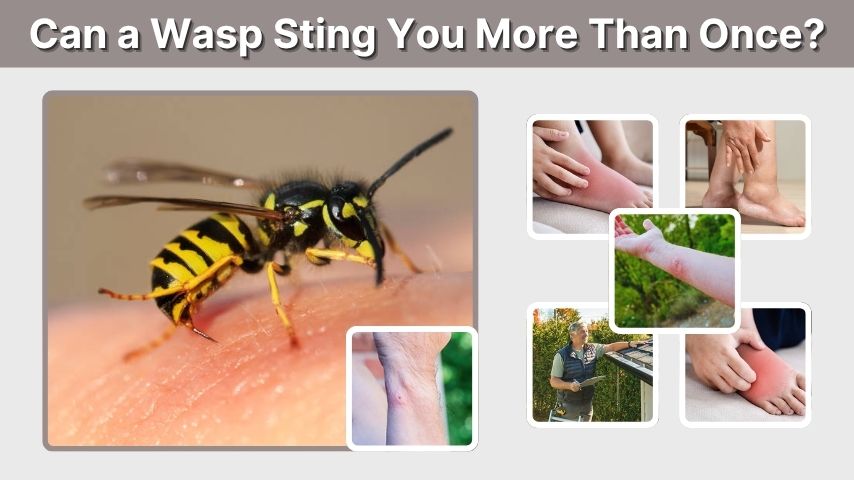
Many people wonder whether wasps can sting more than once, especially after experiencing repeated attacks near a nest. Unlike bees, most wasps can sting multiple times without dying because their stingers are smooth and do not get stuck in the skin. This ability makes wasps more aggressive and dangerous when defending their colonies. Different species such as paper wasps, hornets, red wasps, and ground wasps all share this repeated stinging ability. Understanding how wasp stings work can help people stay safe and respond properly during encounters outdoors.
Can Wasps Sting More Than Once?
Most wasps can sting repeatedly without losing their stinger. Their smooth stingers allow them to inject venom multiple times while attacking predators or defending their nests. This is one of the biggest differences between wasps and honey bees. Wasps become especially aggressive when they feel threatened, and some species may sting several times in rapid succession during a defensive attack.
Why Wasps Can Sting Multiple Times
Wasps have smooth stingers that slide in and out of the skin easily. Unlike bees, their stingers do not detach after stinging.
- Smooth stinger structure
- Stinger stays attached to body
- Venom can be injected repeatedly
- Allows multiple attacks
- Helps defend colonies
How Many Times Can a Wasp Sting?
A single wasp can sting multiple times during one attack if it continues feeling threatened. There is no exact limit because the stinger remains functional after each sting.
Some wasps may sting several times in just a few seconds. Social species such as yellowjackets and hornets often become more aggressive near their nests and may continue attacking until the threat leaves the area.
Why Bees Usually Sting Only Once
Honey bees usually sting only once because their stingers contain backward-facing barbs that become stuck in human skin. When the bee pulls away, the stinger tears from its body, causing the bee to die shortly afterward.
Wasps do not have strongly barbed stingers like honey bees. This anatomical difference is the main reason wasps survive after stinging and remain capable of repeated attacks.
Why Can Wasps Sting More Than Once?
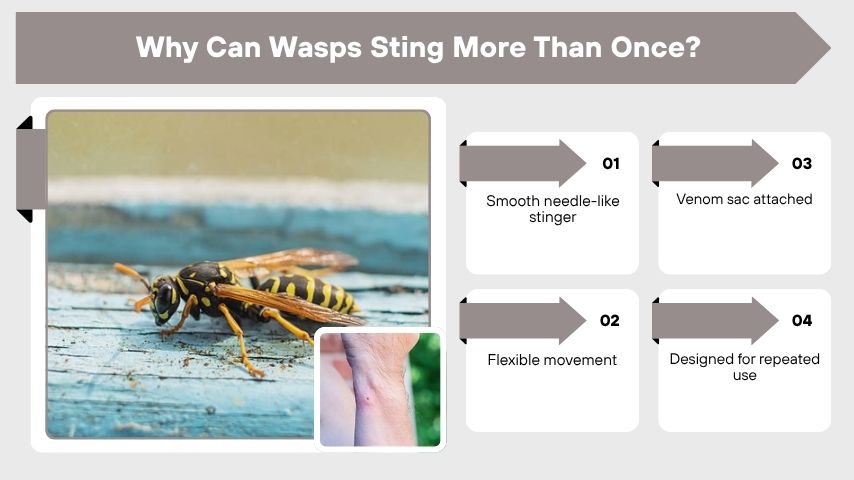
The ability to sting multiple times gives wasps a strong defensive advantage in nature. Their stingers are specially adapted for repeated venom delivery and nest protection. Since many wasps live in colonies, aggressive defense helps protect queens, larvae, and food supplies from predators. Repeated stinging also increases the chances of driving threats away before damage occurs to the colony.
Wasp Stinger Anatomy
The structure of a wasp stinger allows repeated use without major injury to the insect itself.
- Smooth needle-like stinger
- Flexible movement
- Venom sac attached
- Designed for repeated use
- No permanent skin attachment
Defensive Survival Advantage
Repeated stinging helps wasps defend themselves and their nests more effectively against animals and predators.
- Protect colony members
- Defend larvae and queen
- Drive away predators
- Increase survival chances
- Warn nearby wasps of danger
Venom Delivery Process
When a wasp stings, venom enters the skin through the stinger and causes pain, swelling, and irritation. The venom contains chemicals that help defend the wasp and discourage predators from attacking again.
Some species release alarm pheromones during stinging, which can attract other wasps nearby. This is why disturbing a nest sometimes results in multiple wasps attacking at the same time.
Can Different Types of Wasps Sting More Than Once?
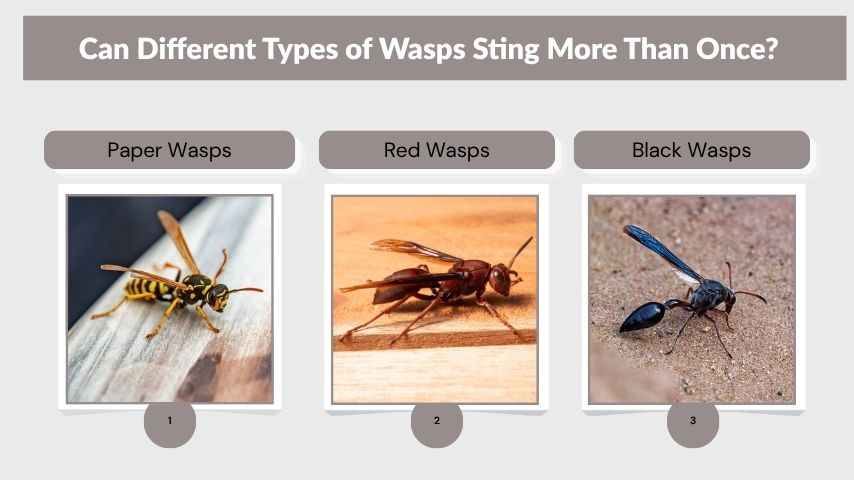
Nearly all common wasp species can sting multiple times, although aggression levels vary depending on species and situation. Social wasps that defend nests are usually more aggressive than solitary species. Paper wasps, hornets, red wasps, and ground wasps all possess smooth stingers that allow repeated stinging when threatened or disturbed.
Can Paper Wasps Sting More Than Once?
Paper wasps can sting multiple times because their stingers do not become lodged in the skin. They usually sting only when protecting their nests or defending themselves.
- Repeated stinging possible
- Protective around nests
- Painful venom
- Less aggressive away from colony
- Common around homes and gardens
Can Red Wasps Sting More Than Once?
Red wasps are capable of repeated stings and are known for being highly defensive near their nests. Their stings are often considered more painful than those of smaller wasp species.
Red wasps may chase intruders over short distances if they feel their colony is threatened. Disturbing a nest accidentally can result in multiple rapid stings from several wasps at once.
Can Black Wasps Sting More Than Once?
Many black wasp species can sting repeatedly, although some solitary species are less aggressive than social wasps. Their stinging behavior depends largely on species type and environmental conditions.
Some black wasps focus more on hunting insects than defending colonies. However, if handled or trapped, they can still sting multiple times using the same smooth stinger.
Can Hornets and Ground Wasps Sting Multiple Times?
Hornets and ground-nesting wasps are among the most defensive stinging insects people encounter outdoors. Like other wasps, they possess smooth stingers that allow repeated attacks without losing the stinger. These species often become aggressive when nests are disturbed accidentally. Because many live in large colonies, multiple insects may sting at the same time, increasing the danger and pain of the attack.
Can Hornets Sting More Than Once?
Hornets can sting repeatedly and are known for aggressive nest defense behavior. Their venom is stronger than that of many smaller wasps, making their stings especially painful.
- Multiple stings possible
- Aggressive near nests
- Strong venom
- May attack in groups
- Can chase perceived threats
Can Ground Wasps Sting More Than Once?
Ground wasps can also sting repeatedly when their underground nests are disturbed. Many people accidentally step near hidden nests and trigger defensive attacks.
- Underground colony nests
- Fast swarm response
- Repeated stinging behavior
- Common in lawns and gardens
- Highly defensive during nesting season
Which Wasp Species Sting the Most?
Some wasp species are more aggressive and more likely to sting repeatedly than others.
- Yellowjackets
- Hornets
- Paper wasps
- Ground wasps
- Red wasps
- European wasps
Can Wasps Sting You More Than Once at a Time?
Wasps can sting repeatedly during a single attack, especially if they feel threatened or if their nest is disturbed. Some species release alarm pheromones after stinging, which alert nearby colony members to attack as well. This defensive behavior can lead to multiple stings from one wasp or several stings from an entire group in only a few seconds.
Why Wasps Attack Repeatedly
Wasps use repeated stinging as a defense strategy to protect themselves and their colonies from danger.
- Alarm pheromone release
- Threat detection
- Colony protection
- Aggressive nest defense
- Predator deterrence
How Multiple Wasps Sting Together
Social wasps communicate quickly when danger appears near the nest. Once alarm chemicals spread through the colony, nearby workers may join the attack immediately.
This swarm behavior makes nest disturbances especially dangerous because victims can receive many stings at once. Ground nests and hidden nests are particularly risky since people may accidentally trigger large defensive responses.
How Dangerous Multiple Stings Can Be
Multiple wasp stings can become dangerous because larger amounts of venom enter the body at the same time. Even people without allergies may experience severe reactions after numerous stings.
Symptoms can include intense swelling, dizziness, nausea, breathing difficulty, and severe pain. Children, older adults, and allergic individuals face greater risks from multiple stings and may require emergency medical treatment.
Wasp Sting vs Bee Sting
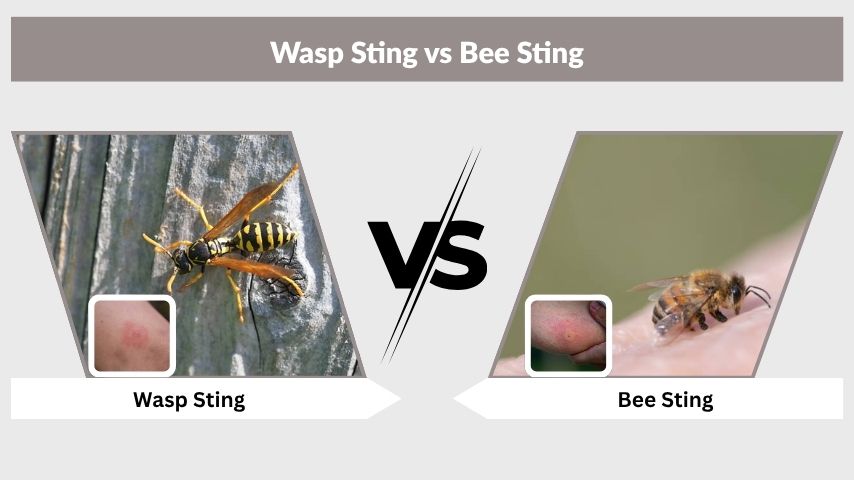
People often confuse wasp stings and bee stings because both cause pain and swelling. However, important differences exist between these insects and their stinging behavior. Wasps can sting repeatedly without dying, while honey bees usually sting only once because their barbed stingers become trapped in the skin after attacking.
Key Differences Table
| Feature | Wasp | Bee |
| Can Sting Multiple Times | Yes | Usually No |
| Stinger Type | Smooth | Barbed |
| Dies After Stinging | No | Usually Yes |
| Aggression Level | Higher | Lower |
| Nest Defense | Often aggressive | Usually defensive only |
Pain Level Comparison
Wasp stings are often described as sharper and more intense than bee stings. Some species, such as hornets and red wasps, produce particularly painful venom reactions.
Bee stings may remain painful longer because the stinger stays lodged in the skin and continues releasing venom after the bee leaves. Immediate stinger removal helps reduce venom exposure from bee stings.
Which Is More Dangerous?
Both bee and wasp stings can become dangerous for people with allergies. However, wasps may pose greater risks because they can sting multiple times and attack in groups.
Multiple wasp stings increase venom exposure and raise the chances of severe reactions. Bee stings are usually isolated unless someone disturbs an entire hive.
What Happens After a Wasp Sting?
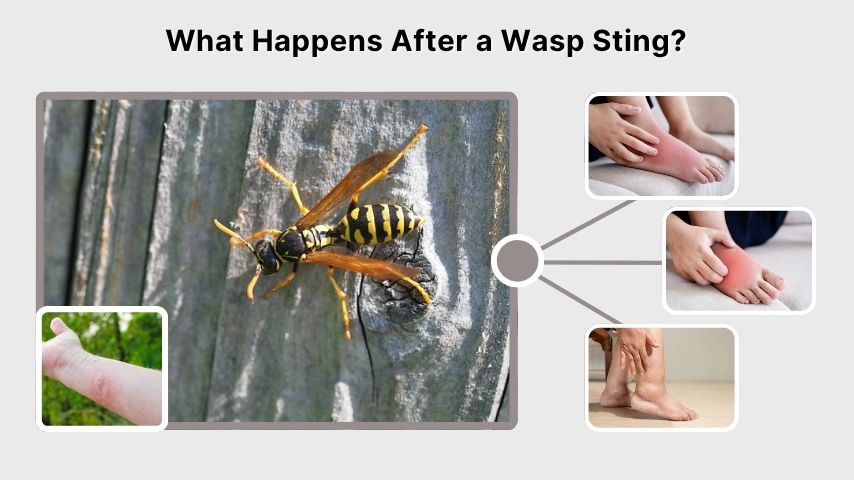
Most wasp stings cause immediate pain followed by redness and swelling around the sting site. Symptoms vary depending on the species, number of stings, and individual sensitivity to venom. Mild reactions are common and usually improve within a few hours or days. However, allergic individuals may experience severe symptoms that require urgent medical attention, especially after multiple stings or swarm attacks.
Normal Sting Symptoms
Most people experience temporary local reactions after being stung by a wasp.
- Sharp burning pain
- Redness
- Swelling
- Itching
- Warm skin around sting
- Mild tenderness
Severe Allergic Reactions
Some individuals are allergic to wasp venom and may develop dangerous reactions shortly after being stung.
- Difficulty breathing
- Severe swelling
- Dizziness
- Rapid heartbeat
- Vomiting
- Anaphylaxis
How Long Wasp Sting Pain Lasts
Pain from a wasp sting usually starts immediately and may remain intense for several minutes before gradually improving. Mild swelling and redness can continue for one or more days depending on the reaction.
Multiple stings or sensitive skin may increase recovery time. Cold compresses and antihistamines often help reduce discomfort and swelling during healing.
What Should You Do After a Wasp Sting?
Quick first aid can help reduce pain, swelling, and the chances of complications after a wasp sting. Most mild reactions improve with basic home treatment and careful monitoring. Since wasps can sting repeatedly, moving away from the area quickly is important to avoid additional attacks from nearby insects or colony members responding to alarm pheromones.
Immediate First Aid Steps
Taking simple first-aid actions immediately after a sting can reduce discomfort and irritation.
- Move away from the area
- Wash sting site with soap and water
- Apply ice or cold compress
- Stay calm
- Avoid scratching the skin
Reduce Pain and Swelling
Several simple treatments may help relieve pain and swelling caused by wasp venom.
- Antihistamine medication
- Hydrocortisone cream
- Cold packs
- Over-the-counter pain relievers
- Elevating swollen areas
When to Seek Medical Help
Medical attention may be necessary if severe symptoms develop after a wasp sting or multiple stings occur.
Breathing problems, chest tightness, severe swelling, dizziness, or signs of an allergic reaction should never be ignored. Multiple stings from hornets or aggressive wasp species may also require emergency evaluation, especially in children or older adults.
How to Avoid Getting Stung by Wasps
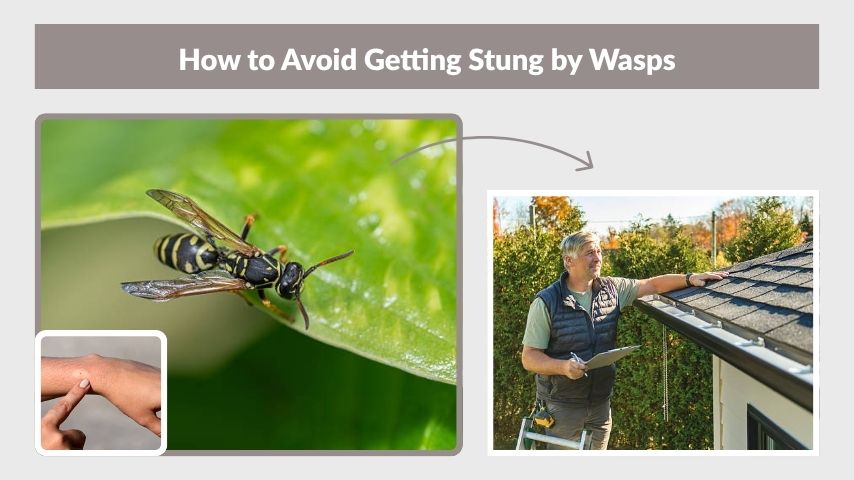
Preventing wasp stings mainly involves avoiding nests and reducing behaviors that attract aggressive insects. Wasps become most defensive during warm months when colonies are large and active. Understanding where wasps build nests and how they react to threats can help people stay safer during outdoor activities near gardens, trees, roofs, and ground nesting areas.
Avoid Disturbing Nests
Most wasp stings happen when people accidentally disturb active nests.
- Stay away from visible nests
- Watch for underground nests
- Avoid hitting nests accidentally
- Be careful when gardening
- Inspect outdoor areas regularly
Reduce Wasp Attraction
Certain smells and food sources attract wasps, especially during late summer and fall.
- Keep trash sealed
- Cover food and drinks outdoors
- Avoid strong perfumes
- Clean sugary spills quickly
- Keep outdoor eating areas clean
Safe Removal Methods
Large nests or aggressive wasp colonies should usually be handled by professionals rather than removed without experience.
Professional pest control services have protective equipment and safer removal methods. Attempting to destroy nests alone may trigger swarm attacks and increase the risk of multiple painful stings.
Interesting Facts About Wasp Stings
Wasps are highly adaptable insects with impressive defensive behaviors and complex colony systems. Their ability to sting repeatedly makes them different from many bees and contributes to their reputation as aggressive insects. Despite their painful stings, wasps also play important ecological roles by controlling pest insects and helping maintain balance in natural ecosystems.
Unique Wasp Sting Facts
Wasps possess several fascinating defensive abilities that help protect their colonies.
- Can sting repeatedly
- Release alarm chemicals
- Some species attack in swarms
- Venom deters predators
- Smooth stingers prevent detachment
Why Wasps Are Important
Although feared because of their stings, wasps provide several environmental benefits.
- Pollinate some plants
- Control pest insects
- Help garden ecosystems
- Reduce caterpillar populations
- Support natural balance
Lifespan and Colony Behavior
Wasp colonies operate with organized social roles that change throughout the year.
- Queens survive winter
- Workers defend the nest
- Colonies grow during warm seasons
- Most workers die in fall
FAQs
Can wasps sting more than once?
Yes, most wasps can sting multiple times because their stingers are smooth and do not become stuck in the skin. This allows them to inject venom repeatedly while defending themselves or their nests.
Why can wasps sting multiple times?
Wasps have smooth stingers that remain attached after stinging. Unlike honey bees, they do not lose their stinger or die after attacking, which allows repeated venom delivery during defensive situations.
Can paper wasps sting more than once?
Yes, paper wasps can sting repeatedly if they feel threatened. They are especially defensive around their nests and may attack multiple times when disturbed.
Are multiple wasp stings dangerous?
Multiple wasp stings can be dangerous because larger amounts of venom enter the body. Severe swelling, allergic reactions, dizziness, or breathing problems may require immediate medical attention.
Do wasps die after stinging?
No, most wasps survive after stinging because their stingers do not become lodged in the skin. This allows them to continue stinging repeatedly if necessary.