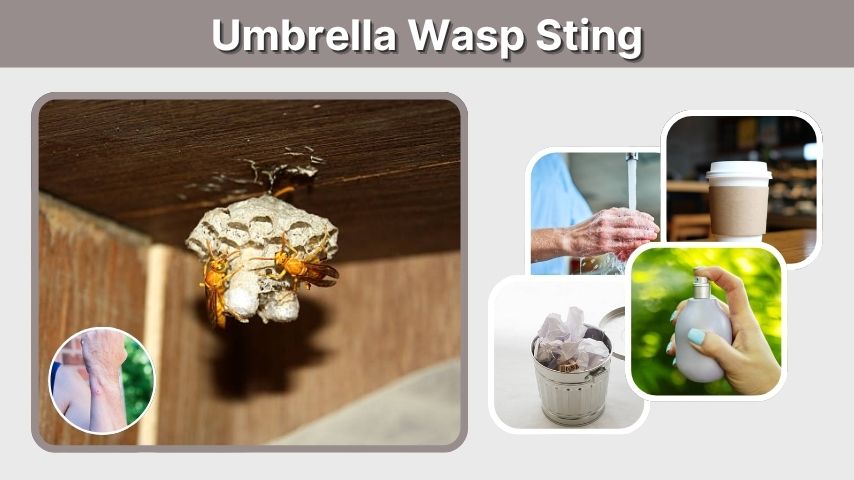
Umbrella wasps are common paper wasps known for their hanging umbrella-shaped nests and painful defensive stings. Although they are usually calm when left alone, they can sting repeatedly if they feel threatened or if their nest is disturbed. Many people search for information about umbrella wasp stings because the sudden burning pain and swelling can be alarming. Understanding what an umbrella wasp sting feels like, what symptoms to expect, and how to treat the sting properly can help reduce fear and prevent more serious complications after contact.
What Is an Umbrella Wasp?
Umbrella wasps are slender paper wasps that build small hanging nests under roofs, tree branches, and outdoor structures. Their name comes from the shape of their nests, which resemble upside-down umbrellas. These wasps play an important ecological role by controlling pest insects and helping maintain natural balance in gardens and outdoor environments.
Umbrella Wasp Identification
Umbrella wasps have several physical features that make them easy to recognize compared to bees or hornets.
- Thin narrow body
- Long dangling legs
- Brown or reddish coloration
- Narrow waist
- Transparent wings
- Fast flying movement
Why They Are Called Umbrella Wasps
The term “umbrella wasp” comes from the shape of their open paper nests. Unlike enclosed hornet nests, umbrella wasp nests remain exposed and hang downward from branches or buildings.
These nests are made from chewed wood fibers mixed with saliva, creating a paper-like material. The open comb structure allows worker wasps to move freely around developing larvae and eggs.
Where Umbrella Wasps Live
Umbrella wasps commonly build nests in sheltered outdoor areas where they remain protected from rain and predators.
- Roof edges
- Tree branches
- Garden sheds
- Outdoor furniture
- Porch ceilings
- Fence corners
Do Umbrella Wasps Sting?
Umbrella wasps can sting humans when they feel threatened or when someone disturbs their nest accidentally. Unlike bees, they can sting multiple times because their smooth stingers do not become trapped in the skin. Most umbrella wasps avoid humans when away from their nests, but colony defense behavior can become aggressive during nesting season or if the nest is approached too closely.
Why Umbrella Wasps Sting
Umbrella wasps mainly sting to defend themselves and protect their colony from danger.
- Nest protection
- Defensive instincts
- Feeling threatened
- Protecting larvae and queen
- Warning predators away
Can Umbrella Wasps Sting More Than Once?
Umbrella wasps can sting repeatedly because their stingers remain attached after attacking. This allows them to inject venom multiple times during defensive encounters.
- Smooth stinger structure
- Repeated venom delivery
- No stinger loss
- Multiple attacks possible
- Similar to other paper wasps
Are Umbrella Wasps Aggressive?
Umbrella wasps are usually not aggressive unless their nest is disturbed. They often ignore humans when foraging for food away from the colony.
However, sudden movements, loud vibrations, or accidental nest contact may trigger defensive behavior. Several worker wasps may attack together if alarm chemicals spread through the colony after the first sting.
What Does an Umbrella Wasp Sting Feel Like?
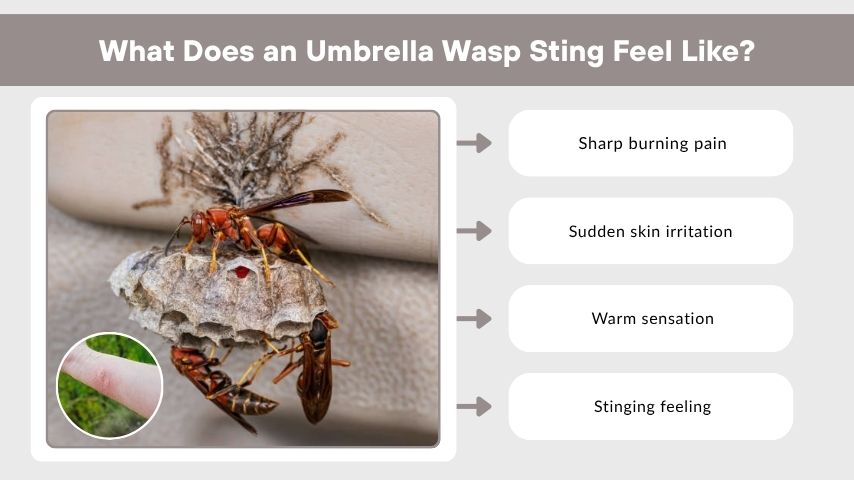
An umbrella wasp sting usually causes immediate sharp pain followed by burning, redness, and swelling around the affected area. The pain can feel stronger than a mosquito bite but is often similar to a typical paper wasp sting. Most reactions remain localized and improve within a short period, although sensitive individuals may experience more severe discomfort or swelling.
Immediate Sting Sensations
Most people notice sudden pain immediately after being stung by an umbrella wasp.
- Sharp burning pain
- Sudden skin irritation
- Warm sensation
- Stinging feeling
- Local tenderness
- Mild throbbing
Pain Level Compared to Other Insects
Umbrella wasp stings are usually more painful than ant bites or mosquito bites but less intense than some hornet stings.
| Insect Sting | Pain Level | Common Reaction |
| Umbrella Wasp | Moderate | Burning and swelling |
| Bee | Moderate | Sharp pain and swelling |
| Hornet | High | Strong pain and larger swelling |
| Mosquito | Mild | Itching and redness |
How Long Sting Pain Lasts
The strongest pain usually occurs during the first few minutes after the sting. Mild swelling and irritation may continue for several hours or days depending on individual sensitivity and the number of stings received.
Cold compresses and antihistamines often help reduce discomfort during recovery. Most mild reactions improve naturally without requiring medical treatment.
Umbrella Wasp Sting Symptoms
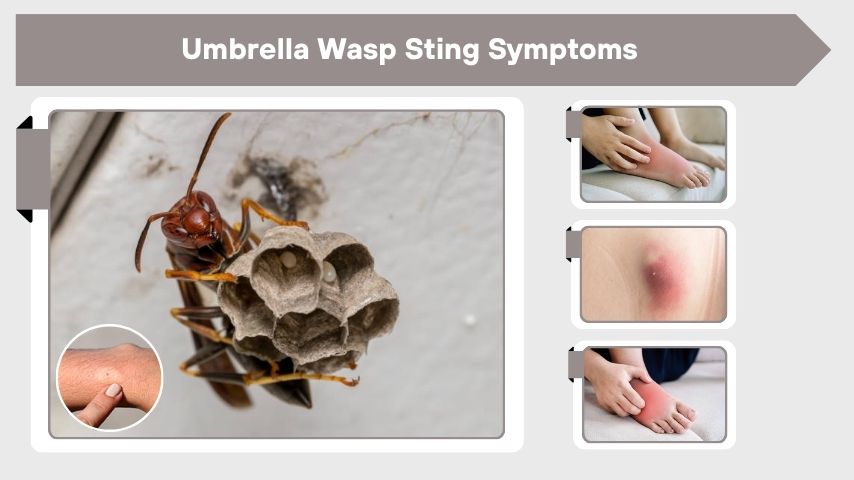
Most umbrella wasp stings cause mild to moderate reactions that remain limited to the sting area. Symptoms vary depending on venom sensitivity, sting location, and the number of stings received. While many people experience only temporary pain and swelling, allergic individuals may develop more serious reactions that require immediate medical attention.
Mild Symptoms
Most people develop normal localized reactions after an umbrella wasp sting.
- Redness
- Small swollen bump
- Burning sensation
- Itching
- Tender skin
- Mild warmth around sting
Moderate Reactions
Some individuals experience stronger reactions with larger swelling and longer-lasting irritation.
- Larger swollen area
- Increased redness
- Persistent burning
- Skin sensitivity
- Mild throbbing pain
Severe Allergic Reactions
Although uncommon, severe allergic reactions can occur after a wasp sting and may become life-threatening without treatment.
- Difficulty breathing
- Severe swelling
- Dizziness
- Rapid heartbeat
- Vomiting
- Anaphylaxis
What Does an Umbrella Wasp Sting Look Like?
An umbrella wasp sting usually appears as a small red bump with localized swelling around the sting site. Tiny puncture marks may sometimes be visible near the center of the irritated skin. In most cases, the area becomes red, warm, and tender shortly after the sting. Symptoms generally remain concentrated near the sting location rather than spreading widely across the body.
Common Sting Appearance
Most umbrella wasp stings produce noticeable but temporary skin irritation.
- Red swollen bump
- Puffy skin
- Tiny puncture point
- Inflamed surrounding area
- Mild skin redness
Umbrella Wasp Sting vs Bee Sting
Although umbrella wasp stings and bee stings can look similar, important differences exist between the two.
Bee stings often leave a stinger embedded in the skin, while umbrella wasps do not lose their stingers. Wasp stings may also occur multiple times because the insect can continue attacking during defensive situations.
Signs of Infection
Repeated scratching or poor wound care can sometimes lead to infection after a sting.
- Spreading redness
- Warm painful skin
- Pus formation
- Fever
- Increased swelling
What Should You Do After an Umbrella Wasp Sting?
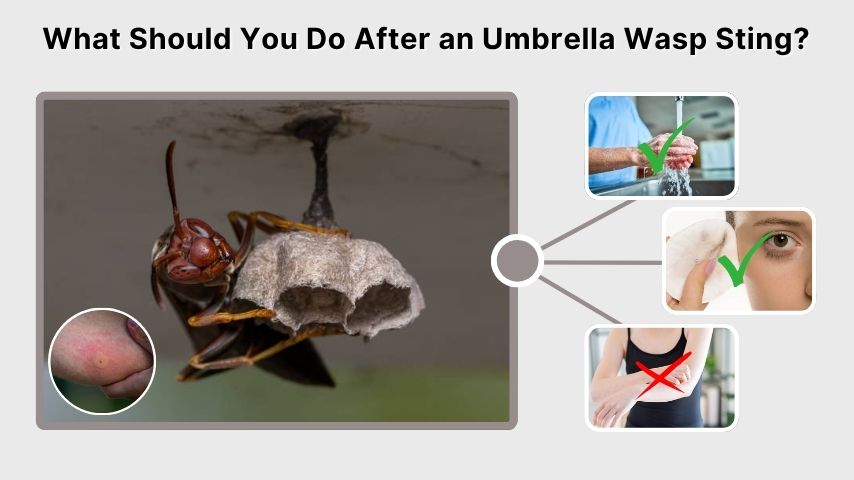
Most umbrella wasp stings can be treated safely at home using simple first-aid methods. Quick treatment helps reduce pain, swelling, and the chance of infection. Since umbrella wasps can sting repeatedly, moving away from the nest area immediately is important to avoid additional attacks from nearby workers responding to alarm signals.
Clean the Sting Area
Cleaning the skin helps reduce irritation and prevent infection after the sting.
- Wash with soap and water
- Remove dirt from skin
- Pat dry gently
- Avoid scratching
- Monitor swelling levels
Reduce Pain and Swelling
Simple home treatments often provide relief from burning pain and swelling caused by wasp venom.
- Apply ice packs
- Use cold compresses
- Take antihistamines
- Apply hydrocortisone cream
- Elevate swollen area if needed
Home Remedies for Sting Relief
Some natural remedies may help soothe irritation and discomfort after mild umbrella wasp stings.
- Aloe vera gel
- Baking soda paste
- Honey application
- Vinegar compress
- Oatmeal paste
When to See a Doctor
Medical attention may be necessary if severe reactions develop after an umbrella wasp sting.
Difficulty breathing, chest tightness, severe swelling, dizziness, or multiple stings should never be ignored. Allergic individuals may require emergency treatment quickly to prevent dangerous complications from venom exposure.
Are Umbrella Wasp Stings Dangerous?
Umbrella wasp stings are usually not dangerous for healthy adults, although they can be painful and irritating. Most reactions remain mild and improve within several days. However, multiple stings or allergic reactions can become serious and may require medical care. Children, older adults, and sensitive individuals may experience stronger reactions than healthy adults.
Normal Sting Reactions
Most umbrella wasp stings cause only temporary discomfort and localized irritation.
- Mild swelling
- Burning pain
- Redness
- Tenderness
- Short-term itching
Risks of Multiple Stings
Multiple stings increase the amount of venom entering the body and may lead to stronger reactions.
- Severe swelling
- Increased pain
- Dizziness
- Nausea
- Toxic venom reactions
Risks for Children and Pets
Children and small pets may react more strongly because of their smaller body size and increased sensitivity to venom.
Pets stung around the face or mouth may experience dangerous swelling that interferes with breathing. Monitoring symptoms carefully after any sting is important for safety.
How to Avoid Umbrella Wasp Stings
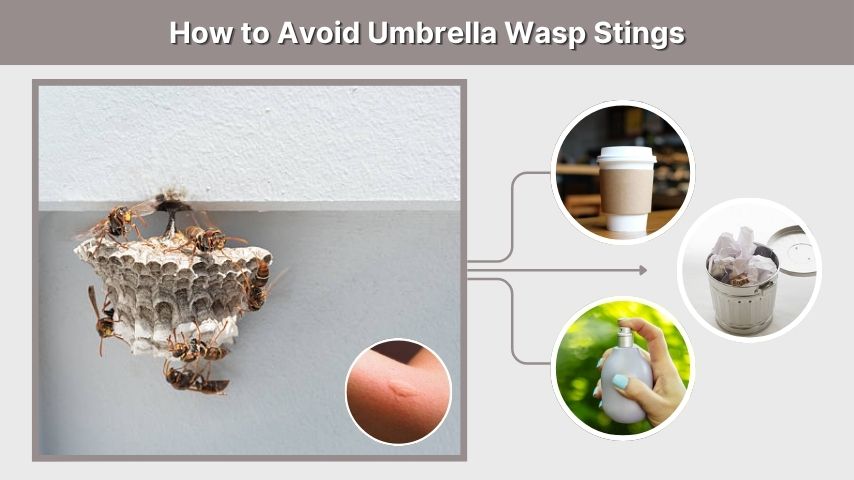
Preventing umbrella wasp stings mainly involves avoiding nests and reducing behaviors that attract wasps into outdoor living spaces. These wasps are usually calm when left alone, but they become defensive if they feel their colony is threatened. Understanding where umbrella wasps build nests and how they react to disturbances can help people reduce the risk of painful encounters during gardening, cleaning, or outdoor activities.
Avoid Disturbing Nests
Most umbrella wasp stings happen when people accidentally approach or disturb active nests.
- Inspect roof edges carefully
- Watch tree branches and sheds
- Avoid sudden movements near nests
- Be cautious when gardening
- Keep children away from nests
Reduce Wasp Attraction
Certain foods, smells, and outdoor conditions attract umbrella wasps searching for sugar or protein sources.
- Cover sugary drinks
- Seal garbage bins
- Clean food spills quickly
- Avoid strong perfumes outdoors
- Keep outdoor eating areas clean
Safe Nest Removal Tips
Removing umbrella wasp nests without proper experience can be dangerous because disturbed colonies may attack repeatedly.
Professional pest control services are usually the safest option for removing large or active nests. If removal is necessary, it should be done carefully during cooler nighttime hours when wasps are less active.
Umbrella Wasp Sting vs Other Wasp Stings
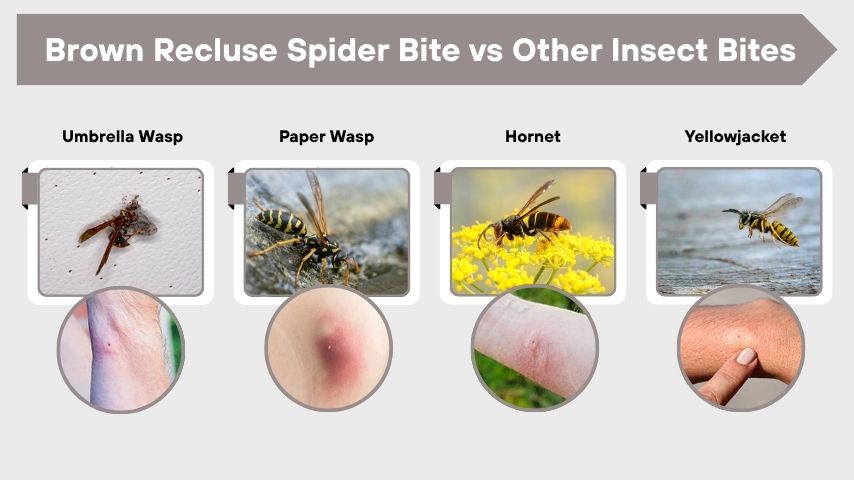
Umbrella wasp stings are often compared to paper wasp, hornet, and yellowjacket stings because these insects share similar defensive behaviors. While umbrella wasp stings are painful, they are generally considered less severe than hornet or yellowjacket stings. Comparing sting characteristics helps people understand the differences in pain, aggression, and venom reactions among common wasp species.
Sting Comparison Table
| Wasp Type | Pain Level | Aggression Level | Can Sting Multiple Times |
| Umbrella Wasp | Moderate | Defensive | Yes |
| Paper Wasp | Moderate | Defensive | Yes |
| Hornet | High | Aggressive | Yes |
| Yellowjacket | High | Very Aggressive | Yes |
Which Wasp Sting Hurts More?
Hornets and yellowjackets are usually considered more painful than umbrella wasps because they inject stronger venom and behave more aggressively near their nests.
Umbrella wasp stings still produce noticeable burning pain and swelling, but most reactions remain manageable with simple first-aid treatment unless allergies are involved.
Which Species Is Most Aggressive?
Yellowjackets are among the most aggressive wasp species and frequently attack in large groups when nests are disturbed. Hornets also defend colonies aggressively and may chase threats over longer distances.
Umbrella wasps are generally calmer but still become defensive if someone approaches their nest too closely or causes vibrations near the colony.
Interesting Facts About Umbrella Wasps
Umbrella wasps are fascinating insects with unique nesting behaviors and important ecological roles. Although feared because of their painful stings, they help control harmful insect populations and contribute to natural ecosystem balance. Their open hanging nests and social colony structure make them one of the most recognizable paper wasps found around homes and gardens.
Unique Nesting Behavior
Umbrella wasps build lightweight paper nests using wood fibers mixed with saliva.
- Open comb nest structure
- Hanging umbrella-shaped nests
- Paper-like building material
- Exposed developing larvae
- Colonies attached under shelters
Ecological Importance
Umbrella wasps provide several environmental benefits despite their defensive behavior.
- Hunt garden pests
- Reduce caterpillar populations
- Support ecosystem balance
- Assist natural pest control
- Help pollinate some plants
Colony Life Cycle
Umbrella wasp colonies grow during warm seasons and decline when temperatures become colder.
- Queens begin new colonies
- Workers defend the nest
- Larvae develop in open cells
- Colonies expand during summer
- Most workers die in colder seasons
FAQs
Are umbrella wasp stings dangerous?
Umbrella wasp stings are usually not dangerous for healthy adults, although they can cause pain, redness, and swelling. Severe allergic reactions are uncommon but may become life-threatening if breathing problems or extreme swelling occur after the sting.
Can umbrella wasps sting more than once?
Yes, umbrella wasps can sting multiple times because their smooth stingers do not become stuck in the skin. This allows them to continue injecting venom during defensive attacks near their nests.
What does an umbrella wasp sting feel like?
An umbrella wasp sting usually causes sharp burning pain followed by redness, swelling, and tenderness around the sting area. Most people describe the sensation as more painful than a mosquito bite but less severe than some hornet stings.
How long does an umbrella wasp sting last?
The strongest pain usually lasts several minutes, while swelling and irritation may continue for a few hours or days depending on individual sensitivity and the number of stings received.
What should I do after an umbrella wasp sting?
Wash the sting area with soap and water, apply a cold compress to reduce swelling, and monitor symptoms carefully. Seek medical help if severe swelling, breathing difficulty, dizziness, or allergic reactions develop after the sting.