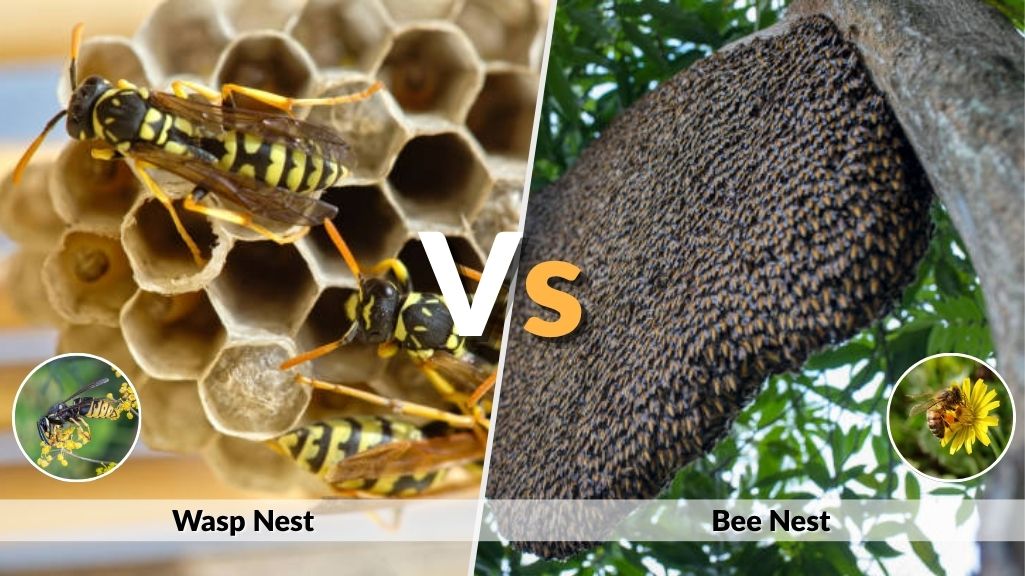
Bee nests and wasp nests are often confused because both contain flying insects and may appear around homes, trees, roofs, or gardens. However, their structure, materials, and insect behavior are very different. Bees usually build wax-based honeycomb hives, while wasps create paper-like nests from chewed wood fibers.
Correct nest identification is important for safety and proper removal decisions. Some nests contain helpful pollinators, while others may house aggressive insects. This guide explains the appearance, behavior, and differences between bee nests, wasp nests, hornet nests, and hives.
What Is the Difference Between Bee and Wasp Nests?
Bee nests and wasp nests serve the same basic purpose of protecting colonies, but they are built in very different ways. The materials, shape, and insect behavior can help homeowners identify them correctly.
What Is a Bee Nest?
Bee nests are usually made from wax produced by worker bees. Honey bees build organized honeycomb structures used for storing honey, pollen, and developing larvae.
What Is a Wasp Nest?
Wasps build nests from chewed wood fibers mixed with saliva. This creates a gray paper-like material that forms layered nesting structures.
Why People Confuse Them
- Both contain flying insects
- Often found near homes
- Similar buzzing sounds
- Nests may appear in trees or roofs
Importance of Correct Identification
Identifying nests properly helps determine whether the insects are beneficial pollinators or potentially aggressive pests that may require professional removal.
Bee Nest vs Wasp Nest Appearance
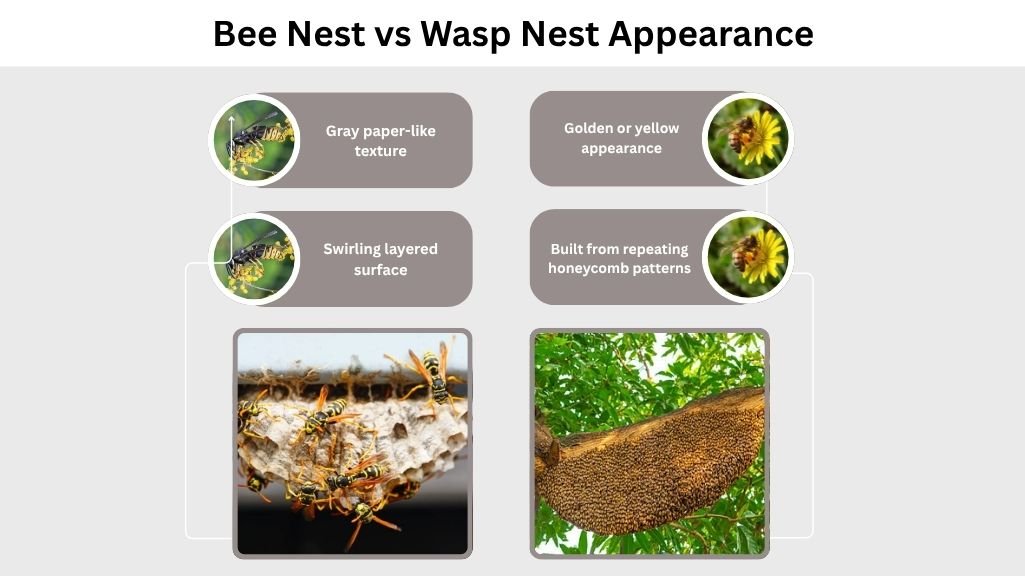
Visual appearance is one of the easiest ways to tell the difference between bee and wasp nests. The texture, color, and shape usually reveal which insect created the nest.
Bee Nest Appearance
Bee nests often have visible wax honeycomb cells with a golden or yellow appearance. Honey bees usually create dense organized comb structures.
Wasp Nest Appearance
- Gray paper-like texture
- Swirling layered surface
- Thin papery walls
- Often rounded or enclosed
Shape and Size Differences
Bee hives are usually built from repeating honeycomb patterns, while wasp nests may appear layered, umbrella-shaped, or football-shaped depending on the species.
Nest Color Comparison
Bee nests commonly appear yellowish or golden because of wax and honey. Wasp nests are usually gray, brown, or dull paper-like colors.
Bee Hive vs Wasp Nest
Bee hives and wasp nests differ greatly in construction materials, colony purpose, and internal organization. Understanding these differences helps avoid accidental disturbance.
How Bees Build Hives
Honey bees produce wax from special glands and shape it into hexagonal honeycomb cells for food storage and raising young bees.
How Wasps Build Nests
- Chew wood fibers into pulp
- Mix fibers with saliva
- Build paper-like structures
- Create layered nest walls
Internal Structure Differences
Bee hives contain organized honeycomb sections filled with honey, pollen, and larvae. Wasp nests usually contain layered chambers designed mainly for raising young wasps.
Which Nest Is More Organized?
Both insects build highly organized nests, but honey bee hives are especially structured because they support large colonies and food storage systems.
Honey Bee Nest vs Wasp Nest
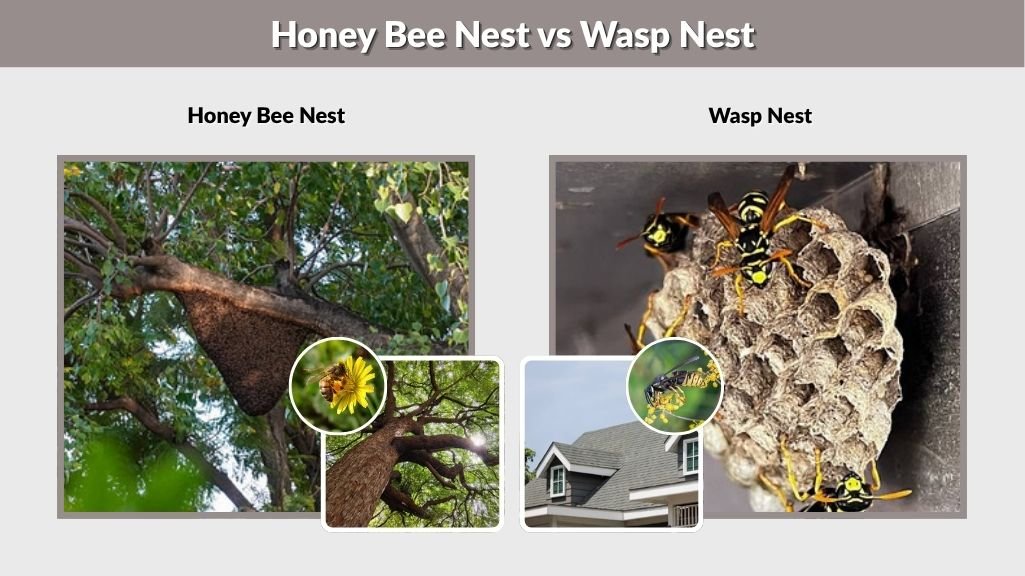
Honey bee nests are among the most recognizable bee structures because of their honeycomb design and large worker populations. Wasp nests differ in both appearance and colony behavior.
Honey Bee Hive Characteristics
- Thick wax honeycomb
- Large colonies
- Honey storage
- Busy worker activity
Wasp Colony Characteristics
Wasps focus more on raising larvae and hunting insects than storing food. Many wasp colonies only survive for a single season.
Honeycomb vs Paper Cells
Bee honeycombs are made from wax and formed into hexagonal cells. Wasp nests use thin paper-like layers instead of wax combs.
Common Nest Locations
Honey bees and wasps may build nests in trees, attics, wall cavities, roof edges, and garden structures depending on species and environmental conditions.
Wasp vs Bee vs Hornet Nest
Hornet nests are often confused with wasp nests because hornets are closely related to wasps. However, hornet nests are usually larger and more enclosed.
Bee Nest Features
- Wax-based honeycomb
- Yellow or golden appearance
- Dense hive activity
- Pollinator behavior
Wasp Nest Features
Wasp nests usually have thin paper walls and may hang from roofs, branches, porches, or hidden cavities around buildings.
Hornet Nest Features
- Large football-shaped nests
- Thick paper layers
- Fully enclosed structure
- Often built in trees
Yellow Jacket Nest Comparison
Yellow jackets commonly build underground nests or hidden wall nests and are known for aggressive colony defense behavior.
Ground Nesting Bees vs Ground Nesting Wasps
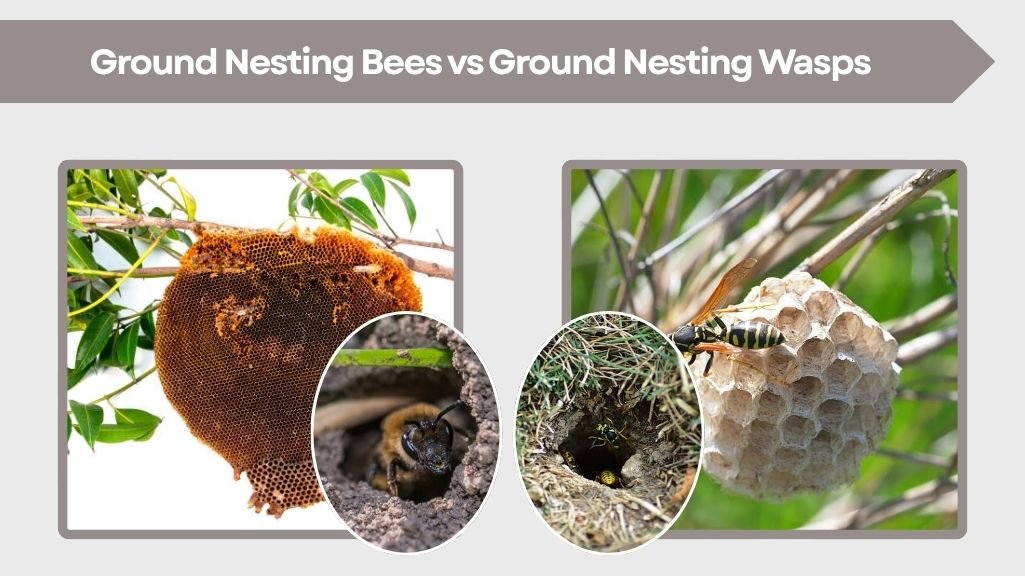
Some bees and wasps build nests underground instead of in trees or roofs. Because only a small entrance hole may be visible, ground nests are often difficult to identify correctly.
Ground Nesting Bee Habits
Ground nesting bees are usually solitary and less aggressive than wasps. Many species are important pollinators that help flowers, vegetables, and crops grow.
Ground Wasp Nest Characteristics
- Underground tunnel entrances
- Colony-based nesting
- Aggressive nest defense
- Fast flying activity near entrances
Mining Bees vs Ground Wasps
Mining bees often appear calmer and less defensive, while ground wasps aggressively protect their nest if disturbed. Their flight patterns may also differ around the entrance.
Safety Around Ground Nests
Avoid stepping near underground nest entrances because disturbing the area may trigger defensive behavior from wasps or hornets.
Paper Wasp Nest vs Bee Hive
Paper wasp nests are among the easiest wasp nests to recognize because they often have exposed honeycomb-like cells without a full outer covering.
Paper Wasp Nest Appearance
Paper wasp nests usually hang from roofs, branches, porches, and fences. Their open comb structure is visible from below.
Bee Hive Appearance
- Thick wax honeycomb
- Yellowish or golden color
- Dense colony structure
- Honey storage cells
Behavior Differences
Bees mainly focus on pollination and honey production, while paper wasps hunt insects and protect their nests more aggressively.
Common Locations
Paper wasps often build nests under roof edges, porch ceilings, outdoor furniture, and tree branches near homes.
Mason Bees vs Mud Wasp Nest
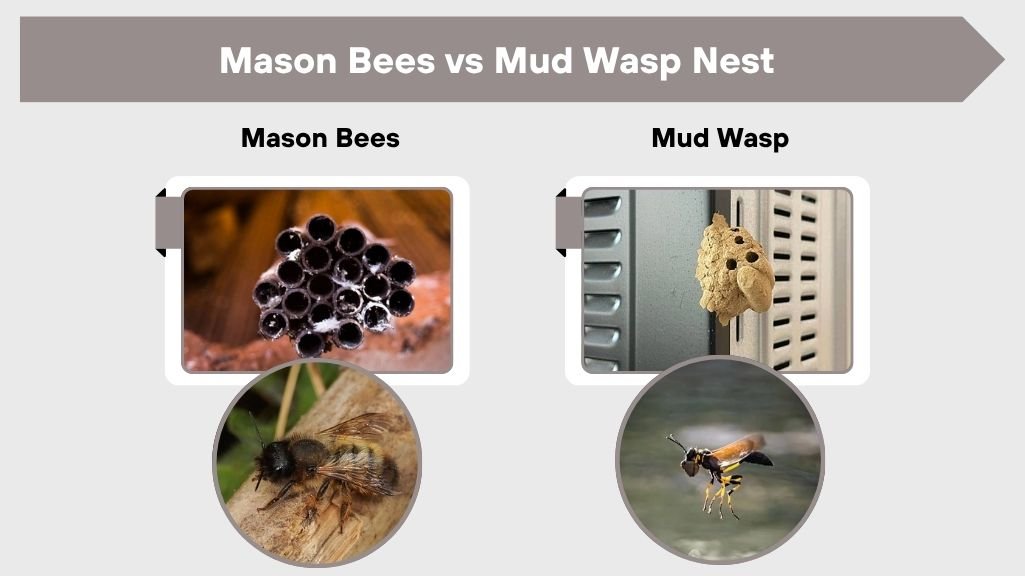
Mason bees and mud wasps both use mud in their nesting process, but their nest structure and behavior differ greatly.
Mason Bee Nest Structure
Mason bees usually nest alone inside small holes or tunnels. They use mud to seal individual chambers containing eggs and pollen.
Mud Wasp Nest Appearance
- Tube-shaped mud structures
- Rounded mud chambers
- Rough dried texture
- Attached to walls or ceilings
Nesting Material Comparison
Both insects use mud, but mason bees mainly seal tunnels while mud wasps build complete nest chambers from mud.
Are They Dangerous?
Mason bees are generally gentle pollinators and rarely sting. Mud wasps are usually non-aggressive unless directly disturbed.
Nest Locations and Common Hiding Areas
Bee and wasp nests may appear in many different places around homes and gardens. The location often helps identify which insect built the nest.
Nests Around Door Areas
Doors, porches, and roof overhangs provide shelter from rain and wind, making them common nesting locations for wasps and some bees.
Tree and Bush Nests
- Hanging hornet nests
- Honey bee swarms
- Wasp nests in branches
- Hidden nests in shrubs
Wall and Attic Nests
Bees and wasps sometimes enter wall cavities and attic spaces through small openings, creating hidden nests that are difficult to detect early.
Underground Nest Locations
Ground wasps and yellow jackets often build underground nests in gardens, lawns, and near tree roots or sidewalks.
Are Bee and Wasp Nests Dangerous?
Some nests remain harmless if left alone, while others may become dangerous if disturbed. The level of aggression depends on the species and nest size.
Bee Sting Risks
Honey bees usually sting mainly when defending their hive. Worker bees lose their stinger after stinging, which causes the bee to die.
Wasp and Hornet Aggression
- More defensive behavior
- Multiple stings possible
- Strong colony protection
- Increased aggression near nests
Allergic Reactions
People allergic to bee or wasp venom may experience serious medical reactions after stings and should seek immediate medical help.
When to Call Professionals
Large nests, hidden wall nests, or aggressive insect activity should usually be handled by trained pest control professionals.
How to Identify a Nest Safely
Safe observation helps homeowners identify nests without increasing the risk of stings or disturbing aggressive insects.
Watch Insect Behavior
Observe whether insects appear calm pollinators or aggressive defenders before approaching any nest area.
Observe Nest Material
- Wax honeycomb indicates bees
- Paper texture suggests wasps
- Mud chambers suggest mud wasps
- Large enclosed paper nests suggest hornets
Check Nest Location
Nest placement around trees, walls, roofs, or underground areas may help determine which insect species is present.
Avoid Touching the Nest
Never shake, spray, or disturb a nest unless proper protective equipment and safety knowledge are available.
FAQs
How can you tell a bee nest from a wasp nest?
Bee nests are usually made from wax honeycomb, while wasp nests have gray paper-like material made from chewed wood fibers.
Are wasp nests more dangerous than bee hives?
Wasp nests are often considered more aggressive because wasps can sting multiple times when defending their colony.
What does a hornet nest look like?
Hornet nests are usually large enclosed paper nests with a football-like shape hanging from trees or structures.
Do bees and wasps nest in the same places?
Yes, both may nest around roofs, trees, walls, and gardens, although their nesting materials and structure differ.
Should you remove a bee nest or leave it alone?
If the bees are not causing danger, many experts recommend leaving them alone because bees are important pollinators.