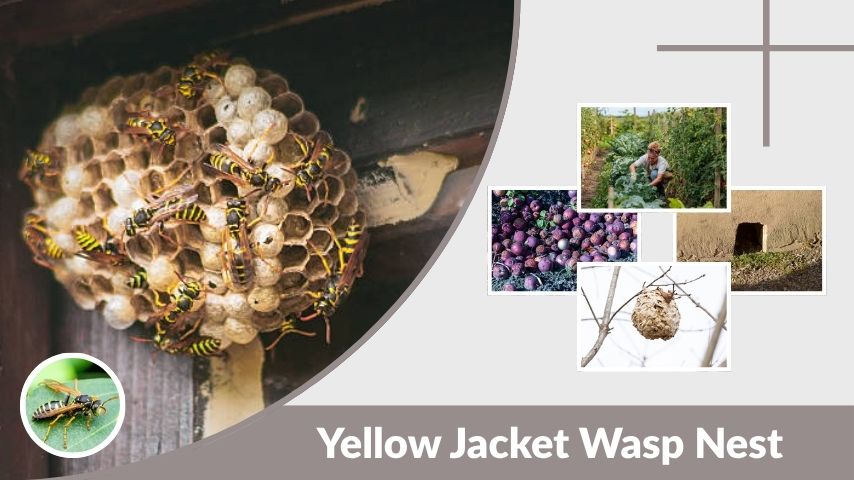
Yellow jacket wasp nests can become a serious problem during late spring and summer. These aggressive insects often build nests underground, inside walls, trees, and even outdoor electrical boxes. Many homeowners confuse yellow jacket nests with paper wasp or hornet nests, which can lead to dangerous mistakes during removal attempts. Understanding the differences between these nests helps you identify infestations early and choose the safest treatment method for your property.
This guide explains how to identify yellow jacket nests, compare them with paper wasp and hornet nests, recognize common nesting locations, and understand why these insects become highly defensive near their colonies. You will also learn how large yellow jacket nests can grow and what warning signs indicate an active infestation around your home.
What Is a Yellow Jacket Wasp Nest?
Yellow jackets build paper-like nests using chewed wood fibers mixed with saliva. Unlike open paper wasp nests, yellow jacket nests are usually enclosed and hidden in protected areas. Colonies begin with a single queen in spring and can rapidly expand into thousands of workers by late summer. Their nests are often difficult to detect until the colony becomes aggressive or highly active around the property.
What Yellow Jacket Nests Look Like
Yellow jacket nests are usually gray or tan with a layered paper texture. Most nests have a rounded or oval shape with a small entrance hole. Ground nests may only show a single opening, while wall nests remain completely hidden from view.
Young nests are small and about the size of a golf ball. Mature colonies can grow much larger and sometimes become massive “super nests” in warm climates. The inside of the nest contains stacked comb layers where larvae develop into adult workers.
Common Types of Yellow Jacket Nests
Yellow jackets choose nesting areas that provide shelter and protection from predators and weather.
- Underground burrows
- Abandoned rodent holes
- Wall cavities
- Roof overhangs
- Hollow trees
- Bushes and shrubs
- Outdoor electrical outlet boxes
- Attic spaces
Ground and underground nests are among the most common forms of yellow jacket infestations. These nests are especially dangerous because people often disturb them accidentally while mowing lawns or gardening.
Yellow Jacket Nest Size
Nest size changes dramatically throughout the season. Early colonies remain small, but worker populations increase quickly during summer.
- Spring nests may contain only a queen and a few workers
- Mid-summer nests often hold several hundred yellow jackets
- Large late-season nests can contain thousands of workers
- Super nests may survive in warmer southern regions
Massive nests are more aggressive because more workers are available to defend the colony when disturbed.
Yellow Jacket Nest vs Paper Wasp Nest
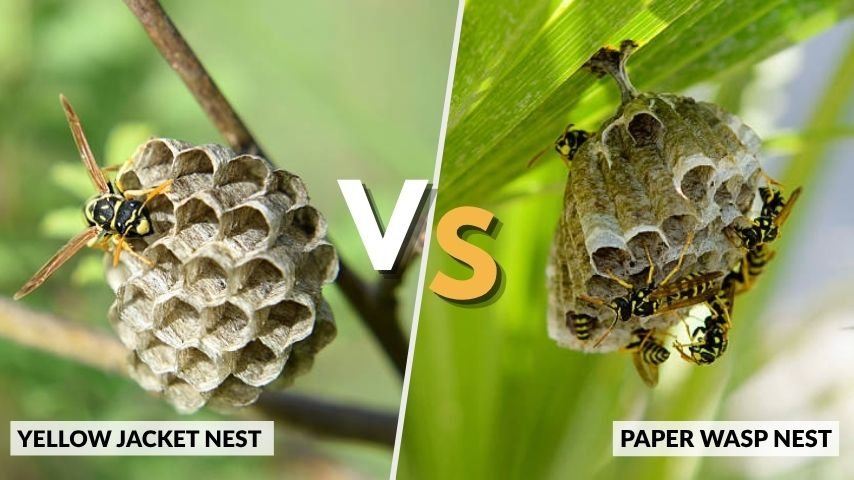
Many homeowners mistake paper wasp nests for yellow jacket nests because both are made from paper-like material. However, the structure and behavior of these insects are very different. Correct identification is important because yellow jackets are generally more aggressive and dangerous around their colonies than paper wasps.
Structural Differences
| Feature | Yellow Jacket Nest | Paper Wasp Nest |
| Nest Design | Fully enclosed | Open comb structure |
| Material | Thick layered paper | Thin papery comb |
| Entrance | Hidden opening | Visible exposed cells |
| Colony Size | Large populations | Smaller groups |
| Protection | Covered exterior shell | Open and exposed |
Paper wasp nests resemble upside-down umbrellas with visible hexagonal cells. Yellow jacket nests, on the other hand, are enclosed and usually hidden underground or inside structures.
Nest Location Differences
Yellow jackets commonly prefer concealed nesting areas. Paper wasps usually build exposed nests beneath eaves, decks, railings, and roof edges. Underground nesting strongly suggests yellow jackets rather than paper wasps.
Wall voids and hidden cavities are also favored by yellow jackets because they provide warmth and protection. Paper wasps rarely create large hidden colonies inside structures.
Behavior Around the Nest
Behavior is one of the easiest ways to distinguish yellow jackets from paper wasps. Yellow jackets defend their nests aggressively and may sting repeatedly when disturbed. Even walking near an underground entrance can trigger an attack.
Paper wasps are less aggressive unless someone directly touches or disturbs their nest. They often warn intruders before attacking, while yellow jackets may swarm almost immediately.
Wasp vs Hornet vs Yellow Jacket Nest
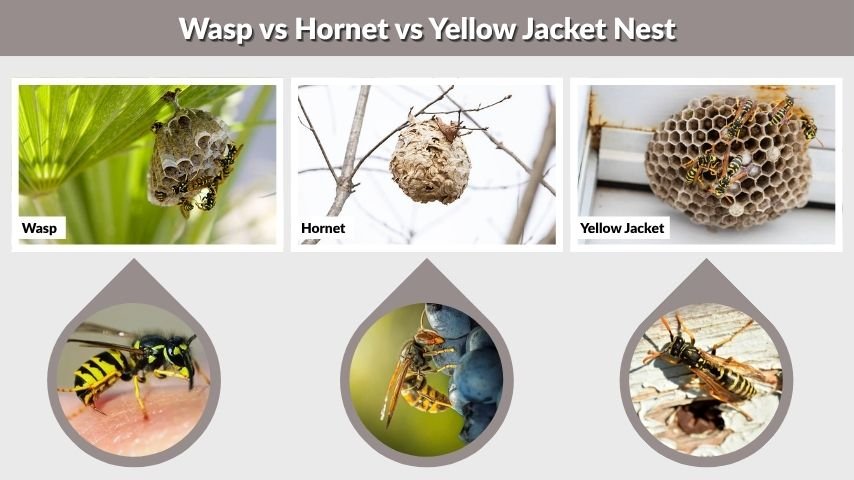
Hornets, paper wasps, and yellow jackets belong to the wasp family, but their nests have distinct appearances. Knowing the differences helps homeowners identify infestations correctly before attempting removal or calling pest control services.
Hornet Nest Identification
Hornet nests are large, enclosed structures that usually hang from trees, rooflines, or tall shrubs. They often resemble football-shaped gray paper balls with a single entrance hole near the bottom.
Bald-faced hornets build some of the most recognizable aerial nests in North America. Their colonies are highly defensive and may attack when the nest is disturbed from several feet away.
Yellow Jacket Nest Identification
Yellow jacket nests are more commonly hidden underground or inside walls. Instead of hanging openly like hornet nests, they are usually concealed beneath soil, siding, or structural gaps.
Visible signs include steady wasp traffic entering and exiting a small hole. Workers move quickly and aggressively around the entrance, especially during warm afternoons.
Paper Wasp Nest Identification
Paper wasp nests have exposed combs without an outer shell. The cells remain visible from below, and the nests are usually much smaller than hornet or yellow jacket colonies.
These nests commonly appear under roof edges, porch ceilings, mailboxes, and deck railings. Adult paper wasps often rest visibly on the outside of the nest structure.
Where Do Yellow Jacket Wasps Nest?
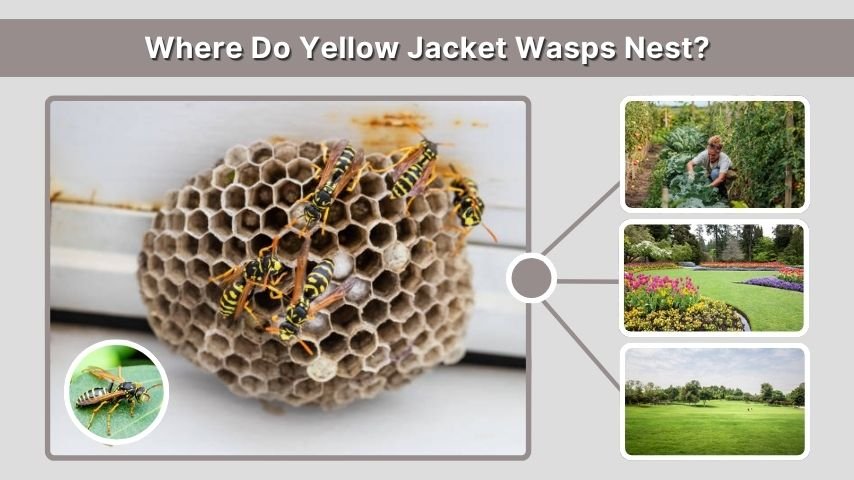
Yellow jackets are highly adaptable insects that can build nests in many hidden locations around homes and yards. They prefer protected spaces that stay dry, warm, and safe from predators. Some colonies remain completely hidden until the population becomes large enough to notice constant worker activity. Understanding common nesting areas helps homeowners locate infestations before they become dangerous.
Yellow Jacket Ground Nests
Ground nests are the most common type of yellow jacket colony. These insects often reuse abandoned animal burrows or naturally occurring holes in the soil. A single entrance hole may lead to a large underground colony hidden beneath the surface.
Common ground nesting locations include:
- Lawns
- Gardens
- Flower beds
- Mulch areas
- Tree roots
- Retaining walls
- Parks and open fields
Ground nests become dangerous because people accidentally disturb them while mowing grass or working outdoors.
Underground Yellow Jacket Nests
Underground nests can be difficult to locate because only a small opening may be visible. Yellow jackets fly in and out quickly, creating a steady stream of activity near the entrance.
You may notice:
- Increased wasp traffic near the soil
- Small holes in the ground
- Buzzing sounds near landscaping
- Aggressive yellow jackets nearby
- Wasps hovering close to one area
Colonies hidden underground often grow very large by late summer. Disturbing the entrance can cause hundreds of workers to swarm in defense.
Yellow Jacket Nests in Walls
Wall infestations are especially troublesome because yellow jackets can enter indoor spaces through vents, cracks, and electrical openings. Workers may chew through drywall or emerge inside rooms while searching for exits.
Signs of wall nests include persistent buzzing sounds, yellow jackets gathering near siding gaps, and insects appearing indoors. These infestations should be handled carefully because sealing the entrance too early may force the colony deeper into the structure.
How to Identify a Yellow Jacket Nest Safely
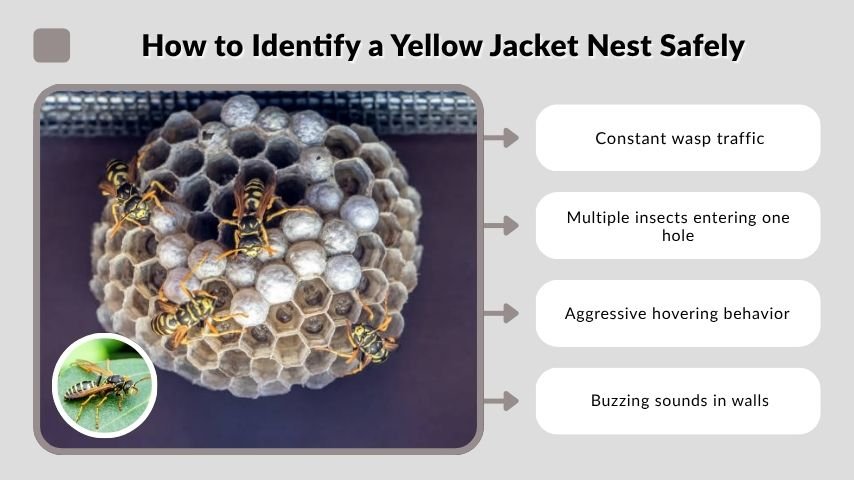
Identifying a yellow jacket nest requires caution because these insects react aggressively when they feel threatened. Observing activity from a safe distance helps reduce the risk of stings while allowing you to locate the colony accurately.
Signs of a Nearby Nest
Yellow jackets become more active during warm afternoons, making daytime observation easier.
Common warning signs include:
- Constant wasp traffic
- Multiple insects entering one hole
- Aggressive hovering behavior
- Buzzing sounds in walls
- Sudden swarming near the yard
- Wasps around outdoor food and garbage
A high number of workers usually indicates a mature colony nearby.
Best Time to Observe a Nest
Early morning and evening are often the safest times to observe yellow jacket activity. Cooler temperatures slow their movement, reducing aggression around the nest entrance.
Avoid standing directly beside suspected nest openings. Watching from a distance allows you to track worker flight paths without triggering defensive behavior.
Warning Signs of an Active Colony
Active colonies become increasingly defensive as populations grow. Mature nests may contain thousands of workers protecting the queen and developing larvae.
Danger signs include rapid swarming, repeated stinging attempts, and workers flying directly toward people or pets. Colonies near walkways, playgrounds, or entry doors pose the highest risk for accidental encounters.
How Many Yellow Jackets Live in a Nest?
Yellow jacket colonies expand rapidly during the warm season. A single queen begins the colony in spring, but worker numbers can explode by late summer. Colony size directly affects aggression levels because more workers are available to defend the nest.
Small Early-Season Colonies
Spring nests usually remain small while the queen raises the first group of workers. These early colonies are less aggressive because populations are limited.
At this stage, nests may contain:
- One queen
- A few developing larvae
- Small paper combs
- Less than 50 workers
Finding nests early makes removal much safer and easier.
Mature Summer Colonies
By midsummer, colonies grow much larger as workers continuously expand the nest and gather food. Increased activity around garbage, sugary drinks, and outdoor meals becomes more noticeable during this period.
Many mature nests contain hundreds or even thousands of yellow jackets. Aggression also increases because workers aggressively defend the queen and brood chambers.
Massive Super Nests
In warmer climates such as southern states, some yellow jacket colonies survive longer and become enormous “super nests.” These colonies may spread through wall voids, attics, or underground chambers.
Super nests can contain thousands of workers and multiple comb layers. Large infestations are extremely dangerous and should only be removed by professional pest control experts.
Preventing Future Yellow Jacket Nests
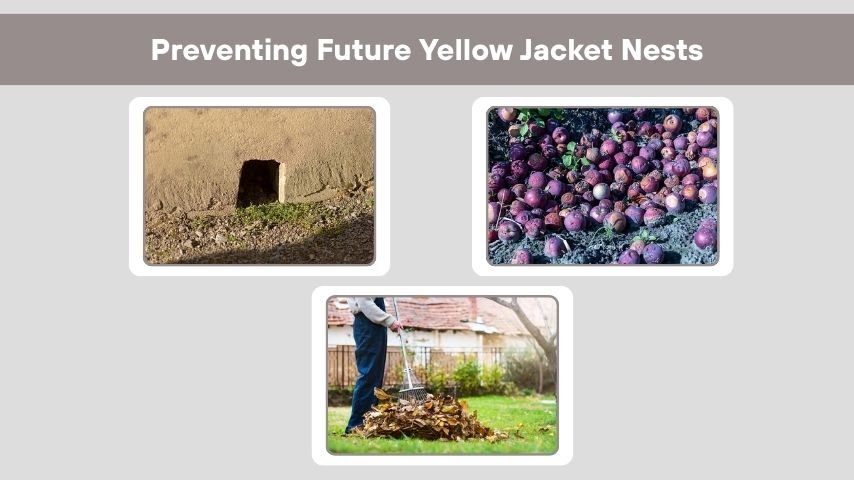
Preventing yellow jacket infestations is much easier than removing established colonies. Early prevention reduces nesting opportunities around homes and outdoor spaces.
Yard Maintenance Tips
Simple outdoor maintenance can make your property less attractive to nesting queens.
- Fill abandoned rodent holes
- Keep trash bins sealed
- Remove fallen fruit
- Trim dense shrubs
- Reduce standing water
- Clean outdoor eating areas
These steps help eliminate food sources and protected nesting spots.
Sealing Entry Points
Yellow jackets often enter buildings through tiny openings. Sealing structural gaps helps prevent hidden wall nests.
Inspect areas around:
- Roof vents
- Siding cracks
- Utility lines
- Window frames
- Outdoor electrical boxes
- Attic openings
Repairing these areas before spring reduces the chance of queens starting new colonies.
FAQs
What does a yellow jacket wasp nest look like?
Yellow jacket nests are usually enclosed, grayish paper structures with hidden entrances. Many nests are underground or inside walls, making them harder to spot than open paper wasp nests.
Are yellow jackets more aggressive than paper wasps?
Yes. Yellow jackets are generally far more aggressive, especially near their nests. They often attack in large numbers and can sting multiple times without losing their stingers.
Can I remove a yellow jacket nest myself?
Small visible nests may sometimes be treated safely with proper equipment, but large underground or wall nests are dangerous and often require professional pest control services.
Do yellow jacket nests die in winter?
Most yellow jacket colonies die during winter except for newly fertilized queens. These queens survive the cold season and start new colonies the following spring.
Can yellow jackets build nests inside houses?
Yes. Yellow jackets commonly nest inside wall voids, attics, crawl spaces, and electrical boxes when they find small entry openings in buildings.