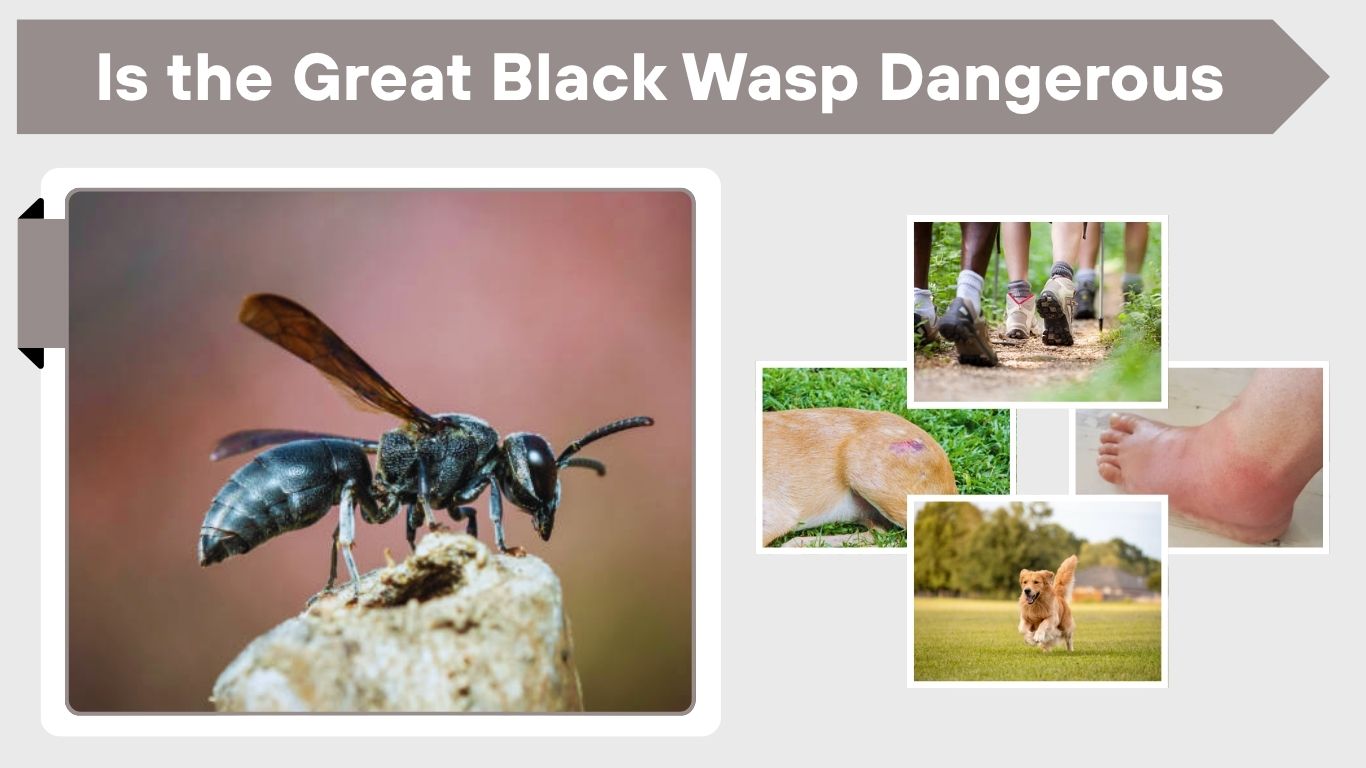
Great black wasps are large solitary insects that often alarm homeowners because of their dark color, loud buzzing, and impressive size. Many people assume these wasps are highly aggressive or dangerous when they see them flying around gardens, lawns, or patios. In reality, great black wasps are usually calm insects that rarely sting humans unless directly threatened. Understanding their behavior, nesting habits, and actual risks can help reduce unnecessary fear while helping homeowners safely manage wasps around homes and outdoor spaces.
What Is a Great Black Wasp?
Great black wasps, scientifically known as Sphex pensylvanicus, are solitary digger wasps commonly found throughout North America. Unlike yellowjackets or hornets, they do not live in large colonies and do not aggressively defend communal nests.
These wasps are known for their shiny black appearance and strong flying ability. Adult females spend much of their time digging nests and hunting insects for their larvae.
Where Great Black Wasps Are Commonly Found
Great black wasps prefer warm outdoor areas with loose soil where they can create underground burrows. They are often seen in residential yards, gardens, and flower beds during summer.
Common locations include:
- Gardens and flower beds
- Dry lawns
- Sandy soil areas
- Patios and sidewalks
- Open sunny landscapes
Because they feed on flower nectar, they are also frequently spotted around blooming plants.
Why Great Black Wasps Look Intimidating
Many people fear great black wasps because they resemble more aggressive insects such as hornets. Their large size and deep buzzing sound can make them appear dangerous even when they are not acting aggressively.
Unlike social wasps, however, great black wasps usually avoid direct conflict with humans whenever possible.
Is the Great Black Wasp Dangerous to Humans?
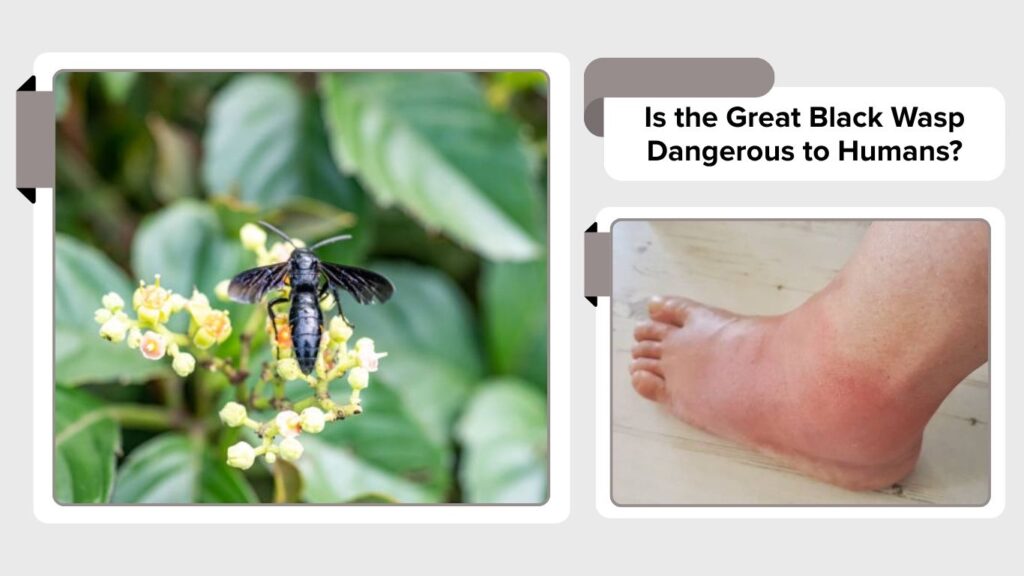
Great black wasps are generally considered low-risk insects for humans. They are solitary wasps, meaning each female builds and manages her own nest instead of living in defensive colonies.
Because they do not protect large communal nests, they are far less aggressive than yellowjackets or hornets.
Do Great Black Wasps Sting?
Female great black wasps are capable of stinging, but stings are relatively uncommon. Most stings happen only when the wasp is handled, trapped, stepped on, or threatened directly.
Male great black wasps cannot sting because they do not possess stingers.
What a Great Black Wasp Sting Feels Like
Most people experience mild symptoms after a sting. Pain and swelling are usually temporary and similar to other common wasp stings.
Typical sting symptoms include:
- Sharp burning pain
- Mild redness
- Temporary swelling
- Minor itching
- Skin irritation near the sting area
People with severe insect allergies may experience stronger reactions and should seek medical attention immediately if breathing problems or widespread swelling occur.
Are Great Black Wasps Aggressive?
Great black wasps are known for calm and non-aggressive behavior compared to many other wasp species. They often continue feeding or digging nests even when humans are nearby.
Most encounters happen without any defensive behavior at all.
Why Great Black Wasps Rarely Attack
The solitary lifestyle of great black wasps is one of the main reasons they rarely attack humans. Social wasps aggressively defend large colonies because thousands of offspring depend on the nest.
Great black wasps work alone and have much less reason to behave defensively.
Difference Between Great Black Wasps and Hornets
Homeowners often confuse great black wasps with hornets because both insects are large and capable of stinging. However, their behavior is very different.
Major differences include:
- Great black wasps are solitary
- Hornets live in defensive colonies
- Great black wasps rarely swarm
- Hornets react aggressively to nest disturbance
- Great black wasps usually avoid people
This difference makes great black wasps significantly less dangerous in most situations.
Are Great Black Wasps Dangerous in Yards?
Great black wasps are usually beneficial insects in outdoor spaces because they help reduce populations of pest insects such as grasshoppers and crickets. They also contribute to pollination while feeding on nectar.
Most homeowners never experience problems with these wasps even when nests are nearby.
Why Great Black Wasps Are Helpful
Female great black wasps hunt insects to feed developing larvae inside underground nests. This natural hunting behavior can reduce damaging garden pests around homes and landscapes.
Benefits of great black wasps include:
- Natural pest control
- Pollination support
- Reduced grasshopper populations
- Low aggression toward humans
- Minimal property damage
Because their nests are temporary and underground, they rarely cause structural problems around homes.
Are Great Black Wasps Dangerous to Pets?
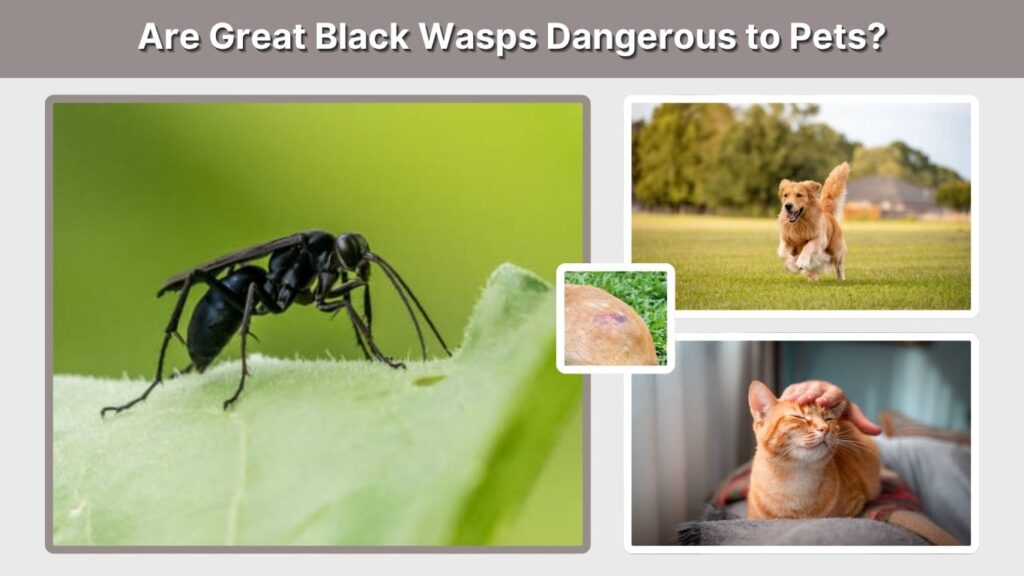
Dogs and cats may occasionally get stung if they disturb a nest or attempt to catch a flying wasp. Most pet stings cause mild swelling and irritation similar to human reactions.
How to Protect Pets From Great Black Wasps
Simple precautions can reduce the risk of pet encounters with wasps around the yard.
Helpful safety measures include:
- Avoiding active nesting areas
- Monitoring pets outdoors
- Filling abandoned burrows
- Keeping lawns maintained
- Contacting professionals if nests are near play areas
In most cases, pets recover quickly from mild stings unless allergic reactions occur.
When Great Black Wasps Become a Problem
Although great black wasps are usually harmless, there are situations where they may create concerns for homeowners. Nests located near doorways, patios, playgrounds, or heavily used walkways can increase the chances of accidental contact.
People with severe insect sting allergies may also feel uncomfortable having wasps nesting close to the home.
Situations That May Increase Risk
Certain conditions can make great black wasps more problematic around residential properties.
- Multiple nests near entrances
- High wasp activity in play areas
- Pets disturbing underground burrows
- Indoor wasps trapped inside rooms
- Allergy concerns among family members
Even in these situations, the insects are still less aggressive than many social wasp species.
Can Great Black Wasps Damage Homes?
Great black wasps rarely cause structural damage because they do not chew wood or build large paper nests inside walls. Their underground burrows are usually temporary and relatively small.
Most nesting activity ends naturally when colder weather arrives, and the adult wasps die off for the season.
What to Do if You Find a Great Black Wasp Nest
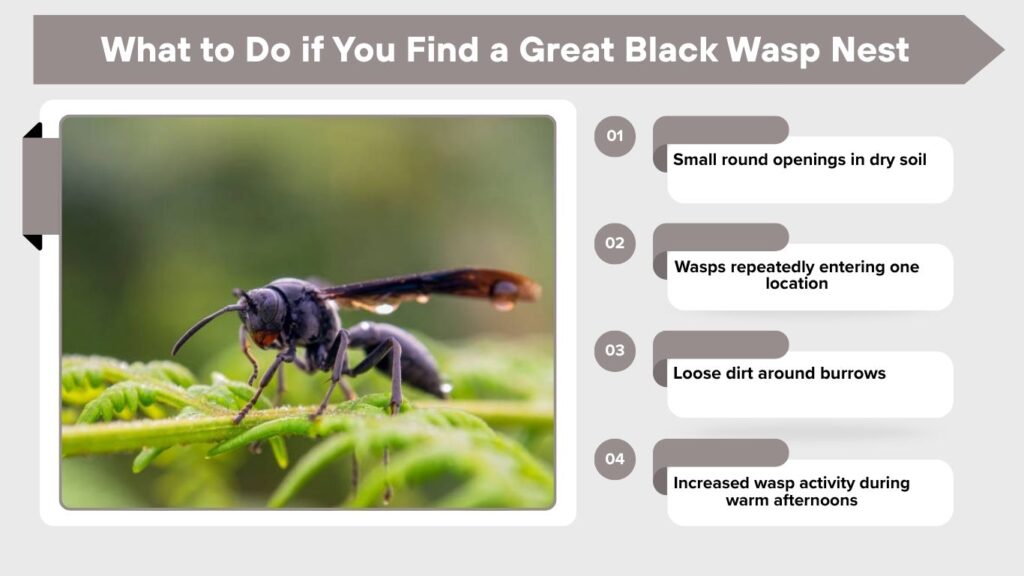
Finding a nest in the yard can be alarming at first, especially if several wasps are flying nearby. However, calm observation is usually safer than immediate removal attempts.
Most great black wasps ignore humans unless directly disturbed.
How to Identify a Great Black Wasp Nest
Great black wasp nests are commonly hidden underground and may appear as small holes surrounded by loose soil.
Common nest signs include:
- Small round openings in dry soil
- Wasps repeatedly entering one location
- Loose dirt around burrows
- Increased wasp activity during warm afternoons
- Multiple nearby nesting holes
Watching from a distance can help homeowners locate the nest safely.
Should You Remove the Nest?
Removal is not always necessary because these wasps provide valuable natural pest control. However, nests in high-traffic areas may need professional attention.
Homeowners should consider removal when:
- Someone has severe sting allergies
- Pets repeatedly disturb the nest
- Burrows appear near doorways
- Children play nearby
- Indoor wasp activity becomes frequent
Professional pest control is usually the safest option for difficult or heavily active nesting areas.
How to Stay Safe Around Great Black Wasps
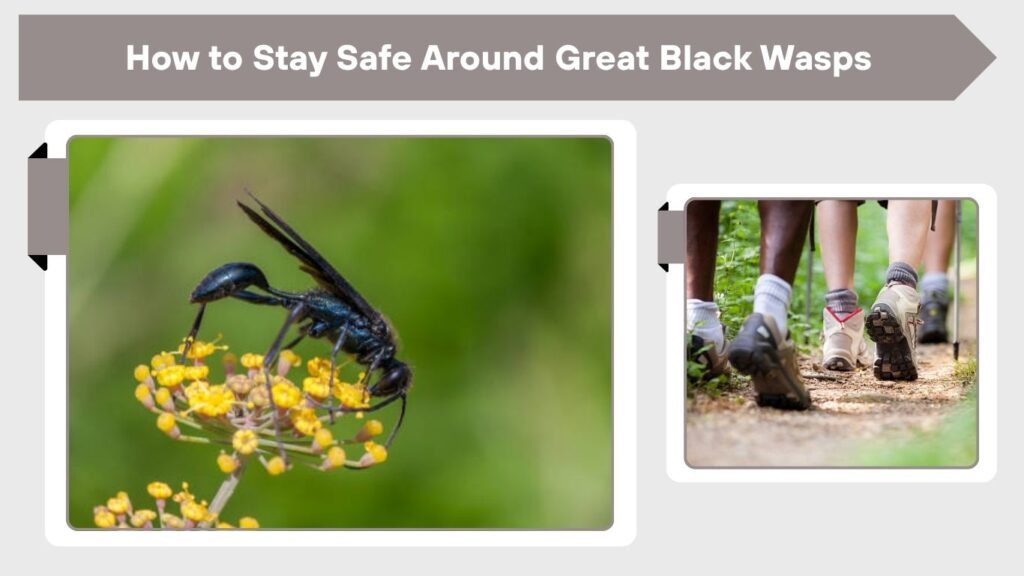
Simple precautions can reduce the chances of accidental stings while allowing beneficial wasps to remain part of the local ecosystem.
Great black wasps are usually more interested in hunting insects and gathering nectar than interacting with humans.
Best Safety Tips
Several habits can help homeowners avoid problems with great black wasps.
- Avoid stepping on bare soil near nests
- Do not swat at flying wasps
- Wear shoes outdoors
- Keep pets away from active burrows
- Remain calm if a wasp flies nearby
Sudden movements often increase the likelihood of defensive behavior from any insect.
Common Myths About Great Black Wasps
Large black wasps are often misunderstood because many people assume all wasps behave aggressively. Great black wasps are very different from colony-forming species such as yellowjackets and hornets.
Myth: Great Black Wasps Attack People
Great black wasps do not actively hunt or chase humans. Most stings happen only when the insect feels trapped or threatened physically.
Myth: Great Black Wasps Swarm Like Hornets
These wasps are solitary insects and do not form aggressive swarming colonies. Each female manages her own underground nest independently.
Myth: Great Black Wasps Destroy Homes
Great black wasps do not chew wood, tunnel through walls, or create major structural damage. Their nests are small underground burrows that usually disappear naturally over time.
Why Great Black Wasps Matter in Nature
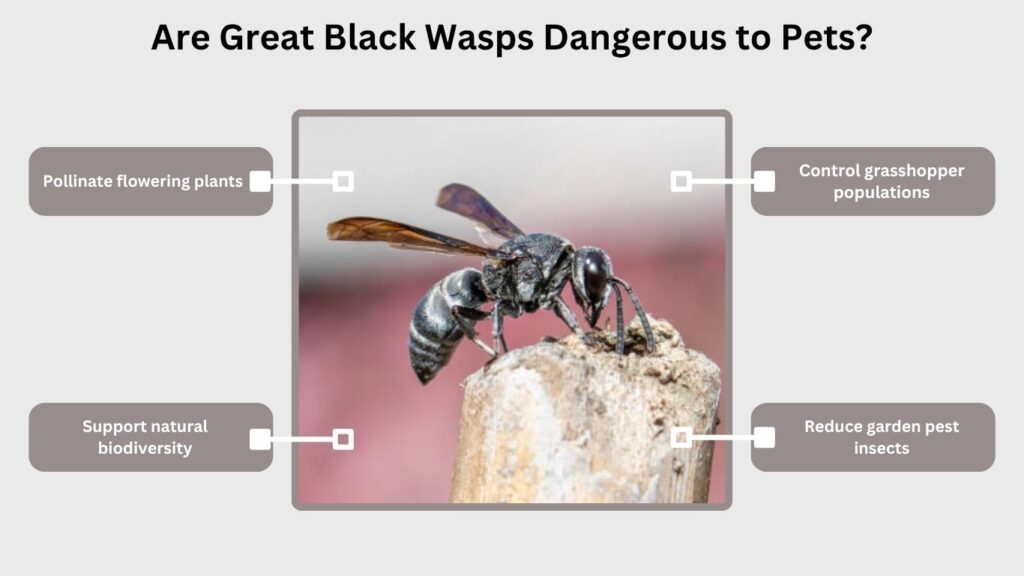
Despite their intimidating appearance, great black wasps play an important ecological role. They help maintain healthy insect populations and support pollination in gardens and natural landscapes.
Their hunting behavior also reduces certain pest insects that may damage plants or crops.
Ecological Benefits
Great black wasps contribute to balanced ecosystems in several ways.
- Control grasshopper populations
- Reduce garden pest insects
- Pollinate flowering plants
- Support natural biodiversity
- Improve garden ecosystem health
For this reason, many gardeners choose to leave the insects undisturbed whenever possible.
FAQs
Is the great black wasp dangerous to humans?
Great black wasps are generally not dangerous to humans because they are solitary and non-aggressive. Female wasps can sting if threatened, but most people experience only mild pain and temporary swelling after a sting.
Do great black wasps attack people?
Great black wasps rarely attack people and usually try to avoid human contact. Unlike hornets or yellowjackets, they do not defend large colonies or swarm aggressively around nests.
What happens if a great black wasp stings you?
A great black wasp sting usually causes mild symptoms such as burning pain, redness, swelling, and itching. Severe allergic reactions are uncommon but may require immediate medical attention if breathing difficulties occur.
Are great black wasps beneficial insects?
Yes, great black wasps are beneficial because they help control pests like grasshoppers and crickets. They also contribute to pollination while feeding on flower nectar in gardens and natural landscapes.
Should I remove great black wasps from my yard?
Removal is usually unnecessary unless the wasps are nesting near entryways, pets, or people with sting allergies. Since they are helpful pollinators and natural pest controllers, leaving them undisturbed is often the best option.