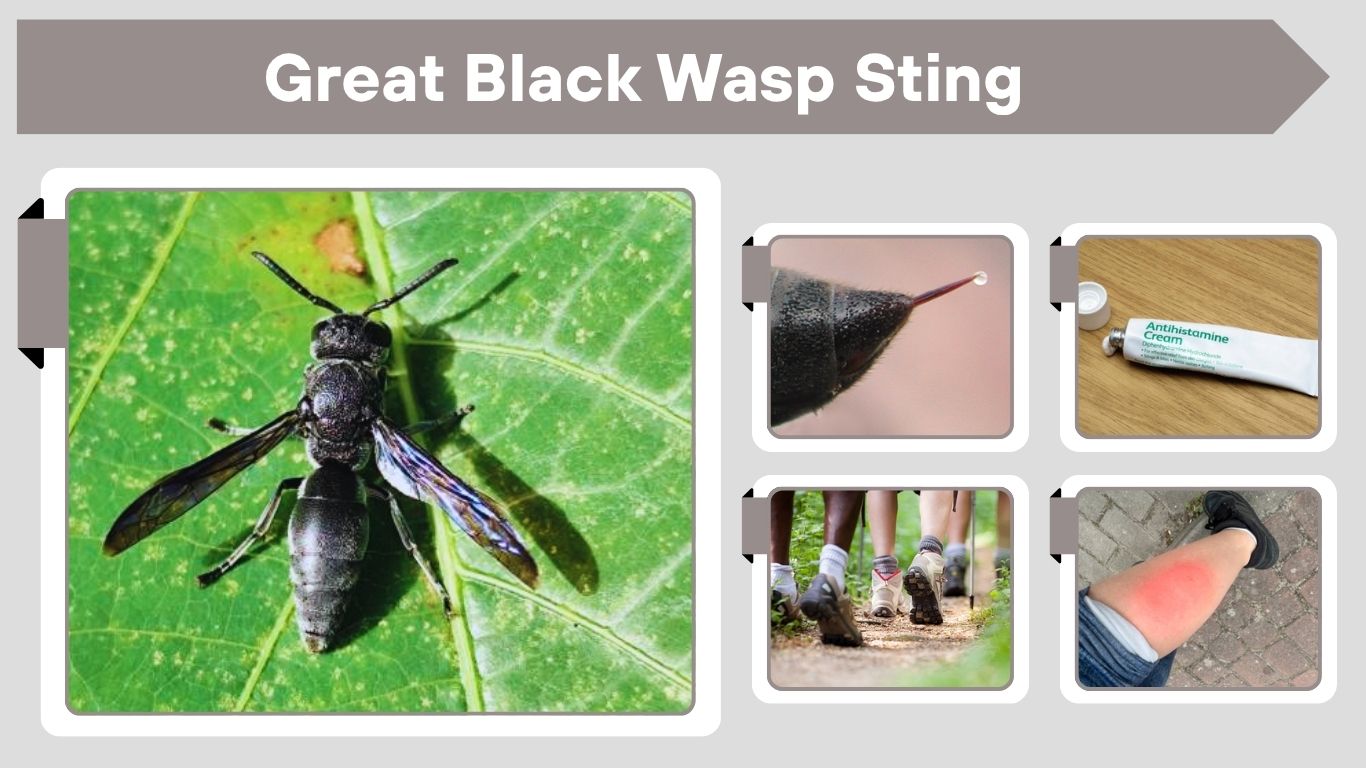
The great black wasp sting is often feared because of the insect’s large size and intimidating appearance. These solitary wasps are powerful hunters that use venom to paralyze prey, but they are generally non-aggressive toward humans. Most great black wasp stings happen only when the insect feels trapped or threatened. Although the sting can be painful, it is usually not medically serious for healthy individuals. Learning how painful the sting is, what symptoms may appear, and how to treat the reaction can help reduce unnecessary fear and improve safety.
Do Great Black Wasps Sting?
Great black wasps are capable of stinging, but only female wasps possess a stinger. Male great black wasps may aggressively hover near people or animals while defending territory, yet they cannot sting because they lack the necessary anatomy.
Female great black wasps use their stingers mainly for hunting prey such as grasshoppers, crickets, and katydids. Human stings are uncommon because these wasps generally prefer avoiding confrontation whenever possible.
Why Great Black Wasps Sting Humans
Most stings occur when the wasp feels threatened or trapped. Common situations include:
- Accidentally stepping on the wasp
- Handling the insect directly
- Disturbing a nest area
- Trapping the wasp inside clothing
- Swatting at the insect aggressively
Do Great Black Wasps Bite or Sting?
Great black wasps sting rather than bite. Their venom is delivered through a stinger located at the end of the abdomen.
Unlike honeybees, great black wasps do not lose their stinger after attacking. This means a female can sting more than once if necessary.
Great Black Wasp Stinger and Venom
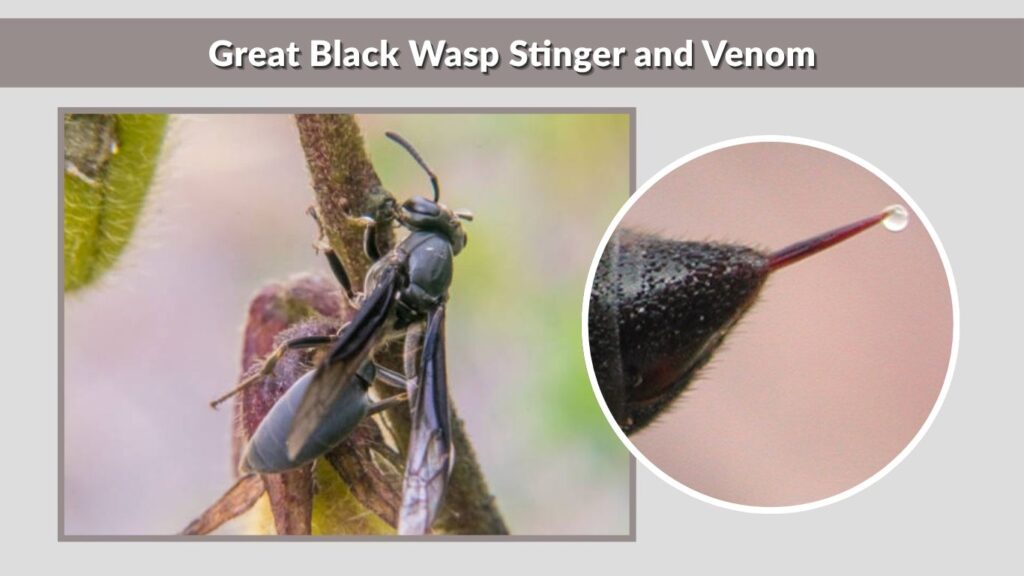
The great black wasp stinger is designed mainly for hunting prey rather than defending against large animals. Female wasps use venom to paralyze insects before dragging them into underground nests for developing larvae.
Although the venom can cause pain and swelling in humans, it is not considered highly dangerous for most healthy adults.
How Big Is the Great Black Wasp Stinger?
The stinger itself is relatively small but effective enough to inject venom quickly. Because the wasp has a large body, many people assume the stinger is extremely dangerous, though its venom is generally mild compared to more aggressive wasp species.
Can Great Black Wasps Sting Multiple Times?
Unlike honeybees, great black wasps can sting repeatedly because their stinger does not detach after use.
Key sting facts include:
- Females can sting multiple times
- Males cannot sting at all
- Most stings are defensive
- Venom mainly targets insect prey
How Painful Is a Great Black Wasp Sting?
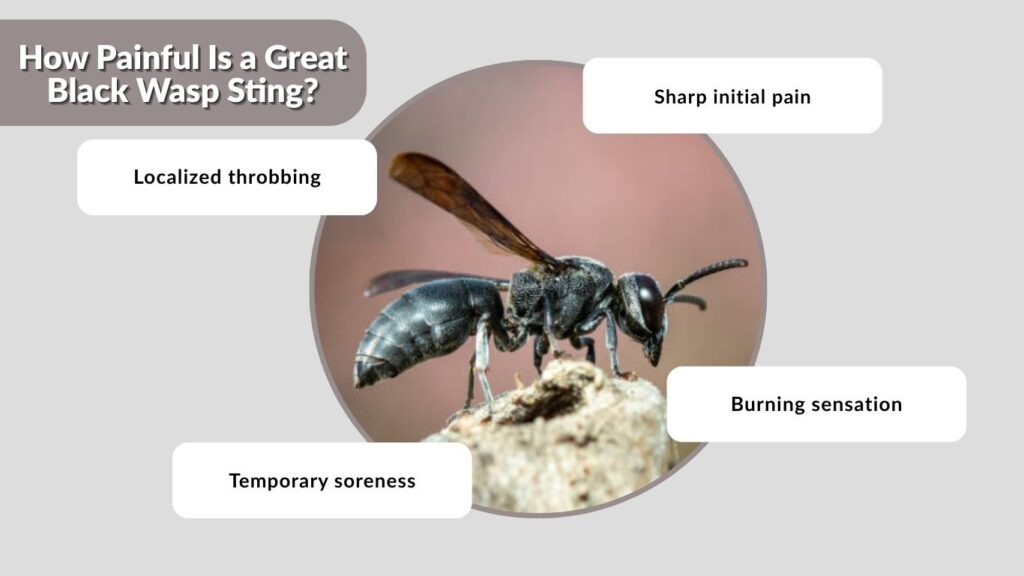
A great black wasp sting is often described as moderately painful. The sensation is usually immediate and sharp, followed by burning or throbbing around the sting site.
Pain levels vary depending on personal sensitivity, sting location, and the amount of venom injected.
Great Black Wasp Sting Pain Index
The sting of a great black wasp is not officially ranked as one of the world’s most painful insect stings, but many people compare it to a strong bee sting.
Common descriptions include:
- Sharp initial pain
- Burning sensation
- Localized throbbing
- Temporary soreness
- Mild itching during healing
Does a Great Black Wasp Sting Hurt?
Yes, the sting does hurt, but most healthy individuals recover quickly without serious complications. Pain often improves significantly within several hours, though mild irritation may continue for a day or two.
The sting is generally considered less painful than a tarantula hawk sting or large hornet sting.
What Does a Great Black Wasp Sting Look Like?
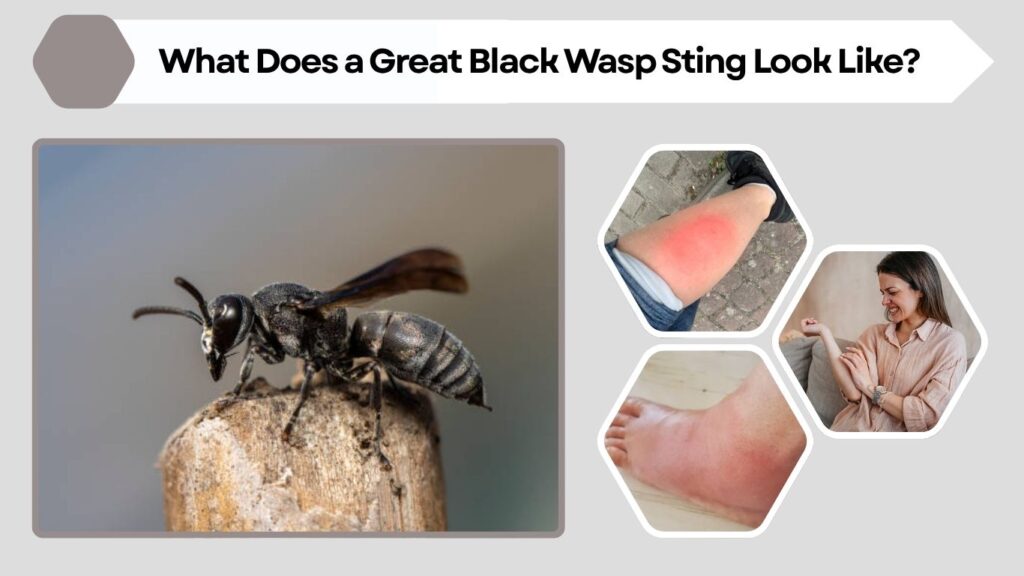
A great black wasp sting usually appears as a small red bump surrounded by mild swelling. In some cases, the area may become slightly raised or warm to the touch.
The appearance varies depending on skin sensitivity and the severity of the reaction. Most stings remain localized and heal without permanent damage.
Great Black Wasp Sting Symptoms
Common symptoms after a sting include:
- Sharp pain
- Redness
- Mild swelling
- Burning sensation
- Temporary itching
Great Black Wasp Sting Swelling
Swelling is one of the most common reactions and may last from several hours to a few days. Stings on sensitive areas such as fingers, feet, or the face may swell more noticeably.
People with allergic sensitivities may experience stronger swelling reactions and should monitor symptoms carefully.
Great Black Wasp Sting Reaction
Most great black wasp sting reactions are mild and improve naturally over time. However, allergic reactions can occur in sensitive individuals.
Severe reactions are rare but may require emergency medical attention if symptoms spread beyond the sting site.
Warning Signs of a Severe Reaction
- Difficulty breathing
- Swelling of the throat or face
- Dizziness
- Rapid heartbeat
- Severe hives
Anyone experiencing these symptoms after a sting should seek immediate medical care.
What Happens If a Great Black Wasp Stings You?
For most people, the sting causes temporary discomfort and localized irritation rather than serious medical problems. The body gradually breaks down the venom, and symptoms improve naturally within a short period.
Proper first aid and avoiding scratching the sting area can help speed up recovery and reduce irritation.
Great Black Wasp Sting Treatment
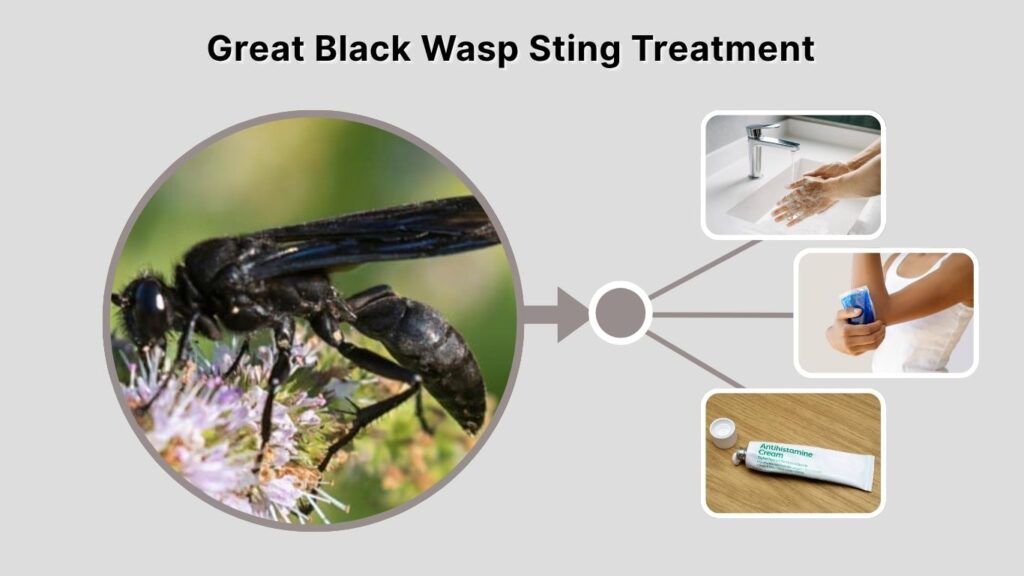
Most great black wasp stings can be treated at home using basic first-aid methods. Cleaning the sting area and reducing swelling quickly can help relieve discomfort and prevent irritation from becoming worse.
The majority of symptoms improve within a few hours or days without the need for medical treatment. However, people with allergies or severe reactions should seek professional medical care immediately.
How to Treat a Great Black Wasp Sting
The following steps are commonly recommended after a sting:
- Wash the area with soap and water
- Apply a cold compress or ice pack
- Elevate the affected area if swelling develops
- Use antihistamines for itching
- Take over-the-counter pain relievers if needed
What to Avoid After a Sting
Certain actions may worsen irritation or increase the risk of infection.
Avoid:
- Scratching the sting site
- Applying dirty bandages
- Using excessive heat
- Squeezing the swollen area
- Ignoring severe allergic symptoms
Keeping the area clean and avoiding irritation usually helps the skin heal faster.
Great Black Wasp Sting Pictures and Skin Appearance
People often search for great black wasp sting pictures because reactions can look different depending on the person and sting location. Some stings appear as small red marks, while others cause noticeable swelling.
Most sting marks remain localized and disappear gradually without scarring.
What Does a Great Black Wasp Sting Look Like?
A typical sting may include:
- Small puncture mark
- Red circular bump
- Mild swelling around the area
- Warm or irritated skin
- Slight blistering in sensitive individuals
Great Black Wasp Stings on Skin
Stings on thin or sensitive skin areas may appear more severe than stings on thicker skin. Fingers, ankles, hands, and facial areas often swell more noticeably because these areas contain sensitive tissue.
The appearance usually improves steadily as the venom effects fade.
Are Great Black Wasp Stings Dangerous?
Great black wasp stings are generally not considered dangerous for healthy adults. These wasps are solitary hunters and are much less aggressive than social wasps such as yellowjackets or hornets.
Most people experience only temporary pain and swelling after being stung.
Can Great Black Wasp Stings Cause Serious Problems?
Although uncommon, certain complications are possible:
- Allergic reactions
- Excessive swelling
- Skin infection from scratching
- Severe irritation in sensitive individuals
People with known insect sting allergies should remain cautious around all stinging insects, including great black wasps.
Do Great Black Wasps Die After Stinging?
Unlike honeybees, great black wasps survive after stinging because their stinger does not detach from the body.
Important sting facts include:
- Females can sting more than once
- Males cannot sting
- Stings are mainly defensive
- Repeat stings are uncommon
Because they survive after stinging, great black wasps can continue hunting and defending themselves normally.
Can Great Black Wasps Sting Dogs or Pets?
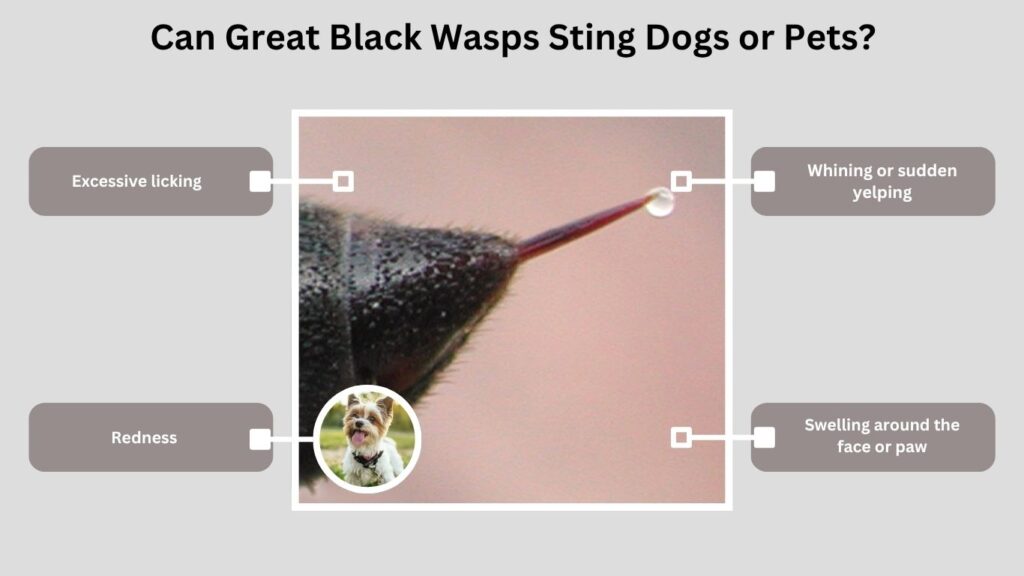
Dogs and pets may occasionally get stung if they disturb a wasp while exploring outdoors. Curious pets that sniff or paw at insects are more likely to be stung.
Most pet stings cause temporary pain and swelling similar to human reactions.
Symptoms of a Great Black Wasp Sting in Dogs
Pet owners may notice:
- Whining or sudden yelping
- Swelling around the face or paw
- Excessive licking
- Redness
- Mild limping
When Pets Need Veterinary Care
Veterinary attention may be necessary if:
- Swelling affects breathing
- The pet becomes weak or lethargic
- Vomiting occurs
- Multiple stings happen
- Severe allergic reactions develop
Prompt veterinary care is especially important if the sting occurs inside the mouth or throat.
Why Great Black Wasps Sting Other Insects
Great black wasps are skilled hunters that use their stingers primarily for capturing prey rather than defending against humans. Female wasps hunt insects such as grasshoppers and crickets to feed developing larvae inside underground nests.
The venom temporarily paralyzes prey, allowing the wasp to transport it safely back to the nest.
Can a Great Black Wasp Sting Kill a Spider?
Great black wasps mainly target large insects rather than spiders, but their venom is powerful enough to paralyze or kill small arthropods.
The sting is specifically adapted for:
- Hunting prey
- Preventing prey escape
- Protecting nests
- Feeding larvae
This hunting behavior plays an important role in controlling insect populations naturally.
How to Avoid Great Black Wasp Stings
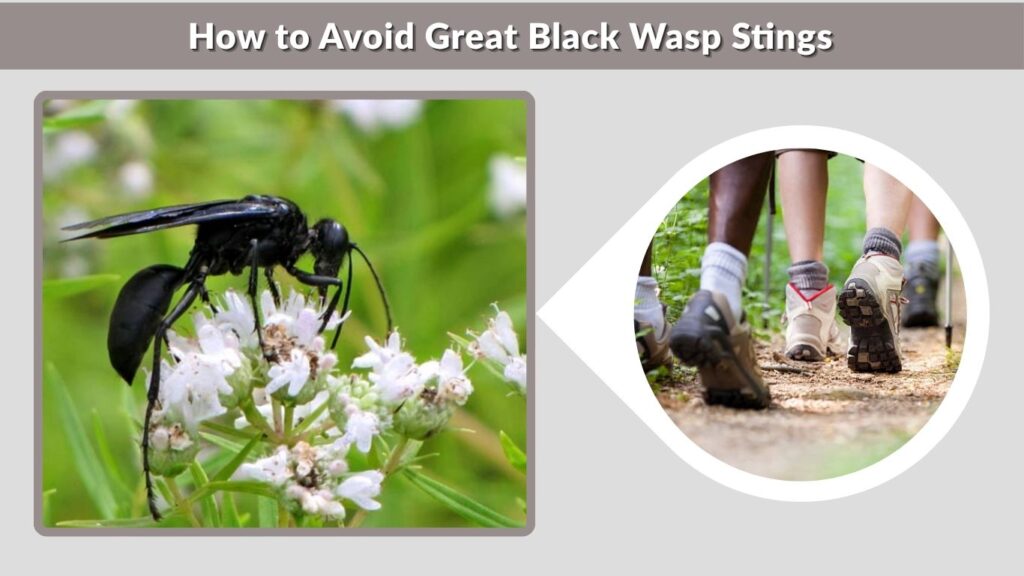
Most stings can be avoided by remaining calm and giving wasps space when encountered outdoors. Great black wasps are usually more interested in hunting than attacking humans.
Tips to Prevent Stings
- Avoid disturbing nesting areas
- Wear shoes outdoors
- Do not swat at hovering wasps
- Keep outdoor food covered
- Use caution while gardening
Understanding their behavior can greatly reduce the chance of accidental stings.
FAQs
Can male great black wasps sting?
No, male great black wasps cannot sting because they do not have stingers. Only female great black wasps possess stingers, which they mainly use for hunting prey and defending themselves when threatened.
How long does great black wasp sting pain last?
The pain from a great black wasp sting usually lasts from several minutes to a few hours. Mild swelling, redness, or itching may continue for one or two days depending on the person’s sensitivity.
Are great black wasp stings worse than bee stings?
Many people describe a great black wasp sting as similar to or slightly stronger than a bee sting. The pain is usually sharp and burning at first but generally fades faster than severe hornet stings.
Can great black wasps sting multiple times?
Yes, female great black wasps can sting multiple times because their stingers do not detach after use. However, repeated stinging is uncommon since these wasps are not naturally aggressive toward humans.
Should you go to the hospital after a great black wasp sting?
Most stings do not require hospital treatment. Emergency medical care is only necessary if severe allergic reactions occur, such as breathing difficulty, throat swelling, dizziness, or widespread hives after the sting.