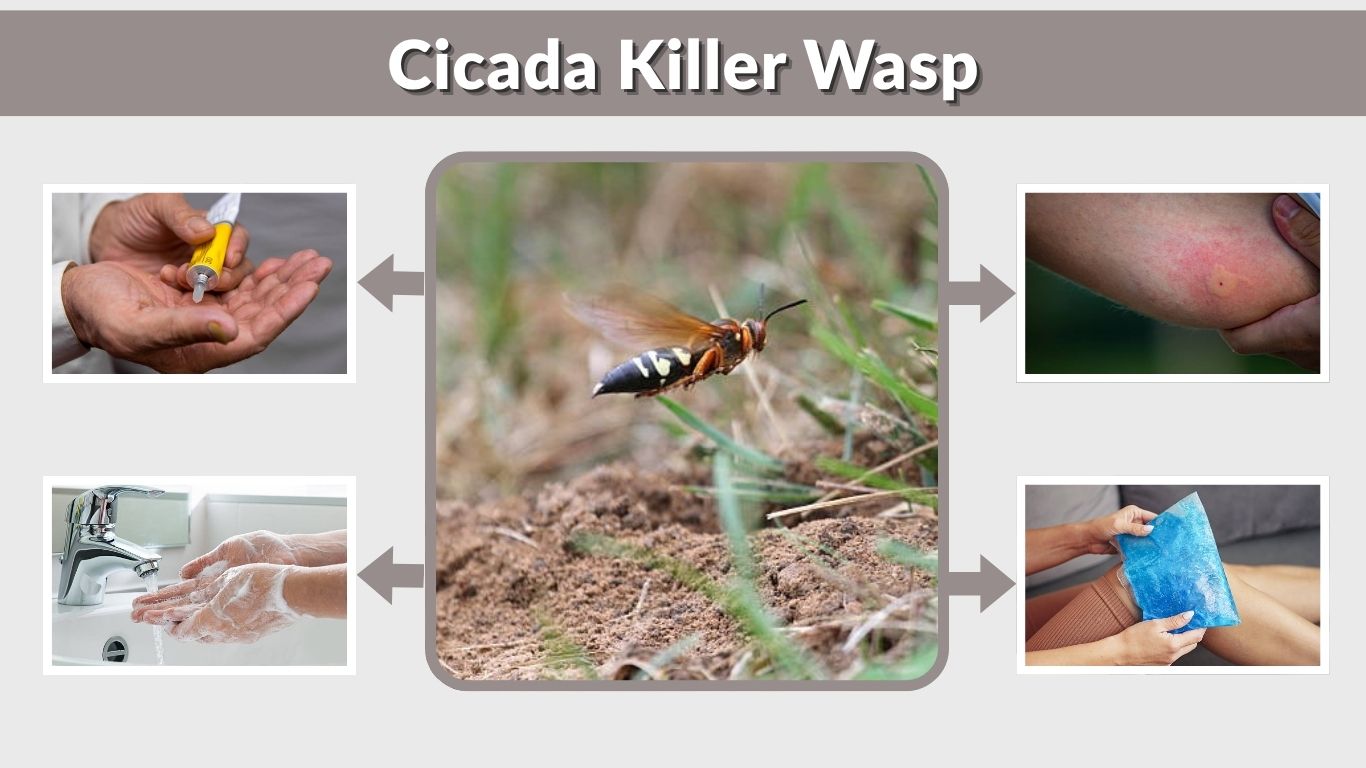
Cicada killer wasps are large, solitary insects that often alarm homeowners because of their intimidating appearance and loud buzzing flight. Many people worry about getting stung after seeing these giant wasps flying around lawns, gardens, and nesting areas during summer. Although female cicada killer wasps can sting, they rarely attack humans and usually prefer avoiding confrontation. Their stingers are mainly used to paralyze cicadas for their larvae rather than to defend nests aggressively. Understanding cicada killer wasp sting behavior, symptoms, and treatment options can help reduce fear and improve safety around these insects.
Do Cicada Killer Wasps Sting?
Cicada killer wasps are capable of stinging, but stings are relatively uncommon. Female cicada killers possess stingers, while males do not have the ability to sting at all.
Why Cicada Killer Wasps Sting
Female cicada killers primarily use their stingers to paralyze cicadas before dragging them underground to feed developing larvae. Human stings usually happen only when the wasp feels threatened or trapped.
Common reasons cicada killer wasps sting include:
- Being stepped on accidentally
- Handling or trapping the wasp
- Disturbing active nests
- Defending themselves from threats
- Protecting underground tunnels
Why Male Cicada Killers Cannot Sting
Male cicada killer wasps often hover aggressively near people and pets, which makes them appear dangerous. However, males are harmless because they do not possess stingers.
Their territorial behavior is meant to scare away intruders from nesting areas rather than cause harm. Most encounters with males end without physical contact or injury.
Do Cicada Killer Wasps Sting Humans?
Female cicada killer wasps can sting humans, but they are usually calm insects that avoid confrontation whenever possible.
Will a Cicada Killer Wasp Sting You?
Most people are never stung by cicada killer wasps because the insects prefer escaping instead of attacking. Stings are more likely if someone directly handles the wasp, disturbs a nest, or accidentally traps it against the skin.
Important facts about human stings include:
- Human stings are uncommon
- Females sting only defensively
- Most stings happen accidentally
- Males cannot sting people
- Cicada killers are less aggressive than hornets
Are Eastern Cicada Killer Wasps Dangerous to Humans?
Eastern cicada killer wasps behave similarly to other cicada killer species and are generally considered low-risk to humans. Although their size can appear frightening, these wasps are far less aggressive than yellowjackets or social hornets.
Most eastern cicada-killer wasps focus on hunting cicadas, digging tunnels, and caring for nests rather than interacting with people.
What Does a Cicada Killer Wasp Sting Feel Like?
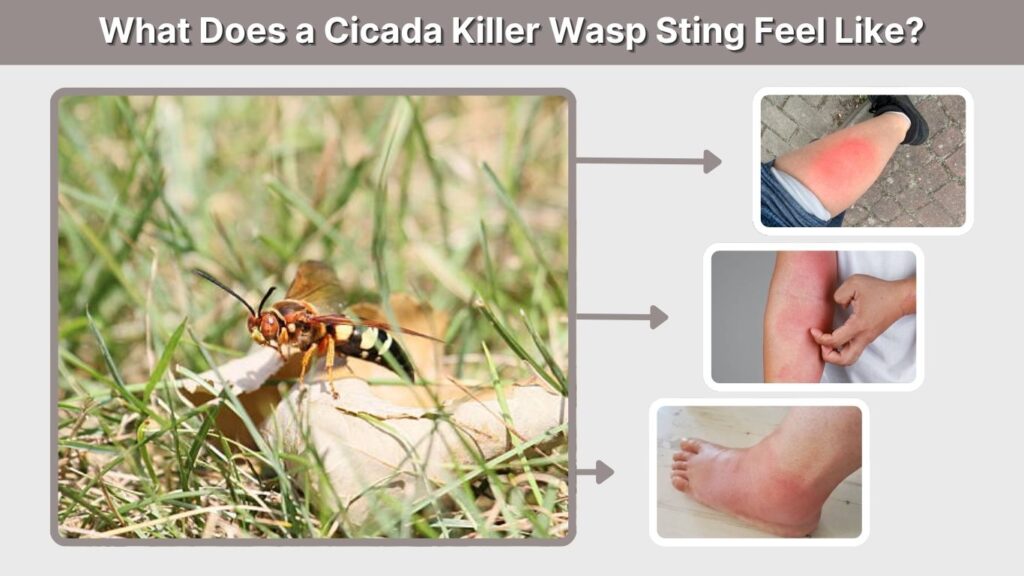
A cicada killer wasp sting usually causes immediate pain followed by mild swelling and irritation around the sting site.
Common Cicada Killer Wasp Sting Symptoms
Most sting reactions are temporary and improve within several hours or days, depending on individual sensitivity.
Common symptoms include:
- Sharp burning pain
- Redness around the sting
- Mild swelling
- Tenderness or soreness
- Itching near the sting site
Cicada Killer Wasp Sting Pain Index
The pain from a cicada killer wasp sting is often compared to a bee sting. Most people describe the pain as moderate rather than extreme.
Pain intensity may vary depending on sting location and individual sensitivity. Although uncomfortable, cicada killer stings are usually not considered medically serious for most healthy adults.
Cicada Killer Wasp Stinger
The female cicada killer wasp has a long stinger designed mainly for hunting cicadas rather than attacking humans.
Cicada Killer Wasp Stinger Size and Appearance
The stinger is thin, sharp, and strong enough to penetrate the bodies of cicadas during hunting. Female cicada killers use venom to paralyze prey before carrying it underground.
The stinger may appear intimidating because of the wasp’s large body size, but females generally reserve stings for defensive situations.
Why Cicada Killer Wasps Use Their Stingers
Unlike aggressive social wasps that defend colonies, cicada killer wasps mainly rely on their stingers for hunting. Their venom helps immobilize cicadas while keeping them alive for larval feeding.
This specialized hunting behavior is one reason cicada killer wasps rarely waste venom on humans unless absolutely necessary.
Cicada Killer Wasp Sting Reaction
Reactions to cicada killer wasp stings vary between individuals. Most people experience only mild symptoms, though allergic reactions are possible in sensitive individuals.
Mild vs Severe Sting Reactions
Most sting reactions remain localized near the sting site and improve gradually without medical treatment.
Common mild reactions include:
- Temporary swelling
- Minor redness
- Mild itching
- Warm skin near the sting
- Short-term discomfort
Severe allergic reactions are uncommon but may involve breathing difficulty, widespread swelling, dizziness, or hives. These symptoms require immediate medical attention.
Cicada Killer Wasp Sting Treatment
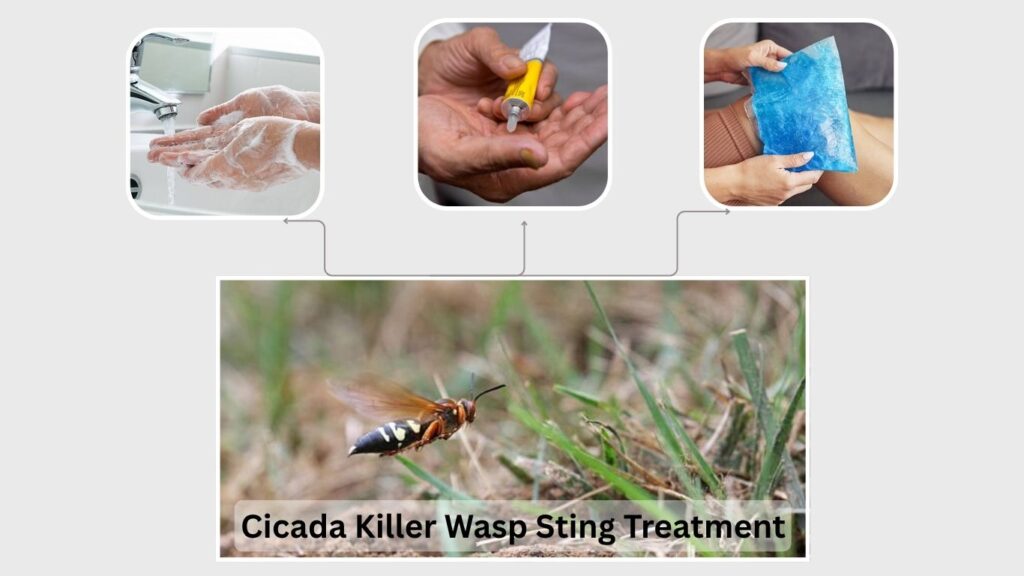
Most cicada killer wasp stings can be treated at home with simple first aid measures. Quick treatment helps reduce pain, swelling, and irritation while lowering the chance of infection from scratching.
Best Ways to Treat a Cicada Killer Wasp Sting
Basic care usually provides relief within a short time after the sting occurs.
- Wash the sting area with soap and water
- Apply an ice pack to reduce swelling
- Use antihistamines for itching or irritation
- Apply anti-itch or hydrocortisone cream
- Avoid scratching the sting site
When to Seek Medical Attention
Although most stings are mild, some reactions may require medical care. People with known insect sting allergies should monitor symptoms carefully after being stung.
Difficulty breathing, severe swelling, dizziness, or widespread hives may indicate a serious allergic reaction. Increasing redness, pus, or warmth around the sting may also suggest infection.
Cicada Killer Wasp Sting in Dogs and Pets
Dogs and other curious pets sometimes get stung after investigating cicada killer wasps or disturbing underground nests. Most pet stings are mild, though swelling and discomfort are common.
Signs a Dog Was Stung by a Cicada Killer Wasp
Pet sting symptoms usually appear quickly after contact with the wasp.
- Paw licking or chewing
- Facial swelling
- Limping or sensitivity
- Whining or restlessness
- Red irritated skin
When Pets Need Veterinary Care
Most pet stings improve with rest and monitoring, but severe swelling or breathing difficulty requires immediate veterinary attention.
Dogs stung around the mouth or throat may experience more serious swelling because the airway can become affected. Veterinarians may recommend antihistamines or other treatments depending on symptom severity.
Eastern and Western Cicada Killer Wasp Sting
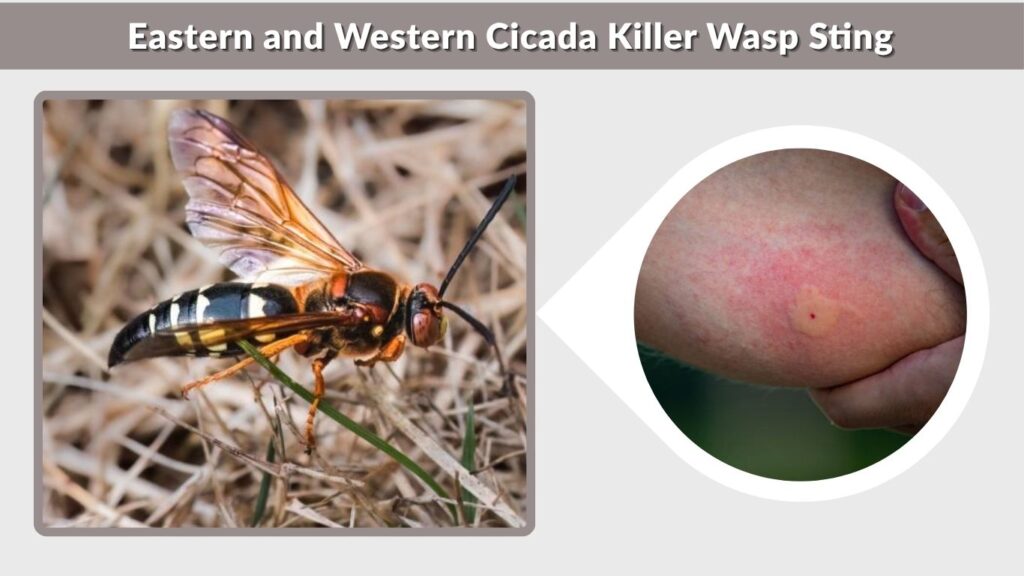
Eastern and western cicada killer wasps have similar sting behavior and pain levels. Both species are solitary wasps that rarely sting humans unless threatened.
Eastern Cicada Killer Wasp Sting
Eastern cicada killer wasps are commonly found throughout many parts of the United States during summer. Female eastern cicada killers are capable of stinging, but generally avoid confrontation with people.
Most stings happen when nests are disturbed or when the wasp becomes trapped against clothing or skin.
Western Cicada Killer Wasp Sting
Western cicada killer species display similar hunting and nesting behavior. Their sting reactions are usually mild and comparable to other cicada killer species.
Although their appearance may look intimidating, western cicada killers are not considered highly aggressive insects.
Are Cicada Killer Wasp Stings Dangerous?
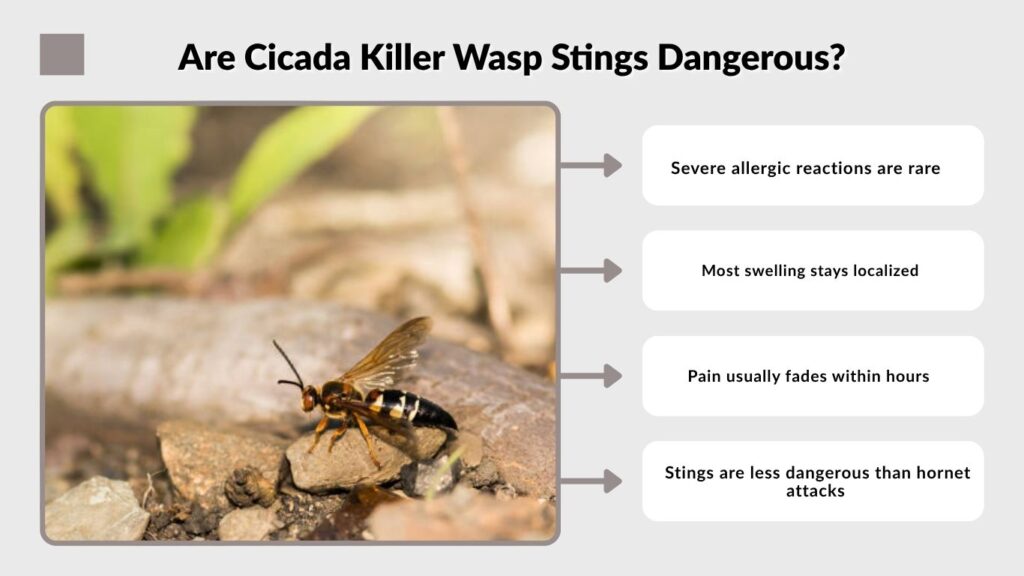
For most healthy people, cicada killer wasp stings are not considered dangerous. The majority of reactions remain mild and improve with basic treatment.
How Dangerous Is a Cicada Killer Wasp Sting?
Most stings cause temporary pain and swelling rather than serious medical problems.
Important safety facts include:
- Severe allergic reactions are rare
- Most swelling stays localized
- Pain usually fades within hours
- Stings are less dangerous than hornet attacks
- Cicada killers rarely sting repeatedly
Cicada Killer Wasp Sting Recovery Time
Minor symptoms often improve within one or two days, though mild itching or tenderness may last slightly longer in sensitive individuals.
Scratching the sting area excessively can increase irritation and raise the risk of infection, which may delay healing.
Can Cicada Killer Wasps Sting Through Clothing?
Female cicada killer wasps may be able to sting through thin clothing if trapped against the skin. Thick protective materials provide much better protection against stings.
Can a Cicada Killer Wasp Sting Through a Bee Suit?
Proper bee suits and thick protective gear are usually designed to prevent most wasp stings. However, poorly fitted or thin protective clothing may not provide complete protection during close contact.
People working near nests should wear gloves, long sleeves, and thick fabrics to reduce sting risk.
Common Myths About Cicada Killer Wasp Stings
Many fears about cicada killer stings come from myths and misunderstandings rather than actual aggressive behavior.
Myth: Cicada Killer Wasps Attack Humans Frequently
Cicada killer wasps rarely sting humans and usually try to escape instead of attack.
Myth: Male Cicada Killers Can Sting
Male cicada killer wasps do not have stingers, even though they may hover aggressively near people or pets.
Myth: Cicada Killer Wasp Stings Are Extremely Dangerous
Most stings are mild and manageable with basic first aid. Serious reactions are uncommon except in people with venom allergies.
FAQs
Do cicada killer wasps sting humans?
Yes. Female cicada killer wasps can sting humans, but stings are uncommon because they usually avoid confrontation.
How painful is a cicada killer wasp sting?
The sting is generally considered moderately painful and may feel similar to a bee sting with temporary burning and swelling.
Can male cicada killer wasps sting?
No. Male cicada killer wasps do not have stingers.
What should I do after a cicada killer wasp sting?
Wash the area, apply ice, use antihistamines if needed, and monitor for allergic reactions or severe swelling.
Are cicada killer wasp stings dangerous?
Most stings are mild, but allergic individuals may experience more serious reactions that require medical attention.