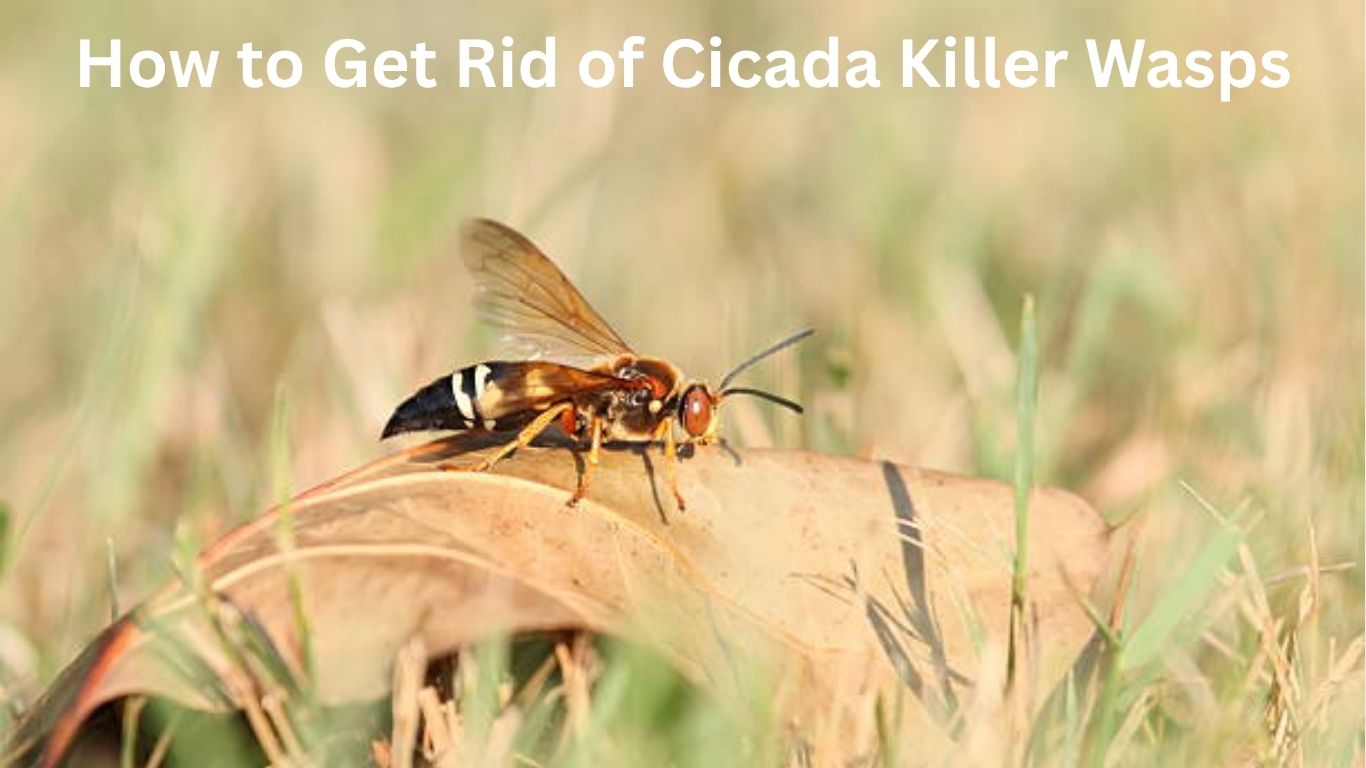
Cicada killer wasps are large ground-nesting insects that often appear in yards during the summer months. Their size and loud buzzing can make them seem dangerous, but these wasps are usually less aggressive than many other stinging insects. Homeowners commonly notice them digging holes in dry soil, flying low across lawns, or hovering near nesting areas. Although cicada killer wasps help control cicada populations, large infestations can damage lawns and become a nuisance. Proper treatment and prevention methods can help remove them safely and reduce future nesting activity.
What Are Cicada Killer Wasps?
Cicada killer wasps are solitary wasps known for hunting cicadas and carrying them underground to feed developing larvae. Unlike social wasps that live in large colonies, cicada killers usually build individual nests in soil. They are most active during warm summer weather and prefer sunny areas with loose dirt or sparse grass coverage.
How to Identify Cicada Killer Wasps
These wasps are often confused with hornets because of their large size and yellow markings. However, cicada killers have different behavior patterns and are usually less aggressive toward humans.
Common identifying features include:
- Large bodies that may reach nearly two inches long
- Black and yellow striped abdomen
- Reddish-brown wings
- Loud buzzing while flying
- Low flight patterns near the ground
Eastern Cicada Killer Wasps
Eastern cicada killer wasps are commonly found throughout many parts of the United States. They are especially active in areas with sandy or dry soil conditions where digging is easier.
These wasps spend most of their time searching for cicadas, digging nests, and protecting nesting areas. Male cicada killers often hover near people or pets, but they cannot sting. Female wasps can sting, though they usually avoid human contact unless threatened.
Signs You Have a Cicada Killer Wasp Infestation
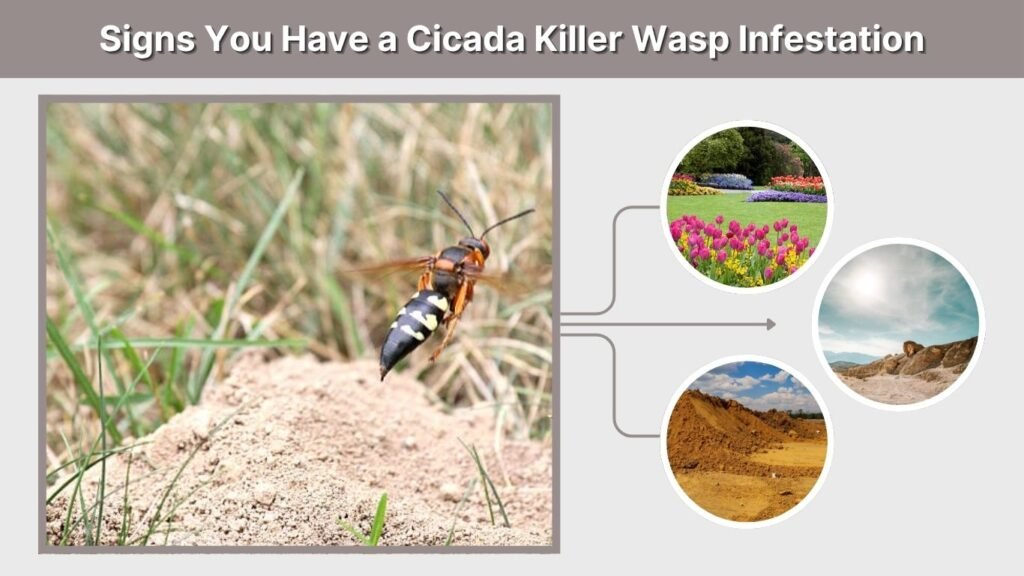
Cicada killer infestations are usually easy to spot because the wasps spend much of the day flying close to the ground. Their nesting activity also leaves visible holes and dirt piles throughout the yard.
Common Signs of Cicada Killer Wasps
Several warning signs may indicate active cicada killer nests around the property. Activity levels often increase during hot afternoons when the wasps are most active.
- Large wasps flying over lawns or gardens
- Half-inch holes in dry soil
- Mounds of loose dirt near tunnels
- Increased wasp activity during summer
- Cicadas disappearing around the yard
What Cicada Killer Wasp Holes Look Like
The entrance holes created by cicada killer wasps are usually surrounded by piles of loose soil. These tunnels can extend deep underground and contain multiple chambers where eggs and paralyzed cicadas are stored.
Because the tunnels are hidden beneath the surface, infestations may continue growing even when only a few holes are visible above ground.
Why Cicada Killer Wasps Nest in Yards
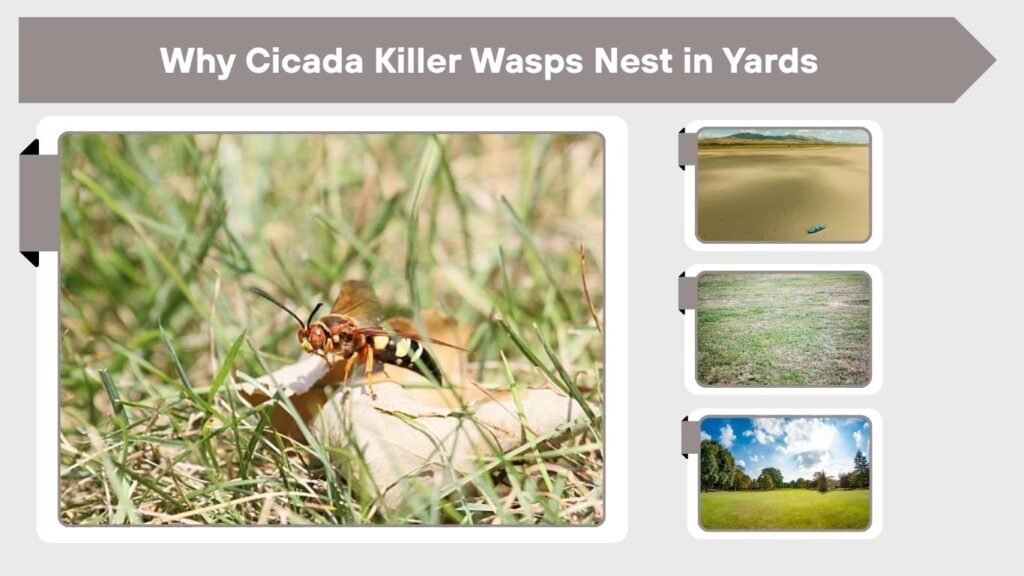
Cicada killer wasps choose nesting areas carefully. They prefer locations with warm temperatures, direct sunlight, and dry soil that is easy to dig. Yards with bare patches of dirt often attract much larger numbers of these wasps.
Yard Conditions That Attract Cicada Killer Wasps
Certain landscaping conditions make properties more appealing for nesting activity. Areas with poor grass growth are especially vulnerable because exposed soil provides ideal digging conditions.
Common attractants include:
- Dry sandy soil
- Thin or patchy grass
- Sunny open spaces
- Loose landscaping dirt
- Nearby cicada populations
Why Cicada Killer Wasps Return Every Year
Many homeowners notice cicada killer wasps returning to the same locations each summer. This happens because the soil conditions remain favorable for nesting and because larvae may remain underground for long periods before emerging.
Without lawn improvements or nest treatment, the wasps may continue using the same yard season after season.
How to Get Rid of Cicada Killer Wasps Fast
Removing cicada killer wasps usually requires treating active nests directly while also reducing conditions that attract them. Timing is important because these wasps are less active during evening hours.
Best Methods for Fast Cicada Killer Wasp Removal
Several treatment options can help control cicada killer populations quickly. For severe infestations, combining multiple methods often provides better results.
- Apply dust insecticides into active nest holes
- Use foaming wasp sprays for visible tunnels
- Flood shallow nest openings with water
- Seal abandoned tunnels after treatment
- Contact professional pest control for large infestations
Best Time to Treat Cicada Killer Wasp Nests
Evening and early nighttime hours are usually the safest times to treat cicada killer nests because most wasps are underground and less active. Treating nests during the hottest part of the day may increase wasp activity and make removal more difficult.
Protective clothing and caution are important during any treatment process, especially for people with insect sting allergies.
How to Get Rid of Cicada Killer Wasps Naturally
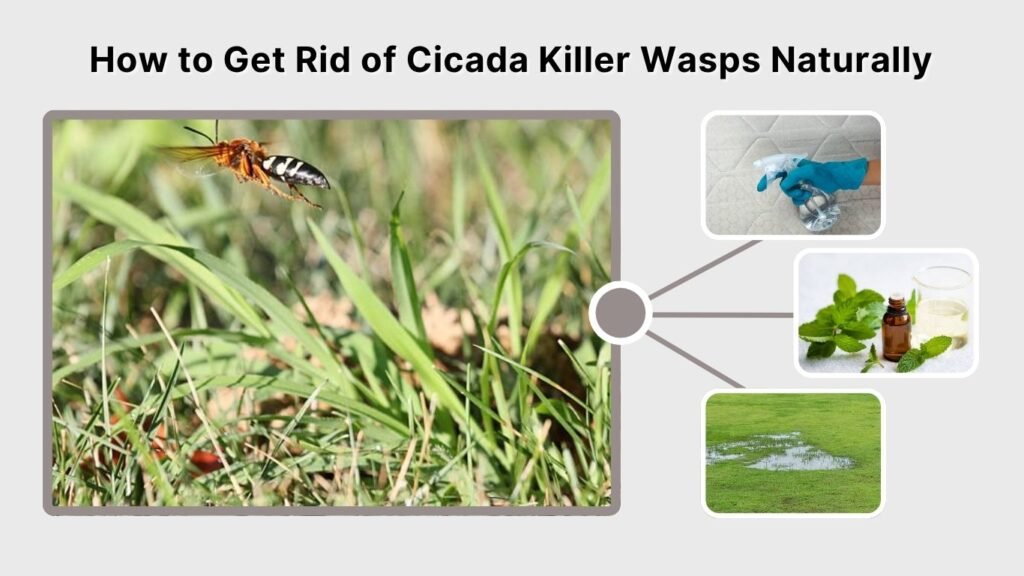
Many homeowners prefer natural solutions before using stronger insecticides. Natural methods are often safer for pets, children, and beneficial insects, though they usually work best for smaller infestations or prevention rather than severe nesting problems.
Natural Cicada Killer Wasp Remedies
Several natural remedies may help discourage cicada killer wasps from nesting in the yard. Consistency is important because these wasps often return if soil conditions remain ideal.
- Spray vinegar around nesting areas
- Apply peppermint oil near tunnel entrances
- Use diatomaceous earth on dry soil
- Water lawns regularly to reduce dry ground
- Add mulch or thicker grass coverage
Do Natural Remedies Really Work?
Natural remedies can reduce wasp activity, but they are not always strong enough to eliminate established nests completely. Cicada killer wasps are persistent diggers and may relocate only a short distance away if conditions still support nesting.
For larger infestations, natural methods usually work better when combined with lawn improvements and direct nest treatment.
How to Get Rid of Cicada Killer Wasp Nests
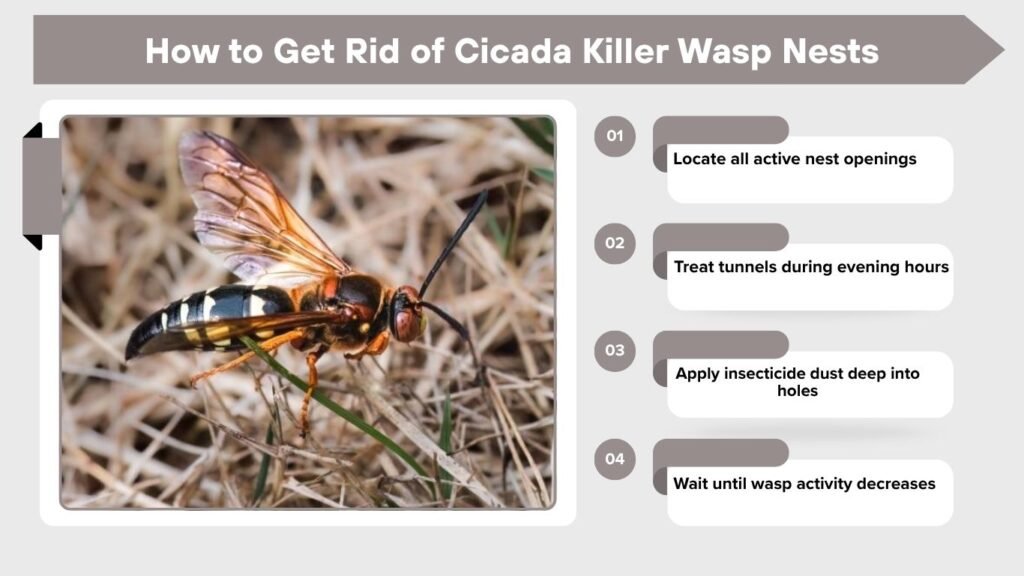
Cicada killer nests are underground tunnel systems that contain eggs, larvae, and stored cicadas. Proper nest treatment is important because untreated tunnels may continue producing wasps throughout the season.
Steps for Safe Nest Removal
Removing active nests carefully can reduce the risk of repeated infestations. Since female wasps spend most of their time underground, treating the entire tunnel is more effective than simply spraying the entrance.
Important nest removal steps include:
- Locate all active nest openings
- Treat tunnels during evening hours
- Apply insecticide dust deep into holes
- Wait until wasp activity decreases
- Fill inactive tunnels with soil afterward
How Deep Cicada Killer Wasp Nests Are
Cicada killer tunnels can extend several inches underground and may contain side chambers where larvae develop. These chambers are stocked with paralyzed cicadas that provide food for the growing larvae.
Because of the depth and structure of the tunnels, surface spraying alone may not fully eliminate the nest.
How to Prevent Cicada Killer Wasps From Returning
Long-term prevention is the best way to stop cicada killer wasps from nesting repeatedly in the same yard. Eliminating favorable soil conditions can make the property much less attractive for future activity.
Best Prevention Tips
Maintaining a healthy lawn and reducing exposed soil can significantly lower the chance of recurring infestations.
- Keep grass thick and healthy
- Water dry soil regularly
- Repair bare lawn patches quickly
- Add mulch to exposed dirt areas
- Reduce outdoor cicada attraction
Why Cicada Killer Wasps Keep Coming Back
Cicada killer wasps often return because the same nesting conditions still exist year after year. Dry sunny soil remains one of the biggest attractants for these insects.
If underground larvae survive untreated, new adult wasps may emerge the following season and begin digging new tunnels in nearby areas of the yard.
Cicada Killer Wasp Eggs and Larvae
Female cicada killer wasps lay eggs inside underground chambers after placing paralyzed cicadas beside them. Once the eggs hatch, the larvae feed on the cicadas until development is complete.
The larvae remain underground for much of their life cycle and may overwinter in the soil before emerging as adults during warmer weather. Because the developing wasps stay hidden beneath the surface, infestations can continue unnoticed until adult wasps appear again.
Understanding the life cycle helps explain why prevention and complete nest treatment are important for long-term control.
When to Call a Professional Exterminator
Some cicada killer infestations become too large or widespread for simple home treatment methods. Professional pest control services may be necessary when nests appear across large sections of the property or when homeowners are uncomfortable handling wasps directly.
Signs You Need Professional Help
Certain situations often require expert treatment to eliminate infestations safely and effectively.
- Multiple nests across the yard
- Heavy daytime wasp activity
- Recurring infestations every summer
- Family members with sting allergies
- Difficulty locating underground nests
Benefits of Professional Treatment
Professional exterminators have specialized products and equipment designed for underground wasp treatment. They can also inspect the property for conditions that encourage recurring infestations.
Many pest control companies provide follow-up inspections and prevention strategies to reduce future cicada killer activity.
FAQs
How long do cicada killer wasps stay around?
Adult cicada killer wasps are usually active for several weeks during the summer. Most activity peaks in mid to late summer before the wasps eventually die off after the breeding season ends.
Are cicada killer wasps beneficial?
Yes. Cicada killer wasps help control cicada populations naturally. They also rarely sting humans, making them less dangerous than many social wasp species.
Can cicada killer wasps damage my lawn?
Yes. Their digging activity can create multiple holes and dirt mounds that damage grass appearance, especially during larger infestations.
Will cicada killer wasps attack pets?
Cicada killer wasps generally avoid pets and humans. Female wasps may sting only if handled, stepped on, or directly threatened.
What time of day are cicada killer wasps most active?
Cicada killer wasps are most active during warm daytime hours, especially in the afternoon when temperatures are highest.