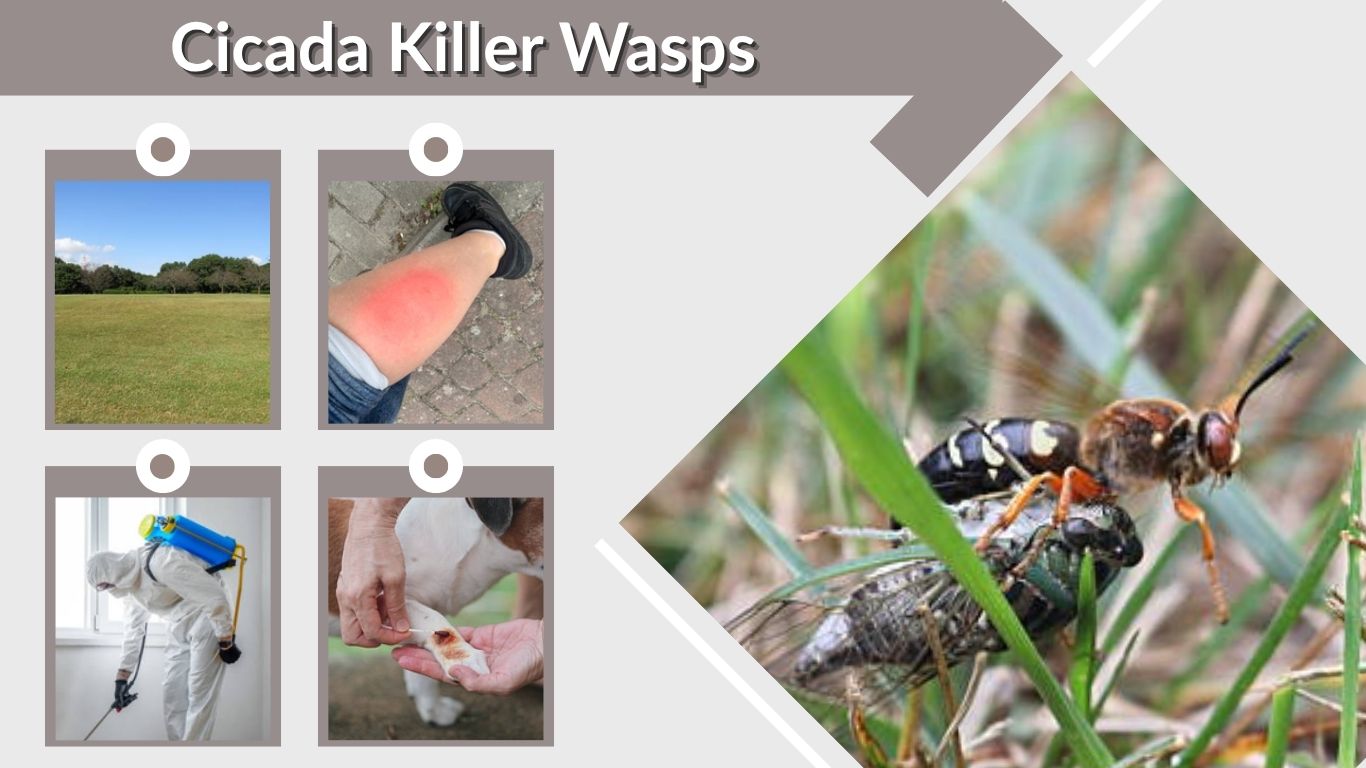
Cicada killer wasps are large flying insects that often frighten homeowners because of their enormous size, loud buzzing, and fast flight patterns. Many people mistake them for aggressive hornets or dangerous stinging pests when they appear in lawns and gardens during summer. Despite their intimidating appearance, cicada killer wasps are usually solitary and far less aggressive than many common wasp species. They mainly focus on hunting cicadas and building underground nests rather than attacking humans or pets. Understanding their behavior can help reduce fear and prevent unnecessary panic around these insects.
What Are Cicada Killer Wasps?
Cicada killer wasps are large solitary wasps known for hunting cicadas and carrying them underground to feed their developing larvae. Unlike social wasps such as yellowjackets, cicada killers do not live in colonies with workers and queens.
Common Cicada Killer Wasp Traits
These wasps are easy to identify because of their size and loud flight behavior. They are most active during summer when cicadas are abundant.
Common traits include:
- Large black body with yellow markings
- Reddish or amber-colored wings
- Loud buzzing while flying
- Ground-nesting behavior
- Solitary lifestyle
Why Cicada Killer Wasps Look So Dangerous
The large size of cicada killer wasps causes many people to believe they are highly aggressive. Some females can grow close to two inches long, making them one of the largest wasps in North America.
Their fast flight and territorial hovering also make them appear threatening, especially when males fly near people or pets. However, most of this behavior is defensive territory patrol rather than aggression.
Are Cicada Killer Wasps Dangerous?
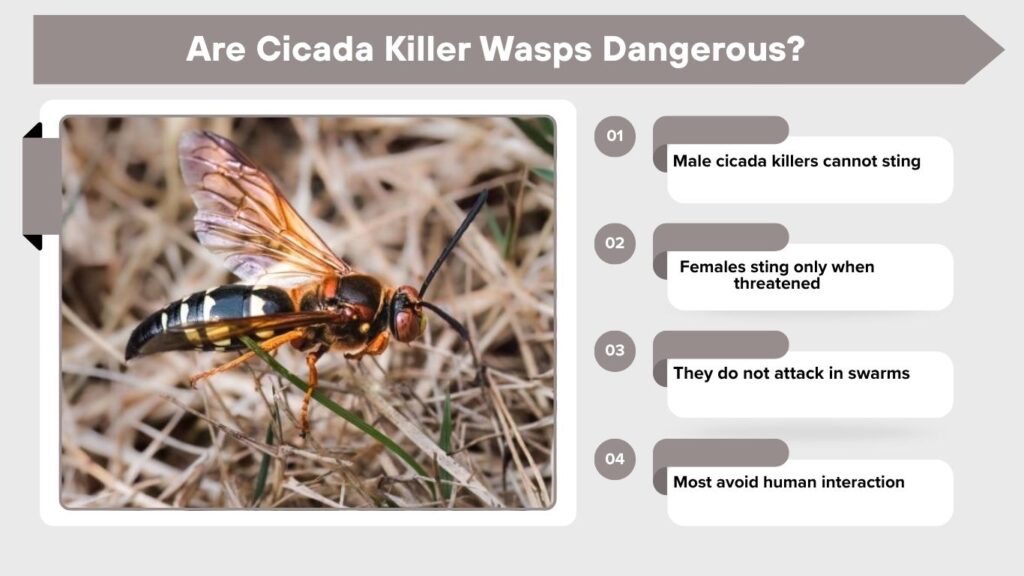
Cicada killer wasps are generally not considered dangerous to humans. They rarely sting and usually avoid conflict whenever possible. Most encounters end harmlessly without any aggressive behavior.
Why Cicada Killer Wasps Are Usually Harmless
Although female cicada killers can sting, they primarily use their stinger to paralyze cicadas rather than defend nests aggressively.
Important safety facts include:
- Male cicada killers cannot sting
- Females sting only when threatened
- They do not attack in swarms
- Most avoid human interaction
- Stings are uncommon
Why They Hover Around People
Male cicada killer wasps often hover near moving objects because they defend territory around nesting sites. This behavior can feel intimidating, but the males are harmless because they do not possess stingers.
Females spend most of their time hunting cicadas or digging nests rather than confronting humans. In most situations, cicada killers prefer escaping instead of fighting.
Are Cicada Killer Wasps Dangerous to Humans?
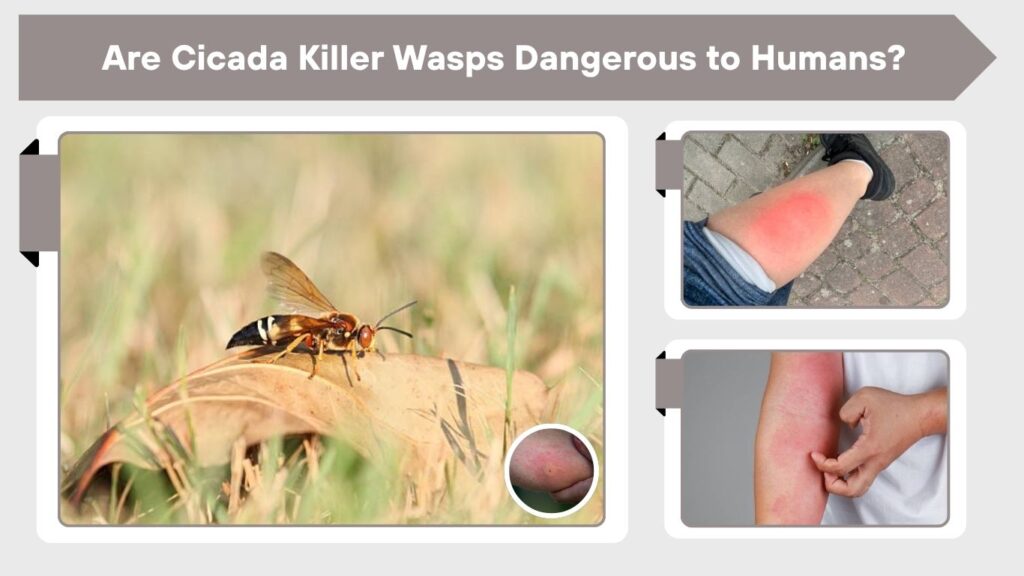
For most people, cicada killer wasps pose very little risk. Their calm behavior makes them much safer than aggressive social wasps that defend large colonies.
What Happens if a Cicada Killer Wasp Stings You?
A sting from a female cicada killer wasp usually causes temporary pain, redness, and swelling similar to other wasp stings. Severe reactions are uncommon unless the person has an allergy to insect venom.
Common sting symptoms include:
- Sharp temporary pain
- Mild swelling
- Redness around the sting site
- Itching or irritation
- Minor soreness for several hours
Allergic Reactions and Medical Concerns
Although rare, allergic reactions can occur after any wasp sting. People with known insect sting allergies should use caution around cicada killer wasps and seek medical attention if severe symptoms develop.
Difficulty breathing, dizziness, widespread swelling, or hives may indicate a serious allergic reaction requiring emergency care.
Are Eastern Cicada Killer Wasps Dangerous?
Eastern cicada killer wasps behave similarly to other cicada killer species and are generally considered non-aggressive toward humans.
Why Eastern Cicada Killers Hover Around People
Male eastern cicada killers patrol nesting areas aggressively and may fly directly toward people, lawn equipment, or pets. However, these flights are usually bluffing displays intended to scare away intruders rather than actual attacks.
Because males cannot sting, the behavior is more intimidating than dangerous. Female eastern cicada killers usually remain focused on hunting cicadas and maintaining underground nests.
Are Cicada Killer Wasps Dangerous to Dogs?

Cicada killer wasps are usually not dangerous to dogs unless a curious pet disturbs a nest or attempts to bite a wasp.
Signs a Dog Was Stung by a Cicada Killer Wasp
Most stings in dogs cause mild irritation that improves within a short time. However, allergic reactions may occur in sensitive animals.
Common signs include:
- Swelling around the mouth or paws
- Excessive licking
- Whining or limping
- Red irritated skin
- Temporary discomfort
Dogs that experience breathing difficulty or severe swelling after a sting should receive veterinary care immediately.
Male vs Female Cicada Killer Wasps
Male and female cicada killer wasps behave very differently, which is important when discussing how dangerous they really are. Most intimidating encounters involve males, even though males are physically incapable of stinging.
Main Differences Between Males and Females
Female cicada killers handle nesting and hunting duties, while males focus mainly on defending territory near nesting areas.
Key differences include:
- Females can sting while males cannot
- Females are larger and heavier
- Males hover near movement aggressively
- Females dig underground nests
- Males patrol nesting territories
Which Cicada Killer Is More Aggressive?
Male cicada killers often seem more aggressive because they fly directly toward people and animals. However, this behavior is mostly territorial bluffing intended to scare away intruders.
Females are generally calmer and spend more time hunting cicadas than interacting with humans. Most females sting only if they are grabbed, trapped, or accidentally stepped on.
Why Cicada Killer Wasps Come Into Yards
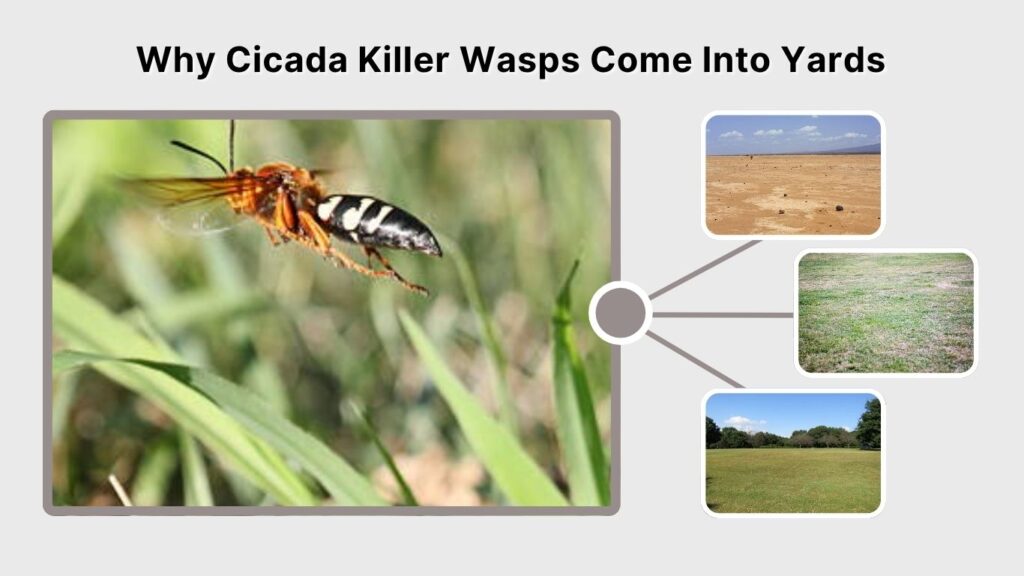
Cicada killer wasps are attracted to outdoor areas that provide ideal nesting and hunting conditions. Homes with dry soil and nearby cicada populations are especially likely to attract these insects during summer.
Common Yard Conditions That Attract Cicada Killers
Certain landscaping conditions make properties more appealing for nesting activity.
- Dry sandy soil
- Thin or patchy grass
- Sunny open areas
- Loose landscaping dirt
- Nearby trees with cicadas
Why Cicada Killer Wasps Return Every Year
Female cicada killers often return to the same areas because the soil remains suitable for digging underground tunnels. If larvae survive underground during winter, new adults may emerge in the same location the following summer.
Lawns with repeated dry soil conditions and exposed dirt patches are more likely to experience recurring cicada killer activity year after year.
When Cicada Killer Wasps Become a Problem
Although cicada killer wasps are generally harmless, large nesting populations can become a nuisance for homeowners. Multiple nests may create lawn damage and increase fear around outdoor spaces.
Signs Cicada Killers Are Becoming a Nuisance
Some infestations grow large enough to interfere with normal outdoor activities.
- Numerous holes throughout the lawn
- Constant daytime wasp activity
- Large dirt mounds around nests
- Fear near patios or sidewalks
- Pets disturbing active nesting areas
When to Call Pest Control
Professional treatment may be necessary if large infestations develop near heavily used outdoor spaces or if someone in the household has severe insect sting allergies.
Pest control professionals can safely treat underground nests and recommend prevention strategies that reduce future nesting activity.
How to Get Rid of Cicada Killer Wasps Safely
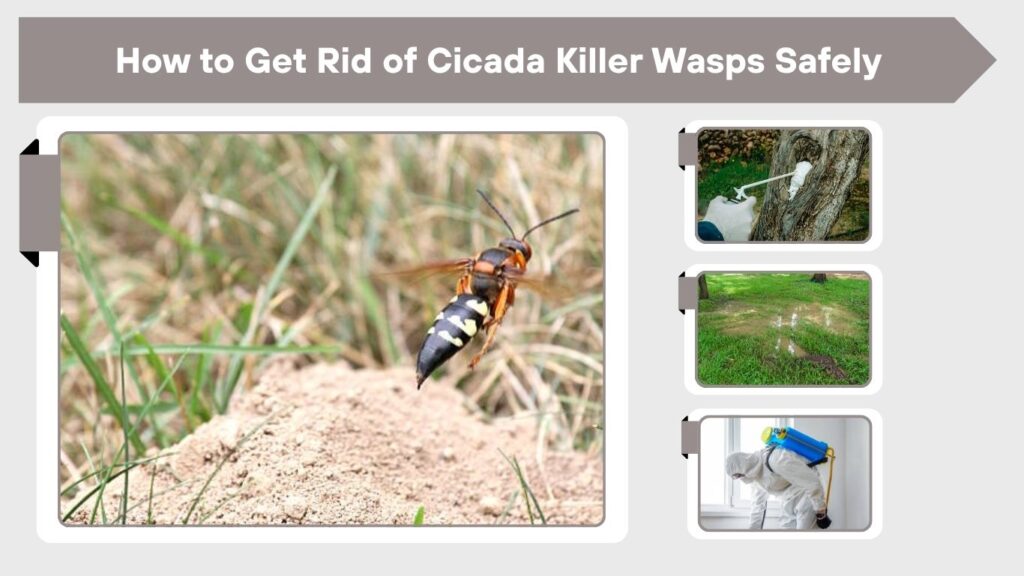
Most cicada killer infestations can be controlled safely through proper lawn maintenance and targeted treatment methods. Prevention is often the most effective long-term solution.
Best Cicada Killer Wasp Control Methods
Several treatment options can reduce cicada killer activity around homes and yards.
- Apply dust insecticides into active nests
- Use foaming wasp sprays carefully
- Water dry soil regularly
- Improve lawn thickness
- Contact professional exterminators if necessary
Best Time to Treat Cicada Killer Nests
Evening is usually the safest and most effective time to treat nests because most wasps are underground and less active.
Protective clothing should always be worn during treatment, especially by individuals sensitive to insect stings. Active nests should not be disturbed during peak daytime activity.
Common Myths About Cicada Killer Wasps
Many fears surrounding cicada killer wasps come from myths and misunderstandings about their behavior.
Myth: Cicada Killer Wasps Attack Humans Frequently
These wasps rarely attack humans and usually avoid confrontation whenever possible.
Myth: Male Cicada Killers Can Sting
Male cicada killers do not have stingers, even though they may hover aggressively near people and pets.
Myth: Cicada Killers Are More Dangerous Than Hornets
Cicada killer wasps are generally much less aggressive than social hornets and yellowjackets that defend colonies aggressively.
FAQs
Can cicada killer wasps chase people?
Male cicada killer wasps may appear to chase people while defending territory, but they cannot sting and usually back away quickly after investigating movement.
Are cicada killer wasps more dangerous than bees?
No. Cicada killer wasps are generally less aggressive than many bee and wasp species because they rarely sting unless directly threatened.
What time of year are cicada killer wasps most active?
Cicada killer wasps are most active during mid-to-late summer when cicadas are plentiful and soil conditions are ideal for nesting.
Can cicada killer wasps damage lawns?
Yes. Their digging activity can create holes and loose dirt piles throughout lawns, especially during larger infestations.
Why do cicada killer wasps fly low over grass?
They fly low while searching for nesting sites, defending territory, or carrying cicadas back to underground tunnels.