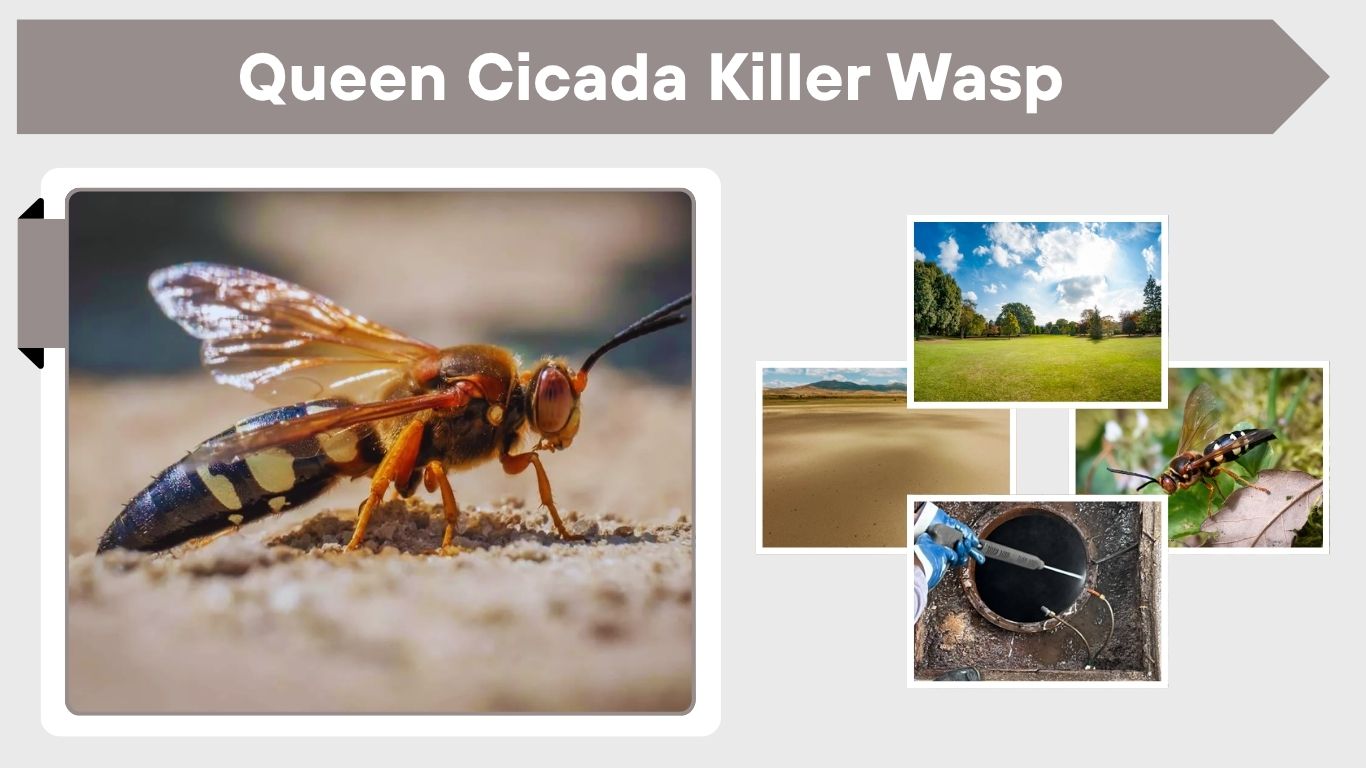
The queen cicada killer wasp is a term many people use when describing the large female cicada killer wasp seen flying around lawns and gardens during summer. Although these insects are often mistaken for giant hornets or queen wasps, cicada killers are actually solitary wasps that do not live in colonies with a true queen. Female cicada killer wasps are responsible for digging underground nests, hunting cicadas, and laying eggs. Their impressive size and loud buzzing can appear intimidating, but they are generally less aggressive than many other wasp species.
Is There a Queen Cicada Killer Wasp?
Many homeowners assume cicada killer wasps have queens because the females are much larger and more active around nesting sites. However, cicada killer wasps are solitary insects rather than social wasps like yellowjackets or hornets.
Why People Call Them Queen Cicada Killer Wasps
The large female cicada killer is often called a queen because she controls her own nest and performs all reproductive tasks independently. Unlike colony insects, there is no worker caste or organized hive structure.
Common reasons people mistake them for queens include:
- Extremely large body size
- Loud and intimidating flight
- Territorial nesting behavior
- Similar appearance to hornets
- Female dominance around nest areas
How Cicada Killer Wasps Live
Each female cicada killer creates and maintains her own underground nest. She hunts cicadas, digs tunnels, lays eggs, and protects developing larvae without help from worker wasps.
Because these wasps live independently, there is no queen hierarchy like the social structure found in honey bees or paper wasps. Every female functions on her own throughout the nesting season.
What Does a Queen Cicada Killer Wasp Look Like?
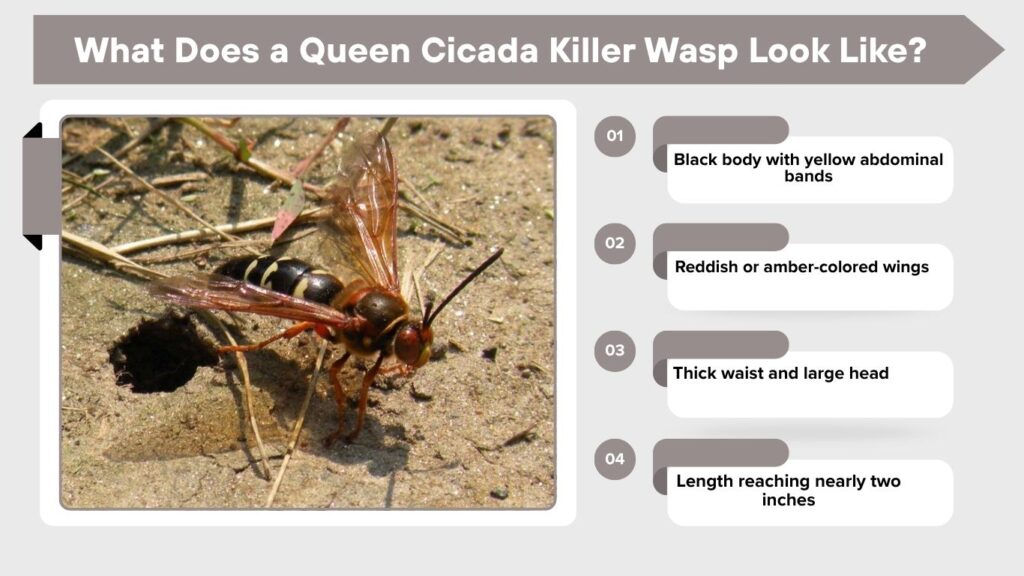
Female cicada killer wasps are among the largest wasps found in many parts of North America. Their striking appearance often causes concern because they resemble aggressive stinging insects.
Physical Features of Female Cicada Killer Wasps
These wasps have thick bodies, strong wings, and bold yellow markings that make them easy to identify during flight.
Common identifying features include:
- Black body with yellow abdominal bands
- Reddish or amber-colored wings
- Thick waist and large head
- Length reaching nearly two inches
- Loud buzzing sound while flying
Giant Queen Cicada Killer Wasp Appearance
The giant size of female cicada killer wasps is one reason they attract so much attention. Their bodies are much larger than many common wasps and bees found around homes.
Despite their intimidating appearance, these wasps are usually focused on hunting cicadas or maintaining nests rather than attacking people. Most female cicada killers avoid human interaction whenever possible.
Female vs Male Cicada Killer Wasps
Male and female cicada killer wasps behave very differently. Understanding these differences helps explain why the larger females are more commonly mistaken for queens.
Important Differences Between Males and Females
Female cicada killers perform all nesting and hunting duties, while males mainly defend territory around nesting areas.
Key differences include:
- Females can sting while males cannot
- Females are larger and heavier
- Males hover aggressively near intruders
- Females dig tunnels and hunt cicadas
- Males spend more time patrolling territory
Which Cicada Killer Is More Aggressive?
Male cicada killers often appear more aggressive because they hover near people, pets, and moving objects. However, males cannot sting at all.
Female cicada killers are capable of stinging, but they are usually calm and avoid confrontation unless directly threatened or handled.
What Does the Female Cicada Killer Wasp Do?
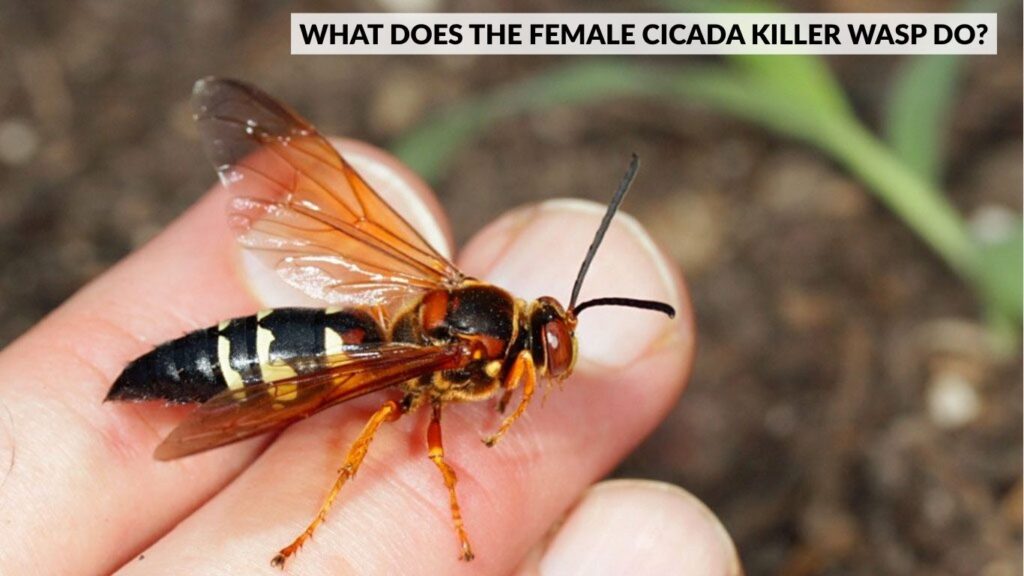
The female cicada killer wasp is responsible for the entire nesting and reproductive process. Her behavior is focused on creating a safe underground environment for developing offspring.
How Female Cicada Killers Hunt Cicadas
Female cicada killers capture cicadas by stinging and paralyzing them. After subduing the cicada, the wasp carries or drags it back to an underground nest chamber.
Inside the chamber, the female lays an egg beside the cicada. Once the larva hatches, it feeds on the immobilized cicada as its primary food source.
This hunting behavior helps regulate cicada populations naturally and is one reason cicada killer wasps are considered beneficial insects in many ecosystems.
Cicada Killer Wasp Nesting Behavior
Female cicada killer wasps build nests in dry sandy soil where digging is easier. The nests consist of underground tunnels with separate chambers used for eggs and food storage.
Common Nest Characteristics
Cicada killer nests are often found in sunny lawns, gardens, and landscaping areas with sparse grass coverage.
Typical nest signs include:
- Half-inch to one-inch holes in soil
- Loose dirt piles near tunnel entrances
- Multiple nearby nesting holes
- Increased wasp activity during summer
- Dry sandy ground conditions
Why Female Cicada Killers Dig Deep Tunnels
Deep tunnels protect eggs and larvae from predators, flooding, and extreme weather conditions. The underground chambers also provide stable temperatures during larval development.
In heavily infested areas, multiple female cicada killers may nest close together even though each wasp maintains her own separate tunnel system.
Are Queen Cicada Killer Wasps Dangerous?

The large size and loud buzzing of female cicada killer wasps often make people believe they are highly dangerous. In reality, these wasps are usually non-aggressive and prefer to avoid human contact whenever possible.
Can Female Cicada Killer Wasps Sting?
Female cicada killer wasps are capable of stinging, but stings are uncommon because the wasps rarely attack unless directly threatened. Most stings happen when a wasp is stepped on, trapped, or handled roughly.
Important facts about stings include:
- Only females can sting
- Males cannot sting at all
- Stings are usually defensive
- Most females avoid confrontation
- Serious reactions are uncommon
Why They Appear Aggressive
Male cicada killers often hover close to people, which creates the impression that they are preparing to attack. However, males are harmless because they do not have stingers.
Females may also fly quickly around nesting areas while hunting cicadas or entering tunnels. Their large size and loud buzzing make the behavior seem more threatening than it actually is.
Why Giant Cicada Killer Wasps Appear in Yards
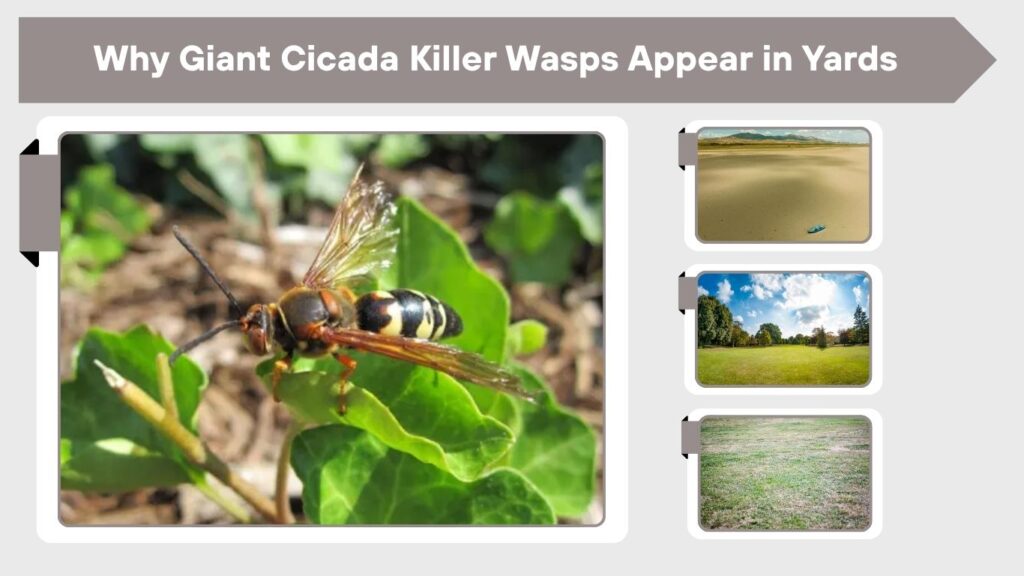
Cicada killer wasps choose nesting areas carefully based on soil conditions and food availability. Yards with dry soil and active cicada populations are especially attractive to female wasps.
Common Yard Conditions That Attract Cicada Killers
Certain landscaping conditions encourage repeated nesting activity during summer months.
- Dry sandy soil
- Thin or patchy grass
- Sunny open spaces
- Loose landscaping dirt
- High cicada activity nearby
Why Cicada Killer Wasps Return Every Summer
Female cicada killers often return to the same general nesting areas because the soil remains favorable for digging. Underground larvae can also survive through winter and emerge as adults during the following summer.
Without changes to lawn conditions, the same yard may continue attracting new female wasps each season.
How to Get Rid of Female Cicada Killer Wasps
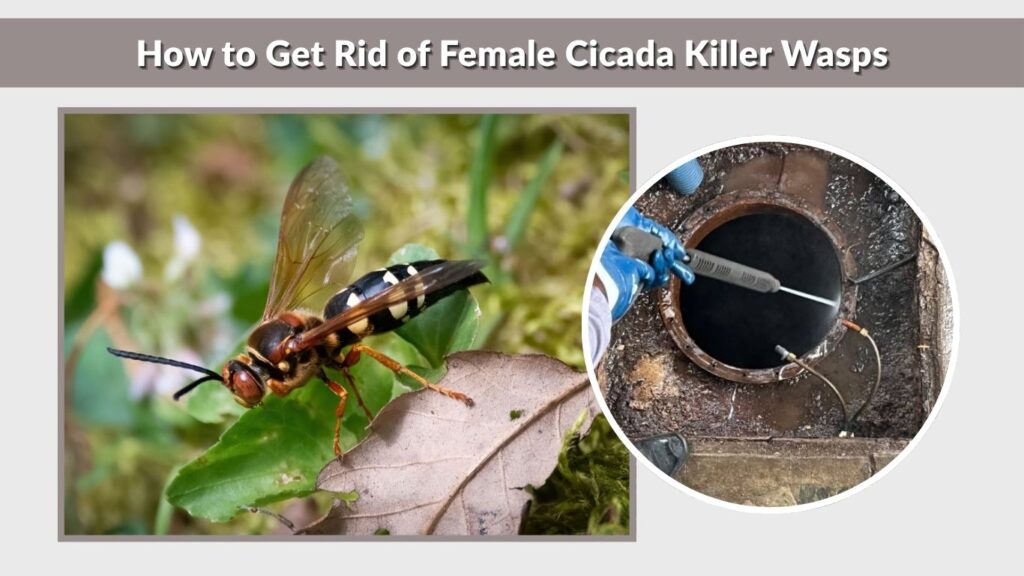
Most cicada killer infestations can be managed safely with proper nest treatment and lawn maintenance. Because these wasps are beneficial predators of cicadas, many homeowners choose prevention methods before using stronger pesticides.
Best Ways to Remove Cicada Killer Wasps
Combining several treatment methods usually provides the best long-term control results.
- Apply dust insecticides into active nests
- Use foaming wasp sprays in tunnels
- Water dry soil regularly
- Improve lawn thickness
- Contact professional pest control if needed
Best Time to Treat Cicada Killer Nests
Evening is usually the safest and most effective time to treat nests because most female wasps are underground and less active.
Protective clothing should always be worn during treatment, especially for people sensitive to insect stings. Active nests should never be disturbed during the hottest part of the day when wasp activity is highest.
Common Myths About Queen Cicada Killer Wasps
Many myths about cicada killer wasps come from their intimidating appearance. These misunderstandings often cause unnecessary fear among homeowners.
Myth: Cicada Killers Live in Colonies With a Queen
Cicada killer wasps are solitary insects, meaning there is no actual queen or organized colony structure. Each female works independently and manages her own nest.
Myth: Giant Cicada Killer Wasps Are Extremely Aggressive
Despite their size, cicada killer wasps are usually calmer than many social wasps. Most females avoid humans and focus primarily on hunting cicadas and caring for nests.
Myth: Male Cicada Killers Can Sting
Male cicada killer wasps do not have stingers. Although they may hover around people to defend territory, they cannot cause painful stings.
FAQs
Can queen cicada killer wasps damage lawns?
Yes. Female cicada killer wasps dig tunnels in dry soil, which can create small dirt mounds and visible holes throughout lawns and garden areas.
How long do female cicada killer wasps live?
Adult female cicada killer wasps usually live for several weeks during the summer while nesting, hunting cicadas, and laying eggs.
What do female cicada killer wasps eat?
Adult cicada killer wasps mainly feed on nectar and plant juices, while their larvae consume paralyzed cicadas stored underground.
Are cicada killer wasps beneficial insects?
Yes. Cicada killer wasps help naturally control cicada populations and are considered beneficial predators in many outdoor ecosystems.
What time of year are giant cicada killer wasps most active?
Cicada killer wasps are most active during mid-to-late summer when cicadas are abundant and soil conditions are warm enough for nesting.