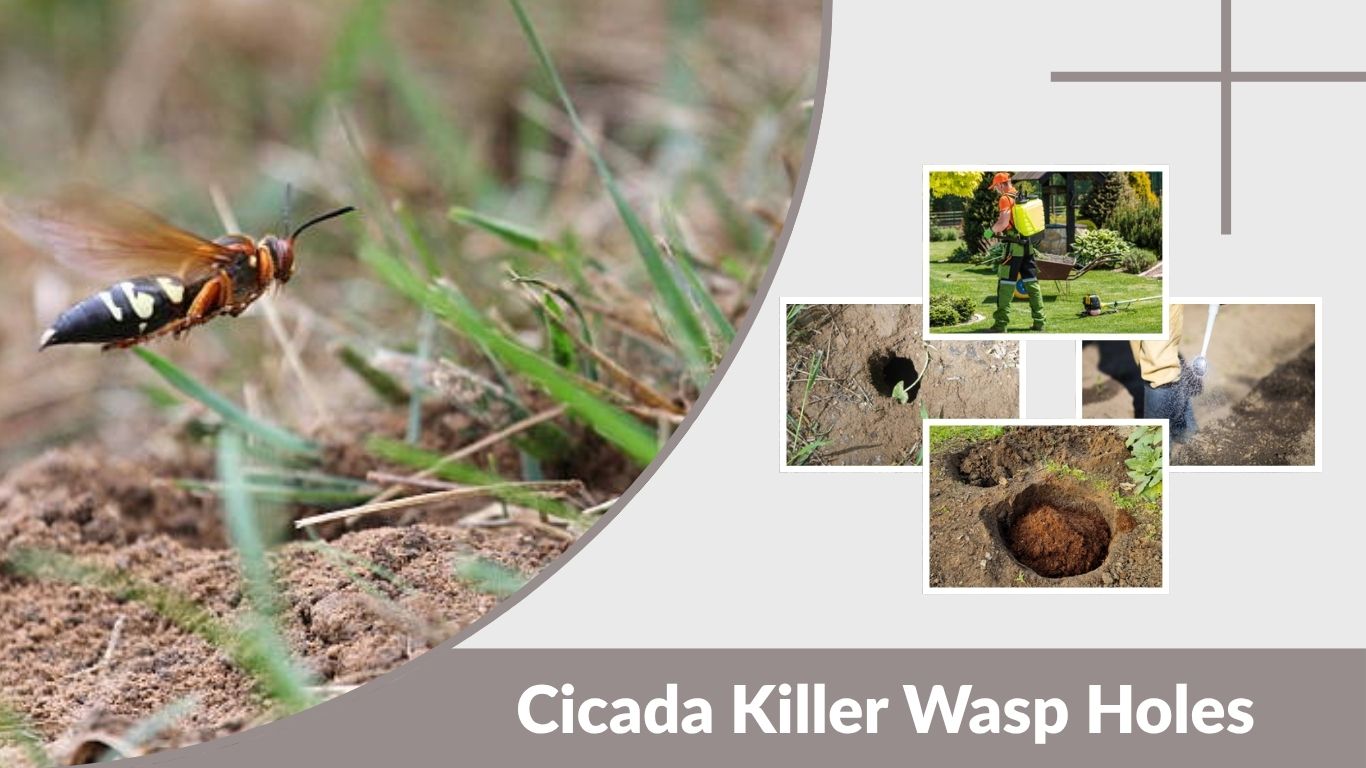
Cicada killer wasp holes are common sights in lawns and gardens during the warmer months of the year. These ground tunnels are created by large solitary wasps that dig underground nests for laying eggs and storing cicadas. Many homeowners become alarmed after noticing large holes surrounded by loose dirt because they often resemble rodent burrows or aggressive bee nests. While cicada killer wasps are usually not dangerous, their digging activity can damage lawns and create nuisance problems. Correctly identifying the holes is important for proper treatment and prevention.
What Are Cicada Killer Wasp Holes?
Cicada killer wasps create underground tunnels in dry soil where they raise their young. Unlike social wasps that live in colonies, cicada killers are solitary insects, meaning each female builds and manages her own nest. The holes serve as entrances to underground chambers where eggs and paralyzed cicadas are stored.
Why Cicada Killer Wasps Dig Holes
Female cicada killer wasps dig deep tunnels to protect developing larvae. After catching and paralyzing cicadas, the wasps drag them into underground chambers where eggs are laid nearby. Once the larvae hatch, they feed on the cicadas before completing development underground.
Common reasons cicada killer wasps dig holes include:
- Creating protected nesting chambers
- Storing food for larvae
- Laying eggs underground
- Avoiding predators and harsh weather
- Using warm dry soil for nesting
Where Cicada Killer Holes Commonly Appear
These holes are usually found in sunny areas with sandy or loose soil. Lawns with thin grass or bare dirt patches are especially attractive because the ground is easier for the wasps to dig through.
Homeowners often notice the holes near sidewalks, flower beds, gardens, patios, and driveway edges where soil remains warm and exposed throughout the day.
What Do Cicada Killer Wasp Holes Look Like?
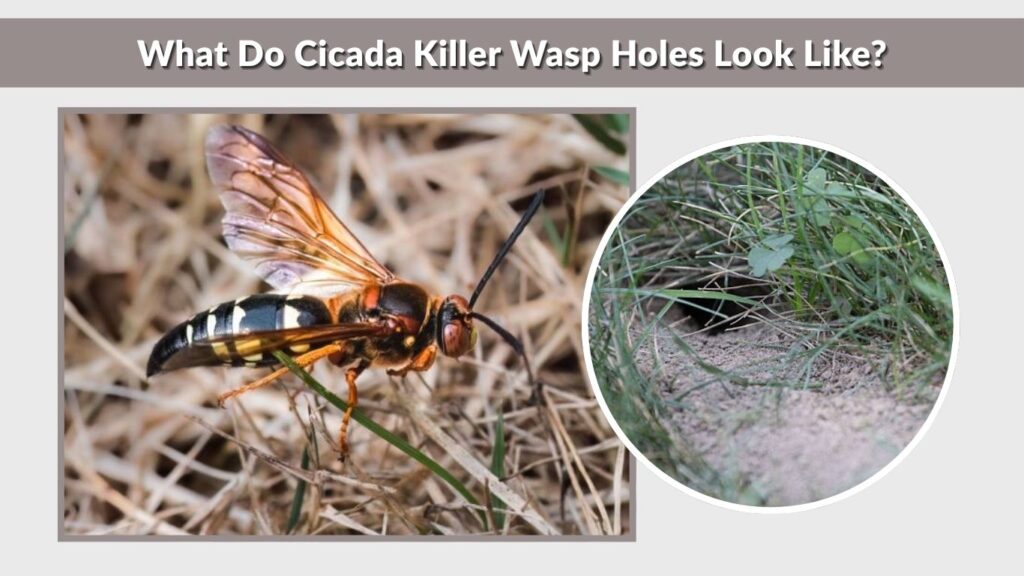
Cicada killer wasp holes have a distinct appearance that helps separate them from ant mounds, bee nests, or rodent burrows. The openings are usually larger than most ground insect holes and are often surrounded by loose piles of dirt.
Common Features of Cicada Killer Wasp Holes
The entrance holes are typically smooth and rounded with freshly dug soil nearby. Several holes may appear close together if multiple female wasps choose the same nesting area.
Common characteristics include:
- Half-inch to one-inch wide openings
- Loose dirt mounds around entrances
- Smooth tunnel edges
- Multiple holes grouped together
- Activity in sunny daytime hours
Cicada Killer Wasp Hole Closeup
When viewed up close, cicada killer holes usually look cleaner and wider than ant tunnels. The surrounding dirt often appears freshly excavated, especially during active nesting periods.
The entrance may slope slightly downward before leading deeper underground into several branching chambers. In heavily infested yards, dozens of holes may appear across dry sections of grass.
Cicada Killer Wasp Hole Size
The size of cicada killer wasp holes is one of the easiest ways to identify them correctly. These wasps are much larger than many ground-nesting insects, so their tunnel entrances are noticeably wider.
How Big Is a Cicada Killer Wasp Hole?
Most cicada killer holes measure between half an inch and one inch across. The exact size depends on the size of the wasp and the softness of the soil.
The tunnels themselves can extend several inches underground and may branch into multiple chambers used for egg-laying and food storage. Loose soil near the entrance often makes the hole appear even larger from the surface.
Why Hole Size Can Vary
Different soil conditions affect how cicada killer holes appear. Sandy soil usually produces wider and cleaner entrances, while compact soil may create smaller openings with tighter edges.
Rainfall, lawn watering, and repeated nesting activity can also change the appearance of the holes over time.
Cicada Killer Wasp Holes vs Ground Bee Holes
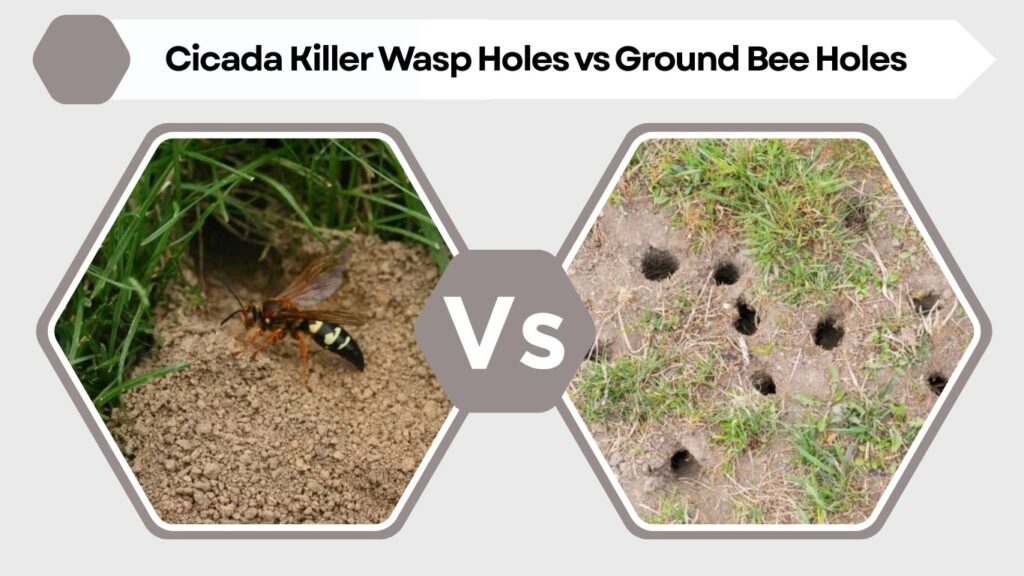
Many homeowners confuse cicada killer wasp holes with ground bee nests because both insects dig tunnels in soil. However, the size of the hole, insect activity, and dirt patterns usually make identification easier.
Differences Between Cicada Killer and Bee Holes
Cicada killer wasp holes are generally larger and surrounded by more noticeable dirt piles than most bee holes. Ground bees also tend to be smaller and less visible from a distance.
Important differences include:
- Cicada killer holes are wider
- Dirt mounds are larger and more obvious
- Wasps fly lower and more aggressively around nests
- Bee holes are usually smaller and cleaner
- Cicada killers prefer very dry sunny soil
Cicada Killer Wasp or Ground Bee Hole?
Watching insect behavior is often the best way to confirm identification. Cicada killer wasps are large and easy to spot during daytime activity, especially when flying low across the lawn or carrying cicadas toward the nest.
How to Get Rid of Cicada Killer Wasp Holes
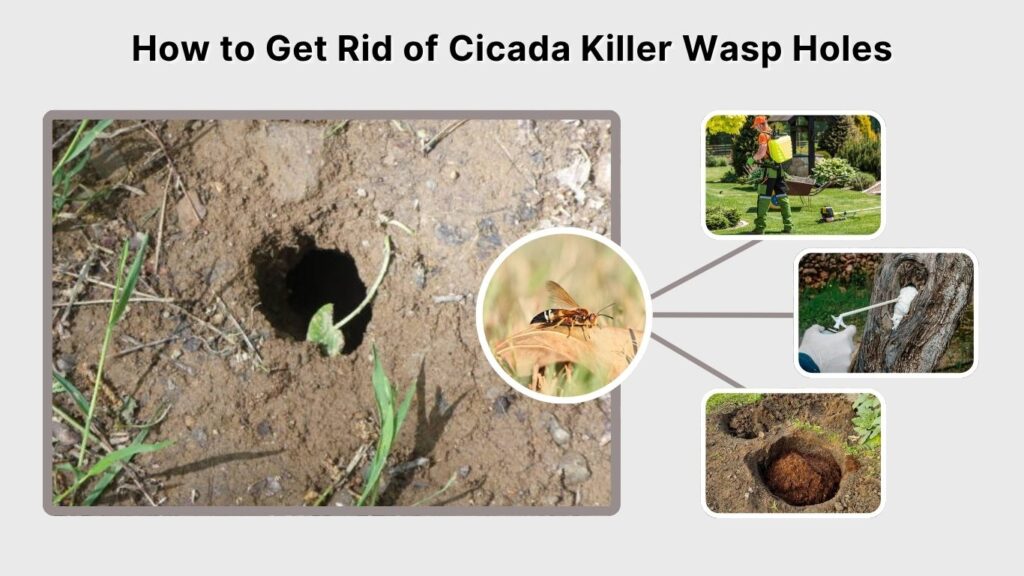
Removing cicada killer wasp holes requires more than simply filling the openings with dirt. Because the nests extend underground, proper treatment is necessary to eliminate active wasps and prevent them from reopening tunnels nearby.
Best Ways to Eliminate Cicada Killer Wasp Holes
Several treatment methods can help reduce cicada killer activity in lawns and gardens. The most effective approach usually combines direct nest treatment with lawn improvements that discourage future digging.
Common treatment methods include:
- Applying dust insecticides into active holes
- Using foam wasp sprays for tunnel treatment
- Flooding shallow tunnels with water
- Filling abandoned holes with compacted soil
- Hiring professional pest control for severe infestations
Best Time to Treat Cicada Killer Holes
Evening is generally the best time to treat cicada killer nests because most wasps return underground after daytime activity slows. Treating nests at night reduces the chance of disturbing active wasps flying around the yard.
Protective clothing and caution are important during treatment, especially for people sensitive to insect stings. Female cicada killer wasps can sting if directly threatened, though they are usually less aggressive than social wasps.
Pesticides for Cicada Killer Wasp Holes
Pesticides designed for ground-nesting wasps are commonly used when infestations become widespread. Dust insecticides are often preferred because they travel deeper into underground tunnels and chambers where larvae develop.
Common Pesticide Options
Different pesticide products work better depending on soil conditions and infestation size. Dust products are often considered more effective for deep underground nests.
Popular treatment products include:
- Dust insecticides for underground tunnels
- Residual liquid insecticides
- Foaming wasp sprays
- Ground wasp treatment granules
- Professional-grade pest control products
Boric Acid for Cicada Killer Wasp Holes
Some homeowners try boric acid as a natural treatment option, but it may not work well for larger cicada killer infestations. Because the tunnels are deep and complex, boric acid often fails to reach all underground chambers effectively.
Direct nest treatments specifically designed for ground wasps usually produce faster and more reliable results than boric acid alone.
What to Do If You Cannot Find the Wasp Hole
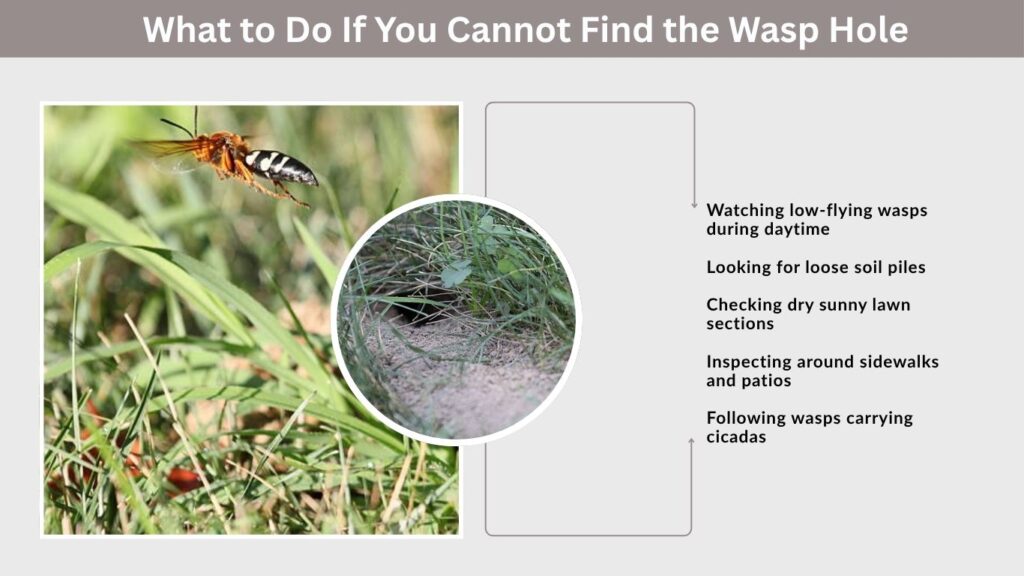
Cicada killer wasps may sometimes disappear into hidden openings that are difficult to locate. Thick grass, landscaping features, or multiple tunnel entrances can make identification more challenging.
How to Locate Hidden Cicada Killer Holes
Watching wasp flight patterns carefully is often the easiest way to locate active nests. Female cicada killers usually fly directly toward tunnel entrances after hunting cicadas or carrying nesting materials.
Helpful ways to find hidden holes include:
- Watching low-flying wasps during daytime
- Looking for loose soil piles
- Checking dry sunny lawn sections
- Inspecting around sidewalks and patios
- Following wasps carrying cicadas
Why Some Cicada Killer Holes Are Hard to Find
Certain nests remain hidden because the openings are partially covered by grass or debris. Wasps may also create secondary tunnels that are less noticeable from the surface.
In larger yards, nests can spread across several areas, making it difficult to identify every active tunnel without close inspection.
How to Prevent Cicada Killer Wasp Holes
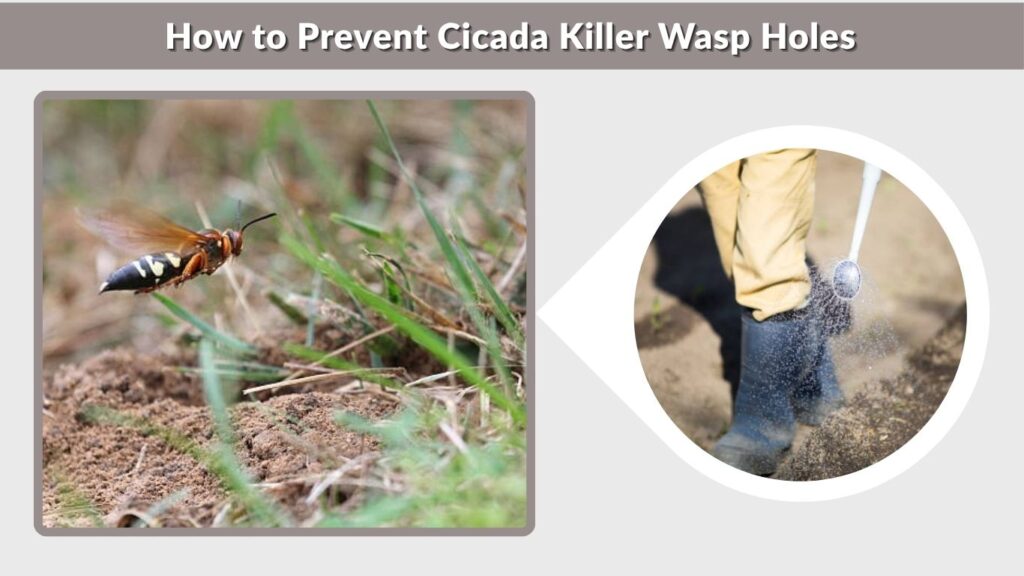
Prevention is the most effective long-term solution for reducing cicada killer nesting activity. These wasps prefer dry exposed soil, so improving lawn conditions can make the property much less attractive for future infestations.
Best Prevention Tips
Consistent lawn care and soil management can significantly reduce the chance of recurring cicada killer holes.
- Keep grass thick and healthy
- Water dry soil regularly
- Cover bare dirt patches with mulch
- Improve lawn density in sunny areas
- Treat new holes quickly before infestations grow
Why Cicada Killer Wasps Keep Returning
Cicada killer wasps often return because the same favorable nesting conditions remain year after year. Warm sunny soil and sparse grass coverage create ideal environments for digging tunnels.
If underground larvae survive untreated, new adult wasps may emerge the following summer and begin nesting again in nearby areas.
FAQs
How big are cicada killer wasp holes?
Most cicada killer wasp holes are about half an inch to one inch wide, though size may vary depending on soil conditions and wasp size.
Are cicada killer wasp holes dangerous?
The holes themselves are usually not dangerous, but they can damage lawns and create minor tripping hazards in heavily infested areas.
What attracts cicada killer wasps to lawns?
Dry sandy soil, bare dirt patches, sunny areas, and nearby cicada populations commonly attract cicada killer wasps.
What is the best pesticide for cicada killer wasp holes?
Dust insecticides made for ground-nesting wasps are often considered one of the most effective treatment options.
Do cicada killer wasps return every year?
Yes. Cicada killer wasps frequently return to properties with favorable nesting conditions and untreated underground larvae.