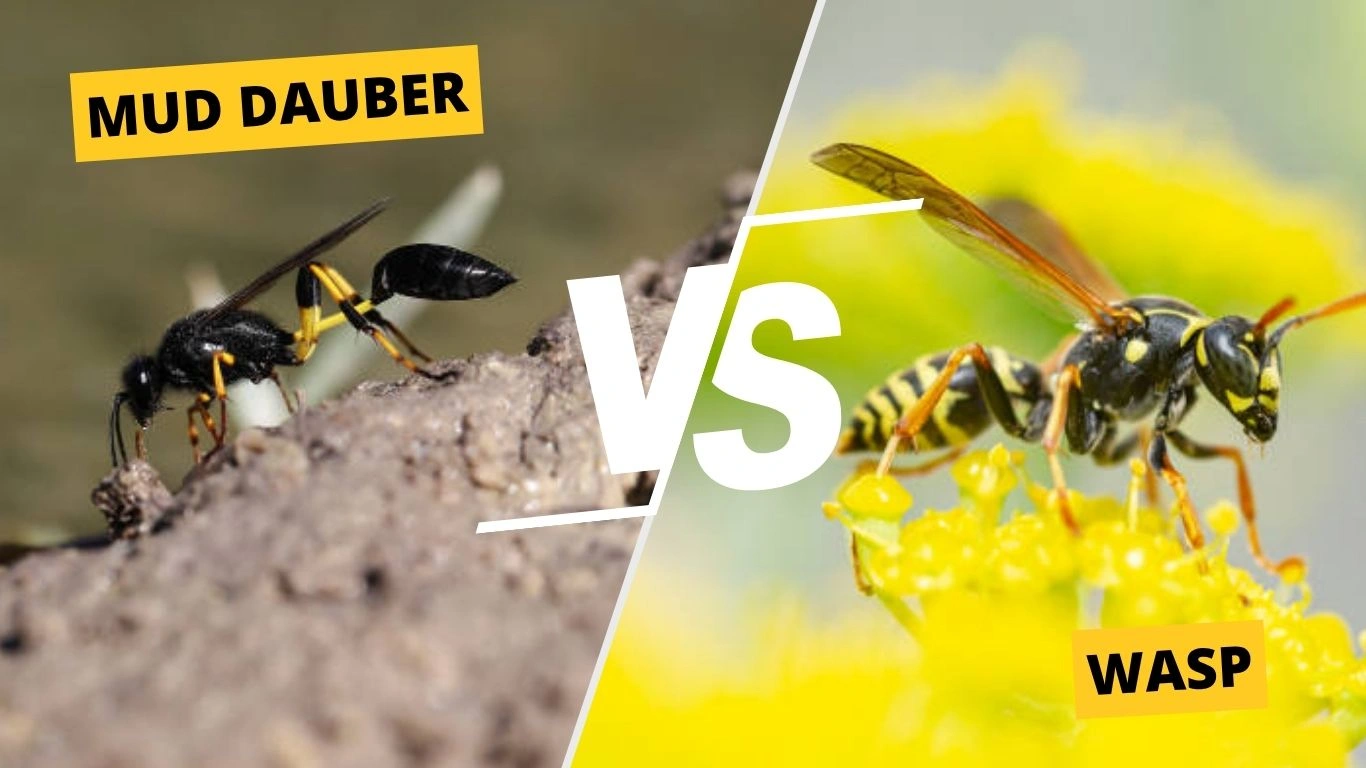
Mud daubers and wasps are often confused because both belong to the same insect family and commonly appear around homes during warmer months. However, their appearance, behavior, nests, and aggression levels are very different. Mud daubers are solitary hunters that rarely sting humans, while many common wasps live in colonies and aggressively defend their nests. Learning the differences between mud daubers and wasps can help homeowners identify these insects correctly, avoid unnecessary fear, and choose the safest removal or prevention methods when nests appear around the property.
What Is a Mud Dauber?
Mud daubers are solitary wasps known for building mud nests and hunting spiders. Unlike social wasps, they do not form colonies or aggressively protect nests. Their calm nature and beneficial hunting behavior make them one of the least dangerous wasp species commonly found near homes.
Physical Appearance of Mud Daubers
Mud daubers have long, slender bodies with a very narrow waist connecting the thorax and abdomen. Depending on the species, their color may appear metallic blue, black, or black with yellow markings. Their legs are longer and thinner than those of many social wasps.
Common Types of Mud Daubers
Several mud dauber species are commonly found in residential areas:
- Blue mud dauber
- Black mud dauber
- Yellow-legged mud dauber
- Organ pipe mud dauber
- Metallic blue mud dauber
Mud Dauber Behavior
Mud daubers spend most of their time hunting spiders and building mud nests in quiet sheltered locations. They usually avoid people and rarely become defensive unless directly handled or trapped. Unlike social wasps, they do not swarm around humans or food sources outdoors.
What Is a Wasp?
The term “wasp” includes many different species such as yellowjackets, paper wasps, and hornets. Most social wasps live in colonies with queens and workers that cooperate to build nests and protect the colony from threats.
Common Types of Wasps
The most common wasp species found around homes include:
- Paper wasps
- Yellowjackets
- Hornets
- Bald-faced hornets
- Red wasps
Wasp Appearance
Most wasps have thicker bodies and brighter warning colors than mud daubers. Yellow and black stripes are especially common among aggressive species such as yellowjackets. Their compact body shape and shorter legs give them a more powerful appearance.
Why Wasps Are More Aggressive
Social wasps protect colonies containing hundreds or even thousands of insects. Because of this, they react aggressively when people approach the nest area. Worker wasps may sting repeatedly to defend the colony from perceived threats.
Mud Dauber vs Wasp Appearance

Although mud daubers and social wasps belong to the same insect group, their body shape and coloring differ noticeably. Careful observation usually makes identification much easier, especially when comparing size, waist shape, and nest activity.
| Feature | Mud Dauber | Common Wasp |
| Body Shape | Thin and elongated | Thick and compact |
| Waist | Long narrow waist | Shorter waist |
| Color | Blue, black, metallic | Yellow and black |
| Behavior | Calm and solitary | Defensive and social |
| Legs | Long dangling legs | Shorter sturdy legs |
Body Shape Differences
Mud daubers have a thin thread-like waist that gives them a stretched appearance during flight. Social wasps have thicker, more compact bodies designed for colony defense and active nest protection. Their flight patterns may also appear faster and more aggressive than mud daubers.
Color Comparison
Many mud daubers are dark blue or black with metallic coloring that shines in sunlight. Social wasps often display bright yellow and black warning patterns that help predators recognize them as defensive insects capable of painful stings.
Mud Dauber Nest vs Wasp Nest

One of the easiest ways to identify whether you are dealing with mud daubers or social wasps is by looking at the nest. The material, structure, and size are completely different between the two species.
Mud Dauber Nests
Mud dauber nests are built from wet mud collected from puddles or damp soil. These nests appear as narrow tubes or clustered mud chambers attached to walls, ceilings, garages, barns, or porch roofs.
Important characteristics include:
- Made entirely from mud or clay
- Small tube-shaped chambers
- Usually built in sheltered locations
- Designed for solitary larvae
- Rarely defended aggressively
Wasp Nests
Social wasp nests are made from paper-like material created by chewing wood fibers mixed with saliva. These nests can grow very large and often contain hundreds of worker wasps protecting the colony.
Nest Location Differences
Mud daubers prefer quiet dry locations such as garages, attics, and sheds where nests remain protected from rain. Social wasps commonly build nests beneath roof edges, tree branches, decks, and wall cavities where colonies can expand safely over time.
You have not enough Humanizer words left. Upgrade your Surfer plan.
Mud Dauber vs Wasp Behavior
Mud daubers and social wasps behave very differently around humans. Mud daubers are generally calm insects focused on hunting spiders and building nests, while social wasps become defensive when protecting colonies. Their behavior is one of the easiest ways to determine which insect is nearby.
Are Mud Daubers Aggressive?
Mud daubers are considered one of the least aggressive wasp species. They rarely sting people because they do not defend large colonies or compete aggressively for food sources. Most mud daubers simply fly away when disturbed.
Their calm behavior is linked to their solitary lifestyle. Since there are no worker insects or queen colonies to protect, they have little reason to attack humans or pets near the nest area.
Are Wasps Aggressive?
Social wasps are much more defensive than mud daubers. Yellowjackets, hornets, and paper wasps actively protect their nests and may sting repeatedly if they feel threatened. Even small disturbances near the colony can trigger aggressive behavior.
Common aggressive wasp behaviors include:
- Swarming near the nest
- Chasing intruders
- Repeated stinging
- Defending food sources
- Reacting quickly to movement
Feeding and Hunting Habits
Mud daubers mainly hunt spiders, which they paralyze and place inside nests for developing larvae. Adult mud daubers also feed on flower nectar and avoid human food whenever possible.
Social wasps have a more varied diet and are commonly attracted to:
- Sugary drinks
- Fruit and sweets
- Outdoor garbage
- Meat and protein sources
- Human picnic foods
Mud Dauber Sting vs Wasp Sting

Both mud daubers and social wasps can sting, but the severity and frequency are usually very different. Mud daubers sting rarely and only in self-defense, while social wasps are more likely to sting when defending nests.
Mud Dauber Sting
Mud dauber stings are generally mild and uncommon. Most people never experience a sting because these insects prefer avoiding confrontation. When stings do occur, symptoms are usually limited to temporary pain, redness, and slight swelling.
Wasp Sting
Wasp stings are often more painful because social wasps defend colonies aggressively. Unlike bees, many wasps can sting multiple times without losing the stinger. This increases the risk of repeated stings during encounters near nests.
People who are allergic to insect venom may experience severe reactions that require immediate medical attention. Symptoms such as difficulty breathing, dizziness, or severe swelling should never be ignored.
Sting Treatment
Most mild stings can be treated at home using basic first aid methods:
- Wash the area with soap and water
- Apply a cold compress for swelling
- Use antihistamines for itching
- Avoid scratching the sting area
- Monitor for allergic reactions
Which Is More Dangerous?
Mud daubers are generally considered beneficial insects, while social wasps present a greater safety concern because of their defensive colony behavior. Understanding the risk level of each insect helps homeowners decide whether removal is necessary.
Risks Around Homes
Mud daubers usually create little risk around homes because they avoid direct interaction with humans. Their nests are small, and they rarely sting even when people are nearby.
Social wasps become dangerous when colonies are built close to doors, patios, garages, or children’s play areas. Large colonies increase the chance of accidental disturbance and repeated stings.
Benefits of Mud Daubers
Mud daubers actually provide several benefits to homeowners because they help reduce spider populations around the property. Some species are even known for hunting black widow spiders, which are considered medically important pests.
Benefits include:
- Natural spider control
- Reduced black widow populations
- Minimal aggression toward humans
- Low risk around homes
- Helpful role in the ecosystem
When Removal Is Necessary
Removal may be necessary when nests are located inside homes, near entryways, or in heavily used outdoor spaces. Large social wasp colonies should be handled carefully because disturbing them can trigger aggressive swarming behavior.
How to Identify Mud Daubers and Wasps

Correct identification helps homeowners respond appropriately to nests and insect activity. Observing body shape, nest structure, and behavior can quickly reveal whether the insect is a mud dauber or a social wasp.
Signs You Have Mud Daubers
Mud daubers are easier to identify because of their unusual nests and calm behavior. They are often seen flying alone rather than in large groups.
Common signs include:
- Mud tube nests
- Solitary flying behavior
- Metallic blue or black coloring
- Spider remains near nests
- Low aggression around humans
Signs You Have Wasps
Social wasps usually appear in groups and actively defend nests. Their activity is often more noticeable around food and outdoor gatherings.
Quick Identification Tips
Mud daubers typically move slowly and quietly while inspecting walls or ceilings for nesting locations. Social wasps are faster, more defensive, and often gather around food, trash, or sugary drinks during warm weather.
FAQs
Are mud daubers considered wasps?
Yes, mud daubers are a type of wasp belonging to the Sphecidae family. Unlike social wasps such as yellowjackets and hornets, mud daubers are solitary insects that build mud nests and rarely behave aggressively around humans.
Which is more aggressive, mud daubers or wasps?
Social wasps are far more aggressive than mud daubers. Mud daubers usually avoid confrontation and rarely sting unless directly threatened. Wasps such as yellowjackets and hornets actively defend colonies and may sting repeatedly when disturbed.
How can you tell a mud dauber from a wasp?
Mud daubers usually have long thin bodies with narrow waists and build mud tube nests. Social wasps often have thicker yellow-and-black bodies and build paper-like nests that contain large colonies of worker insects.
Do mud daubers kill spiders?
Yes, mud daubers are skilled spider hunters. Female mud daubers paralyze spiders and place them inside mud nests as food for developing larvae. Some species even hunt black widow spiders around homes and garages.
Should mud dauber nests be removed?
Mud dauber nests usually do not require removal because the insects are calm and beneficial. However, nests near doors, windows, or heavily used areas may be removed safely to prevent repeated nesting or indoor activity.