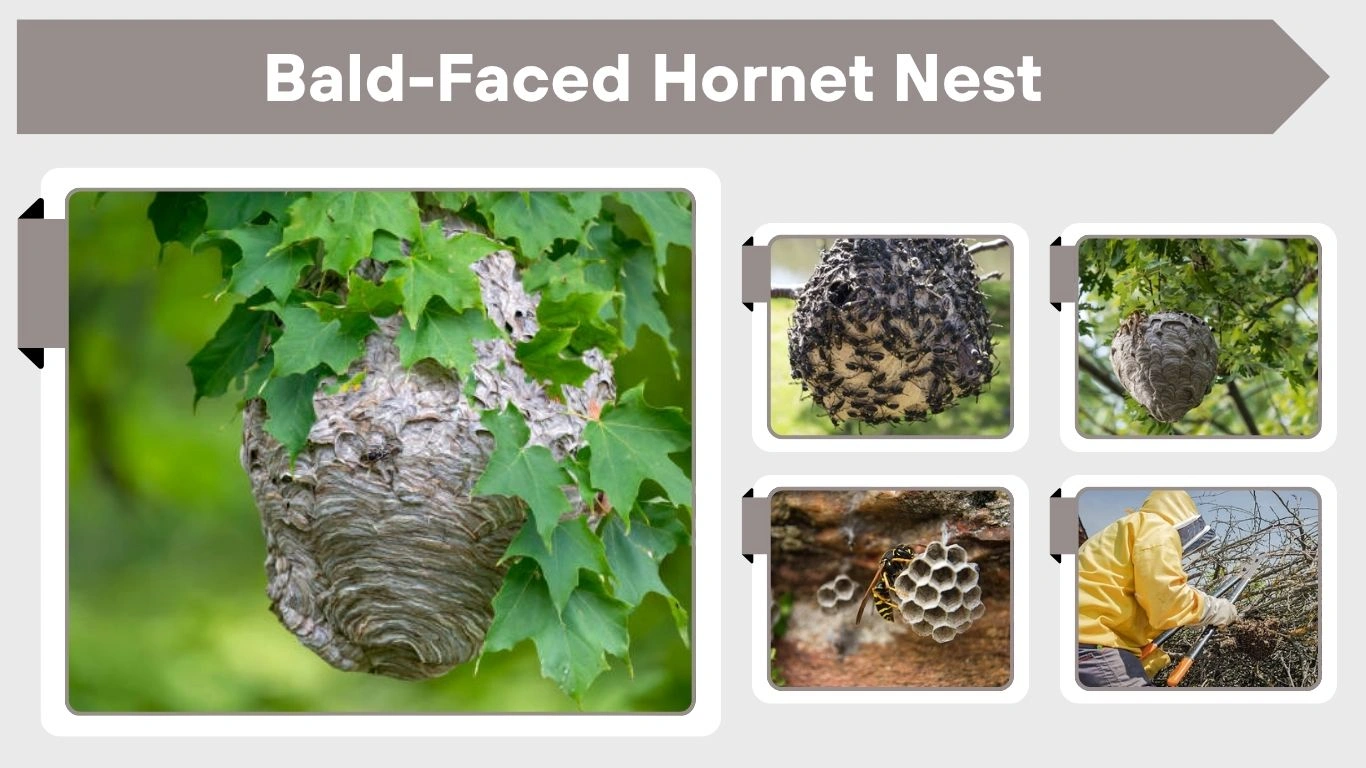
Bald-faced hornet nests are one of the most noticeable and often alarming insect structures found around homes and gardens. Their large size, paper-like texture, and aggressive defenders make them a common concern for homeowners. Many people want to know how to identify these nests, whether they are dangerous, and how to remove them safely. This guide explains everything you need to know about bald-faced hornet nests, including their appearance, locations, and behavior.
What Is a Bald-Faced Hornet Nest?
A bald-faced hornet nest is a paper-like structure built by a colony of aerial yellowjackets. Unlike open wasp nests, these are fully enclosed and often hang from elevated surfaces. The nest is made by chewing wood fibers and mixing them with saliva to form a durable outer shell.
What Does a Bald-Faced Hornet Nest Look Like?
- Gray, football-shaped structure
- Smooth, layered paper exterior
- Single entrance hole, usually near the bottom
- Can range from small to very large sizes
What Is the Nest Made Of?
- Chewed wood fibers
- Saliva forming paper-like material
- Layered structure for insulation and protection
- Strong outer shell to defend against predators
Where Do Bald-Faced Hornets Build Nests?

Bald-faced hornets prefer elevated and sheltered locations that offer protection from weather and predators. Their nesting choices often bring them close to human activity, which is why they are frequently spotted near homes. Understanding their preferred locations can help in early detection and prevention.
Common Nest Locations
- Trees and tall shrubs
- Roof eaves and house corners
- Sheds, garages, and fences
- Under decks or overhangs
Do They Nest in the Ground?
- Rarely build nests underground
- Prefer aerial nesting sites
- Ground nesting is more typical of yellowjackets
- Low-hanging nests may appear close to the ground
Bald-Faced Hornet Nest Size and Growth
Bald-faced hornet nests grow rapidly during the warm months, starting from a small structure and expanding into a large colony. The size of the nest depends on the colony’s development and environmental conditions. By late summer, nests can become quite large and highly active.
How Big Can a Nest Get?
- Starts as a small “starter nest” in spring
- Expands to football or basketball size
- Can reach impressive sizes in peak season
- Larger nests house more hornets
How Fast Do They Build a Nest?
- Initial nest built within a few days
- Rapid growth over several weeks
- Colony expands quickly during summer
- Peak development occurs in late season
How Many Hornets Live in a Nest?

The population inside a bald-faced hornet nest can grow significantly as the season progresses. A single queen begins the colony, and as workers develop, they take over nest expansion and defense. This results in a highly organized and active colony.
Typical Colony Size
- Starts with one queen
- Grows to hundreds of workers
- Peak populations in late summer
- Numbers decline as the season ends
Bald-Faced Hornet Nest Life Cycle
The life cycle of a bald-faced hornet nest follows a seasonal pattern that begins in spring and ends in late fall. Each phase plays a role in the growth and eventual decline of the colony. Understanding this cycle can help determine the best time for action.
Stages of Nest Development
- Spring: queen builds and starts the nest
- Early summer: workers emerge and expand it
- Late summer: colony reaches peak size
- Fall: colony declines and dies off
Do They Reuse Their Nests?
- Nests are abandoned after one season
- Colonies do not return the next year
- New queens build new nests elsewhere
- Old nests remain empty and inactive
Are Bald-Faced Hornet Nests Dangerous?
Bald-faced hornets are known for their defensive behavior, especially when their nest is disturbed. While they are not aggressive without reason, they will respond quickly if they perceive a threat. This makes their nests potentially dangerous if located near human activity.
Unlike some other wasps, bald-faced hornets can sting multiple times and may attack in groups when defending their nest. Their activity is usually concentrated around the nest, but disturbances can trigger a wider response. For this reason, caution is always recommended when dealing with or approaching a nest.
How Far Do They Travel from the Nest?
- Typically range within a few hundred meters
- Activity strongest near the nest
- Will chase perceived threats
- Foraging range expands as colony grows
How to Find a Bald-Faced Hornet Nest
Locating a bald-faced hornet nest can be challenging because hornets often build them high in trees or hidden areas. However, observing their movement patterns can help you identify the exact location. Finding the nest early is important for safe management and prevention.
Ways to Locate a Nest
- Watch the flight path of hornets returning repeatedly
- Look for activity near trees, rooflines, or shrubs
- Check quiet, shaded areas around structures
- Listen for buzzing sounds near hidden spaces
Bald-Faced Hornet Nest vs Other Wasp Nests

Many people confuse bald-faced hornet nests with those of paper wasps or yellowjackets. While they may look similar at a glance, there are clear differences in structure and placement. Knowing these differences helps avoid misidentification and ensures proper treatment.
Hornet Nest vs Paper Wasp Nest
- Hornet nest is enclosed and football-shaped
- Paper wasp nest is open and umbrella-shaped
- Hornet nest has a protective outer layer
- Paper wasp nest exposes visible cells
Hornet Nest vs Yellowjacket Nest
- Hornet nests are usually above ground
- Yellowjacket nests are often underground
- Hornet nests are larger and more visible
- Yellowjacket nests are hidden and harder to detect
How to Get Rid of a Bald-Faced Hornet Nest

Removing a bald-faced hornet nest requires caution due to the aggressive nature of the insects. While some people attempt removal themselves, safety should always be the top priority. In many cases, professional help is the best option.
DIY Removal Methods
- Use a wasp-specific insecticide spray
- Apply treatment at night when hornets are less active
- Wear protective clothing and maintain distance
- Avoid disturbing the nest during the day
Professional Removal Options
- Pest control experts handle large nests safely
- Specialized equipment ensures effective removal
- Recommended for nests near homes or inside walls
- Reduces risk of stings and incomplete removal
Bald-Faced Hornet Nest Removal Cost
The cost of removing a bald-faced hornet nest varies depending on several factors, including the size of the nest and its location. Nests that are high up or difficult to access generally require more time and specialized tools, increasing the cost.
In most cases, professional removal is more expensive than DIY methods but significantly safer. Prices can vary by region and service provider, but the investment is often worthwhile to avoid injury or repeated infestations.
Bald-Faced Hornet Nest Best Time to Remove a Nest
Timing plays an important role in safely removing a hornet nest. Choosing the right moment can reduce the risk of attacks and improve the effectiveness of removal methods.
Ideal Removal Timing
- Nighttime when hornets are less active
- Early season when nests are smaller
- Cooler weather when activity is reduced
- Winter when nests are empty and safe
Can You Leave a Bald-Faced Hornet Nest Alone?
In some situations, leaving a nest undisturbed may be the safest option. If the nest is located far from human activity, the hornets may not pose a significant threat. Additionally, bald-faced hornets help control other insect populations, which can be beneficial.
However, if the nest is near entryways, walkways, or frequently used areas, removal is usually necessary. Evaluating the location and level of activity can help you decide the best course of action.
Prevention Tips
Preventing bald-faced hornets from building nests around your home is the most effective long-term strategy. Taking simple precautions can reduce the chances of future infestations.
How to Prevent Nests
- Inspect and remove small starter nests early
- Seal gaps and openings in structures
- Keep outdoor areas clean and clutter-free
- Monitor trees and rooflines regularly
FAQs
How big can a bald-faced hornet nest get?
A bald-faced hornet nest can grow from a small starter size to as large as a basketball or even bigger by late summer. The size depends on colony growth and environmental conditions, with larger nests housing hundreds of hornets.
When do bald-faced hornets leave their nest?
Bald-faced hornets typically abandon their nest in late fall when temperatures drop. The colony dies off, and only new queens survive the winter to start new nests in the spring.
Do bald-faced hornets return to the same nest?
No, bald-faced hornets do not reuse old nests. Each year, a new queen builds a completely new nest in a different location.
Can you remove a bald-faced hornet nest in winter?
Yes, winter is the safest time to remove a nest because it is usually empty and inactive. There is no risk of stings once the colony has died off.
What happens if you destroy a bald-faced hornet nest?
If a nest is destroyed while active, hornets may become aggressive and attempt to defend it. It’s best to use proper methods or seek professional help to avoid multiple stings and incomplete removal.