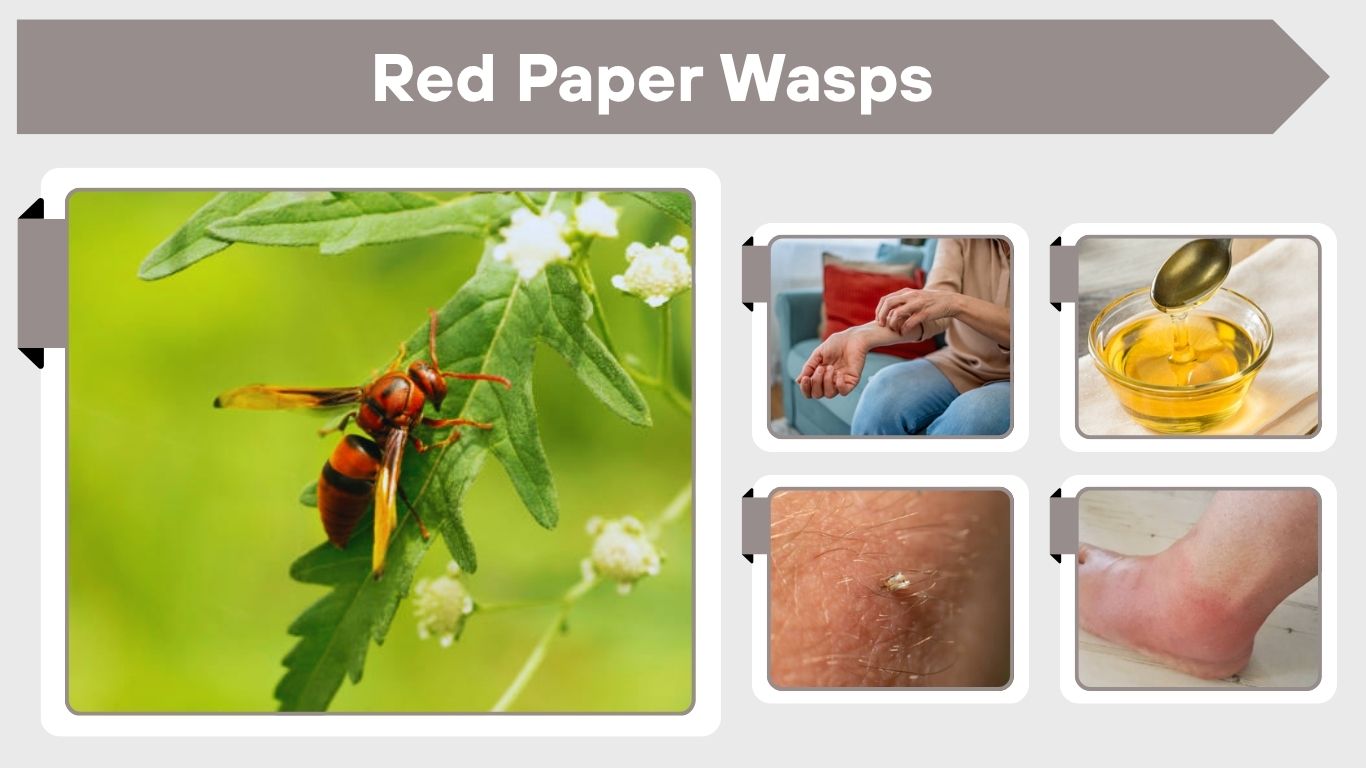
Red paper wasps are one of the most commonly seen wasp species in warm regions, often found around homes, gardens, and outdoor structures. Their reddish color and visible nests can make them seem more dangerous than they actually are. While they can sting, they are generally not aggressive unless disturbed. Understanding how to identify red paper wasps, where they live, and how they behave can help you avoid problems and handle them safely. This guide covers their appearance, habitat, and key behaviors.
What Is a Red Paper Wasp?
A red paper wasp is a type of social wasp belonging to the Polistes genus. It is known for its reddish-brown color and slender body shape. These wasps live in small colonies and build open, paper-like nests using chewed wood fibers. They are beneficial insects because they help control pest populations, but they can become a concern when nesting near human activity.
Key Characteristics
- Reddish or rust-colored body
- Long legs that hang during flight
- Builds open, umbrella-shaped nests
Red Paper Wasp Identification

Red paper wasps are easy to identify once you know their main features. Their body is slimmer compared to other wasps, and their flight pattern is slow with legs dangling. Their color can vary slightly, ranging from deep red to reddish-brown, sometimes with darker markings depending on the species.
Physical Features
- Slender body with narrow waist
- Length around 0.75 to 1 inch
- Wings folded lengthwise when at rest
Types of Red Paper Wasps
There are several variations of red paper wasps, and their appearance may differ slightly depending on the region. Some species are more common in certain areas, especially in warmer climates like Texas and Florida.
Common Variations
- Fine-backed red paper wasp
- Coarse-backed red paper wasp
- Red and black or red and yellow paper wasp
Where Do Red Paper Wasps Live?
Red paper wasps are commonly found in warm and temperate regions where they can easily build nests and find food. They prefer sheltered locations that provide protection from weather and predators. Their proximity to human structures often leads to frequent encounters.
Typical Habitat
- Southern regions such as Texas, Florida, and Georgia
- Gardens, backyards, and wooded areas
- Near buildings, roofs, and outdoor structures
Red Paper Wasp Nest

Red paper wasp nests are one of their most recognizable features. These nests are usually small and open, making them easier to spot than enclosed nests of other wasps. They are often built in quiet areas where there is little disturbance, allowing the colony to grow safely.
Nest Appearance
- Gray, papery texture
- Open comb with visible hexagonal cells
- Attached by a single stalk
How Do Red Paper Wasps Build Their Nests?
Red paper wasps begin building their nests in spring, typically started by a single queen. She collects wood fibers, chews them into a pulp, and shapes them into small cells. As the colony grows, worker wasps help expand the nest. This process continues throughout the warmer months, gradually increasing the size of the structure.
Nest Building Process
- Queen starts the nest alone
- Wood fibers are turned into paper-like pulp
- Workers expand the nest over time
Red Paper Wasp Life Cycle
The life cycle of a red paper wasp follows a typical pattern seen in social wasps. It begins in spring when a fertilized queen emerges from winter shelter and starts a new nest. Eggs are laid in the cells, and larvae develop into adult wasps over time. The colony grows throughout summer and reaches its peak before declining in cooler months.
Life Stages
- Egg stage inside nest cells
- Larva stage fed by workers
- Adult wasps emerge and continue the cycle
Are Red Paper Wasps Aggressive or Dangerous?
Red paper wasps are not naturally aggressive, but they are highly defensive when it comes to protecting their nest. Most stings occur when people accidentally get too close or disturb the colony. Compared to yellow jackets, they are less likely to attack without reason, but their bright color often makes them seem more threatening than they actually are.
When They Become Aggressive
- When their nest is disturbed
- During late summer when colonies are larger
- If they feel threatened or trapped
Do Red Paper Wasps Sting?

Red paper wasps are capable of stinging and will do so primarily in defense. Unlike bees, they can sting multiple times because their stinger does not detach. However, they do not actively seek to sting humans and usually only react when they feel threatened or their nest is disturbed. Understanding their behavior helps reduce the risk of accidental stings.
Red Paper Wasp Sting Pain and Symptoms
- Sharp, burning pain at the sting site
- Redness and swelling within minutes
- Mild itching or irritation afterward
Red Paper Wasp Sting Treatment
Most red paper wasp stings are not dangerous and can be treated at home with simple first aid. Acting quickly can reduce discomfort and prevent complications. People with known allergies should always take extra precautions and seek medical help if symptoms worsen.
Treatment Steps
- Wash the area with soap and water
- Apply ice to reduce swelling
- Take antihistamines for itching
- Seek medical attention if severe reactions occur
Red Paper Wasp vs Yellow Jacket

Red paper wasps are often confused with yellow jackets, but their behavior and appearance differ significantly. Red paper wasps are less aggressive and build open nests, while yellow jackets are more defensive and build enclosed nests, often in hidden locations. Knowing the difference can help you respond appropriately when encountering them.
Key Differences
- Red paper wasps: open nests, calmer behavior
- Yellow jackets: enclosed nests, more aggressive
- Red paper wasps: visible nesting locations
What Do Red Paper Wasps Eat?

Red paper wasps have a balanced diet that includes both sugary substances and protein sources. They feed on nectar and plant juices, which provide energy, and they also hunt small insects to feed their larvae. This behavior makes them beneficial for controlling pests in gardens and outdoor environments. Their role in nature helps maintain ecological balance while supporting plant life through occasional pollination.
Diet Overview
- Nectar and sugary liquids
- Small insects like caterpillars
- Plant juices and organic matter
How to Get Rid of Red Paper Wasps
If red paper wasps become a problem near your home, safe removal methods should be used. It is important to avoid disturbing the nest during the day when wasps are active. Proper timing and protective measures can greatly reduce the risk of stings.
Safe Removal Methods
- Use insecticide spray at night
- Wear protective clothing
- Keep a safe distance from the nest
Red Paper Wasp Control and Prevention
Preventing red paper wasps from nesting near your home is the best long-term solution. By making your environment less attractive to them, you can reduce the chances of future infestations. Regular maintenance and early detection are key to effective control.
Prevention Tips
- Seal cracks and openings around your home
- Remove food sources like exposed garbage
- Inspect eaves and corners regularly
FAQs
Are red paper wasps dangerous?
Red paper wasps are generally not dangerous unless provoked. They can sting, which causes pain and swelling, but serious reactions are rare. The main risk is for individuals who are allergic to wasp venom.
How bad is a red paper wasp sting?
The sting is moderately painful and causes a burning sensation along with redness and swelling. For most people, the symptoms are temporary and fade within a few hours to a day.
Do red paper wasps sting more than once?
Yes, red paper wasps can sting multiple times because their stinger does not detach. However, they typically sting only when they feel threatened or when their nest is disturbed.
How do I get rid of red paper wasps safely?
The safest way is to use a long-range insecticide spray at night when they are less active. Wearing protective clothing and keeping distance helps reduce the risk of stings.
Where do red paper wasps build their nests?
They usually build nests in sheltered areas such as roof eaves, tree branches, and wall corners. These locations provide protection and easy access to food sources.