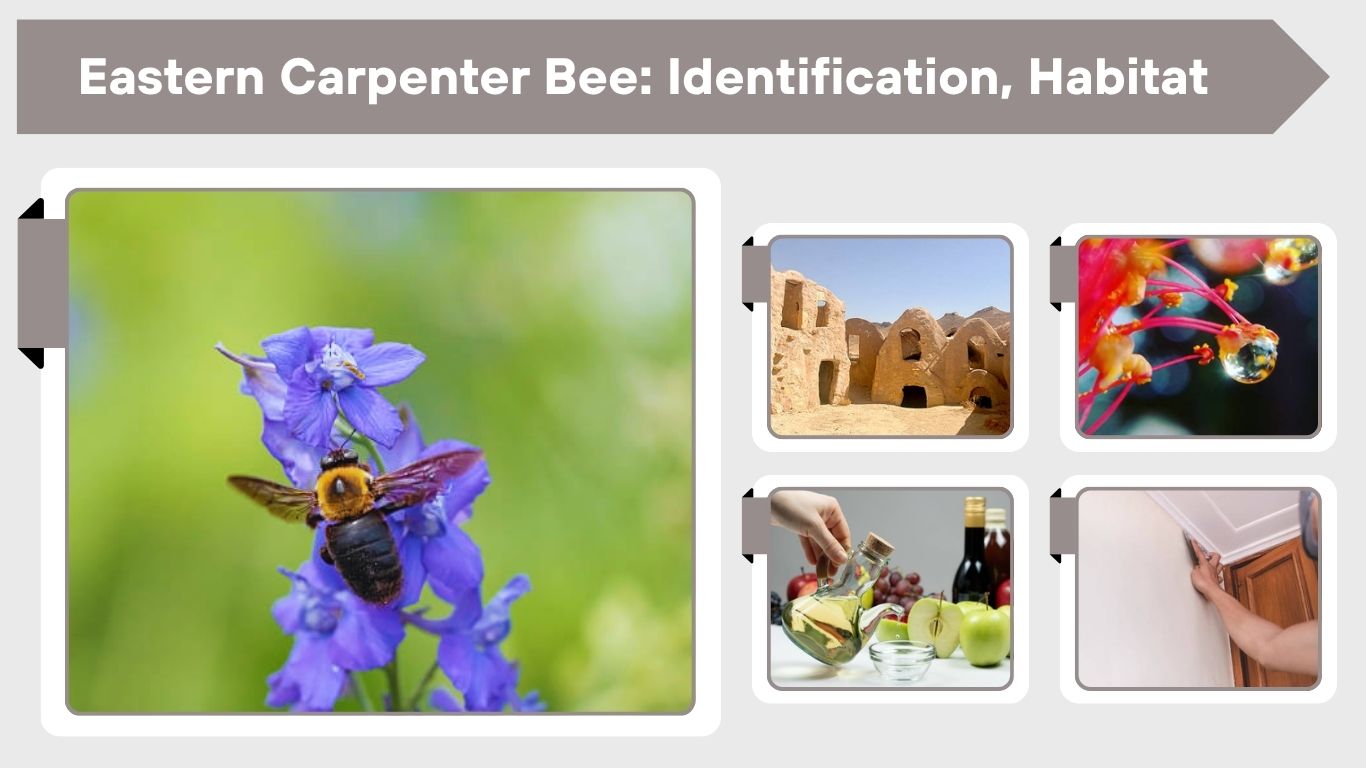
The eastern carpenter bee is one of the most common large bees found in North America, especially in the eastern regions. Known for its loud buzzing and habit of drilling into wood, it often attracts attention around homes, decks, and fences. While many people worry about their presence, these bees are not as dangerous as they seem. Understanding how to identify them, how they behave, and whether they pose a real risk can help you respond appropriately and avoid unnecessary concern.
What Is the Eastern Carpenter Bee?
The eastern carpenter bee (Xylocopa virginica) is a solitary bee species known for nesting in wood rather than living in hives. Unlike honeybees, they do not form large colonies or produce honey, but they play an important role in pollination.
Basic Characteristics
- Large bee, typically around 1 to 1.5 inches long
- Shiny black abdomen with a yellow and black thorax
- Loud buzzing flight that is easy to notice
Why They Are Often Misidentified
- Frequently confused with bumblebees
- Similar size and coloring at first glance
- Differences become clear upon closer inspection
How to Identify an Eastern Carpenter Bee

Correct identification is important because many people mistake these bees for other species. Their physical features and behavior provide clear clues once you know what to look for.
Key Identification Features
- Smooth, shiny abdomen instead of fuzzy
- Larger and more elongated body shape
- Fast, direct flying patterns
Male vs Female Eastern Carpenter Bee
- Males often have lighter-colored faces
- Females have darker, black faces
- Only females can sting
Eastern Carpenter Bee vs Bumblebee

Eastern carpenter bees are often confused with bumblebees, but their differences are noticeable when observed carefully. Bumblebees have a soft, fuzzy appearance and tend to be rounder, while carpenter bees have a sleek, shiny abdomen. Bumblebees usually build nests in the ground, whereas carpenter bees drill into wood to create tunnels. This difference in nesting behavior is one of the easiest ways to distinguish between the two species in real-life situations.
Where Do Eastern Carpenter Bees Live?

Eastern carpenter bees are widely distributed across the eastern United States and nearby regions. They prefer areas where wood is easily available for nesting and where the climate is warm enough to support their activity.
Common Locations
- Eastern U.S. states like Maryland, Missouri, and Vermont
- Suburban and rural environments
- Areas with plenty of wooden structures
Preferred Habitats
- Wooden decks, fences, and siding
- Dead trees and exposed timber
- Dry, sheltered locations
Eastern Carpenter Bee Behavior
Eastern carpenter bees are active mainly during spring and early summer, when they search for nesting sites and mates. Male bees are often seen hovering around open spaces, especially near wooden structures, where they guard territory. Females, on the other hand, focus on drilling tunnels into wood and laying eggs. Despite their large size and noticeable presence, their behavior is generally non-aggressive, and they tend to avoid human interaction unless disturbed.
Do Eastern Carpenter Bees Sting?
Many people are concerned about whether these bees can sting. The answer depends on the type of bee you encounter.
Can Eastern Carpenter Bees Sting?
- Female bees can sting if provoked
- Male bees cannot sting at all
- Stings are uncommon in normal situations
Are They Dangerous?
- Not aggressive by nature
- Usually avoid contact with humans
- Stings are mild compared to other insects
Eastern Carpenter Bee Life Cycle
The life cycle of the eastern carpenter bee follows a simple but effective process that supports their reproduction and survival.
Stages of Development
- Egg laid inside a wooden tunnel
- Larva develops and feeds inside the chamber
- Pupa stage before becoming an adult
Seasonal Activity
- Adults emerge in late summer
- Overwinter inside tunnels
- Become active again in spring
Eastern Carpenter Bee Diet and Pollination

Eastern carpenter bees play an important role in the ecosystem, especially as pollinators. While they are sometimes seen as pests due to their wood-boring habits, they also contribute positively to plant reproduction.
What Do Eastern Carpenter Bees Eat?
- Nectar from flowers for energy
- Pollen as a protein source
- Prefer open-faced flowers and garden plants
Pollination Benefits
- Help fertilize crops and wild plants
- Support garden growth and biodiversity
- Important for certain plant species
Are Eastern Carpenter Bees Beneficial or Harmful?
Eastern carpenter bees have both positive and negative impacts, depending on the situation. On one hand, they are valuable pollinators that support plant life. On the other hand, their nesting habits can cause damage to wooden structures. Their overall impact depends on how many bees are present and whether they are nesting in important areas of your home. In small numbers, they are mostly beneficial, but larger infestations may require attention.
Eastern Carpenter Bee Nesting and Damage
Eastern carpenter bees create nests by drilling into wood, which can lead to structural concerns over time if left untreated.
Signs of Nesting Activity
- Perfectly round holes in wood
- Sawdust or debris below entry points
- Bees frequently entering and exiting holes
Types of Damage
- Weakening of wooden structures
- Expansion of tunnels over time
- Attraction of other pests like woodpeckers
How to Get Rid of Eastern Carpenter Bees

Controlling eastern carpenter bees involves both removing active bees and preventing future nesting. A combination of natural and preventive methods works best.
Natural and DIY Methods
- Use citrus sprays or essential oils as repellents
- Apply vinegar-based solutions to discourage nesting
- Install carpenter bee traps near problem areas
Prevention Tips
- Paint or seal exposed wood surfaces
- Fill existing holes with wood filler or caulk
- Inspect wooden areas regularly
When Should You Be Concerned About Eastern Carpenter Bees?
While eastern carpenter bees are not typically dangerous, their presence should not always be ignored. If you notice repeated nesting in the same area or visible damage to wooden structures, it may indicate a growing problem. Large numbers of bees or activity inside walls can lead to more serious issues over time. Taking action early can prevent costly repairs and reduce the likelihood of long-term infestations.
FAQs
Do eastern carpenter bees sting?
Yes, female eastern carpenter bees can sting, but they rarely do unless provoked. Male bees cannot sting at all, even though they may hover aggressively.
Are eastern carpenter bees aggressive?
They are not aggressive by nature. Male bees may appear aggressive due to hovering behavior, but they are harmless and cannot sting.
Are eastern carpenter bees pollinators?
Yes, they are beneficial pollinators that help fertilize many plants, flowers, and crops, making them important for the ecosystem.
What do eastern carpenter bees eat?
They feed on nectar and pollen from flowers, which provide the nutrients they need for energy and reproduction.
How do you get rid of eastern carpenter bees?
You can control them using natural repellents, traps, and by sealing wood surfaces. Long-term prevention includes regular maintenance and protecting exposed wood.