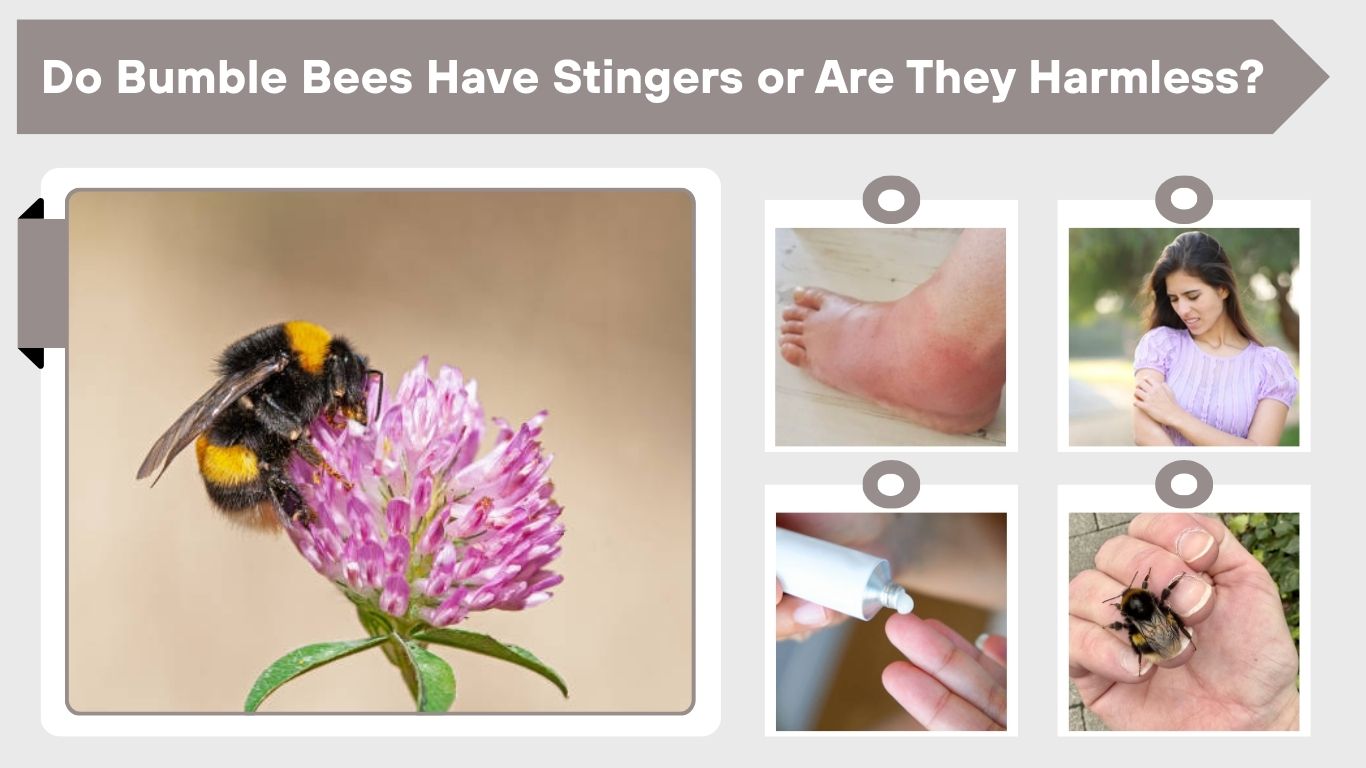
Bumble bees are known for their large, fuzzy bodies and gentle behavior, but many people still wonder: do bumble bees have stingers? The simple answer is yes—but not all of them. Whether a bumble bee can sting depends on its role in the colony.
In this guide, we’ll break down which bumble bees can sting, how their stingers work, and whether you should be concerned.
Do All Bumble Bees Have Stingers?
Not every bumble bee has a stinger. In fact, only female bumble bees are capable of stinging.
Here’s how it works:
- Female bees (workers and queens) have stingers
- Male bees (drones) do not have stingers
- The stinger is actually a modified egg-laying organ
Because male bees do not lay eggs, they also lack the physical structure needed to sting. This is why you may see many bumble bees around flowers that pose no threat at all.
Do Male Bumble Bees Have Stingers?

No, male bumble bees cannot sting at all.
Even though male bumble bees may look just as large and fuzzy as females, they are completely harmless when it comes to stinging. They do not have a stinger or venom, and their primary role is reproduction rather than defense.
People often mistake male bees for dangerous ones because of their size, but in reality:
- They cannot sting
- They are generally more passive
- They spend most of their time feeding and mating
So if a bee is hovering around you but not acting aggressively, there’s a good chance it’s a harmless male.
Do Female and Queen Bumble Bees Sting?

Yes, female bumble bees—including both workers and queens—can sting.
However, their behavior is important to understand. Bumble bees are not naturally aggressive and usually sting only when they feel threatened.
Here’s how it breaks down:
- Worker bees: Defend the nest if disturbed
- Queen bees: Can sting but rarely do unless provoked
- General behavior: Prefer to avoid conflict
Unlike some other insects, bumble bees won’t chase people or sting randomly. Most stings happen when someone accidentally touches or disturbs them.
Do Bumble Bees Have Barbed Stingers?
Bumble bees do have stingers, but they are not strongly barbed like those of honey bees.
This difference is important because it affects how they sting:
- Bumble bees can sting more than once
- They do not lose their stinger after attacking
- They survive after stinging
In contrast, honey bees have barbed stingers that get stuck in the skin, causing the bee to die after one sting. Bumble bees don’t have this limitation, though they still rarely sting unless necessary.
Do Big or Black Bumble Bees Have Stingers?
The size or color of a bumble bee does not determine whether it has a stinger. What really matters is whether the bee is male or female.
However, there’s an interesting detail:
- Larger bumble bees are often females
- Queens are usually bigger than workers and males
- Many black or darker bees are females in certain species
This means that bigger bees are more likely to be able to sting—but not because of their size alone. It’s simply because they are more likely to be female.
Why Do Bumble Bees Have Stingers?

Bumble bees use their stingers primarily for defense, not for hunting or aggression. Their main goal is to protect themselves and their colony.
Here’s why stingers are important:
- Colony protection: Workers defend the nest from threats
- Self-defense: They sting if handled or disturbed
- Queen safety: Protecting the reproductive member of the colony
Unlike predators, bumble bees don’t use their stingers to catch food. They feed on nectar and pollen, so their stinger is purely a defensive tool.
Are Bumble Bee Stings Dangerous?

For most people, bumble bee stings are not dangerous, but they can be painful.
Typical reactions include:
- Sharp, immediate pain
- Mild swelling and redness
- Temporary itching or irritation
The pain is usually moderate and fades within a few hours. However, some people may experience stronger reactions.
In rare cases, a person can have an allergic reaction, which may include:
- Severe swelling
- Difficulty breathing
- Dizziness or rapid heartbeat
If these symptoms occur, medical attention is needed immediately.
How to Avoid Getting Stung by Bumble Bees
Bumble bees are generally calm, so avoiding stings is usually easy if you don’t disturb them.
Follow these simple tips:
- Do not touch or handle bees
- Avoid disturbing nests (often found in the ground)
- Stay calm if a bee is nearby
- Wear shoes outdoors to prevent accidental contact
Most stings happen when a bee feels threatened, so giving them space is the best way to stay safe.
What to Do If a Bumble Bee Stings You

If you do get stung, don’t panic. Bumble bee stings are usually manageable at home.
Here’s what you can do:
- Wash the area with soap and water
- Apply a cold pack to reduce swelling
- Use antihistamine cream if needed
- Avoid scratching the area
Since bumble bees don’t leave their stinger behind, you won’t need to remove it like you would with a honey bee sting.
FAQ
Do baby bumble bees have stingers?
No, baby bumble bees (larvae) do not have stingers. Only adult female bees develop stingers as they mature. Male bees never develop stingers at any stage of life, even after becoming adults.
Can bumble bees sting more than once?
Yes, bumble bees can sting multiple times. Their stingers are not strongly barbed, so they can use them repeatedly without dying. However, they usually sting only when they feel threatened.
Are bumble bees aggressive?
Bumble bees are not aggressive by nature. They are generally peaceful and focused on collecting nectar and pollen. They will only sting if provoked, such as when their nest is disturbed or they are handled.
Do fuzzy bumble bees have stingers?
Yes, fuzziness has nothing to do with stingers. All female bumble bees, whether fuzzy or not, have stingers. The fuzzy hairs help with insulation and pollen collection, not defense.