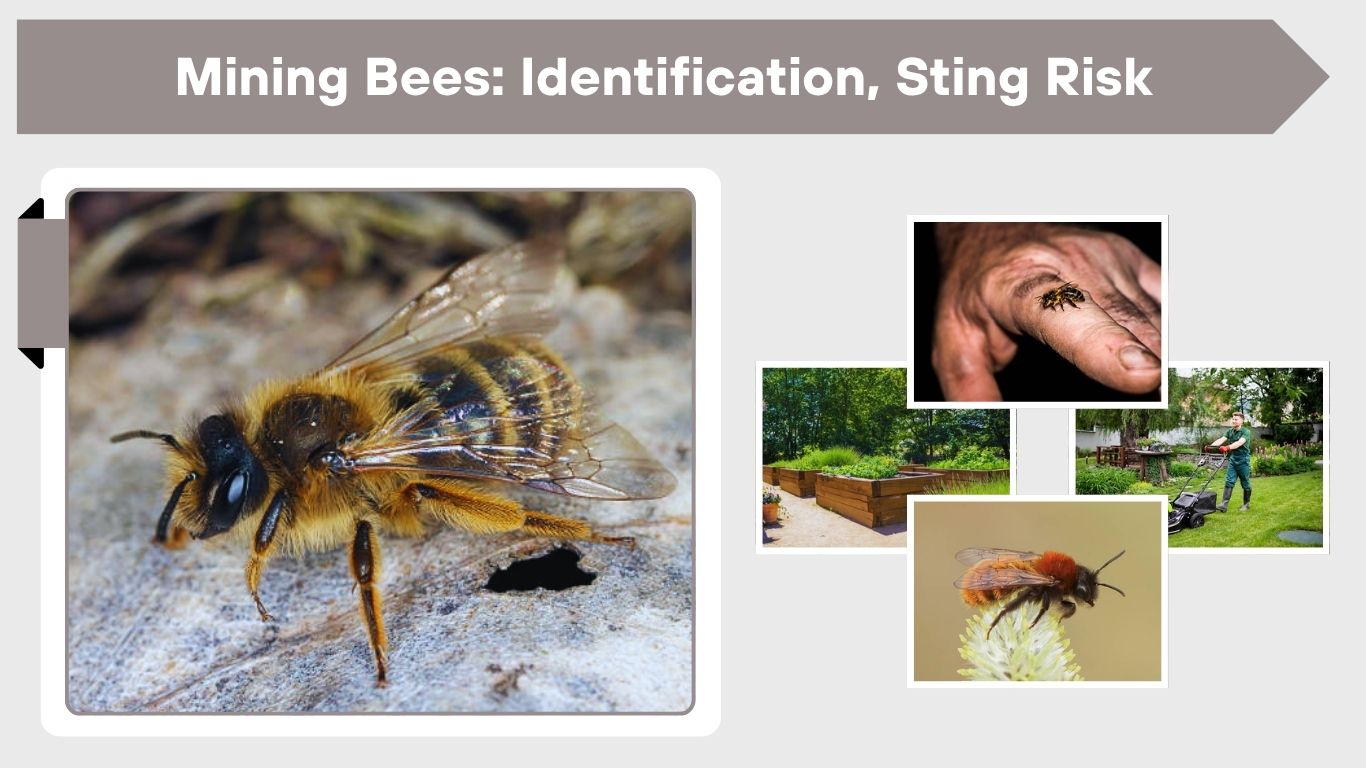
Mining bees are a common sight in spring, especially when small holes suddenly appear in lawns, gardens, or pathways. Many people worry these bees might be dangerous or aggressive, but in reality, mining bees are among the most harmless and beneficial insects you can have around your home.
Unlike honey bees or wasps, mining bees are solitary creatures that focus on pollination rather than building hives or producing honey. Understanding their behavior, nesting habits, and role in the ecosystem can help you decide whether to remove them or simply let them be.
What Are Mining Bees?
Mining bees belong to the Andrena genus, one of the largest groups of bees in the world. They are known as ground-nesting bees because they dig tunnels in soil instead of living in hives.
These bees are solitary, meaning each female builds and manages her own nest without the help of a colony. However, you may still see many mining bees in one area because they prefer nesting in suitable soil conditions close to each other.
Key characteristics of mining bees include:
- Small to medium-sized bodies
- Hairy appearance for collecting pollen
- Active mainly in early spring
- Gentle and non-aggressive nature
They are often mistaken for honey bees, but their behavior and lifestyle are completely different.
Types of Mining Bees (Common Species)

Ashy Mining Bee
The ashy mining bee is easily recognized by its gray, ash-like thorax. It is commonly found in parts of Europe and the UK and is often seen visiting spring flowers.
These bees prefer sandy soils and are usually active for a short period during early spring.
Tawny Mining Bee
Tawny mining bees are one of the most widespread species. They have a distinctive orange-brown color, making them easy to identify.
They are commonly found in gardens, lawns, and woodland edges, where they nest in loose soil.
Chocolate Mining Bee
Chocolate mining bees have a darker brown or black appearance. While less commonly discussed in real-world settings, they are also known in gaming communities, particularly in modded environments like “Productive Bees.”
Other Notable Species
There are many other types of mining bees, including:
- Yellow-legged mining bee
- Hairy-banded mining bee
- Spring beauty mining bee
Each species has slightly different characteristics, but all share similar nesting and behavioral traits.
Where Do Mining Bees Live? (Nests & Holes)

Mining bees live underground in small tunnels they dig themselves. These nests are often the reason people first notice them.
Each female creates a burrow that can go several inches deep, with small chambers where she lays eggs and stores food for her larvae.
Common features of mining bee nests include:
- Small round holes in the ground
- Tiny mounds of loose soil around the entrance
- Clusters of holes in the same area
- Found in lawns, garden beds, or paths
These holes are sometimes mistaken for ant nests, but they are usually larger and more evenly spaced.
Why Are Mining Bees in My Lawn?
If you suddenly notice dozens of tiny holes in your yard, mining bees have likely chosen your lawn as a nesting site.
They are attracted to specific conditions, including:
- Dry, well-drained soil
- Bare or thin patches of grass
- Sunny areas with little shade
- Minimal disturbance from foot traffic
Lawns with poor grass coverage or sandy soil are especially appealing to them. While this may seem like a problem, it simply means your yard provides a suitable environment for nesting.
Are Mining Bees Dangerous?
One of the most common concerns people have is whether mining bees are dangerous. The good news is that they are not.
Mining bees are:
- Non-aggressive
- Solitary (no hive to defend)
- Unlikely to interact with humans
Because they do not live in colonies, they have no reason to defend a nest aggressively like honey bees or wasps. Even when many bees are present, they are simply sharing the same area, not working together as a swarm.
Do Mining Bees Sting?

Can They Sting Humans?
Yes, mining bees can sting—but only under very specific conditions. Only female bees have stingers, while males cannot sting at all.
Even females rarely sting unless they are directly handled or feel threatened.
How Painful Is the Sting?
If a sting does occur, it is usually mild and much less painful than a sting from a honey bee or wasp. For most people, it causes only minor discomfort and fades quickly.
Because of their calm nature, stings are extremely uncommon.
Are Mining Bees Aggressive?
Mining bees are not aggressive. Their solitary lifestyle means they do not defend nests or attack in groups.
They are more focused on gathering pollen and building nests than interacting with humans. Even if you walk near their nesting area, they will typically ignore you completely.
This makes them one of the safest types of bees to have around your home.
Do Mining Bees Make Honey?
A common misconception is that all bees produce honey, but this is not true for mining bees.
Mining bees do not make honey because they are solitary insects. Instead of storing large amounts of food, each female collects just enough pollen and nectar to feed her offspring.
Unlike honey bees, they:
- Do not live in hives
- Do not produce surplus honey
- Do not have worker bees
Their main role in nature is pollination, not honey production.
Importance of Mining Bees (Pollination Benefits)

Mining bees play a crucial role in the ecosystem, especially during early spring when other pollinators are not yet active.
Their benefits include:
- Pollinating flowers, fruits, and vegetables
- Supporting early-blooming plants
- Helping maintain biodiversity
- Improving crop yields in gardens and farms
Because of their efficiency, mining bees are considered some of the best natural pollinators.
How Long Do Mining Bees Stay?
Mining bees are seasonal insects, and their presence is temporary.
Typically:
- They are active for about 4 to 8 weeks
- Most activity occurs in spring
- They disappear naturally after completing their life cycle
After laying eggs, the adult bees die off, and the next generation remains underground until the following year.
Mining Bees vs Honey Bees

Although they may look similar, mining bees and honey bees are very different.
Key differences include:
- Lifestyle: Mining bees are solitary, while honey bees live in colonies
- Nesting: Mining bees nest underground; honey bees build hives
- Honey Production: Mining bees do not produce honey
- Aggression: Mining bees are gentle; honey bees can be defensive
Understanding these differences helps reduce unnecessary fear.
How to Get Rid of Mining Bees (Humanely)
If mining bees are causing concern, it’s best to use safe and eco-friendly methods to discourage them rather than eliminate them.
Effective methods include:
- Water the soil regularly: Moist soil is less attractive for nesting
- Cover bare patches: Plant grass or use mulch to block access
- Improve lawn density: Thick grass discourages burrowing
- Reduce dry, sandy areas: Adjust soil conditions
In most cases, these steps are enough to prevent them from returning the following year.
How to Kill Mining Bees (Not Recommended)
While some people search for ways to kill mining bees, this approach is strongly discouraged.
Chemical pesticides:
- Harm beneficial pollinators
- Can damage the environment
- May affect other wildlife and plants
In some areas, harming certain bee species may also be restricted or discouraged by environmental guidelines.
A better approach is to manage your lawn conditions and allow the bees to leave naturally.
Are Mining Bees Protected or Endangered?
Some species of mining bees are experiencing population declines due to habitat loss, pesticide use, and climate changes.
Key points:
- Protection laws vary by country
- Many species are considered beneficial and should be preserved
- Creating pollinator-friendly spaces can support their survival
Encouraging their presence in controlled ways can actually benefit your garden and the environment.
FAQ
Do mining bees sting humans?
Mining bees can sting, but it is extremely rare. Only female bees have stingers, and they typically sting only when directly handled or threatened. Their sting is mild and far less painful than that of honey bees or wasps, making them generally harmless to humans.
Are mining bees dangerous to pets?
Mining bees are not dangerous to pets. They are non-aggressive and do not attack animals. Pets are unlikely to be stung unless they dig into the ground or accidentally step on a bee, which rarely happens in normal situations.
Why are there holes in my lawn?
The small holes are nesting tunnels created by mining bees. Each hole belongs to a single female bee. These holes are often surrounded by tiny mounds of soil and usually appear in dry, sunny areas with loose soil.
How do I permanently get rid of mining bees?
To discourage mining bees, maintain a healthy lawn by watering regularly, planting grass, and covering bare soil. These bees prefer dry, open ground, so improving soil conditions makes your yard less attractive to them over time.
Do mining bees come back every year?
Yes, mining bees may return to the same location if the conditions remain ideal. However, their activity is short-lived and seasonal, usually lasting only a few weeks each year before they disappear naturally.
Conclusion
Mining bees may seem alarming at first, especially when they suddenly appear in large numbers, but they are actually harmless and highly beneficial insects. They rarely sting, are not aggressive, and play a vital role in pollination.
Since their presence is temporary, the best approach is often to let them complete their life cycle naturally. If needed, simple lawn care adjustments can prevent them from returning without harming these important pollinators.