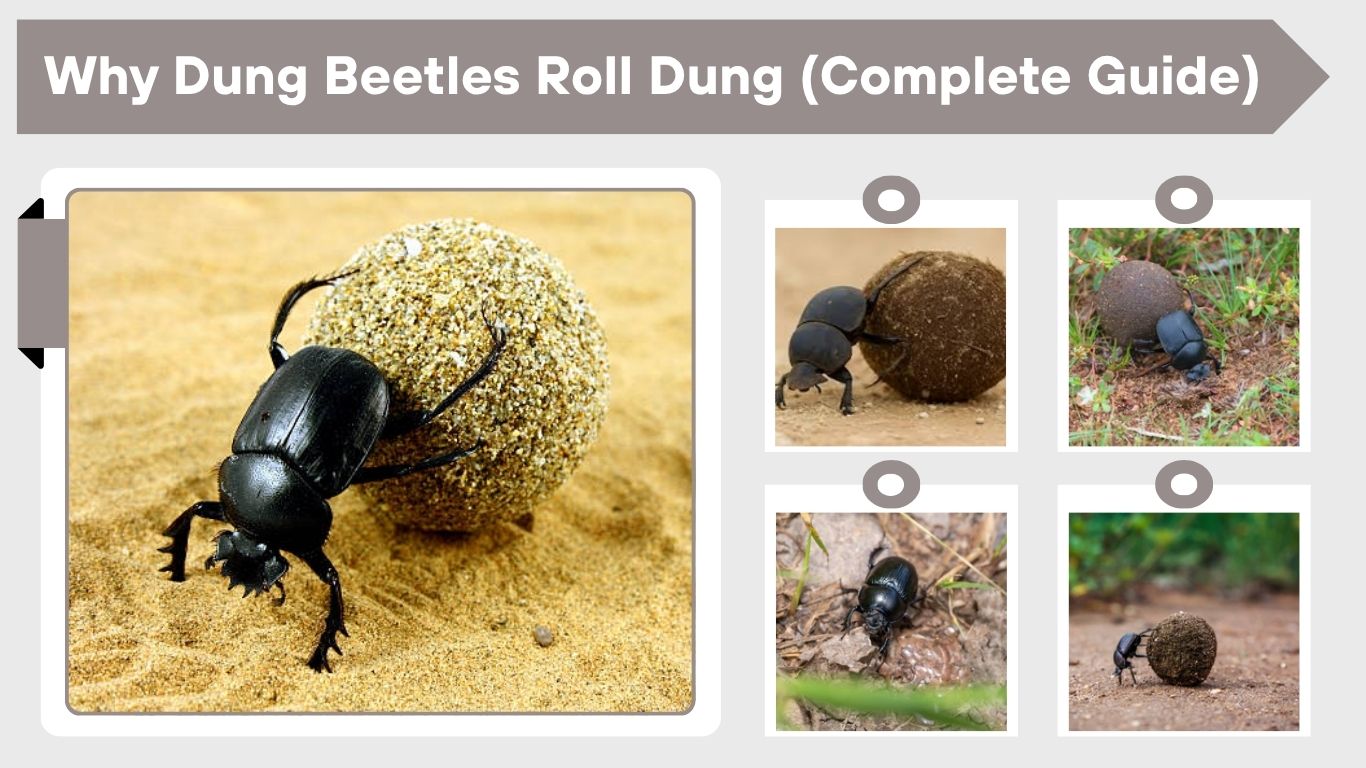
Dung beetles are among the most fascinating insects in the natural world. Their behavior of rolling balls of animal waste might seem strange or even amusing, but it actually plays a crucial role in their survival. From feeding to reproduction and even navigation, every movement has a purpose. In this guide, we’ll explore why dung beetles roll dung and what makes this behavior so important.
What Is a Dung Beetle?
Dung beetles are insects that primarily feed on animal feces. They belong to the Scarabaeidae family and are found in many parts of the world, especially in warm climates. There are thousands of species, and while not all of them roll dung, the rolling species are the most widely recognized.
These beetles are highly adapted to their environment. Their strong legs, excellent sense of smell, and unique behaviors allow them to locate and use dung efficiently. As soon as an animal drops waste, dung beetles quickly arrive to claim their share.
Why Do Dung Beetles Roll Dung?

Dung beetles roll dung mainly to survive. They use it as food, a place to lay eggs, and a resource to protect from competitors. Rolling the dung away from the original pile helps them secure it for their own use.
1. Food Storage
One of the main reasons dung beetles roll dung is to store food. Dung contains partially digested plant material, which is rich in nutrients that beetles can consume.
- Fresh dung is packed with nutrients
- Rolling helps move food to a safe location
- Stored dung can be eaten over time
By forming a ball and rolling it away, the beetle ensures it has a reliable food source without having to compete with others at the original site.
2. Reproduction and Nesting
Dung beetles also use dung balls for reproduction. This is one of the most important purposes of their rolling behavior.
- Females lay eggs inside dung balls
- The dung serves as food for developing larvae
- Each ball acts as a protected nursery
Once the eggs hatch, the larvae feed on the dung until they mature into adult beetles. This system gives the young a strong start in life.
3. Avoiding Competition
When dung is freshly deposited, it attracts many beetles at once. This leads to intense competition.
- Multiple beetles fight over the same resource
- Rolling helps claim a private share
- Moving away reduces conflict
By quickly shaping and rolling a ball away, a dung beetle avoids fights and increases its chances of survival.
4. Efficient Resource Use
Rolling dung into a ball is not random—it’s a smart strategy.
- The ball shape is easy to move
- It reduces waste and keeps resources compact
- Makes storage and transport more efficient
This efficient use of resources helps dung beetles thrive even in competitive environments.
5. Navigation Skills
Dung beetles are known for their impressive navigation abilities. After forming a dung ball, they roll it in a straight line away from the dung pile.
- They use the sun during the day
- At night, they can use the moon or stars
- This prevents them from circling back
This straight-line movement helps them quickly escape crowded areas and protect their dung from being stolen.
Why Do Dung Beetles Roll Dung Backwards?
One of the most interesting aspects of their behavior is that dung beetles often roll their balls backward.
- They push the ball with their hind legs
- This gives better control and strength
- Their head stays free to detect danger
Although it may look awkward, this method is actually very effective for moving heavy loads.
Why Do Dung Beetles Roll Dung at Night?

Some dung beetles are active at night, and there are clear advantages to this behavior.
- Cooler temperatures reduce the risk of overheating
- Fewer predators are active
- There is less competition from other insects
Nocturnal beetles often rely on the moon or even the Milky Way to guide their movement, showing how advanced their navigation skills are.
Why Do Dung Beetles Make Balls?
Dung beetles don’t just move dung randomly—they carefully shape it into balls. This behavior has several advantages that make survival easier.
- A round shape rolls smoothly across the ground
- It keeps the dung compact and easy to manage
- It’s ideal for both storage and reproduction
The ball shape is one of the most efficient ways to transport food over long distances, especially across uneven terrain.
Do All Dung Beetles Roll Dung?
Not all dung beetles roll dung. In fact, scientists classify them into three main groups based on how they use dung.
- Rollers: Form dung into balls and roll it away
- Tunnelers: Dig tunnels beneath dung piles and bury it
- Dwellers: Live and reproduce directly inside the dung
Each type has a different survival strategy, but all depend on dung in some way.
Why Is This Behavior Important for the Environment?

Dung beetles are not just important for themselves—they play a major role in maintaining healthy ecosystems.
- They recycle nutrients back into the soil
- Help reduce parasites and flies that breed in dung
- Improve soil aeration and fertility
By breaking down and burying dung, they help keep environments clean and support plant growth. Farmers especially benefit from their activity.
Why Do Dung Beetles Roll Dung So Fast?
Speed is important when dealing with dung because it is a limited and highly competitive resource.
- Fresh dung attracts many insects quickly
- Faster beetles secure better portions
- Quick movement reduces the risk of theft
Rolling quickly helps ensure that the beetle keeps control of its dung ball before others can take it.
Why Do Dung Beetles Climb on Their Balls?

You might sometimes see a dung beetle climbing on top of its dung ball. This behavior is not random.
- It helps them check their direction
- They use it to orient themselves using the sky
- It can also help them cool down from hot ground
This small action plays a big role in their navigation and survival.
Fun Facts About Dung Beetles
Dung beetles have some truly surprising abilities that make them unique in the insect world.
- Some species can roll dung balls up to 50 times their body weight
- They are among the few animals that can navigate using the Milky Way
- Ancient Egyptians considered them symbols of rebirth and transformation
These facts highlight just how remarkable these insects really are.
FAQs
Why do dung beetles roll poop?
Dung beetles roll poop mainly to use it as food and to create a safe place for their eggs. Rolling also helps them move dung away from crowded areas, reducing competition and increasing their chances of survival.
Why do dung beetles roll balls?
They roll dung into balls because it makes it easier to transport and store. The round shape allows smooth movement and provides a compact structure that works well for feeding and reproduction.
Why do dung beetles roll backwards?
Dung beetles roll backwards because it allows them to push the ball using their strong hind legs. This method gives them better control and keeps their head free to watch for threats.
Why do dung beetles roll dung at night?
Some dung beetles roll dung at night to avoid heat and predators. Cooler temperatures make movement easier, and reduced competition allows them to gather and store dung more efficiently.
Do dung beetles only eat dung?
Yes, dung beetles mainly rely on animal feces as their primary food source. Both adults and larvae consume dung because it contains essential nutrients needed for growth and survival.