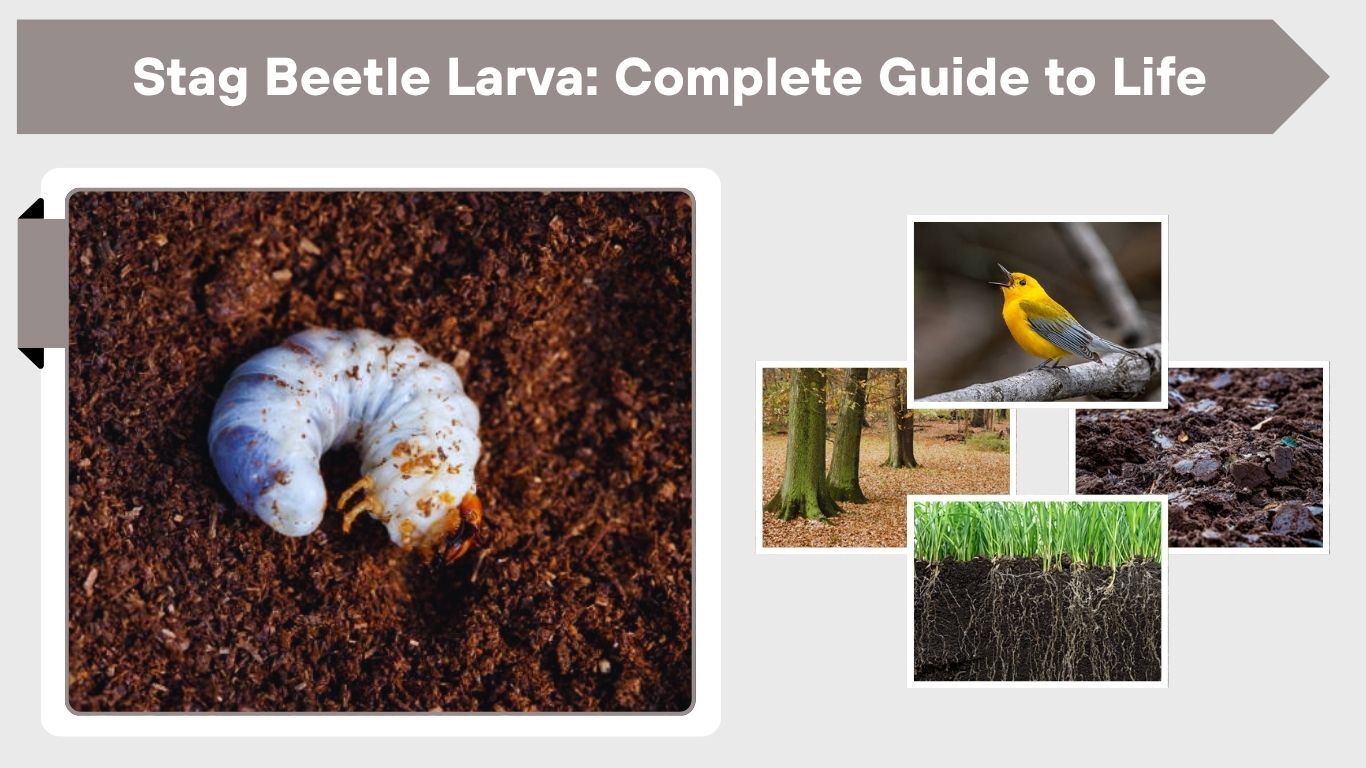
Stag beetle larvae are the hidden, underground stage of one of the most fascinating beetle families, Lucanidae. While adult stag beetles are known for their large, antler-like jaws, their larvae spend years quietly developing inside decaying wood. This stage is crucial not only for the beetle’s survival but also for maintaining healthy ecosystems. Understanding stag beetle larvae helps reveal their ecological importance and unique biological traits.
What Are Stag Beetle Larvae?
Stag beetle larvae are the immature form of stag beetles, living beneath the ground or inside rotting wood. They represent the longest phase of the beetle’s life cycle and focus entirely on feeding and growth before transforming into adults.
- Soft, C-shaped grub-like body
- Found in decaying wood and tree roots
- Harmless to humans and plants
Taxonomy and Classification
Stag beetle larvae belong to the family Lucanidae, within the order Coleoptera. This group includes over 1,200 species worldwide, ranging from small to very large beetles.
Key Classification
- Kingdom: Animalia
- Phylum: Arthropoda
- Class: Insecta
- Order: Coleoptera
- Family: Lucanidae
These larvae share common biological traits across species, even though adult beetles may look very different.
Physical Appearance and Anatomy

Stag beetle larvae have a distinctive look that makes them recognizable among other insect larvae. Their bodies are adapted for life inside decomposing wood.
Main Features
- Creamy white body with a curved “C” shape
- Dark, hardened head with strong mandibles
- Segmented body with small bristles
The mandibles are especially important, allowing larvae to break down tough, rotting wood for nutrition.
Life Cycle of a Stag Beetle
The life cycle of a stag beetle consists of four main stages, with the larval stage lasting the longest.
Stages of Development
Egg → Larva → Pupa → Adult
After hatching, larvae spend several years feeding and growing before entering the pupal stage. This long development period helps them store enough energy to survive adulthood, which is relatively short.
Habitat and Natural Environment

Stag beetle larvae thrive in environments rich in decaying organic material. They are commonly found in forests, woodlands, and areas with old trees.
Preferred Habitat Conditions
- Rotting logs and tree stumps
- Moist, nutrient-rich soil
- Hardwood trees like oak and beech
These environments provide both food and protection, making them ideal for larval development.
Diet and Feeding Behavior

Stag beetle larvae primarily feed on decaying wood, which provides the nutrients they need for growth and development. Their feeding activity plays a key role in breaking down organic material.
What Do They Eat?
They consume soft, rotting wood from fallen trees, stumps, and underground roots. Using their strong mandibles, they grind the wood into digestible material. This process helps recycle nutrients back into the soil, supporting plant growth and ecosystem balance.
Growth and Development (Instars)
The larval stage is divided into several growth phases known as instars. During each instar, the larva sheds its outer skin in a process called molting.
How Development Occurs
Larvae gradually increase in size over time, with each molt allowing further growth. Environmental factors such as temperature, humidity, and food availability can significantly influence how quickly they develop. Some species may remain in the larval stage for several years before pupation.
Behavior and Adaptations
Stag beetle larvae are well adapted to their underground lifestyle. Their behavior is primarily focused on feeding, avoiding danger, and conserving energy.
Key Adaptations
They burrow through decaying wood, creating tunnels where they live and feed. Their pale coloration helps them blend into their environment, while their strong jaws allow them to process tough organic material. They are also adapted to low-light conditions, relying more on touch than sight.
Ecological Importance
Stag beetle larvae play a vital role in maintaining healthy ecosystems. By breaking down dead wood, they contribute to natural recycling processes.
Why They Matter
Their feeding activity accelerates decomposition, releasing nutrients back into the soil. This improves soil fertility and supports plant growth. Additionally, they serve as a food source for various animals, forming an important part of the food chain.
Predators and Threats

Despite living underground, stag beetle larvae face several natural and human-related threats.
Common Threats
Predators such as birds, mammals, and other insects may dig them out of their habitats. Human activities like deforestation and removal of dead wood reduce their living spaces. Climate change can also affect the moisture and temperature conditions they depend on.
Differences Between Stag Beetle Larvae and Other Grubs
Stag beetle larvae are often confused with other beetle grubs, but there are clear differences.
How to Identify Them
They are usually larger and found specifically in decaying wood rather than garden soil. Their mandibles are stronger, and their overall body structure appears more robust compared to common garden grubs.
Conservation Status
Many stag beetle species are facing population decline due to habitat loss and environmental changes.
Protection Efforts
In some regions, species like the European stag beetle are protected by law. Conservation efforts focus on preserving dead wood habitats and raising public awareness about their ecological value.
FAQs
What do stag beetle larvae eat?
Stag beetle larvae mainly feed on decaying wood and organic matter. They break down rotting logs and tree roots using strong mandibles, helping recycle nutrients into the soil. This makes them beneficial for ecosystems rather than harmful to plants or crops.
How long do stag beetle larvae live?
The larval stage can last from 1 to 6 years depending on species and environmental conditions. Most of a stag beetle’s life is spent in this stage, growing and storing energy before transforming into a pupa and eventually an adult beetle.
Are stag beetle larvae harmful?
No, stag beetle larvae are harmless to humans, pets, and healthy plants. They only feed on decaying wood and do not damage living trees or crops. In fact, they are beneficial because they help decompose organic material and improve soil health.
How can you identify stag beetle larvae?
They are large, creamy-white grubs with a curved body and a darker head. Unlike many other grubs, they are found in rotting wood rather than soil. Their strong mandibles and size also help distinguish them from other beetle larvae.
Can you keep stag beetle larvae as pets?
Yes, some enthusiasts raise stag beetle larvae in controlled environments. They require decayed wood substrate, proper humidity, and stable temperatures. Ethical care and knowledge are important to ensure their healthy growth and successful development into adult beetles.