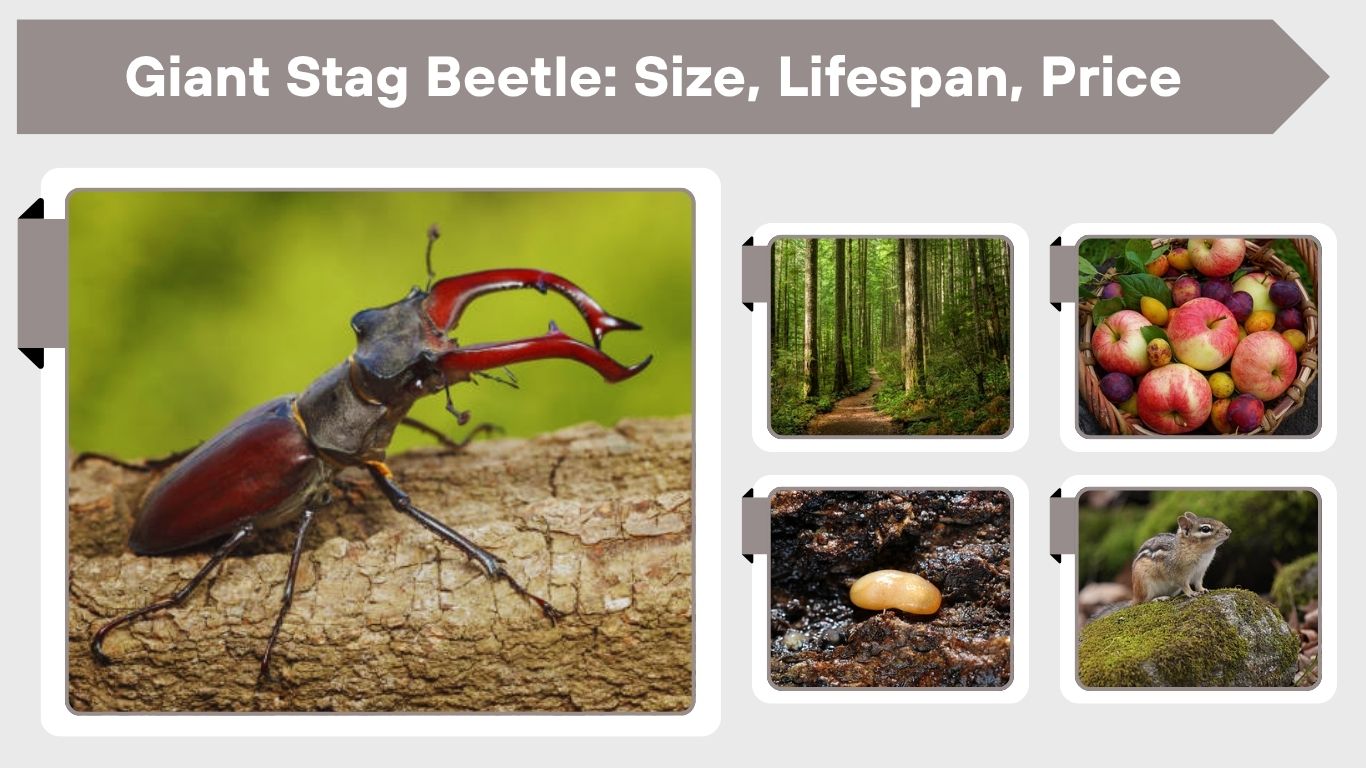
Giant stag beetles are among the most fascinating insects in the world, known for their impressive size and antler-like mandibles. These beetles, especially species like Lucanus elaphus, attract attention from nature enthusiasts and insect collectors alike. From their long larval stage to their short adult life, they have a unique life cycle. Understanding their size, lifespan, habitat, and behavior helps reveal why they are both ecologically important as pets.
What Is a Giant Stag Beetle?
Giant stag beetles belong to the family Lucanidae, a group of beetles recognized for their large jaws and robust bodies. The term “giant” refers to their relatively large size compared to other beetles.
They are most commonly found in forested regions and are especially known in North America, Europe, and parts of Asia. The species Lucanus elaphus, often called the giant stag beetle, is one of the most notable examples due to its size and striking appearance.
Giant Stag Beetle Size
One of the most searched aspects of this insect is its size, which makes it stand out in the insect world.
How Big Do They Get?
Giant stag beetles can grow between 1.5 to 3 inches (4–7.5 cm) in length. Males are usually larger than females and possess long, curved mandibles that resemble deer antlers. These mandibles can sometimes be as long as the beetle’s body, making males appear even bigger.
Females, on the other hand, are smaller and have shorter, more functional jaws used for feeding rather than fighting.
Giant Stag Beetle Lifespan

The lifespan of a giant stag beetle is quite unique because most of it is spent in the larval stage.
Life Expectancy
The larval stage can last between 1 to 3 years, depending on environmental conditions such as temperature and food availability. During this time, the larvae feed continuously and grow in size.
Once they become adults, their lifespan is much shorter—typically only a few months. Adult beetles mainly focus on reproduction and do not spend much time feeding or growing.
Giant Stag Beetle Life Cycle

The life cycle of a giant stag beetle consists of four main stages, each playing an important role in its development.
Stages of Development
Egg → Larva → Pupa → Adult
After the eggs hatch, the larvae begin feeding on decaying wood. This stage is the longest and most critical phase of their life. When fully grown, the larva transforms into a pupa inside a protective chamber, eventually emerging as an adult beetle.
Giant Stag Beetle Larvae
The larval stage is often overlooked, but it is the most important phase in the beetle’s life.
Characteristics
Stag beetle larvae are large, creamy-white grubs with a curved, C-shaped body. They have a darker head and strong mandibles that allow them to chew through decaying wood.
Diet and Growth
Larvae feed primarily on rotting wood found in logs, tree stumps, and underground roots. This diet provides the nutrients they need to grow over several years. Their slow development ensures they store enough energy to survive adulthood.
Giant Stag Beetle Habitat and Range

Giant stag beetles are typically found in forested areas with plenty of decaying wood.
Where Do They Live?
They are commonly found in North America, particularly in the eastern United States. Some species are also found in Europe and Asia.
Preferred Environment
- Forests and woodlands
- Areas with dead logs and tree stumps
- Moist, nutrient-rich soil
These environments provide both food and shelter, especially for larvae that depend on decaying wood to survive.
Giant Stag Beetle Diet

Diet varies depending on the stage of life, with larvae and adults having different feeding habits.
Adult Diet
Adult stag beetles mainly feed on tree sap, fruits, and other sugary substances. They are often seen on tree trunks where sap is flowing.
Larval Diet
Larvae consume decaying wood and organic matter. This feeding behavior helps break down dead plant material and contributes to nutrient recycling in the ecosystem.
Giant Stag Beetle as a Pet
Giant stag beetles are increasingly popular among insect enthusiasts due to their unique appearance and relatively simple care requirements.
Can You Keep Them as Pets?
Yes, giant stag beetles can be kept as pets, especially in countries where it is legal. They are quiet, low-maintenance, and do not require much space, making them ideal for beginners.
Basic Care Tips
- Use a well-ventilated container with decayed wood substrate
- Maintain proper humidity and temperature
- Feed adults with fruit or beetle jelly
With proper care, they can live comfortably through their short adult stage.
Giant Stag Beetle Price and For Sale
Many people search for giant stag beetles for sale, especially collectors and hobbyists.
How Much Do They Cost?
The price of a giant stag beetle varies depending on species, size, and rarity. Common species are generally affordable, while rare or large specimens can be more expensive.
Where to Buy
You can find stag beetles through online insect shops, breeders, or specialty hobby stores. However, it is important to ensure that purchasing and keeping them is legal in your area.
Giant Stag Beetle Behavior and Features
Giant stag beetles display interesting behaviors, especially during mating season.
Mandibles and Fighting
Male stag beetles use their large mandibles to fight other males for access to females. These battles are mostly for display and dominance rather than causing serious harm.
Eyes and Senses
Although their eyesight is not very strong, they rely on their sense of smell to locate food sources like tree sap. Their antennae play an important role in detecting scents in their environment.
Predators and Threats

Despite their tough appearance, giant stag beetles face several threats in the wild.
Natural Predators
Birds, small mammals, and reptiles often prey on both larvae and adult beetles. Larvae are especially vulnerable when their habitats are disturbed.
Environmental Threats
Habitat loss due to deforestation and removal of dead wood is one of the biggest threats. Climate change can also affect their survival by altering moisture and temperature conditions.
Conservation Status
Some stag beetle species are declining due to environmental pressures and human activities.
Protection Efforts
Conservation efforts focus on preserving natural habitats, especially dead wood in forests. In some regions, stag beetles are legally protected, and collecting them from the wild is restricted.
Raising awareness about their ecological importance is key to ensuring their survival.
Interesting Facts
Giant stag beetles have many fascinating traits that make them stand out in the insect world.
- Males use their jaws like antlers to fight rivals
- Larvae live much longer than adults
- They play a major role in decomposing wood
- Some species are highly valued by collectors
FAQs
How big is a giant stag beetle?
Giant stag beetles can grow up to 3 inches long, with males appearing larger due to their extended mandibles. Their size makes them one of the most noticeable beetles in their habitat.
How long do giant stag beetles live?
Most of their life is spent as larvae, lasting 1 to 3 years or more. Adult beetles typically live only a few months, focusing mainly on reproduction before dying.
Are giant stag beetles expensive?
Prices vary depending on species and rarity. Common species are usually affordable, while rare or larger specimens can be quite costly in the insect market.
Can giant stag beetles be kept as pets?
Yes, they are popular pets among insect enthusiasts. They require a simple setup with proper humidity, substrate, and food like fruit or beetle jelly.
What do giant stag beetles eat?
Adult beetles feed on tree sap and fruits, while larvae consume decaying wood. This feeding behavior helps them contribute to nutrient recycling in ecosystems.