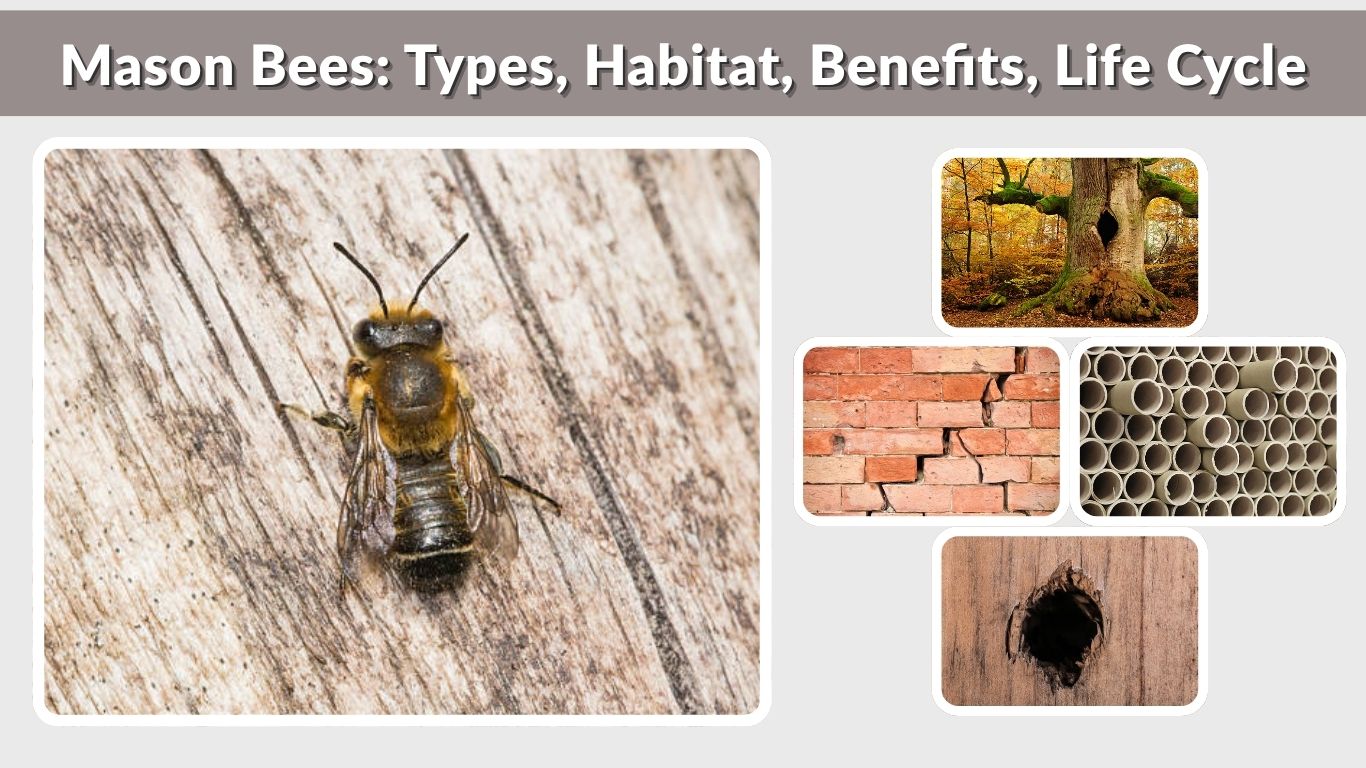
Mason bees are solitary, gentle pollinators known for their exceptional efficiency in pollinating flowers and crops. Unlike honeybees, they do not live in colonies or produce honey, but they play a crucial role in maintaining ecosystems and boosting garden productivity. These bees have become increasingly popular among gardeners and farmers due to their low maintenance and high pollination rate. With their non-aggressive nature and simple habitat needs, mason bees are an excellent choice for anyone looking to support pollinators and improve plant yields naturally.
What Are Mason Bees?
Scientific Classification
Mason bees belong to the genus Osmia, which is part of the Megachilidae family. This group includes solitary bees that are known for carrying pollen on their abdominal hairs instead of their legs, making them highly effective pollinators.
Physical Characteristics
Mason bees are typically small to medium in size and often display metallic blue or black coloring. Their bodies are covered with fine hairs that help them collect and transfer pollen efficiently. Unlike honeybees, they appear slightly rounder and fuzzier.
Solitary Nature
One of the defining features of mason bees is their solitary lifestyle. Each female bee builds and manages her own nest without the help of a queen or worker bees. This independence reduces aggression, making them safe and easy to manage in residential areas.
Types of Mason Bees

Blue Orchard Mason Bee
The Blue Orchard Mason Bee (Osmia lignaria) is one of the most well-known species, especially in North America. It is highly valued for pollinating fruit trees such as apples, cherries, and almonds. These bees are active in early spring when many crops begin to bloom.
Red Mason Bee
The Red Mason Bee (Osmia bicornis) is commonly found in Europe. It has a slightly reddish-brown appearance and thrives in similar conditions as the blue orchard species. This bee is also active during spring and contributes significantly to garden pollination.
Other Notable Species
There are many other species of mason bees across different regions, each adapted to local climates and plant types. Despite slight variations, all mason bees share similar behaviors, nesting habits, and ecological roles.
Mason Bee Life Cycle
Spring Emergence
Mason bees emerge in early spring when temperatures rise to around 12–14°C (54–57°F). This timing aligns perfectly with the blooming of fruit trees and early flowers, ensuring effective pollination.
Nest Building and Egg Laying
After emerging, female mason bees begin searching for suitable nesting sites such as hollow stems or drilled holes in wood. They collect mud to build partitions inside these cavities. Each chamber contains a mixture of pollen and nectar along with a single egg.
Development Stages
The eggs hatch into larvae that feed on the stored pollen and nectar. As they grow, they develop into pupae and eventually mature into adult bees. This entire development process occurs within the sealed nesting chamber.
Overwintering Phase
Once development is complete, adult mason bees remain inside their cocoons throughout the winter. They stay dormant until the following spring, when they emerge to repeat the cycle.
Habitat and Nesting Behavior

Natural Habitats
Mason bees naturally nest in pre-existing cavities such as hollow plant stems, holes in wood, or cracks in structures. They do not dig their own nests but rely on available spaces.
Nest Structure
Their nests are arranged in a linear pattern inside tunnels. Each section is separated by mud walls, creating individual chambers for eggs. This unique construction method is the reason they are called “mason” bees.
Ideal Environmental Conditions
Mason bees thrive in environments where flowers are abundant and a source of moist soil is available. Access to mud is essential for building their nests, while nearby plants provide food for their offspring.
Benefits of Mason Bees for Pollination
High Pollination Efficiency
Mason bees are considered one of the most efficient pollinators. Unlike honeybees, which pack pollen tightly, mason bees carry loose pollen that easily transfers between flowers. This results in higher pollination success rates.
Best Crops for Mason Bees
These bees are particularly effective for pollinating fruit trees such as apples, pears, cherries, and plums. They also benefit crops like berries and nuts, making them valuable for both home gardens and commercial farms.
Environmental Advantages
Mason bees require minimal care and do not need large hives or constant management. Their presence supports biodiversity and helps maintain healthy ecosystems. By encouraging mason bees, gardeners can reduce reliance on artificial pollination methods.
Mason Bees vs Honey Bees

Behavior and Social Structure
Mason bees are solitary, while honeybees live in complex colonies with queens and workers. This difference greatly affects how they behave and interact with their environment.
Pollination Differences
Mason bees are often more efficient pollinators than honeybees because they transfer pollen more effectively between flowers during each visit.
Honey Production and Maintenance
Unlike honeybees, mason bees do not produce honey. However, they require far less maintenance, making them ideal for beginners or those looking for a low-effort pollination solution.
How to Attract Mason Bees
Attracting mason bees to your garden is simple and requires only a few thoughtful steps. First, plant a variety of native flowering plants that bloom in early spring, as this is when mason bees are most active. Flowers such as fruit blossoms, dandelions, and wildflowers provide essential nectar and pollen.
Avoid using chemical pesticides, as these can harm bees and reduce their activity. Providing a reliable source of water and moist soil is also important, since mason bees use mud to build their nests. Creating a bee-friendly environment with diverse plants and natural resources will naturally encourage mason bees to settle in your area.
Mason Bee House Setup Guide

Materials and Design
A mason bee house can be made from wooden blocks with drilled holes or paper tubes placed inside a protective frame. The holes should be about 5–8 mm in diameter and deep enough to allow multiple nesting chambers. Using natural, untreated materials is important to keep the bees safe.
Placement Tips
Place the bee house in a sunny location facing south or southeast. It should be positioned at least 1–2 meters above the ground and protected from strong winds and rain. Proper placement ensures warmth and encourages early activity.
Maintenance
Regular maintenance is essential for keeping mason bees healthy. Clean or replace nesting materials annually to prevent the buildup of pests and diseases. Well-maintained bee houses can support bee populations for many years.
Care and Management of Mason Bees
Caring for mason bees is relatively easy compared to other pollinators. During the active season, ensure they have access to flowers and mud. At the end of the season, cocoons can be carefully harvested and cleaned to remove pests such as mites.
Store the cleaned cocoons in a cool, dry place during winter, typically in a ventilated container. This protects them from extreme weather and predators. With proper care, mason bees will return each spring and continue to thrive.
Common Problems and Solutions
Low Bee Activity
If mason bees are not active, it may be due to a lack of flowers, poor weather conditions, or improper placement of the bee house. Ensuring sunlight and nearby food sources can improve activity levels.
Pests and Parasites
Mites, parasitic wasps, and other predators can affect mason bee populations. Regular cleaning of cocoons and nesting materials helps reduce these threats.
Mold and Disease
Excess moisture can lead to mold growth inside nesting tubes. Proper ventilation and timely cleaning can prevent disease and improve bee survival rates.
Are Mason Bees Safe?
Mason bees are extremely gentle and rarely sting. Since they do not have a colony to defend, they are far less aggressive than honeybees or wasps. Even when handled, they are unlikely to sting unless severely provoked.
This makes them ideal for family gardens, including spaces where children and pets are present. Their calm behavior allows gardeners to observe them closely without fear.
Environmental Importance of Mason Bees
Mason bees play a vital role in maintaining ecological balance. As pollinators, they help plants reproduce, which supports food chains and biodiversity. Their efficiency makes them especially valuable in sustainable agriculture.
With global pollinator populations declining, mason bees offer a practical and eco-friendly solution. Encouraging their presence can improve crop yields while reducing dependence on managed honeybee colonies.
FAQs
Do mason bees make honey?
No, mason bees do not produce honey. They collect nectar and pollen only to feed their larvae, not to store food like honeybees.
How long do mason bees live?
Adult mason bees typically live for about 4–6 weeks. However, their full life cycle lasts around one year, including development and overwintering stages.
When do mason bees emerge?
Mason bees usually emerge in early spring when temperatures begin to rise and flowers start blooming, ensuring immediate access to food sources.
Can beginners keep mason bees?
Yes, mason bees are very beginner-friendly. With a simple bee house, flowering plants, and access to mud, they can thrive with minimal effort.
Conclusion
Mason bees are one of the most efficient and easiest pollinators to support. Their gentle nature, low maintenance requirements, and high pollination effectiveness make them ideal for both beginners and experienced gardeners.
By providing a suitable habitat and avoiding harmful chemicals, anyone can help these valuable insects thrive. Supporting mason bees not only benefits your garden but also contributes to a healthier and more sustainable environment.